If you grew up watching family sitcoms in the 1980s and 1990s, you eventually learned to recognize the warning signs. The peppy theme song would end, the screen would fade from black, and instead of a zany misunderstanding about a school dance, the lighting was noticeably darker. The studio audience was eerily quiet. And a grave voiceover announcer would utter the phrase that struck fear into the hearts of children everywhere: “Tonight, on a very special episode of…”
This was the ultimate television bait-and-switch. For 22 minutes, the jokes stopped, the laugh track was muted, and your favorite comedic characters were suddenly forced to confront a harrowing, real-world issue. It was a bizarre era of broadcasting that subjected a generation of kids to some genuine tonal whiplash.
The Anatomy of a Very Special Episode
The “Very Special Episode” was a highly formulaic television trope designed to tackle serious societal topics like drug addiction, child abduction, eating disorders, racism, or alcoholism. Because sitcoms traditionally relied on resetting the status quo at the end of every half hour, these episodes were incredibly jarring.
The format was almost always the same. A beloved character—usually the rebellious teenager or the innocent youngest child—would stumble into a massive, life-altering danger. The comedy would completely vanish by the second commercial break. In the final act, a parental figure would discover the truth, deliver a stern but loving monologue, and the characters would share a tearful hug. By the following week, the traumatic event was completely forgotten, and the characters went right back to arguing about who left the refrigerator door open.
The Most Infamous Examples
Some of these episodes left deep, lingering scars on an entire generation of viewers.
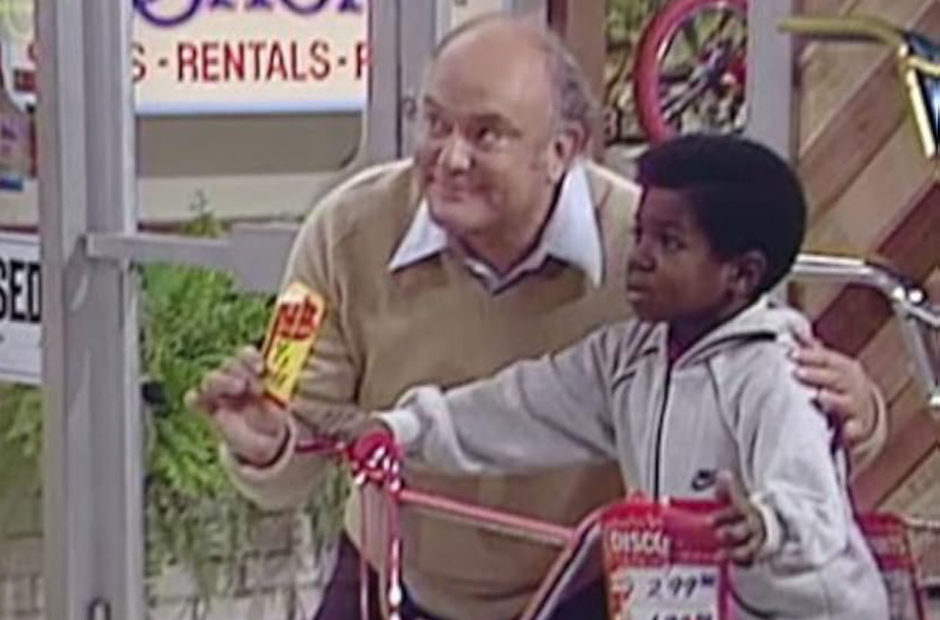
Perhaps the most notorious is the two-part Diff’rent Strokes episode, “The Bicycle Man.” In it, Arnold and his friend Dudley are lured into the back room of a bicycle shop by a friendly owner (played chillingly by Gordon Jump) who turns out to be a child predator. It is a deeply unsettling hour of television that completely shattered the show’s lighthearted tone.
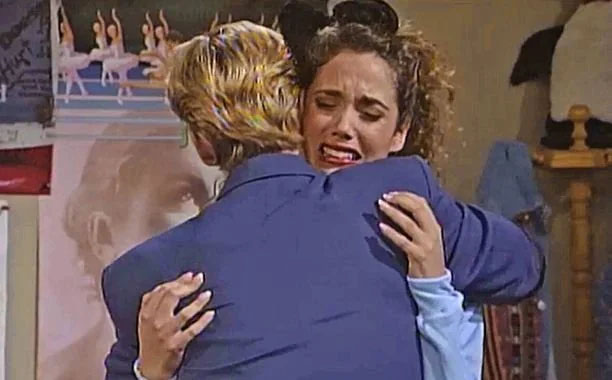
On the more absurd side of the spectrum is the legendary Saved by the Bell episode, “Jessie’s Song.” In a desperate bid to balance her studies and her new pop group, straight-A student Jessie Spano becomes horribly addicted to over-the-counter caffeine pills. It culminates in an infamous, melodramatic breakdown where she desperately sings “I’m so excited… I’m so… scared!” into Zack Morris’s arms.
Sometimes, the shows brought in massive guest stars to add weight to the issue. In Family Ties, a pre-megastardom Tom Hanks guest-starred as Uncle Ned, a charismatic relative who is eventually revealed to be a violent alcoholic who drinks vanilla extract out of the Keaton family pantry.
Why Did Networks Do This?
The motivation behind the “Very Special Episode” was a mixture of genuine public service and cynical corporate strategy.
During the 1980s, the Reagan administration heavily pushed the “Just Say No” anti-drug campaign, and television networks were heavily incentivized to weave anti-drug messaging directly into their programming. Furthermore, tackling a serious social issue was a fantastic way for a sitcom to catch the attention of Emmy voters who usually ignored broad family comedies.
But the biggest driving force was always the ratings. Networks quickly realized that promoting a “shocking” or “important” episode was a brilliant way to grab a massive audience during a sweeps month. Advertisers loved the inflated viewership numbers, and networks loved the positive PR of looking socially responsible.
The Parody and Decline
By the late 1990s, audiences had simply grown too savvy for the format. The heavy-handed moralizing felt increasingly artificial, and the trope became a frequent target for parody. Shows like Clone High and It’s Always Sunny in Philadelphia actively mocked the earnest, preachy tone of these episodes.
Furthermore, the rise of serialized television eliminated the need for the format. Today, if a comedy or drama wants to tackle a character’s struggle with addiction or mental health, writers can slowly explore that nuance over a 10-episode season. They no longer have to awkwardly cram a traumatic life lesson into 22 minutes before the credits roll. The era of the “Very Special Episode” is dead, but anyone who grew up watching Jessie Spano battle caffeine pills will never forget it.
The Classic TV History Series
Catch up on our complete guide to the bizarre rules, forgotten tech, and scheduling quirks that defined the broadcast era of television.
- What Does It Mean to “Jump the Shark”?
- What Is a Clip Show?
- The History of the TV Remote: Why Do We Call It a “Clicker”?
- How Much Does a TV Pilot Actually Cost?
- What Was the Friday Night Death Slot?
- What Is a Backdoor Pilot?
- Why Did Old Sitcoms Use Laugh Tracks?
- What Was a Sweeps Episode?
- What Was TGIF? ABC’s Friday Night Sitcom Block Explained
- What Happened to Made-for-TV Movies?
- What Is a Bottle Episode?