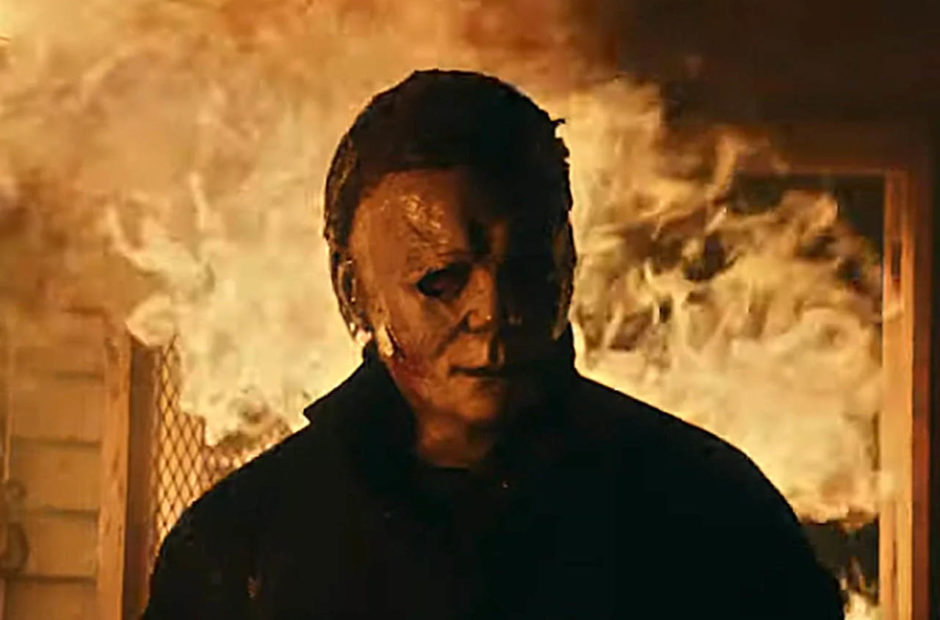
Figuring out the Halloween movies in order is unusually complicated for a horror franchise. What began with John Carpenter’s relatively simple 1978 story about an escaped killer stalking teenagers in Haddonfield eventually grew into a series of sequels, abandoned storylines, remakes, alternate continuities, and movies that repeatedly returned to the original while ignoring large portions of what came afterward.
There are 13 movies in the franchise, but they do not tell one continuous story. Michael Myers currently has four distinct movie continuities, while Halloween III: Season of the Witch exists entirely on its own.
If you want to watch everything, release order remains the easiest approach. If you want the story to actually make sense, however, you need to choose a timeline.
Halloween Movies in Release Order
The complete Halloween movie franchise in release order is:
- Halloween (1978)
- Halloween II (1981)
- Halloween III: Season of the Witch (1982)
- Halloween 4: The Return of Michael Myers (1988)
- Halloween 5: The Revenge of Michael Myers (1989)
- Halloween: The Curse of Michael Myers (1995)
- Halloween H20: 20 Years Later (1998)
- Halloween: Resurrection (2002)
- Halloween (2007)
- Halloween II (2009)
- Halloween (2018)
- Halloween Kills (2021)
- Halloween Ends (2022)
Watching the movies this way lets you experience the franchise as audiences originally did, including all of its attempts to reinvent itself. It also means jumping between continuities without warning. Halloween H20, for example, effectively discards three previous Michael Myers sequels, while the 2018 Halloween goes even further and ignores every movie released after the 1978 original.
For anyone primarily interested in following a coherent story, the individual timelines are much more useful.
The Original Halloween Timeline
The first major continuity begins with Carpenter’s original movie and eventually develops into what is often called the Thorn timeline. It consists of:
- Halloween (1978)
- Halloween II (1981)
- Halloween 4: The Return of Michael Myers (1988)
- Halloween 5: The Revenge of Michael Myers (1989)
- Halloween: The Curse of Michael Myers (1995)
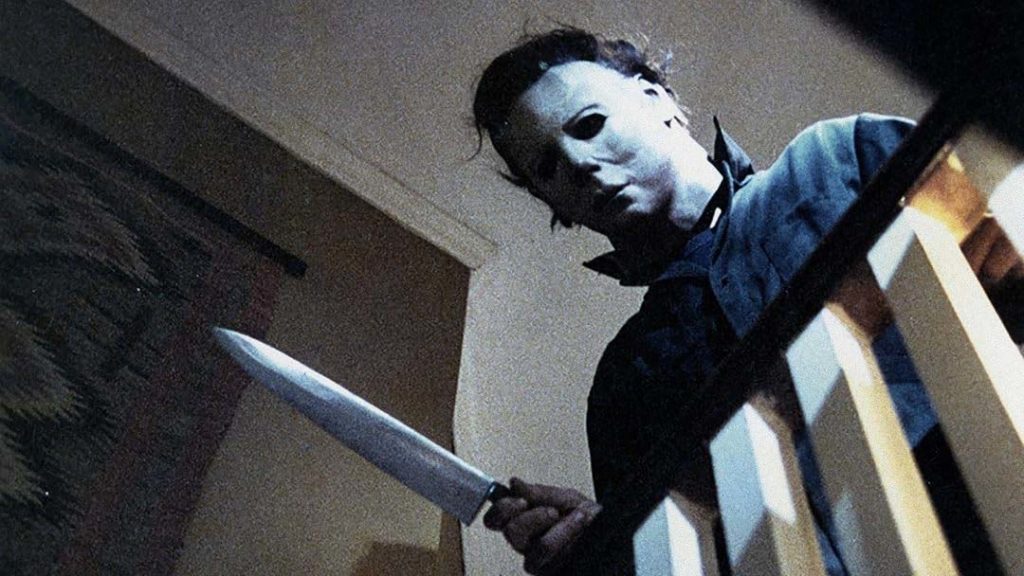
Halloween (1978)
John Carpenter’s original introduces Michael Myers, who murdered his sister Judith as a child in 1963 and escapes from Smith’s Grove Sanitarium 15 years later. Michael returns to Haddonfield on Halloween night, where he begins stalking Laurie Strode and her friends while his psychiatrist, Dr. Samuel Loomis, attempts to find him.
The movie was designed as a largely self-contained story, long before anyone needed to worry about competing Halloween timelines. Nearly everything that follows traces itself back to the events of this film, although different sequels disagree about what those events ultimately mean.
Where to watch: Available to stream; sold on physical media and digitally.
Halloween II (1981)
Halloween II begins immediately after the ending of the original, continuing the same Halloween night as Laurie is taken to Haddonfield Memorial Hospital. Michael follows her there, while Loomis continues trying to stop him.
The sequel also introduces one of the franchise’s most consequential ideas: Laurie is revealed to be Michael’s younger sister. That relationship would shape the series for decades, but it is important to remember that it does not exist in every continuity. The 2018 timeline specifically removes it.
Where to watch: Available to stream; sold on physical media and digitally.
Halloween 4: The Return of Michael Myers (1988)
After the franchise briefly attempted to move away from Michael Myers, Halloween 4 brought him back and continued the storyline established by the first two films. Laurie Strode has died off-screen, leaving behind a daughter, Jamie Lloyd, who becomes Michael’s new target.
Both Michael and Loomis survived the fiery conclusion of Halloween II, and their return begins a new phase of the original continuity centered on Jamie.
Where to watch: Available to stream; sold on physical media and digitally.
Halloween 5: The Revenge of Michael Myers (1989)
Halloween 5 follows directly from the fourth movie and continues Michael’s pursuit of Jamie. It also begins introducing mysteries surrounding Michael, including a strange tattoo and an unidentified man in black.
Those elements would eventually become part of the mythology explored in The Curse of Michael Myers, although the series was clearly developing some of these ideas as it went along.
Where to watch: Available to stream; sold on physical media and digitally.
Halloween: The Curse of Michael Myers (1995)
The sixth film attempts to provide an explanation for Michael’s seemingly supernatural nature by connecting him to the Cult of Thorn. The story also brings back Tommy Doyle, the child Laurie babysat in the original Halloween, now played by Paul Rudd.
The Curse of Michael Myers became the end of this particular continuity. When Jamie Lee Curtis returned to the franchise three years later, the filmmakers chose not to continue the storyline involving Jamie Lloyd and Thorn.
Where to watch: Available to stream; sold on physical media and digitally.
The Halloween H20 Timeline
The first major continuity reset arrived with Halloween H20: 20 Years Later. This branch keeps the first two movies but ignores Halloween 4, Halloween 5, and The Curse of Michael Myers.
The H20 timeline is:
- Halloween (1978)
- Halloween II (1981)
- Halloween H20: 20 Years Later (1998)
- Halloween: Resurrection (2002)
In this continuity, Laurie Strode never had Jamie Lloyd. Instead, she survived the first two movies, faked her death, changed her identity, and built another life.
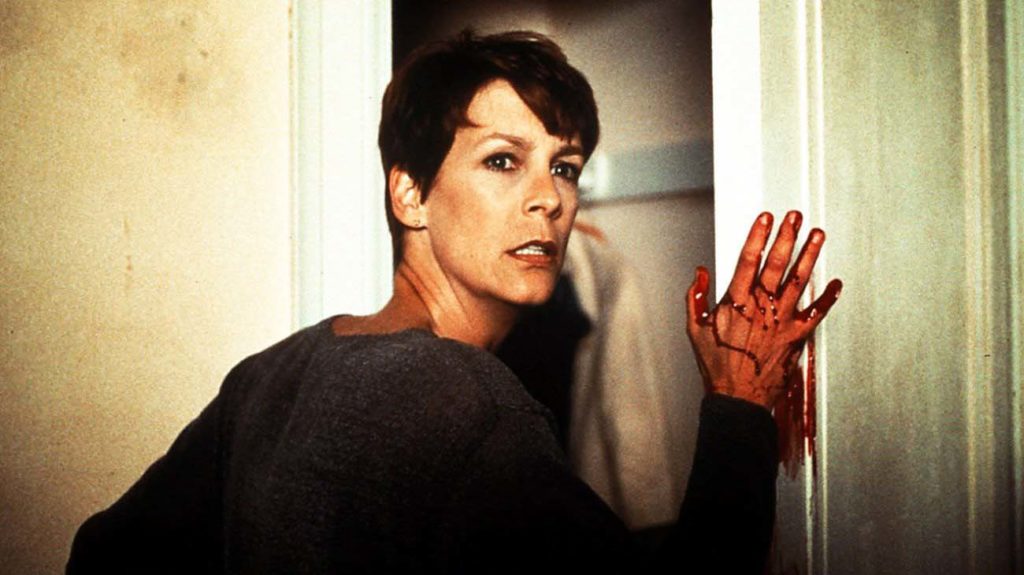
Halloween H20: 20 Years Later (1998)
Twenty years after Michael’s original attack, Laurie is living under the name Keri Tate and working as the headmistress of a private school in California. She has a teenage son, John, but remains deeply affected by what happened in Haddonfield.
Michael eventually finds her, allowing the movie to bring Laurie back into the center of the franchise without having to resolve the increasingly elaborate mythology of the previous sequels. For viewers interested primarily in Laurie and Michael, the H20 continuity is one of the franchise’s most compact viewing options.
Where to watch: Available to stream; sold on physical media and digitally.
Halloween: Resurrection (2002)
Halloween: Resurrection continues directly from H20, including an explanation for how Michael survived that movie’s apparently definitive ending. Laurie returns for the opening portion of the film before the story shifts to a group of college students participating in an internet reality show inside Michael Myers’ childhood home.
This was the final entry in the H20 continuity. When Michael returned five years later, the franchise started over completely.
Where to watch: Available to stream; sold on physical media and digitally.
The Rob Zombie Halloween Timeline
Rob Zombie’s two Halloween movies are the easiest part of the franchise to understand because they form their own completely separate continuity:
- Halloween (2007)
- Halloween II (2009)
Unlike the later 2018 film, Zombie’s Halloween is an actual remake rather than a sequel sharing the original movie’s title.
Halloween (2007)
Zombie retells the Michael Myers story from the beginning, devoting considerably more time to Michael’s childhood and his years under the care of Dr. Loomis before eventually recreating elements of the 1978 film.
Although many familiar characters and situations appear, this version does not take place in the continuity of Carpenter’s movie. It establishes a new Michael, Laurie, Loomis, and Haddonfield.
Where to watch: Available to stream; sold on physical media and digitally.
Halloween II (2009)
Zombie’s sequel continues his version of the story and moves increasingly far from the structure and mythology of the original films. Laurie struggles with the psychological aftermath of Michael’s attack while Loomis has turned his experiences into a successful book.
The film concludes Zombie’s separate two-movie interpretation of Halloween. Nothing from these movies carries into the films that began in 2018.
Where to watch: Available to stream; sold on physical media and digitally.
The 2018 Halloween Timeline
The most recent movie continuity performs the franchise’s biggest reset. It retains only Carpenter’s original Halloween and ignores every previous sequel, including Halloween II.
The timeline is:
- Halloween (1978)
- Halloween (2018)
- Halloween Kills (2021)
- Halloween Ends (2022)
Because Halloween II no longer happened in this continuity, Laurie and Michael are not siblings. Michael’s 1978 attack was simply an encounter between a killer and one of the teenagers he targeted that night.
Halloween (2018)
Four decades after the original murders, Laurie Strode has spent much of her life preparing for the possibility that Michael Myers could return. Her obsession has damaged her relationship with her daughter Karen, while Laurie’s granddaughter Allyson becomes the third generation of the family drawn into Michael’s violence.
The movie’s title can create confusion because it is the third film in the franchise simply called Halloween. Unlike the 2007 version, however, this is not a remake. It is a direct sequel to the 1978 movie.
Where to watch: Available to stream; sold on physical media and digitally.
Halloween Kills (2021)
Halloween Kills begins on the same night as the 2018 film and expands the story beyond Laurie’s family. As Michael continues his rampage through Haddonfield, survivors and residents of the town organize in an attempt to stop him themselves.
The film also revisits the night of the original 1978 murders through flashbacks, filling in events that occurred after Michael disappeared at the end of Carpenter’s movie.
Where to watch: Available to stream; sold on physical media and digitally.
Halloween Ends (2022)
Halloween Ends jumps forward four years and brings the 2018 continuity to its conclusion. Rather than simply staging another immediate rematch between Laurie and Michael, the film explores how Haddonfield has changed after years of fear and violence, with a new character, Corey Cunningham, becoming central to the story.
The movie was designed as the conclusion to the storyline that began with the 1978 original and resumed with the 2018 film, closing this particular version of Laurie Strode and Michael Myers’ story.
Where to watch: Available to stream; sold on physical media and digitally.
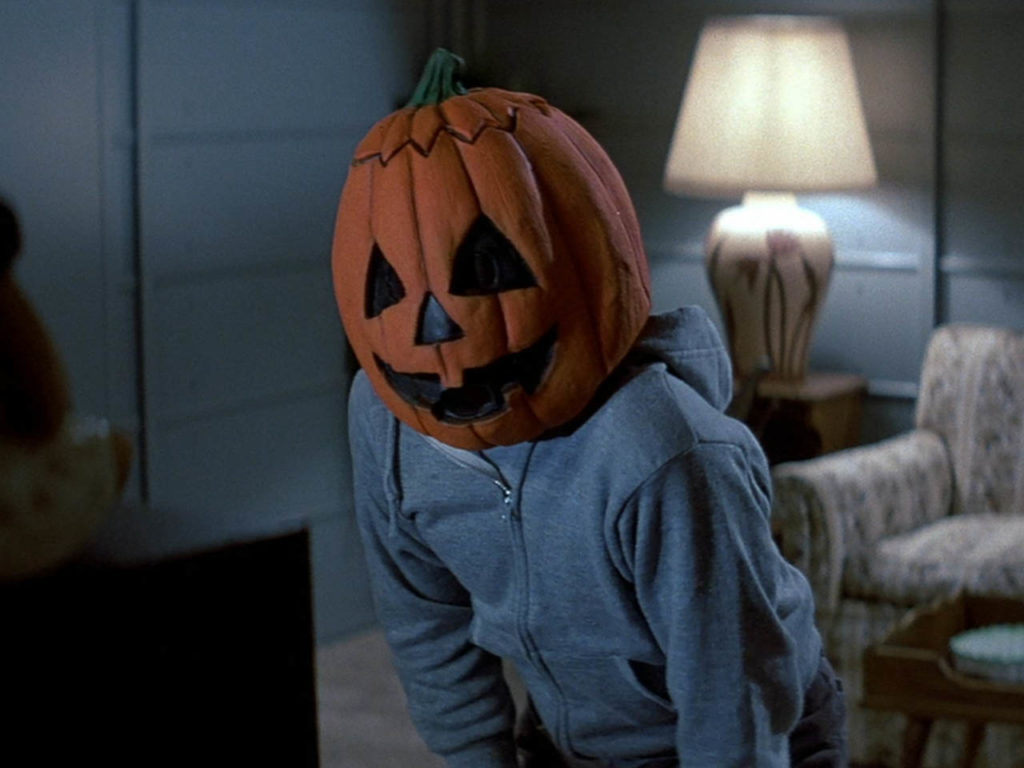
Where Does Halloween III: Season of the Witch Fit?
Halloween III: Season of the Witch is the franchise’s great exception. Released in 1982, it does not continue Michael Myers’ story at all.
After Halloween II, the idea was to move the series away from Michael and turn Halloween into an anthology brand featuring a different horror story with each movie. Season of the Witch follows Dr. Daniel Challis as he investigates Silver Shamrock Novelties and a deadly plan involving the company’s enormously popular Halloween masks.
The anthology approach did not continue, and Michael returned in Halloween 4: The Return of Michael Myers. As a result, Halloween III stands alone. In fact, Carpenter’s original Halloween exists as a movie within the world of Season of the Witch, making it impossible to place the film inside any Michael Myers continuity.
Where to watch: Available to stream; sold on physical media and digitally.
Which Halloween Timeline Should You Watch?
For someone watching the franchise for the first time, release order remains the best way to experience the entire series. The continuity changes are part of the history of Halloween, and watching the films as they were released makes it easier to understand why later entries kept returning to Carpenter’s original.
If you would rather watch one coherent storyline, choose a continuity instead. The original timeline gives you the Jamie Lloyd and Thorn storyline, while the H20 timeline provides a shorter Laurie Strode continuation built around the first two movies. Rob Zombie’s two films work as a self-contained remake series, and the 2018 timeline offers another compact Laurie Strode story that requires only the original movie before beginning the newer trilogy.
Halloween III: Season of the Witch can be watched at any point because it has no narrative connection to the Michael Myers stories. Watching it in its original release position between Halloween II and Halloween 4, however, provides some useful historical context for one of the strangest detours in a franchise filled with them.
Halloween Movie Timelines at a Glance
| Timeline | Movies |
|---|---|
| Original/Thorn | Halloween (1978) → Halloween II (1981) → Halloween 4 → Halloween 5 → The Curse of Michael Myers |
| H20 | Halloween (1978) → Halloween II (1981) → Halloween H20 → Halloween: Resurrection |
| Rob Zombie | Halloween (2007) → Halloween II (2009) |
| 2018 | Halloween (1978) → Halloween (2018) → Halloween Kills → Halloween Ends |
| Standalone | Halloween III: Season of the Witch |
Halloween Movies in Order FAQ
How many Halloween movies are there?
There are 13 Halloween feature films released between 1978 and 2022. Twelve involve Michael Myers as a central part of the story, while Halloween III: Season of the Witch is a standalone anthology film.
What is the correct order to watch the Halloween movies?
If you want to watch every movie, release order is the simplest choice. If you want a continuous story, choose one of the four Michael Myers timelines because all 13 movies cannot be combined into a single chronology.
Why are there three movies called Halloween?
Halloween (1978) is John Carpenter’s original film. Halloween (2007) is Rob Zombie’s remake, while Halloween (2018) is a sequel to the 1978 original that ignores all of the earlier sequels.
Is Halloween III connected to Michael Myers?
No. Halloween III: Season of the Witch tells an independent story and was produced when the filmmakers were attempting to turn Halloween into an anthology franchise. Michael Myers does not participate in its story.
Is Laurie Strode Michael Myers’ sister?
It depends on the timeline. Halloween II (1981) establishes Laurie as Michael’s sister, making that relationship part of the original and H20 continuities. The 2018 continuity ignores Halloween II, so Laurie and Michael are not related in that version of the story.
Does Halloween H20 ignore Halloween 4, 5, and 6?
Yes. The H20 continuity follows Halloween (1978) and Halloween II (1981), then continues with Halloween H20: 20 Years Later. The events of Halloween 4, Halloween 5, and The Curse of Michael Myers are not part of that continuity.
Does Halloween 2018 ignore Halloween II?
Yes. Halloween (2018) treats the original 1978 film as the only previous movie in its continuity. That removes the sibling relationship introduced in Halloween II and creates a new storyline continuing through Halloween Kills and Halloween Ends.
More Movie Timeline Guides
Trying to untangle another franchise? These guides break down several other movie series with complicated timelines and continuities.
Fun Jug Media, LLC (operating TheNerdy.com) has affiliate partnerships with various companies. These do not at any time have any influence on the editorial content of The Nerdy. Fun Jug Media LLC may earn a commission from these links.