What is a sleeper hit? In the movie business, the term generally describes a film that becomes far more successful than initially expected, often building its audience gradually rather than arriving with an enormous opening weekend. Instead of dominating the box office immediately, a sleeper hit can spend weeks gaining momentum through word of mouth, reviews, awards attention, or simply audiences discovering that a movie they initially overlooked is worth seeing.
That makes a sleeper hit different from a traditional blockbuster. Studios usually know when they are releasing a potential blockbuster. The movie may have a massive budget, famous stars, an established franchise, a major advertising campaign, and thousands of theaters waiting on opening weekend. Its success is supposed to be immediate.
A sleeper hit sneaks up on everyone.
Sometimes it begins in only a handful of theaters before expanding across the country. Sometimes it opens nationwide but performs far better in later weeks than its opening suggested. The defining characteristic is not a particular budget or box-office total. It is the gap between what initially appeared likely and what the movie ultimately became.
What Does Sleeper Hit Mean?
A sleeper hit is an entertainment release that achieves unexpected success after a modest beginning. The term is used for movies, television programs, music, books, and games, but it is particularly useful when discussing theatrical films because box-office performance makes their growth easy to see.
A movie does not need to fail before becoming a sleeper hit. It may simply open quietly, receive little attention compared with larger releases, and then continue attracting audiences while other movies quickly disappear from theaters.
That last part is important. A surprise hit and a sleeper hit are closely related, but they are not necessarily identical. A movie that unexpectedly earns $50 million during a huge opening weekend is certainly a surprise success, but it did not exactly sleep through its arrival. The classic sleeper develops over time.
My Big Fat Greek Wedding Is Almost the Perfect Sleeper Hit
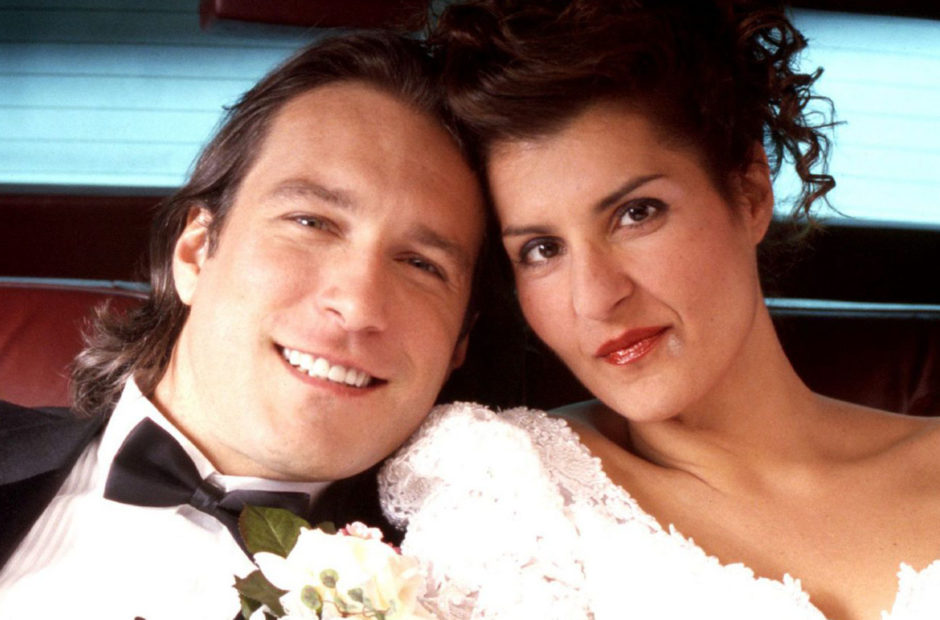
Few movies demonstrate the concept better than 2002’s My Big Fat Greek Wedding.
The romantic comedy had a reported production budget of approximately $5 million and began its domestic release in only 108 theaters. Its opening weekend produced just under $600,000, numbers that gave no obvious indication that the movie was about to become one of the year’s biggest success stories.
Then audiences kept showing up.
Instead of quickly losing theaters, My Big Fat Greek Wedding expanded as word of mouth grew. It eventually played in more than 2,000 theaters and earned approximately $241.4 million domestically. Worldwide, it finished with roughly $369 million to $375 million depending on how later releases and reporting are counted.
What makes the run particularly remarkable is that the movie did not need a conventional blockbuster opening to reach those numbers. It spent months accumulating ticket sales as more people discovered it. The domestic gross eventually became more than 400 times the size of its opening weekend.
That is the classic sleeper-hit pattern: modest expectations, a small beginning, sustained audience enthusiasm, theatrical expansion, and a final result dramatically larger than anyone could have reasonably predicted from opening weekend.
Word of Mouth Can Change a Movie’s Box Office
The phrase “word of mouth” is used constantly when discussing movies, but sleeper hits show what it means commercially.
A studio can purchase advertising. It can’t buy millions of people telling friends they need to see a movie.
When audiences genuinely recommend something, the effect can appear in a movie’s weekly box-office performance. Instead of experiencing the steep declines common to heavily anticipated releases, the movie holds unusually well. A limited-release film may earn enough per theater for its distributor to add hundreds of locations. A wide release may continue drawing crowds long after its opening campaign has ended.
This is sometimes described as a movie having “legs.” A film with strong legs earns a large portion of its eventual box office after opening weekend rather than depending primarily on the initial rush of viewers.
For a sleeper hit, those legs can become the entire story.
Napoleon Dynamite Grew From Six Theaters
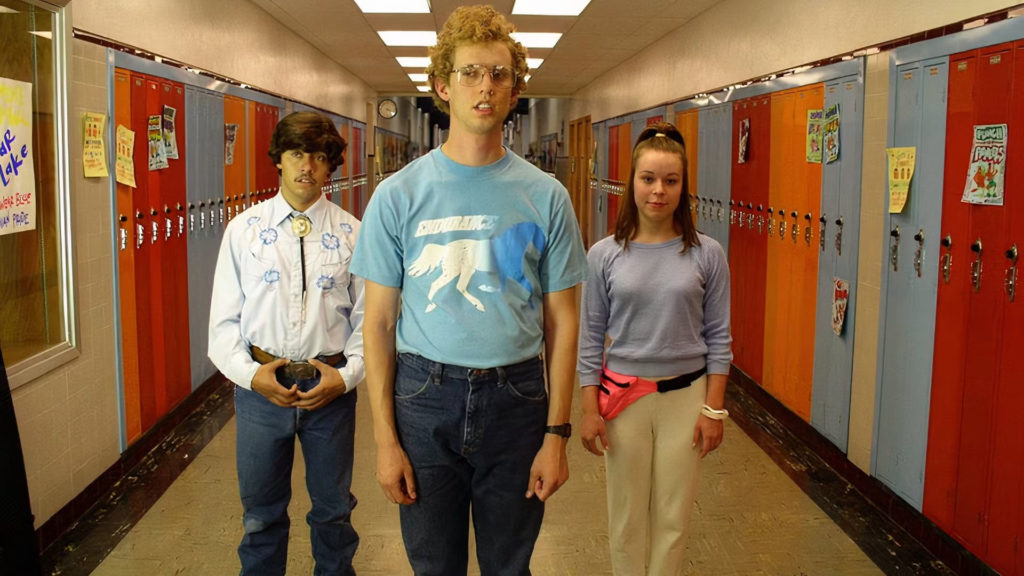
Napoleon Dynamite provides another unusually clear example.
The 2004 comedy was produced for a reported $400,000 and opened in only six theaters. Its first weekend brought in approximately $116,700.
Its distributor kept expanding the release as audiences responded. Six theaters became 18, then 73, then 142. By September, the movie was playing in more than 900 theaters, and it eventually reached a maximum of more than 1,200.
Napoleon Dynamite ultimately earned about $44.5 million domestically and more than $46 million worldwide. Its domestic DVD sales were also enormous, further extending the movie’s commercial life after theaters.
Nothing about a six-theater opening for a $400,000 independent comedy suggested an eventual pop-culture phenomenon. The audience built gradually, which is precisely why the sleeper-hit label fits.
Limited Releases Can Help Create Sleeper Hits
Opening a movie in only a few theaters is not necessarily a sign that a distributor lacks confidence in it. For certain films, it is a deliberate strategy.
A limited release allows the distributor to concentrate attention in a small number of markets. If the movie performs well, particularly on a per-theater basis, it can expand into additional cities. Strong reviews and audience recommendations have time to develop before the movie reaches its widest release.
This approach is particularly common with independent films and awards contenders that cannot compete with the advertising budgets of major studio blockbusters.
Little Miss Sunshine followed that path in 2006. The film opened in only seven theaters and earned approximately $371,000 during its first weekend, an excellent average of roughly $53,000 per theater.
The release expanded rapidly. Seven theaters became 58, then 153, then 691. By its sixth weekend, Little Miss Sunshine was playing in more than 1,600 theaters.
Produced for approximately $8 million, it eventually earned nearly $60 million domestically and more than $100 million worldwide. It also became a Best Picture nominee, demonstrating how commercial momentum and awards attention can reinforce one another.

A Sleeper Hit Doesn’t Have to Be a Tiny Independent Movie
The term is strongly associated with inexpensive movies that emerge from nowhere, but a sleeper hit does not have to begin as a micro-budget independent production.
The Greatest Showman is a particularly interesting example because almost nothing about the production itself was small. The 2017 musical starred Hugh Jackman and carried a reported production budget of approximately $84 million.
Its opening suggested trouble.
The Greatest Showman earned only about $8.8 million during its first domestic weekend. For an $84 million studio musical released during the crowded Christmas season, that was hardly encouraging.
Then something unusual happened: the movie refused to go away.
Its second weekend was substantially larger than its first. Audiences continued discovering the movie, the soundtrack became enormously popular, and repeat viewing helped sustain the theatrical run. The film eventually earned approximately $174.3 million domestically and well over $400 million worldwide.
That is a different kind of sleeper story from My Big Fat Greek Wedding. The movie was not obscure, inexpensive, or released without studio support. Nobody anticipated how much stronger its long-term performance would be than its opening weekend suggested.
Can a Movie Become a Sleeper Hit Through Awards Buzz?
Yes. Awards attention can extend a movie’s theatrical life and introduce it to audiences who did not see it when it first opened.
Everything Everywhere All at Once combined several forces that can create a sleeper. It began in only 10 theaters in March 2022, earning approximately $501,000 during its opening weekend. Strong reviews and audience response allowed distributor A24 to expand it rapidly, eventually reaching more than 2,200 theaters.
The movie had a reported production budget of approximately $25 million and ultimately earned about $145 million worldwide. Its cultural profile continued growing long after the initial theatrical expansion, culminating in seven Academy Awards, including Best Picture.
By that point, Everything Everywhere All at Once was no longer something audiences had merely stumbled across. It had become one of the defining movies of its year.
Awards didn’t create its initial success, but the movie’s unusually long cultural life shows how a sleeper can keep finding new audiences through several stages of attention.
Is a Movie With a Small Opening Automatically a Sleeper Hit?
No. Most movies with small openings simply have small openings.
The term only becomes meaningful when something changes afterward. Audiences discover the film, theaters add screens, weekly declines remain unusually small, or the movie develops a much larger cultural presence than its initial release suggested.
This is why the label is usually applied retrospectively. Nobody can confidently announce on opening night that a movie is a sleeper hit because the “hit” part has not happened yet.
A $2 million opening followed by a $5 million final domestic total is not a sleeper hit. A $2 million opening that eventually turns into $100 million because audiences keep discovering the movie is an entirely different story.

Is Every Movie With Strong Box-Office Legs a Sleeper Hit?
No. Strong legs show audiences keep supporting a movie, but the film also needs an element of unexpected success for the sleeper label to be useful.
A highly anticipated sequel can have excellent legs and become an enormous hit without ever being a sleeper. Everyone expected it to succeed in the first place.
This distinction becomes murkier with movies that initially appear to be disappointments and then recover.
Pixar’s Elemental, for example, opened domestically to approximately $29.6 million in 2023, a weak beginning for a movie with a reported $200 million production budget. It then held up unusually well through the summer and eventually earned about $154.4 million domestically and $496.4 million worldwide.
That performance was certainly a remarkable recovery, and the movie was frequently discussed as a sleeper success. Whether it fits the classic definition as neatly as My Big Fat Greek Wedding is debatable. Elemental was an expensive Pixar release that opened in more than 4,000 theaters, backed by Disney. It did not quietly emerge from obscurity; audiences simply arrived much more slowly than expected.
Calling it a sleeper hit is defensible, but calling it a movie with exceptional legs may be more precise.
Does a Sleeper Hit Have to Make a Lot of Money?
There is no fixed box-office threshold.
Scale matters. A $3 million independent film earning $30 million can be an extraordinary surprise, while a $200 million production earning $300 million worldwide may still be financially disappointing once you factor in marketing costs and the theaters’ share of ticket sales.
That is why the term describes performance relative to expectations rather than a specific dollar amount.
A sleeper hit might become one of the year’s highest-grossing films, but it does not have to. The important point is that its eventual success was substantially greater than its launch, profile, or initial expectations suggested.
Is a Cult Classic the Same as a Sleeper Hit?
No. A sleeper hit becomes an unexpected commercial success, while a cult classic develops an unusually devoted audience. Those things can overlap, but they describe different kinds of success.
A movie can become a cult classic years after failing at the box office. Its audience may grow through television broadcasts, home video, repertory screenings, or streaming without ever changing the fact that its original theatrical release lost money.
A sleeper hit generally shows unexpected success during its original commercial life, even if its popularity keeps growing afterward.
Conversely, a movie can be a sleeper hit without developing anything resembling a cult following. Audiences may simply discover it gradually, make it commercially successful, and move on.
More Movie Terms Explained
Hollywood uses plenty of familiar terms that become more complicated once you start looking at what they actually mean.
Can Streaming Create a Sleeper Hit?
The idea becomes harder to measure outside theaters because streaming services generally don’t provide the same transparent, week-by-week financial data as the theatrical box office.
The basic phenomenon still exists. A movie or television series can arrive with modest attention and then explode weeks later because viewers recommend it, clips spread online, or an algorithm begins presenting it to more subscribers.
Streaming also gives older movies opportunities for unexpected second lives. A film that attracted little attention during its theatrical release can suddenly become one of the most watched titles on a service years later.
Whether that should be called a sleeper hit, a rediscovery, or simply viral popularity depends on the circumstances. The underlying behavior is familiar, however: audiences find something not expected to dominate the conversation, tell others about it, and create momentum that conventional marketing did not produce.
Why Do Sleeper Hits Matter to Hollywood?
Sleeper hits are valuable because they demonstrate how difficult audience behavior is to predict.
Studios can estimate demand using franchise history, test screenings, tracking surveys, advance ticket sales, and enormous amounts of market research. None of those tools can guarantee that audiences will embrace a movie, and they cannot always identify the film people will still be recommending six weeks after release.
A sleeper hit can also change careers. An actor who was largely unknown before a small movie breaks out may suddenly receive major offers. A director can move from independent productions to studio projects. A distributor can turn a modest acquisition into one of its most valuable releases.
The effect can extend beyond a single movie. My Big Fat Greek Wedding eventually produced sequels. Napoleon Dynamite became a recognizable piece of 2000s pop culture. Everything Everywhere All at Once went from a limited release in 10 theaters to winning Best Picture.
None arrived with the box-office trajectory of a conventional blockbuster, and that is precisely the point.
Why Are Sleeper Hits Harder to Spot Today?
The theatrical marketplace has changed considerably from the era when a movie such as My Big Fat Greek Wedding could spend months slowly expanding around the country. Home entertainment arrives sooner, streaming competes for attention, and studios often decide on theatrical screens very quickly.
At the same time, social media can dramatically accelerate word of mouth. A movie no longer necessarily needs months for audiences to discover it. A viral reaction can transform awareness within days.
That can compress the traditional sleeper-hit cycle, but it does not eliminate it. As long as movies can perform substantially better than their initial expectations suggest, Hollywood will continue producing unexpected successes.
What Makes a Movie a Sleeper Hit?
A sleeper hit ultimately needs two things: surprise and sustained growth.
The movie begins with relatively modest expectations, limited awareness, an unimpressive opening, or some combination of the three. Then audiences respond more strongly than anticipated. Word of mouth spreads, theaters keep the movie around or add screens, and its commercial performance grows far beyond what the initial release suggested.
That is why My Big Fat Greek Wedding remains such an extraordinary example. A $5 million romantic comedy opening in 108 theaters did not look like one of the major movies of 2002. Months later, after more than $240 million in domestic ticket sales, it unquestionably was.
Blockbusters announce themselves. Sleeper hits have to be discovered.
Sleeper Hit FAQ
What is a sleeper hit?
A sleeper hit is a movie or other entertainment release that achieves substantially greater success than initially expected, usually by building an audience gradually through word of mouth, reviews, awards attention, or other forms of growing awareness.
What is an example of a sleeper hit movie?
My Big Fat Greek Wedding is one of the clearest examples. Produced for approximately $5 million, it opened in only 108 theaters and eventually earned more than $240 million domestically and roughly $370 million worldwide.
Is a sleeper hit the same as a blockbuster?
No. A blockbuster is generally a major commercial success and is often designed, marketed, and released with enormous expectations from the beginning. A sleeper hit becomes successful in a way that was not initially anticipated.
Does a sleeper hit need a small budget?
No. Low-budget films frequently become sleeper hits because expectations are modest, but larger studio movies can qualify when their eventual success dramatically exceeds what their early performance suggested. The Greatest Showman is a notable example.
What does it mean when a movie has legs?
A movie has strong “legs” when it continues performing well for an extended period instead of losing a large portion of its audience immediately after opening weekend. Strong legs are common among sleeper hits because their success depends on sustained audience interest.
Is a sleeper hit the same as a cult classic?
No. A sleeper hit describes unexpected commercial success, while a cult classic describes a movie that develops an especially devoted following. A movie can be both, either one, or neither.