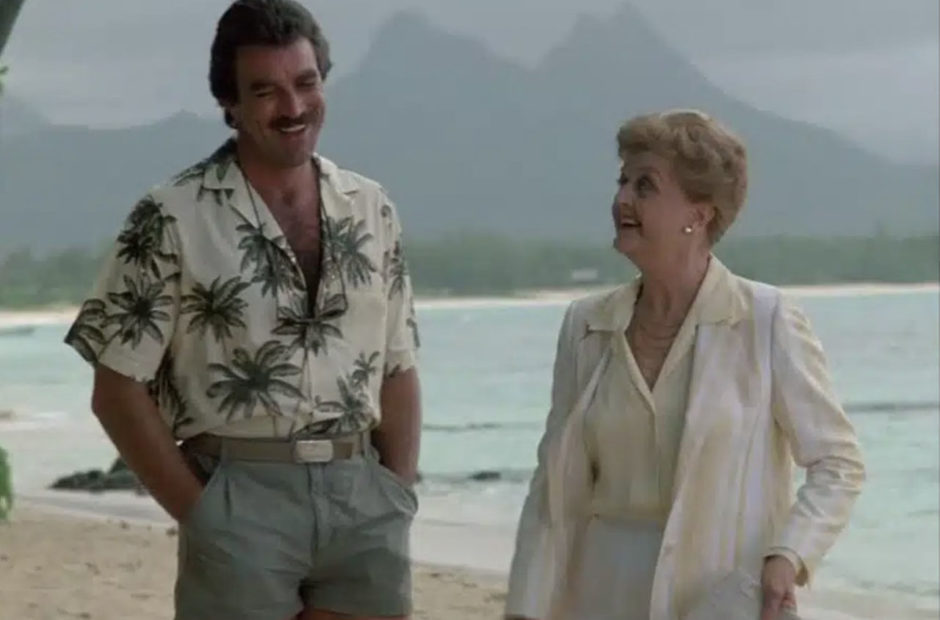
There was a time when tuning into your favorite broadcast network show felt a bit like a hallucination. You could be watching a lighthearted Hawaiian private investigator track down a stolen artifact, and suddenly, an elderly mystery novelist from Maine would wander onto the screen to help him crack the case.
This was the television crossover event. Long before massive cinematic universes normalized the idea of dozens of intellectual properties sharing the same airspace, broadcast networks occasionally decided to smash two entirely different television shows together. The results were incredibly lucrative, highly publicized, and almost always logistically unhinged.
The Sweeps Month Synergy
Much like the “bottle episode” and the “very special episode,” the massive crossover event was born primarily out of a desperate need for ratings. Networks almost exclusively deployed these stunts during a sweeps month, the highly competitive periods where local affiliate stations set their advertising rates.
The business logic was flawless. If a network had a massive hit at 8:00 PM and a struggling new show at 9:00 PM, they simply sent the star of the 8:00 PM show into the 9:00 PM time slot. The network heavily promoted the “two-hour television event,” forcing fans of the hit show to stick around for the second hour just to see how the story ended. It was an aggressive, undeniable way to cross-pollinate audiences and artificially inflate viewership numbers across an entire evening block.
The Logistical Nightmare
While the business side was easy to understand, the physical reality of producing a crossover was a nightmare for the crew. You were essentially dealing with two separate productions that had their own writing staffs, lighting setups, union rules, and catering budgets.
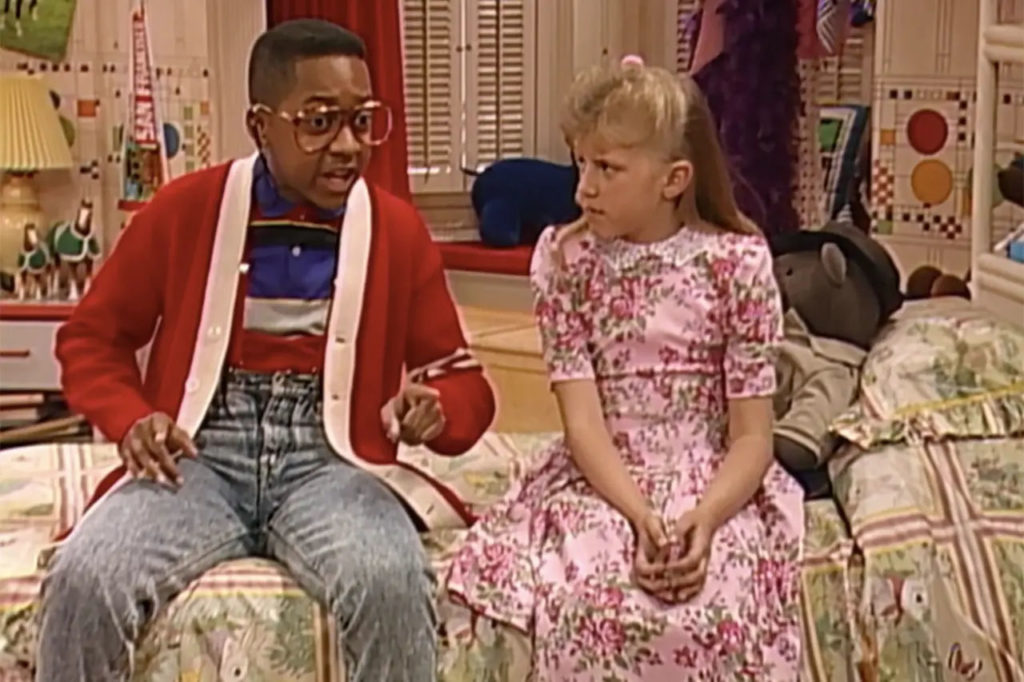
If the two shows were owned by the same production company and filmed on the same studio lot, the friction was minimal. This is why ABC’s TGIF block had constant crossovers; Steve Urkel from Family Matters could easily walk across the Warner Bros. lot to teach Stephanie Tanner a lesson on Full House. It was entirely in-house.
But when the shows were shot in different cities, things became highly complex. The most critically acclaimed crossover of the 1990s was the blending of NBC’s Law & Order (shot in New York) and Homicide: Life on the Street (shot in Baltimore). Because the shows had vastly different visual styles and pacing, the crews had to fly the actors back and forth across the East Coast, completely disrupting both production schedules just to build a single cohesive murder mystery.
The Tonal Whiplash
The greatest side effect of the broadcast crossover was the sheer tonal absurdity. Networks rarely cared if the two shows actually belonged in the same universe; they only cared if the demographics matched.
The pinnacle of this absurdity occurred in 1986 when CBS crossed Magnum, P.I. with Murder, She Wrote. The first hour featured Tom Selleck dodging bullets and getting into high-speed Ferrari chases in Hawaii. The second hour immediately slowed down to feature Angela Lansbury quietly deducing a murder plot while drinking tea. The tonal shift was completely jarring, but the event drew over 40 million viewers. It worked perfectly.
The Corporate Era
Today, the wild, chaotic energy of the crossover event is largely dead. We still see crossovers, but they are highly sanitized corporate products. Entire nights of television are built from the ground up by a single creator to be inherently connected, like Dick Wolf’s Chicago Fire, Chicago Med, and Chicago P.D. universe on NBC.
There is no logistical friction or tonal whiplash anymore because the shows are essentially the exact same product in a different uniform. The era of taking two completely disparate, tonally clashing hit shows and violently smashing them together for a quick ratings grab belongs entirely to the classic broadcast era.