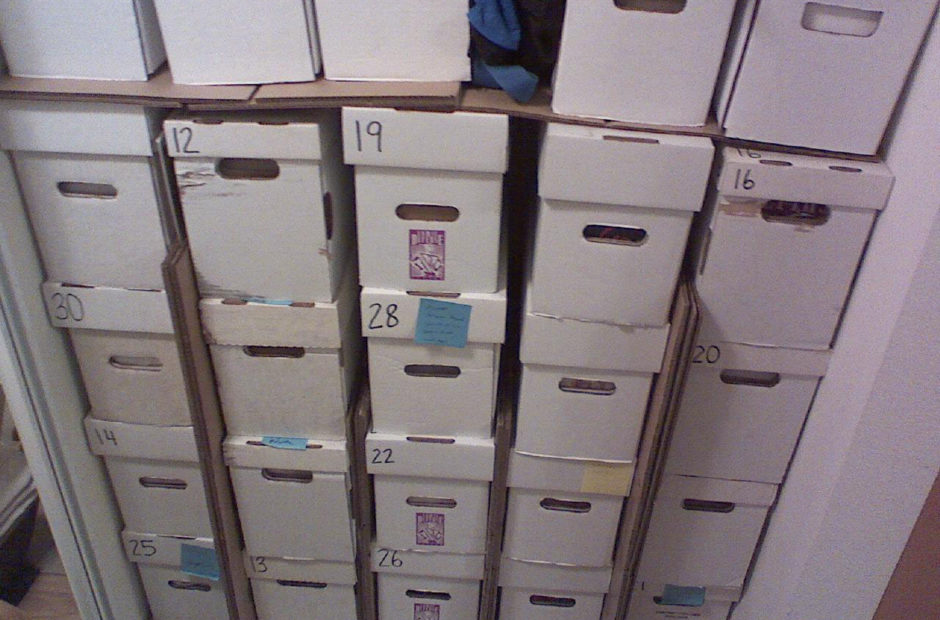
Figuring out how to organize your comic book collection is easy enough when you have 50 issues sitting in a short box. Once you’ve accumulated a few thousand comics, however, finding a particular issue can become an adventure you never intended to have.
Maybe you’re standing in a comic shop trying to remember whether you already own Uncanny X-Men #217. Perhaps you’re looking for an issue you bought years ago, only to discover it could be in any one of 15 long boxes. Or maybe you’ve finally decided to do something about the growing pile of comics that never quite makes it into the collection.
Whatever brought you to this point, organizing your comics doesn’t have to become another hobby in itself. You need a system that makes sense to you, enough room to maintain it, and some way of keeping track of what you own.
Start With a System You Can Actually Maintain
The first decision is how you want to sort everything. For most collectors, alphabetical order by series title is the simplest approach, and it’s the one I’d recommend unless you have a particular reason to do something different.
Under that system, Action Comics goes with the A titles, Batman goes with the B titles, and Uncanny X-Men goes with the U titles. Within each series, the issues are arranged numerically. You don’t have to remember which publisher released something or decide whether a team-up belongs with one character or another. You just need to know the title.
Of course, there are collectors for whom that approach makes less sense. Someone building an extensive Batman collection might prefer to keep Batman, Detective Comics, Batman and Robin, and related miniseries together. Another collector might separate everything by publisher before alphabetizing the titles. If your collection focuses on a particular era, chronological organization might be appealing.
Those systems are perfectly workable, but they introduce decisions that alphabetical sorting largely avoids. If you’re organizing by character, where does World’s Finest Comics belong? If you’re sorting by publisher, what happens when a property changes publishers? And if you’re organizing chronologically, are you using cover dates or actual publication dates?
You can establish rules for all of those situations, but the more complicated your rules become, the more you’ll need to remember when filing new purchases. That’s why I favor alphabetical order for a general collection. It’s not exciting, but it gets the job done.
The Problem With Comic Book Numbering
Alphabetical order solves one problem, but modern comic publishing has created another: publishers really, really like launching new #1 issues.
Take Avengers, for example. Marvel has launched multiple series using that title, each beginning with a new first issue. If you simply file every issue of Avengers together by number, you’ll quickly discover that you have several copies of #1 that aren’t actually the same comic.
The easiest solution is to separate different publishing runs by their starting years. You might have Avengers (1963), Avengers (1998), and Avengers (2010), with the issues arranged numerically within each group.
You’ll sometimes see these identified by volume numbers instead, but publication years are often easier to work with. Volume numbering isn’t always presented consistently across publishers, databases, and collector references, while the year a series began provides a useful way to distinguish one run from another.
Legacy numbering can complicate matters further. Publishers sometimes return to an older numbering sequence after years of relaunches, meaning a title might jump from a relatively low issue number to one in the hundreds. In those cases, I’d keep the issues with the publishing run they belong to rather than trying to force every issue into one uninterrupted numerical sequence.
The goal is to be able to find the comic you’re looking for, not to make the publisher’s numbering decisions appear more logical than they actually are.
What About Crossovers, Variants, and Duplicate Issues?
Crossovers are where collectors can spend an extraordinary amount of time arguing with themselves about organization.
Consider Batman: A Lonely Place of Dying, the 1989 storyline that runs through issues of Batman and The New Titans. You could pull those issues together and store them as a complete storyline, but that would leave gaps in both regular series.
I’d prefer to keep the comics under their respective titles and use an inventory or reading-order list to track the crossover. That way, when you’re looking for Batman #440, it’s exactly where you’d expect it.
There are exceptions. If you collect complete crossover events and enjoy having every issue together, you can dedicate a box to them. Just remember that you’ve created an exception to your normal filing system, and make sure you can find those issues later.
Variant covers are considerably easier. If you own three covers of the same issue, I’d keep them together before moving on to the next issue number. When available, arrange them by their cover designations, such as A, B, and C.
Duplicate copies can stay together as well, although it may make sense to separate comics you intend to sell or trade from your permanent collection. If you do that, record where the extra copies are stored. Otherwise, you may end up buying another copy of something you already own.
Choosing Comic Boxes and Where to Put Them
Once you’ve settled on an organization system, you need somewhere to put everything. Traditional cardboard comic boxes remain a practical choice, and plastic comic storage boxes are another option. The bigger decision is often whether to use long boxes or short boxes.
Long boxes hold more comics, so you need fewer containers to buy and label. Unfortunately, they can also become extremely heavy when filled. Anyone who has moved a substantial comic collection knows that a long box doesn’t look particularly intimidating until you’ve carried the tenth one across a room.
Short boxes hold fewer comics, but they’re easier to lift, move, and fit onto shelving. If you regularly access your collection, that convenience can outweigh the additional boxes you’ll need.
Think about the storage location before buying a roomful of shelving. Comic books are primarily paper, which means moisture is a serious concern. The Library of Congress recommends avoiding basements, attics, and garages for valuable collections because of the environmental conditions and water risks commonly associated with those spaces.
Ideally, your boxes should be in a reasonably cool, dry, stable indoor environment, away from direct sunlight and potential water problems. Keeping them off the floor provides some additional protection if a pipe leaks or water enters the room.
That doesn’t mean putting every long box on the highest shelf you can find. A full long box can weigh dozens of pounds, and lifting one down from above shoulder height is an unnecessary risk. You want the boxes elevated enough to reduce exposure to minor water intrusion, but low enough that you can retrieve them safely.
Sturdy shelving is worth considering, particularly for a large collection. Check the manufacturer’s weight limits, including the capacity of individual shelves, and remember that several full boxes can place a substantial load on one section of a shelving unit.
Whatever containers you choose, don’t pack them so tightly that retrieving an issue requires forcing the surrounding comics apart. Leave enough room to browse comfortably, but not so much that the comics constantly fall over or lean at awkward angles.
Labels, Dividers, and the Problem of Growing Collections
Now that everything has a home, make sure you can identify what’s in each box without opening it.
Numbering your boxes is a good starting point. A label reading “Box 12: Batman (1940), Issues #200-350” tells you considerably more than one reading “DC Comics.” The exact issue ranges will depend on what you own and how many comics fit in the box, but the principle is simple: make the labels specific enough to be useful.
I’d recommend giving every box a permanent number, even if its contents change. That number can serve as the location reference in your collection inventory. If you eventually move some comics from Box 12 into Box 18, you can update their records without having to renumber the entire collection.
Dividers make finding individual series easier, especially in boxes containing numerous titles. You don’t necessarily need one for every three-issue miniseries, but they’re useful for identifying larger runs and separating different volumes of titles with the same name.
One problem you’ll eventually encounter is that collections don’t stop growing just because you’ve finished alphabetizing them.
Imagine filling 10 boxes in perfect alphabetical order, leaving no extra space anywhere. The following week, you buy several back issues that belong near the beginning of Box 2. Adding them means moving comics into Box 3, which pushes other comics into Box 4, and suddenly you’re reorganizing half the collection.
Leaving a little room in boxes containing titles you’re actively collecting can reduce how often that happens. You may also find it useful to keep completed runs together while giving ongoing series more space.
There’s no permanent solution to the problem. Eventually, a growing collection will require some rearranging. The trick is to avoid creating a system where every new purchase causes a chain reaction through a dozen boxes.
Keeping Track of What You Own
Even the most carefully organized collection won’t help much when you’re standing in a comic shop trying to remember whether you need issue #37 or #38.
That’s where a collection inventory becomes useful.
You don’t need to record every detail about every comic. For most collectors, the essentials are the series title, starting year or volume, issue number, variant or printing when applicable, and storage location. Recording duplicate quantities is also useful, particularly if you buy collections or regularly pick up back issues.
You can add condition, purchase price, estimated value, creator information, or other details if those things matter to you. Remember that every additional field adds work when entering new comics.
Dedicated comic collection apps can simplify the process by providing searchable databases and other cataloging tools. Three services worth investigating are CLZ Comics, League of Comic Geeks, and StashMyComics.
Depending on the service and its current features, you may be able to search for issues, scan barcodes, maintain wish lists, track variants, and record which box contains each comic. Check pricing and subscription requirements before committing to one, and pay particular attention to whether you can export your collection data. You don’t want years of inventory work trapped in a service you eventually decide to stop using.
If you prefer to maintain your own records, a spreadsheet works perfectly well. Microsoft Excel, Google Sheets, or another spreadsheet program can handle a straightforward inventory without requiring specialized software.
A basic spreadsheet might look like this:
| Series | Year | Issue | Version | Box |
|---|---|---|---|---|
| Batman | 2011 | 1 | Cover A | 12 |
| Batman | 2011 | 1 | Cover B | 12 |
| Batman | 2011 | 2 | Cover A | 12 |
| Detective Comics | 2011 | 1 | Cover A | 15 |
A spreadsheet lets you control everything. You can add columns, sort records, maintain a separate want list, or divide the collection into different worksheets. The disadvantage is that you’ll generally need to enter more information yourself rather than relying on a built-in comic database.
For a few hundred comics, that may be perfectly manageable. For several thousand, a dedicated collection app could save considerable time.
Whichever approach you choose, back up your inventory. Losing a collection database after spending months entering comics is the sort of experience nobody needs to have twice.

Credit: iStock/deberarr
What If You Already Have 20 Boxes of Unsorted Comics?
Starting an organization system with a small collection is one thing. Facing a wall of unsorted long boxes is another.
The temptation is to empty everything onto the floor and start alphabetizing. Unless you have an enormous amount of clean, dry workspace and plenty of uninterrupted time, that’s probably going to create more problems than it solves.
Instead, work in stages.
Start by sorting comics into broad alphabetical groups. You might use A-F, G-L, M-R, and S-Z, adjusting the divisions according to how many comics you have. Once you’ve separated the collection into manageable groups, you can sort each group by series and issue number.
There’s no requirement to finish everything in one session. In fact, organizing a box or two at a time may be far more realistic than attempting to process thousands of comics over a weekend.
As you complete a section, transfer the comics into their permanent boxes and label them immediately. Keep the organized boxes separate from the ones you haven’t processed yet so you don’t accidentally undo your work.
If you’re building an inventory, this is a convenient time to enter the comics because you’re already handling them. However, don’t let cataloging become such a time-consuming process that you never finish physically sorting the collection. You can record the box contents first and return later to add more detailed information.
It’s also worth resisting the urge to turn the project into a grading session. Unless you’re specifically evaluating books for sale, you don’t need to stop and assign a condition grade to every issue before putting it away.
The goal is to organize and make the collection accessible. You can always refine the inventory afterward.
If you’re just getting into the hobby and haven’t built much of a collection yet, our guide to starting a comic book collection covers choosing what to collect, finding comics, and understanding the different formats. Once those comics start accumulating, an organization system will make life considerably easier.
Keeping the Collection Organized
Once everything is sorted, the biggest threat to your new system may be the stack of comics you bring home next Wednesday.
It’s easy to tell yourself you’ll file them later. Then another week passes, another stack arrives, and before long you’ve created a second collection consisting entirely of comics you haven’t put away.
Try to establish a routine for handling new purchases. Check them against your inventory, add anything that isn’t already recorded, and put the issues in their proper locations.
If you prefer to keep unread comics separate, that’s fine. A designated box for recent purchases can be useful, especially if you buy several titles regularly. Just make sure you eventually move those comics into the main collection rather than allowing the temporary box to become a permanent fixture.
And when you move comics between boxes, update their inventory locations. Nothing defeats the purpose of cataloging quite like discovering that the issue you’re looking for was moved three years ago and nobody updated the record.
Comic collecting should be enjoyable. An organization system should make it easier to find something you want to read, identify an issue you’re missing, or revisit a favorite series without spending an hour searching through boxes.
If you can do those things reliably, your system is doing its job. It doesn’t need to be any more complicated than that.