The Phantom Zone is one of the most unusual places in DC Comics. Originally created as a prison for Krypton’s most dangerous criminals, this mysterious dimension has become an important part of Superman’s mythology, allowing enemies from his destroyed homeworld to survive for decades and eventually threaten Earth.
General Zod is easily its most famous prisoner, but he is far from the only Kryptonian to have spent time there. The Phantom Zone has housed scientists, murderers, political enemies, and even innocent people whose circumstances made imprisonment the only way to save their lives. Its history also raises an uncomfortable question about Kryptonian justice: Is trapping someone in a ghostlike existence really more humane than putting them to death?
What Is the Phantom Zone?
The Phantom Zone is an extradimensional realm that exists outside the ordinary physical universe. In its classic depiction, people imprisoned there become intangible, ghostlike figures who cannot physically interact with the world around them. They can observe events in the normal universe under certain circumstances, but those on the outside generally cannot see or hear them without specialized technology.
Unlike a conventional prison, there are no cells, walls, or guards separating the inmates. Prisoners occupy the same strange dimension, unable to escape through ordinary means. Time also behaves differently within the Zone. In many versions of Superman’s history, inmates do not age normally while imprisoned, allowing them to survive long after they would otherwise have died.
That last property is particularly important because Krypton was destroyed shortly after many of its most notorious criminals were sentenced. While the planet’s population perished, those confined to the Phantom Zone survived, leaving Superman with an unexpected collection of enemies from a world he never had the opportunity to know.
When Did the Phantom Zone First Appear?
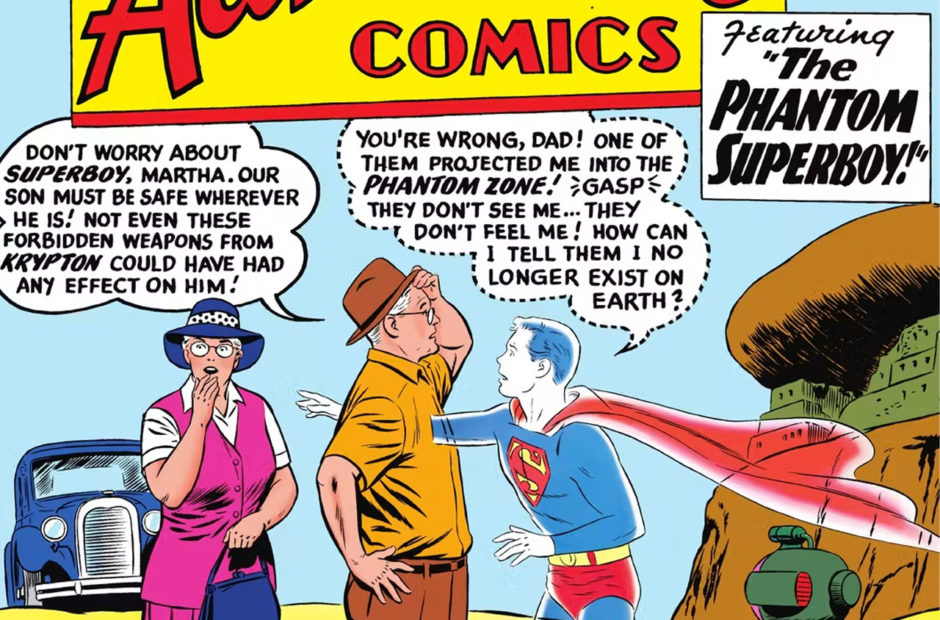
The Phantom Zone made its comic book debut in Adventure Comics #283 in 1961, in a Superboy story written by Robert Bernstein and illustrated by George Papp. The issue also introduced General Zod, establishing a connection between the extradimensional prison and one of Superman’s most enduring adversaries.
In the original continuity, Superman’s father, Jor-El, developed the Phantom Zone projector as an alternative to more conventional forms of punishment. Rather than executing criminals or keeping them in physical prisons, Kryptonian authorities could banish them to another dimension for the duration of their sentences. Once the sentence expired, the prisoner could theoretically be returned to the physical world.
The idea fit neatly into the expanding mythology of Krypton during the Silver Age. Superman’s homeworld was increasingly depicted as a technologically advanced civilization with scientific achievements far beyond those of Earth. Unfortunately, its ability to send criminals into another dimension did not prevent Krypton’s destruction, and the prison system continued operating long after the society responsible for it had ceased to exist.
DC has revisited the Zone’s creation several times. In the 2024 Action Comics storyline “Phantoms,” writer Mark Waid explored Jor-El’s involvement in its development and the consequences of Krypton’s decision to use the dimension as a prison. That story also brought renewed attention to Aethyr, a mysterious entity associated with the realm.
How Does the Phantom Zone Work?
The most recognizable method of entering the Phantom Zone is through a projector, a piece of Kryptonian technology capable of opening a passage between dimensions. Depending on the story, the device may resemble a handheld weapon, a large scientific instrument, or an elaborate portal generator. Its basic function remains the same: transferring someone out of the physical universe and into the Zone.
In the classic comics, prisoners become insubstantial after entering the dimension. They cannot touch physical objects or directly communicate with people outside the Zone, although specialized devices sometimes allow contact between the two realities. Their bodies also cease aging in the conventional sense, effectively suspending their physical development until they are released.
However, the Phantom Zone is not necessarily a peaceful state of suspended animation. Prisoners remain conscious, and the experience of spending years or decades trapped in an intangible existence can have profound psychological consequences. Some inmates retain their memories and personalities throughout their confinement, while others become increasingly consumed by resentment toward the people responsible for imprisoning them.
Escape is possible, although it usually requires outside interference, unusual technology, or a disruption in the barriers separating dimensions. The projector can also be used to release prisoners, which creates an obvious security problem whenever the device falls into the wrong hands. Over the years, Superman has repeatedly faced situations in which someone accidentally or deliberately opens the Zone and unleashes its inhabitants.
General Zod and the Phantom Zone Criminals
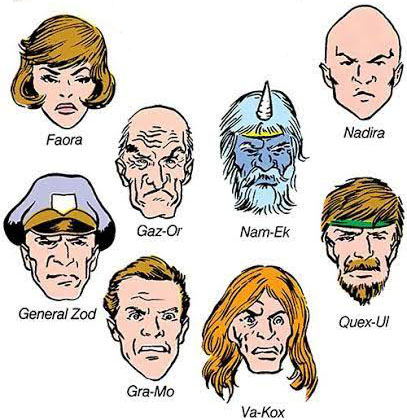
General Dru-Zod is the Phantom Zone’s most famous inmate, although he wasn’t always its most prominent villain. Originally introduced as a Kryptonian military commander who attempted to seize control of his homeworld, Zod was sentenced to the Zone for his crimes. His imprisonment let him survive Krypton’s destruction, and his eventual escape put him in conflict with Jor-El’s son.
During the Silver Age, Zod was one member of a larger collection of Kryptonian criminals. Jax-Ur, a scientist responsible for destroying Krypton’s inhabited moon, was often portrayed as particularly dangerous and sometimes served as the group’s leader. Other prisoners included Quex-Ul, who was convicted of killing a protected Kryptonian creature, and Dr. Xadu, another scientist whose criminal activities earned him a sentence in the extradimensional prison.
The roster also included Faora Hu-Ul, a deadly Kryptonian criminal whose history varies significantly across continuities. Some versions portray her as a serial killer with exceptional martial arts abilities, while others connect her more directly to Zod’s military ambitions. The films and television adaptations have frequently combined or reinterpreted elements of these characters, creating different groups of Phantom Zone prisoners.
One particularly important change came with the 1978 film Superman and its 1980 sequel, Superman II. The movies established Zod, Ursa, and Non as a trio of Kryptonian criminals, with Terence Stamp’s performance helping transform Zod into the character most audiences associate with the Phantom Zone. Ursa and Non were created for the films, although later comics incorporated versions of them into Superman’s mythology.
As DC itself has noted in its history of General Zod, the character’s cinematic popularity significantly elevated his importance compared with other Phantom Zone criminals. While Jax-Ur had frequently been the more prominent antagonist in earlier stories, Zod eventually became the defining representative of Krypton’s imprisoned villains.
Not Everyone in the Phantom Zone Is a Criminal
Although Krypton established the Phantom Zone as a penal system, some of its most important occupants were never criminals at all. The dimension’s unusual relationship with time made it useful for preserving people who otherwise faced death, even if the experience of imprisonment was far from pleasant.
One of the best-known examples is Mon-El, a young hero from the planet Daxam. In his classic origin, Mon-El met Superboy and was initially mistaken for another Kryptonian survivor. Unfortunately, Daxamites are vulnerable to lead, and Mon-El suffered potentially fatal poisoning after exposure to the metal.
Unable to cure him with the resources available at the time, Superboy placed Mon-El in the Phantom Zone to prevent the poisoning from killing him. Because the dimension suspended his physical condition, Mon-El survived until they could develop a treatment. He later became an important member of the Legion of Super-Heroes, connecting the Phantom Zone to another major part of DC’s science-fiction mythology.
Mon-El’s situation illustrates one of the Zone’s strangest contradictions. A dimension designed to punish criminals could also preserve innocent lives, but doing so required subjecting those individuals to the same isolation and intangible existence experienced by convicted prisoners.
Is the Phantom Zone Actually Humane?
Krypton’s authorities regarded the Phantom Zone as an alternative to execution, but the ethics of that decision become considerably more complicated when considering what imprisonment actually involves. The prisoners remain conscious while being denied physical interaction with the world around them, potentially for years or decades. Even those serving relatively short sentences could experience profound psychological consequences.
The destruction of Krypton made the situation considerably worse. With the civilization responsible for administering the sentences gone, there was no longer a functioning legal system to determine when prisoners should be released. Someone sentenced to a limited period of confinement could effectively remain trapped indefinitely unless another person discovered the necessary technology and chose to free them.
Superman has inherited much of this problem. As one of Krypton’s last surviving representatives, he possesses both the knowledge and, at various times, the technology needed to interact with the Phantom Zone. That leaves him facing difficult decisions about whether releasing a prisoner represents an act of justice or an unacceptable danger to Earth.
The dilemma becomes particularly uncomfortable when the prisoner is someone like Mon-El, who committed no crime, or when questions arise about whether Krypton’s legal system convicted the right person in the first place. The Zone may have been intended as a humane solution, but its operation often reveals the darker side of Krypton’s supposedly enlightened civilization.
The Phantom Zone in Movies and Television
The Phantom Zone has appeared in numerous Superman adaptations, although its appearance and rules vary considerably between them. The most influential interpretation remains the one seen in Superman and Superman II, where Zod, Ursa, and Non are imprisoned inside a floating, two-dimensional crystalline surface. The visual was dramatically different from the ghostlike realm of the comics, but it became one of the most recognizable depictions of the prison.
In Man of Steel (2013), General Zod and his followers are sentenced to 300 cycles of somatic reconditioning in the Phantom Zone following their failed military coup. The prisoners are placed aboard the Kryptonian prison ship Black Zero and transported into the dimension, only to be freed when Krypton is destroyed shortly afterward. Having survived the catastrophe, Zod and his forces repurpose the ship’s technology to travel through space, eventually reaching Earth in search of Kal-El.
Television has explored the concept in different ways. Smallville presented the Zone as a harsh, desolate dimension populated by dangerous criminals and other supernatural threats. The animated Justice League series also used the Phantom Zone in its version of Superman mythology, while Superman: The Animated Series incorporated the dimension into stories involving Kryptonian criminals.
These adaptations demonstrate how flexible the concept has become. The Phantom Zone can function as a science-fiction prison, a desolate alternate world, or a nearly abstract dimension depending on the needs of the story, while retaining its fundamental connection to Krypton’s criminal justice system.
How the Phantom Zone Has Changed in Modern DC Comics
Following the 1985–1986 Crisis on Infinite Earths storyline, DC substantially revised Superman’s continuity, including the history of Krypton and its surviving inhabitants. The Phantom Zone remained part of the mythology, but writers reworked its origins, prisoners, and relationship to Superman as they introduced new interpretations of the character’s past.
Later stories expanded the Zone beyond its original role as a prison for Kryptonian criminals. In Steve Gerber’s 1982 Phantom Zone miniseries, the dimension became the setting for a much larger supernatural and cosmic mystery involving Aethyr, an entity associated with the realm. DC would revisit Aethyr in later stories, including the 2024 “Phantoms” storyline in Action Comics.
The Zone also became a major threat to Earth itself during Brian Michael Bendis’s 2018 Superman run. In that storyline, Earth was transported into the Phantom Zone, exposing the planet and its inhabitants to the dangers of the extradimensional prison. The crisis forced Superman and the Justice League to confront the consequences of an entire world becoming trapped in a place never intended to contain one.
Modern stories have continued exploring the dimension’s history and its relationship with Jor-El. In Action Comics #1075 in 2024, Superman traveled into Krypton’s past and witnessed events surrounding his father’s creation of the Phantom Zone. The storyline complicated the idea that the prison was simply an advanced piece of Kryptonian technology, introducing additional questions about the forces associated with the dimension.
Why the Phantom Zone Matters to Superman
Few places in the DC Universe represent Krypton’s legacy as clearly as the Phantom Zone. It preserves people who would otherwise have died with Superman’s homeworld, but many of those survivors are criminals who view Jor-El and his family as enemies. For Superman, that means the dimension offers both a connection to his lost heritage and a recurring source of danger.
It also complicates the idea that Krypton was an ideal civilization destroyed by an unavoidable catastrophe. The Phantom Zone demonstrates that Kryptonian society had criminals, political conflicts, questionable legal practices, and technologies whose consequences its creators did not fully understand. Superman may have inherited Krypton’s extraordinary scientific achievements, but he has also inherited some of its most troubling mistakes.
And as long as the barriers between dimensions can be breached, the possibility remains that another prisoner will eventually escape, bringing a piece of Krypton’s unfinished history back into Superman’s life.
More DC Comics Explained
Explore more of the characters, organizations, and mythology that make up the DC Universe.
Frequently Asked Questions About the Phantom Zone
Who created the Phantom Zone?
In the classic Superman continuity, Jor-El developed the Phantom Zone projector, allowing Kryptonian authorities to send criminals into an extradimensional prison. Later stories have explored the dimension’s earlier existence and the mysterious forces associated with it.
Can someone die in the Phantom Zone?
In many classic stories, prisoners do not age normally while confined to the Phantom Zone, allowing them to survive for extraordinarily long periods. However, the dimension’s properties have changed between continuities, and some modern interpretations portray it as a physically dangerous environment.
How did General Zod escape the Phantom Zone?
Zod has escaped through different methods depending on the continuity. These have included technological interference, damage to the barriers separating dimensions, and the actions of people outside the Zone. In Superman II, his escape was caused by the shockwave from a nuclear explosion in space.
Is the Phantom Zone part of the DC Multiverse?
Yes. The Phantom Zone is an extradimensional realm within DC’s larger cosmology, although its exact relationship to individual universes and the wider Multiverse has varied across different stories.