Television ensembles change all the time. Supporting characters leave, new actors arrive, and long-running shows gradually replace pieces of their original casts. Losing the person at the center of the entire series is something else entirely.
A successful television show is often sold around a character audiences expect to see every week. That character may provide the premise, serve as the audience’s entry point into the story, or even have their name in the title. Removing them creates a problem that can’t necessarily be solved by hiring another actor and continuing as though nothing happened.
Yet television history is filled with shows that tried.
Some successfully discovered that their ensembles were strong enough to carry the series forward. Others introduced a new lead and essentially created a second version of the same show. A few survived in the most literal sense possible, producing additional seasons that demonstrated just how important the departed character had actually been.
For this list, “survived” doesn’t necessarily mean “improved.” The question is whether a series lost a character who had previously appeared essential to its identity and continued long enough afterward to establish what the show looked like without them.
Sometimes the answer was surprisingly successful. Sometimes it very much wasn’t.
Here are 12 TV shows that survived losing their main character.
Valerie / Valerie’s Family / The Hogan Family
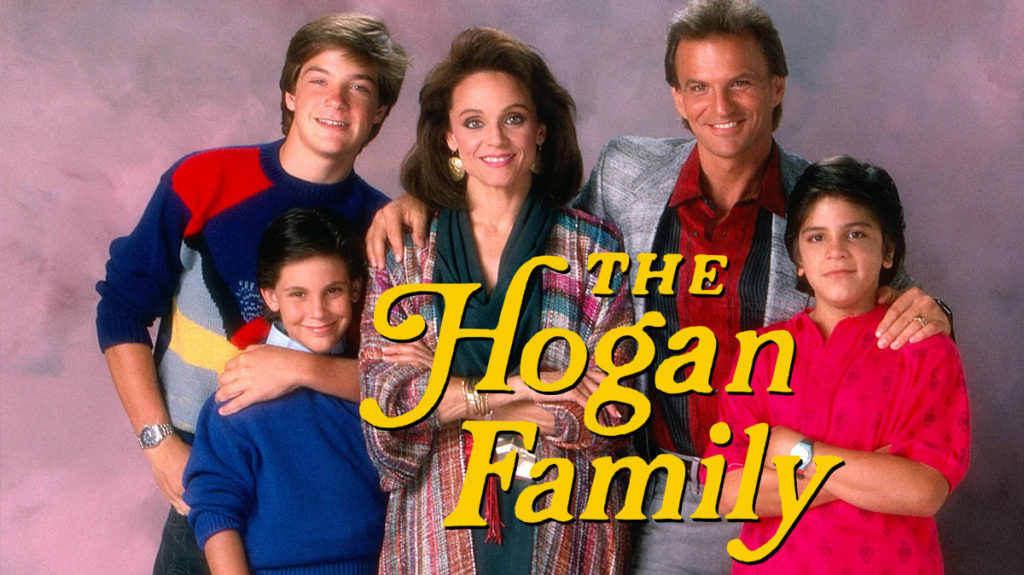
Few television series have faced a more literal version of this problem than Valerie. Valerie Harper didn’t simply play the lead character. The sitcom carried her name. When a contract dispute resulted in Harper being fired after the second season, the producers had to figure out how to continue Valerie without Valerie.
Who the show lost
Harper starred as Valerie Hogan, the mother of three sons who handled most of the parenting while her airline-pilot husband Michael was frequently away from home. Jason Bateman played eldest son David, with Jeremy Licht and Danny Ponce playing twins Mark and Willie.
The series premiered on NBC in 1986 and initially revolved around Valerie dealing with her sons and the ordinary complications of family life. Behind the scenes, however, Harper and production company Lorimar became embroiled in a contract dispute before the third season.
Lorimar fired Harper, a decision she challenged in court. A jury later concluded that she had been wrongfully terminated and awarded Harper damages as well as a share of the show’s profits.
None of that changed the immediate production problem. NBC still had a returning sitcom named Valerie without Valerie Harper.
How the show survived
The producers didn’t recast Valerie Hogan. They killed her.
Season 3 begins after Valerie has died in an automobile accident, leaving Michael and the boys grieving while trying to rebuild their lives. Sandy Duncan joins the series as Michael’s sister, Sandy Hogan, who moves into the family home and becomes the new principal adult female character.
The title also begins an unusual evolution. Valerie becomes Valerie’s Family: The Hogans before eventually settling on The Hogan Family, finally removing the name of the character who was no longer there.
The transition worked well enough for the series to continue for four additional seasons after Harper’s departure, first on NBC and later on CBS. Bateman’s David also became increasingly important, giving the younger ensemble more responsibility rather than simply attempting to make Sandy a substitute Valerie.
The circumstances surrounding Harper’s departure were contentious, but the television solution was remarkably direct. The producers acknowledged that Valerie Hogan couldn’t simply disappear, allowed her death to permanently change the family, and rebuilt the sitcom around the people she left behind.
A show called Valerie survived losing Valerie. By the time it ended, it wasn’t even called Valerie anymore.
Where to watch: Check current streaming availability; check availability on physical media and digitally.
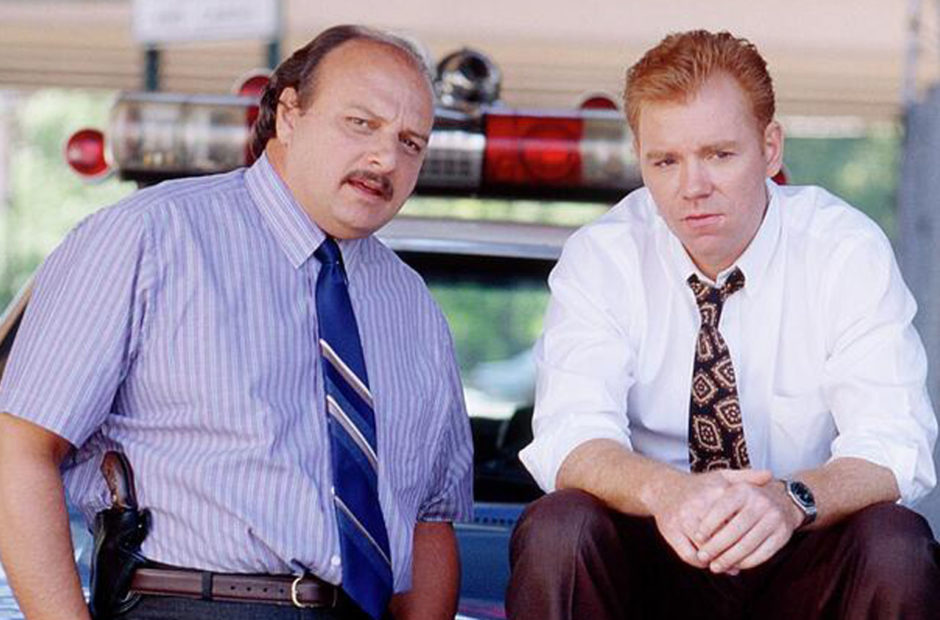
NYPD Blue
When NYPD Blue premiered in 1993, David Caruso’s Detective John Kelly appeared positioned to lead ABC’s groundbreaking police drama. Dennis Franz’s Andy Sipowicz was enormously important from the beginning, but Kelly was the younger detective through whom much of the audience initially entered the world of the 15th Precinct. Caruso’s departure early in Season 2 forced the series to prove that the precinct was bigger than the character who had originally occupied its center.
Who the show lost
Kelly begins the series partnered with Sipowicz, whose alcoholism, anger, racism, and self-destructive behavior make him a much more difficult figure. Kelly has serious problems of his own, including a crumbling marriage and increasingly complicated professional decisions, but he initially provides a comparatively stable counterweight to Sipowicz.
Caruso became one of television’s most talked-about new stars following the first season, but negotiations over his future with the series deteriorated. His departure was incorporated into the opening episodes of Season 2 rather than occurring between seasons.
Kelly leaves the police department after becoming entangled in circumstances that threaten his career, and Caruso makes his final regular appearance only four episodes into the season.
How the show survived
Jimmy Smits joins the series as Detective Bobby Simone, becoming Sipowicz’s new partner and taking over much of the dramatic space Kelly had occupied. The writers don’t attempt to make Simone another John Kelly. His personality, history, and relationship with Sipowicz develop differently, allowing the series to move forward rather than continually reminding viewers of the character who left.
The larger transformation happens with Sipowicz.
A character who could initially appear almost impossible to build a long-running drama around gradually becomes the emotional center of NYPD Blue. Over 12 seasons, viewers watch Sipowicz experience sobriety, relapse, love, fatherhood, devastating losses, professional growth, and repeated confrontations with the ugliest parts of his own personality.
Other partners and detectives come and go, including Simone himself, but Sipowicz remains. The series that initially seemed positioned around John Kelly ultimately becomes inseparable from Andy Sipowicz’s long, difficult evolution.
Caruso’s departure could easily have destabilized a series only beginning its second season. Instead, NYPD Blue continued for more than a decade and discovered that the character who initially looked like its deeply flawed second lead was capable of carrying its emotional history all the way to the finale.
Where to watch: Check current streaming availability; sold on physical media and digitally.
ER
ER began with one of the strongest ensembles on television, but Dr. Mark Greene always occupied a special position within it. The series opens with Greene working the emergency room at County General, and Anthony Edwards spent eight seasons playing the physician who often seemed to embody everything the show wanted to say about the personal cost of practicing medicine.
By the time Edwards decided to leave, ER had already survived the departures of several major original cast members. George Clooney’s Doug Ross was gone. Julianna Margulies had followed him out. Eriq La Salle’s Peter Benton would also leave during Season 8. Losing Greene, however, represented something different. The series was preparing to continue without the character who had been one of its most consistent emotional anchors from the pilot onward.
Who the show lost
Greene isn’t the flashiest member of the original ensemble. He is frequently the person holding everything together while everyone around him is falling apart, although his own life gives him more than enough problems to handle. His marriage collapses, his relationship with his daughter becomes increasingly difficult, he is brutally attacked at the hospital, and eventually he develops a brain tumor.
Edwards’ departure was known in advance, giving the writers time to construct a genuine ending for Greene rather than suddenly removing him from the hospital. His cancer returns during Season 8, and Greene ultimately leaves Chicago to spend his remaining time with his family.
His death in “On the Beach” gives one of ER‘s defining characters an unusually complete farewell. The following episode brings the hospital staff together for his funeral before County General returns to doing what it always does: treating the next patient who comes through the doors.
How the show survived
The answer had been developing almost from the beginning. ER wasn’t ultimately about Mark Greene, Doug Ross, Carol Hathaway, Peter Benton, or any other individual character. It was about County General.
Noah Wyle’s John Carter, originally the inexperienced medical student learning his way around the emergency room, had gradually grown into one of the show’s most important characters. After Greene’s death, Carter was positioned to carry much of the institutional history connecting the newer cast with the original series. At the same time, characters including Abby Lockhart, Luka Kovac, Kerry Weaver and later additions such as Greg Pratt ensured that the drama didn’t simply become the John Carter show.
That model allowed ER to accomplish something few television dramas manage. The cast could continually regenerate because the emergency room itself provided the constant. Doctors and nurses arrived, developed relationships, built careers, burned out, moved away, and sometimes died, while County General remained.
ER continued for seven more seasons after Greene’s death, eventually reaching 15 seasons and 331 episodes. By the final years, almost every familiar face from the beginning was gone, yet the basic storytelling engine established in 1994 still worked.
The final season even used that history to bring the series full circle. Former characters returned, and the finale introduced Greene’s grown daughter Rachel as a prospective medical student. Mark Greene had been gone for years, but his connection to County General remained part of the institution’s history.
Losing Greene demonstrated why ER could survive losing almost anyone. The doctors were temporary. The emergency room was the main character that never left.
Where to watch: Check current streaming availability; sold on physical media and digitally.
Spin City
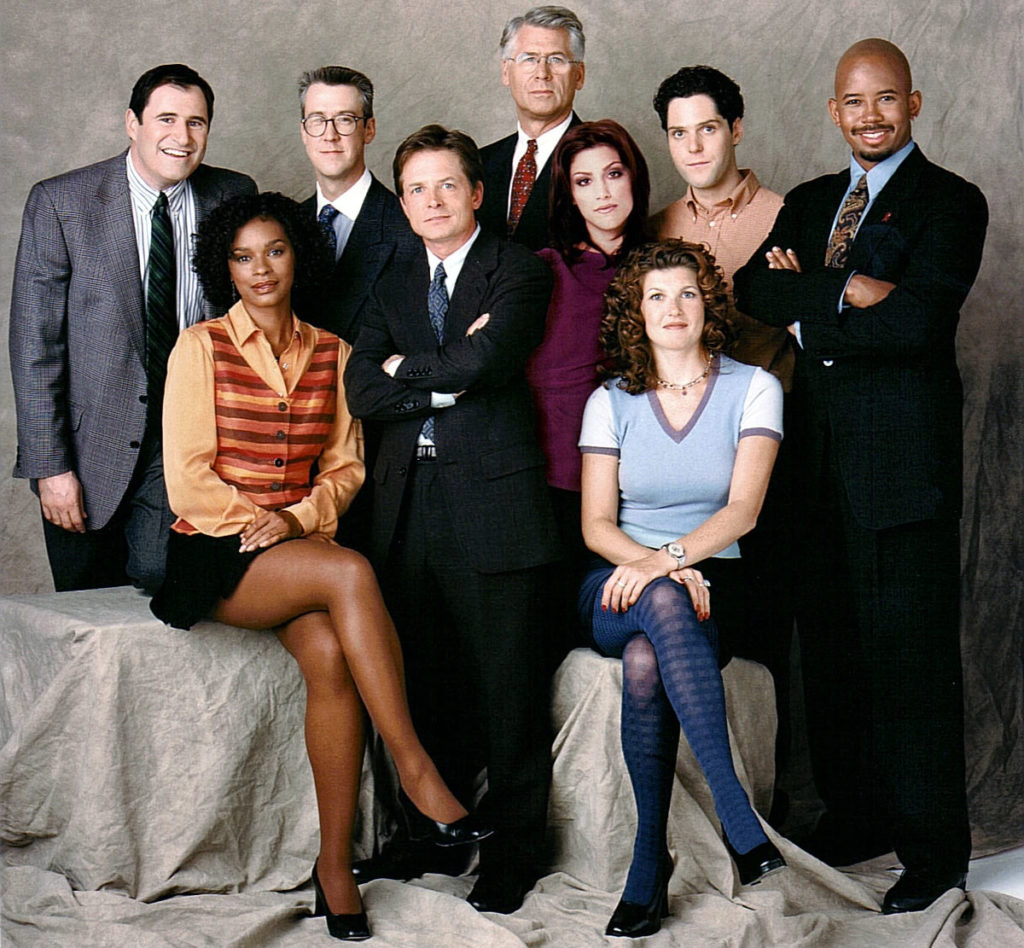
Spin City didn’t have to figure out whether its leading man was really its leading man. Michael J. Fox was unquestionably the center of the series. Mike Flaherty ran the New York City mayor’s office, solved its endless political disasters, and provided the character around whom the workplace ensemble revolved. When Fox left after four seasons, the producers couldn’t simply redistribute his stories among the remaining cast.
They needed another star.
Who the show lost
Fox had returned to regular television in 1996 as Deputy Mayor Mike Flaherty, the highly capable political operator charged with protecting Mayor Randall Winston from scandals, mistakes, bad publicity, and occasionally the mayor himself.
The role earned Fox enormous acclaim, but circumstances outside the series eventually made its demanding production schedule increasingly difficult. Fox had been diagnosed with Parkinson’s disease years earlier and publicly disclosed the diagnosis in 1998. In January 2000, he announced that the fourth season would be his last as a regular.
Fox explained that he wanted to relieve the strain of producing and performing in a weekly network series while devoting more time to his family and efforts toward finding a cure for Parkinson’s. His departure wasn’t a rejection of acting, and he would eventually return to television repeatedly in guest and recurring roles.
It nevertheless left Spin City without Mike Flaherty.
How the show survived
The producers made one of television’s clearest attempts to replace a departing lead with another lead. Charlie Sheen joined the series as Charlie Crawford, another deputy mayor who assumes Mike’s position in the Winston administration.
Sheen wasn’t asked to impersonate Fox. Charlie had a different personality and comic rhythm, with a more relaxed and frequently womanizing persona replacing Mike’s frantic efforts to maintain control of City Hall. Heather Locklear’s Caitlin Moore, who had joined during Fox’s final season, also became increasingly important and provided Charlie with his principal romantic storyline.
The transition preserved much of the show’s basic structure. Barry Bostwick remained Mayor Winston, while Richard Kind, Alan Ruck and Michael Boatman continued as members of the administration. The workplace still generated political crises and personal disasters every week. The biggest difference was the man standing in the middle trying to manage them.
The Sheen version of Spin City lasted two additional seasons, bringing the sitcom to six seasons and 145 episodes. Fox even returned for guest appearances during the final season, allowing Mike Flaherty and Charlie Crawford to share the screen.
The post-Fox years never completely escaped comparison with what came before them, which is almost inevitable when a series loses a performer as closely identified with its success as Michael J. Fox. But Spin City did something relatively uncommon: it replaced its unquestioned star, maintained the central premise, and remained on the air for another two years.
It wasn’t the same Spin City. There was no realistic way it could have been. The fact that there was still a Spin City at all made the experiment notable.
Where to watch: Check current streaming availability; sold on physical media and digitally.
Two and a Half Men
Charlie Sheen had already demonstrated that a sitcom could survive replacing Michael J. Fox when he joined Spin City. A decade later, Sheen found himself on the opposite side of the equation. This time he was the star leaving, and Two and a Half Men had to determine whether there was any reason for the series to exist without Charlie Harper.
It was a reasonable question. Charlie wasn’t simply one member of the ensemble. His Malibu home provided the show’s primary setting, his lifestyle generated much of its comedy, and the title itself referred to Charlie, his brother Alan, and Alan’s son Jake.
Who the show lost
Charlie Harper was essentially a heightened television persona built around Sheen’s established image. He was wealthy, charming, irresponsible, frequently drunk, and seemingly capable of attracting an endless succession of women while Alan struggled with virtually every aspect of adult life.
Behind the scenes, Sheen’s relationship with series creator Chuck Lorre and Warner Bros. Television deteriorated dramatically during the eighth season. Production was suspended and Sheen was eventually fired in March 2011, leaving the season several episodes shorter than originally planned.
Unlike a planned departure, there was no farewell episode waiting to send Charlie Harper on his way. The series simply stopped production with Sheen still occupying the center of it.
CBS nevertheless renewed Two and a Half Men for a ninth season, and Ashton Kutcher was hired as its new star.
How the show survived
Season 9 opens with Charlie Harper already dead. According to Rose, Charlie died in Paris after falling in front of a subway train, although the circumstances surrounding his death eventually become considerably more complicated.
Charlie disappearing created another practical problem: why would Alan continue living in Charlie’s house?
The solution was Walden Schmidt, a billionaire technology entrepreneur played by Kutcher. Walden buys the Malibu house and, through the peculiar logic that has always governed Alan’s living arrangements, allows Alan to remain there. The familiar setting survives even though its owner does not.
Walden wasn’t designed as another Charlie Harper. He was younger, enormously wealthy for completely different reasons, more emotionally vulnerable, and initially far less cynical. Jon Cryer’s Alan consequently became even more important because he provided continuity between the two versions of the series.
The transition was commercially successful enough to keep Two and a Half Men running for four additional seasons. Jake’s role eventually diminished as Angus T. Jones left the regular cast, making the title increasingly metaphorical, but Kutcher and Cryer carried the sitcom through its 12th and final season.
The series never forgot Charlie. References to him continued throughout the Kutcher years, and the finale constructed an elaborate storyline around the possibility that Charlie Harper had actually survived.
Whether the show was better or worse without Sheen is a separate question. What isn’t debatable is that CBS removed the character whose name, home, and lifestyle had defined the original premise and still produced nearly 100 additional episodes.
Where to watch: Check current streaming availability; sold on physical media and digitally.
The Office
The American version of The Office was always an ensemble comedy, but there was little ambiguity about who occupied its center. Michael Scott was the boss, the source of many of Dunder Mifflin Scranton’s problems, and the character most capable of turning an ordinary workday into a catastrophe. Steve Carell’s departure near the end of Season 7 therefore removed more than the show’s biggest star. It removed the person whose behavior had powered much of its comedy since the pilot.
Who the show lost
Michael begins the series as a painfully oblivious manager desperate to be loved by his employees. Over time, the American adaptation softens some of the harsher qualities inherited from David Brent and reveals a man who can occasionally be surprisingly competent, deeply loyal, and genuinely caring underneath his enormous need for attention.
That development made Michael increasingly difficult to imagine replacing. Jim and Pam provided the show’s central romance, Dwight became one of its most distinctive comic characters, and the supporting cast grew considerably over seven seasons, but Michael remained the person around whom the Scranton office usually revolved.
Carell’s contract ended after Season 7, and the writers gave Michael something television characters don’t always receive when their actors leave: a happy ending.
After becoming engaged to Holly Flax, Michael decides to leave Dunder Mifflin and move to Colorado with her. “Goodbye, Michael” allows him to quietly say farewell to his employees before departing one day earlier than they realize, avoiding the enormous goodbye celebration they had planned.
Then everyone had to come back to work.
How the show survived
The Office initially embraced the uncertainty surrounding Michael’s replacement. Will Ferrell appeared briefly as Deangelo Vickers, while the seventh-season finale turned the search for a new regional manager into an excuse for an extraordinary collection of guest stars and internal candidates.
Season 8 eventually installed James Spader’s Robert California above the Scranton branch while Andy Bernard became regional manager. Rather than finding another Michael Scott, the series distributed different pieces of his function among several characters.
The results were uneven. Michael had been uniquely useful because he could simultaneously be the boss, the disruptive comic force, and the emotional center of an episode. Replacing those functions required more complicated storytelling, and the final two seasons remain among the most debated portions of the series.
But The Office had spent seven years building an ensemble strong enough to continue generating stories. Dwight’s ambitions, Jim and Pam’s marriage, Andy’s increasingly erratic career, Angela and Dwight’s unresolved relationship, and the lives of the supporting employees all existed independently of Michael by the time he left.
The ninth and final season increasingly recognized that history, shifting attention toward the documentary itself and what years of being filmed had meant to the employees. Michael briefly returns for Dwight and Angela’s wedding in the finale, but he doesn’t reclaim the series. His former employees have reached endings of their own.
The Office lasted two full seasons without Steve Carell. Those seasons also demonstrated exactly why losing a main character can be so difficult. The series survived because its ensemble had become much larger than Michael Scott, even if replacing what Carell brought to the center of that ensemble proved impossible.
Where to watch: Check current streaming availability; sold on physical media and digitally.

The Vampire Diaries
The Vampire Diaries had plenty of important characters, but there was never much question about whose story viewers were originally following. Elena Gilbert was the human teenager whose life changed when she met Stefan Salvatore, discovered the supernatural world surrounding Mystic Falls, and became caught between Stefan and his brother Damon. Nina Dobrev’s decision to leave after Season 6 meant the series would have to continue without the character who had provided its original point of view.
Who the show lost
Elena’s importance extended far beyond the central love triangle. Her family history connected her to the mythology surrounding Katherine Pierce, the Petrova doppelgängers, the Originals, and eventually many of the supernatural conflicts that drove the series.
Dobrev also played Katherine and other doppelgängers, giving her an unusually large footprint within the show’s mythology. By the sixth season, however, Dobrev had decided to leave the series when her contract concluded.
Rather than killing Elena, the writers devised an exit that preserved the possibility of her eventual return. Kai magically links Elena’s life to Bonnie Bennett’s, placing Elena in a supernatural sleep that will continue as long as Bonnie remains alive.
Elena is consequently still part of the story even though Dobrev is no longer a regular. Damon keeps her coffin protected while attempting to build a life that might eventually include her again.
How the show survived
The final two seasons shifted the center of gravity toward characters who had gradually become capable of carrying the series themselves, particularly Damon, Stefan, Bonnie, and Caroline.
That wasn’t simply a matter of handing Elena’s stories to someone else. The romantic triangle that had defined much of the early series was effectively over, requiring The Vampire Diaries to depend more heavily on the Salvatore brothers, their long and complicated relationship, and the other characters who had survived years of supernatural chaos alongside them.
Bonnie and Caroline benefited particularly from the increased space. Both had begun the series as Elena’s friends, but years of development had transformed them into characters with histories, relationships, and conflicts substantial enough to exist independently of her.
The series continued for two full seasons without Dobrev as a regular, reaching its planned conclusion with Season 8. Dobrev returned for the finale, allowing Elena and Katherine to participate in the ending without undoing the fact that the series had spent two years proving it could function without its original protagonist.
The post-Elena version of The Vampire Diaries was necessarily different from the show that began with a teenage girl meeting a mysterious new student at Mystic Falls High School. By the time Dobrev left, however, the mythology and ensemble had grown far beyond that original premise.
Elena Gilbert opened the door to Mystic Falls. Eventually, the other characters no longer needed her standing in the doorway.
Where to watch: Check current streaming availability; sold on physical media and digitally.
The Walking Dead
Rick Grimes wasn’t simply the lead character of The Walking Dead. He was the audience’s original doorway into its entire world. Viewers awaken alongside Rick in an abandoned hospital, discover the zombie apocalypse with him, and spend years watching his increasingly desperate attempts to protect his family and build some form of civilization. When Andrew Lincoln left during Season 9, the series faced perhaps the clearest possible test of whether its world had become bigger than its protagonist.
Who the show lost
Rick begins as a sheriff’s deputy searching for his wife, Lori, and son, Carl, after waking from a coma. Finding them turns his immediate survival story into something larger, as Rick gradually becomes the leader of a group that repeatedly attempts to establish a permanent home.
Those attempts take the survivors from the farm to the prison, Alexandria, and eventually a network of communities. Rick’s leadership decisions, moral compromises, relationships, and losses provide a through line connecting radically different eras of the series.
By Season 9, however, Lincoln was ready to leave the demanding production schedule. Rick’s departure arrives in “What Comes After,” when he appears to sacrifice himself by destroying a bridge to stop an approaching herd of walkers.
His friends believe he died in the explosion. Viewers learn otherwise.
Anne finds the severely injured Rick and arranges for him to be transported away by helicopter, leaving his ultimate fate unresolved (at least at the time) while removing him from the flagship series.
How the show survived
The Walking Dead made an unusually aggressive choice immediately afterward: it jumped forward six years.
The time jump allowed the series to establish a world that had genuinely moved on without Rick. Michonne had become a more isolated leader, Daryl had spent years searching for Rick’s body, Carol had built a new life, and Judith Grimes was now old enough to function as a significant character herself.
Instead of appointing a single replacement protagonist, the series leaned further into its ensemble. Daryl, Carol, Michonne, Maggie, and others carried different portions of the story, while newer characters received room to become central players. The Whisperers and their leader, Alpha, also provided a major threat that had no connection to Rick, helping establish that the series could generate an entirely new conflict without him.
The transition became even more striking because Rick wasn’t the only major character disappearing. Carl had already died during Season 8. Lauren Cohan’s Maggie temporarily left shortly after Rick, although she eventually returned. Danai Gurira’s Michonne departed during Season 10. The original cast continued shrinking while the series kept expanding its ensemble.
The Walking Dead ultimately completed its 11-season run without bringing Rick back as a regular. Lincoln and Gurira appeared briefly at the end of the series finale, setting up the continuation of their story in The Walking Dead: The Ones Who Live.
Rick’s departure didn’t end the larger franchise either. By then, The Walking Dead had become an interconnected television universe capable of supporting multiple spinoffs centered on characters who had once shared the screen with him.
The man who woke up alone in a hospital introduced viewers to the apocalypse. Nine seasons later, the apocalypse had become large enough to continue without him.
Where to watch: Check current streaming availability; sold on physical media and digitally.
8 Simple Rules
8 Simple Rules faced circumstances unlike almost any other series on this list. John Ritter didn’t decide to leave the sitcom, and the producers didn’t fire him. Ritter died suddenly in September 2003, only days after production began on the second season. The series had been constructed around him, leaving the cast and producers to decide whether it was even possible to continue.
Who the show lost
Ritter played Paul Hennessy, a sportswriter increasingly responsible for raising his three children while his wife Cate returned to work as a nurse. The original title, 8 Simple Rules for Dating My Teenage Daughter, reflected Paul’s frequently panicked attempts to deal with his daughters Bridget and Kerry becoming teenagers while younger son Rory watched the chaos unfold.
Ritter’s gift for physical comedy made Paul the obvious comic engine, but the character also provided the series with much of its warmth. Paul’s rules and overreactions could be ridiculous, yet they came from a father struggling with the realization that his children were growing up faster than he was prepared to accept.
Ritter became ill while working on the fourth episode of Season 2 and died later that day from an aortic dissection. He was 54.
ABC temporarily halted production. Rather than immediately canceling the series or attempting to replace Ritter, the network and producers decided to continue and address his death within the story.
How the show survived
Paul Hennessy dies suddenly as well.
The two-part episode “Goodbye” follows the family immediately after his death, with Cate and the children confronting grief rather than having Paul conveniently disappear between episodes. The sitcom temporarily stops functioning like the series audiences had been watching because there was no believable way for the Hennessys to immediately return to ordinary family comedy.
As the season continued, the writers gradually rebuilt the show around Katey Sagal’s Cate and the three children. James Garner joined the cast as Cate’s father Jim, while David Spade arrived as her nephew C.J. Their characters brought new sources of comedy into the household without being positioned as a replacement father for Paul.
The series also shortened its title to 8 Simple Rules, an appropriate change for a show that could no longer revolve primarily around Paul’s rules for raising teenage daughters.
The transformed series lasted through the remainder of Season 2 and one additional season before ABC canceled it in 2005. That makes its survival relatively brief compared with several other shows on this list, but longevity isn’t what makes this example significant.
8 Simple Rules had to deal with the real death of the person at its center while its cast and crew were grieving him themselves. Instead of pretending nothing had happened, the series allowed the Hennessy family to experience the same absence that everyone making and watching the show understood was real.
The result wasn’t simply a sitcom continuing without its star. For a time, 8 Simple Rules became a show about a family learning how to continue without him.
Where to watch: Check current streaming availability; check availability on physical media and digitally.
House of Cards
For its first five seasons, House of Cards was built around Frank Underwood’s pursuit and exercise of political power. Kevin Spacey’s character spoke directly to the audience, manipulated virtually everyone around him, and eventually maneuvered his way from congressional majority whip to president of the United States. Removing Frank meant removing the character whose ambitions had originally defined the entire series.
Who the show lost
Frank begins House of Cards after being denied the position of secretary of state despite helping Garrett Walker win the presidency. The betrayal launches an elaborate campaign of manipulation and revenge that gradually carries Frank and his wife Claire toward the White House.
Claire becomes increasingly important as the series progresses, and her relationship with Frank evolves from political partnership into a struggle for power of its own. By Season 5, Robin Wright’s character is no longer simply supporting Frank’s story. Claire has become president, and the season ends with her turning toward the audience and saying, “My turn.”
That moment became considerably more consequential than originally anticipated.
In 2017, Netflix severed ties with Spacey following allegations of sexual misconduct. Production on the sixth season was suspended, and the decision was eventually made to proceed without him.
Frank Underwood would not appear in the final season.
How the show survived
House of Cards promoted the character already positioned to challenge Frank for control of the story.
Season 6 centers on President Claire Underwood, with Frank having died before the season begins. His absence remains central to the plot, but the series now belongs unequivocally to Claire. She inherits not only the presidency but also the enemies, secrets and consequences accumulated during the Underwoods’ rise to power.
The transition was easier structurally than it might have been several seasons earlier. Claire had developed into a co-lead long before Spacey’s departure, and the fifth-season finale had already placed her in the Oval Office. The writers therefore didn’t need to introduce an unfamiliar character and ask viewers to accept that person as the new center of the series.
That didn’t mean the transition was seamless. Frank’s absence hangs over the final season, and much of the story necessarily concerns the circumstances surrounding his death and the political world he left behind. The final season also consisted of only eight episodes, making this the shortest post-departure run represented on the list.
Whether House of Cards truly worked without Frank Underwood remains open to debate. What matters here is that Netflix chose to finish the story rather than abandon it when the actor who had been its original star was removed.
The final season ultimately confirms something the series had been moving toward for years. Frank Underwood may have started the climb, but Claire Underwood had no intention of remaining in his shadow.
Where to watch: Check current streaming availability; sold on physical media and digitally.
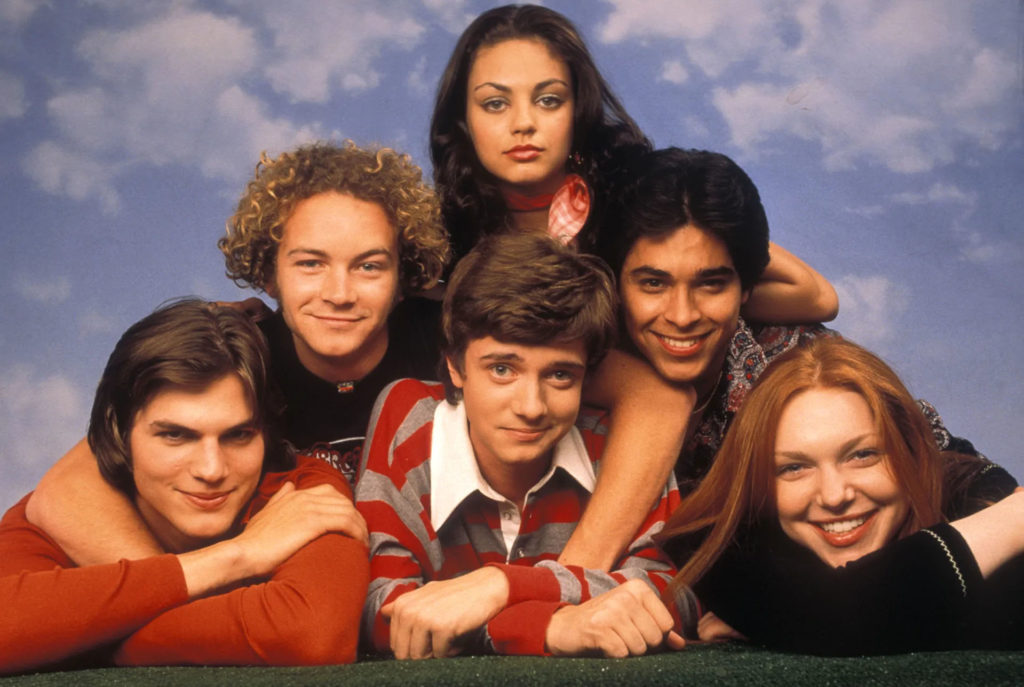
That ’70s Show
That ’70s Show introduced its fictional version of Point Place, Wisconsin, largely through Eric Forman. The basement where the group gathered belonged to his family, Red and Kitty were his parents, and Eric’s relationship with Donna provided one of the sitcom’s longest-running stories. The ensemble became increasingly important over seven seasons, but Topher Grace’s departure still removed the character whose home had served as the show’s center from the beginning.
Who the show lost
Eric was the comparatively ordinary teenager surrounded by larger personalities. Kelso was spectacularly stupid, Hyde cultivated a rebellious persona, Fez was unpredictable, and Jackie could turn almost any conversation back toward herself. Eric’s sarcasm and awkwardness frequently made him the character reacting to everyone else’s insanity.
His family also anchored the adult side of the series. Red’s constant threats to put his foot in someone’s ass and Kitty’s attempts to keep everyone fed and emotionally functional meant that the Forman household remained important even when stories weren’t directly about Eric.
Grace left the regular cast after Season 7 to pursue other opportunities. The finale sends Eric to Africa, where he plans to spend a year teaching in exchange for having his college expenses covered.
Donna remains behind. So do Eric’s parents, his friends and, most importantly, the basement.
How the show survived
The eighth season attempts to preserve the existing ensemble while introducing Josh Meyers as Randy Pearson, a new employee at Hyde’s record store who eventually becomes romantically involved with Donna.
Randy wasn’t literally another Eric, but the similarities in his structural role were impossible to miss. He became the new young male character interacting with the established group while also occupying the romantic space left open by Eric’s departure.
The transition never completely worked. Eric had seven seasons of relationships connecting him to virtually every corner of the series, while Randy arrived after the audience had already spent years with everyone else. You can replace a position in an ensemble much more easily than you can replace the history that made a character matter.
As a result, Season 8 provides one of the clearest examples of the distinction between surviving and thriving. That ’70s Show remained on television for an entire season without its original lead, but Eric’s absence was impossible to ignore.
Grace returned for the series finale, which takes place on New Year’s Eve 1979. Eric comes home from Africa and reunites with Donna as the characters prepare to enter the 1980s, allowing the show to end with its original protagonist back in the Forman house.
The final season proved that Point Place contained enough characters to keep producing stories without Eric. It also demonstrated how much of the show’s identity had quietly accumulated around the skinny kid whose basement everyone had been hanging out in since 1976.
Where to watch: Check current streaming availability; sold on physical media and digitally.
Once Upon a Time
Once Upon a Time begins with Emma Swan learning that the fairy tales she grew up hearing are real and that she is the daughter of Snow White and Prince Charming. More importantly, she is the Savior, the person destined to break the curse trapping those characters in Storybrooke. Jennifer Morrison’s Emma wasn’t merely the original lead. The series’ mythology was built around her arrival.
Six seasons later, Morrison left the regular cast, and Once Upon a Time responded by essentially building itself a new beginning.
Who the show lost
Emma provides the audience’s entry into Storybrooke after the son she gave up for adoption, Henry, appears at her door and insists that the people in his hometown are fairy-tale characters who have forgotten their identities.
Her journey from skeptical outsider to the Savior drives the early series. Along the way, she reconnects with Henry, discovers Snow White and Prince Charming are her parents, develops her magical abilities, and builds a relationship with Captain Hook.
By the end of Season 6, many of the show’s foundational conflicts have reached natural conclusions. Emma marries Hook, the Final Battle is fought, and the characters gather at Granny’s for what could easily have served as the ending of the series.
Morrison announced that she would not return as a series regular for Season 7. She wasn’t the only major departure. Ginnifer Goodwin, Josh Dallas, Emilie de Ravin, and Jared Gilmore also left the regular cast, meaning the series was losing Emma, Snow White, Prince Charming, Belle, and the young version of Henry at essentially the same time.
How the show survived
Rather than pretend Storybrooke could continue unchanged, Season 7 performs a substantial reset.
The story jumps forward and introduces an adult Henry Mills, now played by Andrew J. West. Henry has left Storybrooke, experienced adventures of his own and fallen in love with a new version of Cinderella. When another curse strikes, Henry ends up in Seattle with no memory of his fairy-tale life.
The structure deliberately echoes the beginning of the series. This time, Henry is the disbelieving adult visited by a child who insists that the fantastic stories surrounding him are true. His daughter Lucy effectively assumes the role Henry himself occupied when he first appeared on Emma’s doorstep.
Lana Parrilla’s Regina, Robert Carlyle’s Rumplestiltskin and Colin O’Donoghue’s Hook remain as regulars, although the complicated nature of the new curse means even familiar characters aren’t always exactly the versions audiences previously knew.
The result is less a conventional continuation than an attempt to create a sequel inside the existing series. Season 7 introduces a new setting, new versions of familiar fairy-tale characters, a largely reconstructed ensemble, and a new central family while maintaining connections to the previous six seasons.
The experiment lasted only one season. ABC announced during Season 7 that it would be the show’s last, allowing the writers to construct a finale that brought numerous former cast members back and reunited the different eras of the story.
Once Upon a Time, therefore, didn’t prove it could continue indefinitely without Emma Swan. It did something more unusual: it completed Emma’s story, removed most of the original central family, and attempted to use the mythology she left behind to begin the fairy tale again with her son.
Where to watch: Check current streaming availability; sold on physical media and digitally.
More Television History
Losing a supporting character can force a television series to adjust. Losing the person who once seemed to define the entire show can force everyone involved to decide what the series was really about in the first place.
Sometimes the answer was already hiding in the ensemble. NYPD Blue discovered that Andy Sipowicz could become its emotional center, while ER eventually demonstrated that County General was bigger than any doctor working there. The Walking Dead had constructed a world large enough to continue without Rick Grimes, and The Vampire Diaries had spent years developing characters who could carry Mystic Falls after Elena Gilbert was gone.
Other transitions were much harder. That ’70s Show struggled to fill the enormous space left by Eric Forman, while House of Cards had only a shortened final season to establish a version of the series centered entirely on Claire Underwood. 8 Simple Rules faced circumstances no television production could have planned for and responded by allowing the fictional family to grieve alongside the people making the show.
Perhaps the strangest achievement belongs to Valerie. Losing a main character is difficult enough. Losing the actress whose character’s name is literally the title of your show, killing that character, changing the title twice, and continuing for four more seasons takes the concept to another level.
Not every one of these shows was as good after its original lead disappeared. Some arguably became better, some became worse, and others simply became different. But each discovered that losing the character who once seemed indispensable didn’t necessarily mean the story had to end with them.
Fun Jug Media, LLC (operating TheNerdy.com) has affiliate partnerships with various companies. These do not at any time have any influence on the editorial content of The Nerdy. Fun Jug Media LLC may earn a commission from these links.