Movie fans tend to assume that every film will eventually make its way to Blu-ray.
Maybe it will not happen immediately. Maybe the studio will wait for an anniversary, a restoration, or a boutique label willing to give the movie the attention it deserves. But sooner or later, surely someone will pull the film out of the vault, clean it up, put it on a disc, and collect money from the people who have been asking for it for years.
Unfortunately, physical media does not always work that way.
Ask movie collectors about films they’ve been waiting to own on Blu-ray, and many of the same titles come up over and over. Kevin Smith’s Dogma spent years in home video limbo because of complicated ownership issues. Michael Mann’s The Keep has long been the subject of restoration rumors and rights questions. Other films, like Looking for Mr. Goodbar, have remained frustratingly difficult to find on modern physical media despite years of fan interest.
None of those movies disappeared because audiences stopped caring about them.
Instead, they illustrate a reality that surprises many people. A movie can be popular, culturally important, or deeply loved by a dedicated fan base and still never receive a Blu-ray release. Some films remain stuck on DVD. Others are only available overseas. A few survive only through old VHS releases, occasional television broadcasts, or digital rentals that appear and disappear as licensing agreements change.
The reasons are rarely as simple as a studio forgetting the movie exists. Rights can become tangled. Film elements may require expensive restoration. Music licenses sometimes have to be renegotiated. The expected audience may be too small to justify the work. And occasionally, the company that owns the movie simply decides not to release it at all.
Understanding why some movies never make the jump to Blu-ray means looking at far more than the disc itself. Behind every physical media release is a combination of legal agreements, preservation work, financial decisions, and business priorities that most viewers never have to think about until a favorite movie becomes impossible to find.
Quick Answer: Why Isn’t Every Movie Available on Blu-ray?
A movie may never receive a Blu-ray release because the studio or distributor does not believe projected sales will cover the cost of licensing, restoration, authoring, manufacturing, marketing, and distribution.
Other common problems include unclear ownership, music rights, missing film elements, legal disputes, limited demand, or a rights holder that is unwilling to license the movie to another company.
| Problem | Why It Delays a Blu-ray |
|---|---|
| Low expected sales | The company may not believe enough people will buy the disc |
| Complicated rights | Different companies or individuals may control parts of the movie |
| Restoration costs | The available film elements may require expensive repair and scanning |
| Music licensing | Songs cleared for theaters may require new home video agreements |
| Missing materials | Original negatives, soundtracks, or complete versions may be damaged or lost |
| Corporate priorities | The rights holder may focus on newer or more profitable titles |
| Existing digital availability | A studio may decide streaming and digital sales are sufficient |
The frustrating part is that more than one of these issues can affect the same movie. A film may need restoration, have music-rights problems, and appeal to an audience too small to support a wide retail release.
Take Dogma, for example. For years, it became shorthand among collectors for a movie that everyone wanted but nobody could seem to release. The demand was obvious. The ownership situation was not. In other cases, a movie’s legal status is perfectly clear, but the available film elements need so much restoration work that the project becomes difficult to justify financially.
That is why there is rarely a single answer when someone asks why a particular movie is still missing from Blu-ray. Every title has its own history, and many of them involve several different obstacles at the same time.
A Blu-ray Release Costs More Than Pressing a Disc

Credit: iStock/Erich Karnberger
It is easy to picture physical media production as a fairly mechanical process. A studio already owns the movie, so it should be able to put the file on a disc, print a cover, and start shipping copies.
In reality, the disc is one of the last steps.
Before a movie can reach Blu-ray, someone must locate the best available film or digital materials, inspect them, scan or transfer them, repair damage, correct the picture, prepare the soundtrack, create subtitles and menus, author the disc, perform quality control, design the packaging, manufacture the product, and arrange distribution.
A major studio film with a recent high-quality master may require relatively little new work. An older movie that has been sitting untouched for decades can become a much larger project.
For years, James Cameron’s The Abyss was one of the most requested Blu-ray releases among collectors. It wasn’t because people doubted the film deserved one. Rather, Cameron wanted a new restoration that met his standards before it reached home video. The project took far longer than fans expected, but when the restored Blu-ray finally arrived, it demonstrated why these releases can require years of work before they ever reach store shelves.
The company must then estimate how many copies it can realistically sell. A movie may have thousands of vocal fans online, but that does not mean thousands of people will buy a $25 or $30 disc. Some will wait for a sale. Some already own the DVD. Some only want the movie to appear on a streaming service. Some will enthusiastically announce that the studio has a guaranteed sale and then completely disappear when preorders open.
Enthusiasm is real, but enthusiasm and a viable print run are not always the same thing.
The Studio May Not Know Who Owns Everything
One of the strangest barriers to a physical media release is that ownership can become surprisingly complicated.
A movie may have been produced by one company, financed by another, distributed theatrically by a third, and later absorbed into a larger corporate library through mergers or acquisitions. Domestic rights may be controlled by one company while international rights belong to someone else. Home video rights may not match streaming or television rights.
This is especially common with independent films, older productions, and movies made by companies that no longer exist.
From the viewer’s perspective, the situation appears simple. The movie has a title, a director, and a studio logo at the beginning. Someone must own it.
Legally, the answer may involve contracts, successor companies, bankruptcy proceedings, territorial agreements, and paperwork that has been passed from one owner to another over several decades.
That was one of the reasons Dogma spent so many years in home-video limbo. Fans weren’t asking for an obscure movie that nobody remembered. They were asking for a popular Kevin Smith film with a devoted audience. The demand was never really in question. Untangling who controlled the distribution rights proved to be a much more difficult problem.
Sometimes locating the film is easier than locating the person legally allowed to approve a Blu-ray release.
The Rights Holder May Refuse to License the Movie

Even when ownership is perfectly clear, another obstacle remains.
The company that controls the movie has to want it released.
Collectors often ask why a respected boutique label like Criterion, Arrow Video, Kino Lorber, Vinegar Syndrome, or Shout Studios doesn’t simply license an unreleased film and put it out themselves.
The answer is that those companies cannot release a movie unless the rights holder agrees.
A boutique label may spend months pursuing a particular title, only to discover that the studio has no interest in licensing it. The rights holder may believe it can make more money releasing the film itself someday. It may already have an agreement with another distributor. Or it may simply decide the movie isn’t a priority.
That last possibility is one of the hardest for collectors to accept.
Sometimes the movie isn’t trapped because of legal confusion or missing film elements.
It’s simply sitting on a shelf while the company that owns it focuses on other projects.
Boutique Labels Have Saved Countless Movies
While boutique labels cannot rescue every movie, they have become one of the most important reasons older and overlooked films continue reaching physical media.
Companies like Criterion, Arrow Video, Kino Lorber, Vinegar Syndrome, Severin Films, Shout Studios, and others specialize in titles that larger studios might consider too niche for a wide retail release. Instead of trying to sell hundreds of thousands of copies through big-box stores, they produce carefully curated editions aimed at collectors who value restorations, commentaries, documentaries, essays, and archival bonus features.
That approach has given new life to countless films.
For years, Kathryn Bigelow’s Near Dark was one of the most requested vampire movies on Blu-ray before receiving a restored release. Martin Scorsese’s Bringing Out the Dead also spent years in physical media limbo before eventually receiving a boutique edition. Films such as The Hitcher and Alex Winter’s wonderfully bizarre Freaked likewise found new audiences after companies specializing in catalog releases stepped in.
These success stories are part of the reason collectors pay so much attention to boutique label announcements. Every monthly release slate carries the possibility that another long-requested movie has finally escaped limbo.
Of course, boutique labels are not magicians.
They still need access to suitable film materials. They still need to negotiate a license. And they still have to believe enough collectors will buy the finished product to justify the investment.
A boutique label can solve many problems.
It cannot solve ownership.
Restoring an Older Movie Can Be Expensive
Older films do not always sit in a vault waiting in perfect condition.
Film elements can fade, shrink, tear, warp, collect dirt, develop scratches, or suffer chemical deterioration. Different parts of the movie may survive in different places. The original camera negative may be incomplete, damaged, or unavailable, forcing restorers to work from duplicate negatives, separation masters, release prints, or other less ideal sources.
Sound can create its own problems. Original magnetic tracks may deteriorate, while alternate versions may need to be compared and synchronized.
A proper restoration can involve searching archives around the world, comparing multiple prints, scanning materials at high resolution, stabilizing the image, repairing damage, restoring color, and rebuilding missing sections from whatever survives.
That work costs money before a single disc has been sold.
For a famous film with broad commercial appeal, the investment may be easy to justify. For an obscure drama, forgotten comedy, or cult film with a few thousand likely buyers, the economics become much more difficult.
James Cameron’s The Abyss is a good reminder that even well-known movies can spend years waiting for the right restoration. Collectors requested a Blu-ray release for decades, but Cameron wanted the film restored to a standard he felt was worthy of a high-definition release. Likewise, True Lies remained absent from Blu-ray in the United States for years while restoration work continued behind the scenes. Both films eventually reached Blu-ray, demonstrating that a long wait does not necessarily mean a studio has forgotten a movie exists.
The movie may deserve restoration.
That does not mean the company controlling it is ready to pay for one.
Preservation and Commercial Release Are Not the Same Thing
A movie can be preserved without being commercially available.
Film archives, studios, museums, and nonprofit organizations work to preserve original film elements so that movies survive for future generations. That work is enormously important, but preservation is only one piece of the puzzle.
Preparing a commercial Blu-ray release requires much more than placing a restored print in climate-controlled storage. A company still has to clear the legal rights, prepare a consumer master, author the disc, manufacture it, market it, and believe enough people will buy it.
That distinction sometimes surprises collectors.
A film may receive a beautifully restored screening at a film festival or museum, yet remain unavailable on Blu-ray for years afterward. The restoration exists. The home-video release simply has not happened.
The movie has been preserved.
It just hasn’t been published.
Music Rights Can Stop a Release
Music licensing has been causing headaches for home video distributors for decades.
A song that was licensed for theatrical exhibition in the 1970s or 1980s may not have been cleared for Blu-ray, digital purchases, or streaming because none of those formats existed when the original contract was signed.
That means distributors often have to renegotiate the rights.
Sometimes the negotiations succeed.
Sometimes they become so expensive that the project no longer makes financial sense.
Collectors have probably seen this problem more often with television shows than movies. Series like WKRP in Cincinnati became famous for replacing many of their original songs on home video because securing the original music again would have been prohibitively expensive.
Movies can face similar challenges.
One of the best-known examples is Pink Floyd – The Wall, whose complicated rights situation has contributed to years of uncertainty about new home-video editions. When a film’s identity is closely tied to its soundtrack, replacing songs is rarely an acceptable option. Fans want the movie they remember, not a version with substitute music chosen because it was cheaper.
Music rights are rarely the only obstacle preventing a Blu-ray release.
But they can be one of the most expensive.
The Best Version of the Movie May Be Missing
Sometimes the biggest obstacle is not legal but physical. The original camera negative may no longer exist, audio elements may be damaged, a director’s preferred cut may survive only in lower-quality materials, or different versions of the movie may be scattered across several archives, each preserving only part of what is needed.
This is particularly common with older independent films, international productions, and movies whose original studios no longer exist. A film may technically survive, but not in a condition that makes a high-quality Blu-ray release straightforward.
Collectors often wonder why a movie can exist on DVD but never make the jump to Blu-ray. In many cases, the DVD was created years earlier from an existing standard-definition master. Producing a proper Blu-ray means returning to the original film elements, rescanning them in high definition, and rebuilding the presentation from the ground up.
A company could theoretically place that older standard-definition master on a Blu-ray disc, but the result would offer little meaningful improvement over the DVD. Most collectors expect a Blu-ray release to justify the upgrade through better resolution, stronger color, improved contrast, cleaner audio, or a more accurate presentation of the original film.
That expectation is one reason quality releases sometimes take much longer than fans would like. If the surviving materials are incomplete or damaged, the distributor has to decide whether the restoration can be done properly and whether projected sales are strong enough to support the work.
A DVD Release Does Not Guarantee a Blu-ray
Many movie fans assume that if a film made it to DVD, a Blu-ray release is simply a matter of time.
Unfortunately, the home video market changed dramatically between those two formats.
DVD arrived during a period when physical media sales were booming. Consumers were replacing their VHS collections, retailers devoted enormous amounts of shelf space to movies, and studios were willing to dig deep into their libraries because there was a reasonable chance almost any title would find an audience.
Blu-ray entered a very different marketplace.
By the time high-definition discs became established, streaming was beginning to change how people watched movies. Retail shelf space for physical media was shrinking, and studios had become much more selective about which catalog titles were worth revisiting.
That left many films stranded on DVD.
Some had respectable DVD sales but not enough demand to justify a new restoration and Blu-ray release. Others had been mastered years earlier using standard-definition transfers that no longer met modern expectations. Upgrading those movies meant going back to the original film elements and investing in a new restoration, a project that might never recover its costs.
Collectors sometimes point to their DVD shelf and wonder why certain titles seem frozen in time while others have moved from VHS to DVD to Blu-ray and even 4K.
The answer is that there has never been a guarantee every movie would make every technological leap. Each new format represents another business decision, and studios evaluate those decisions one title at a time.
Why Some Movies Are Released Overseas First
One of the more confusing aspects of physical media collecting is discovering that a movie unavailable on Blu-ray in the United States has already been released in the United Kingdom, Germany, Australia, or Japan.
That usually comes down to territorial licensing.
Film rights are often divided by country or region, meaning one distributor may control the movie in North America while a completely different company handles home video elsewhere in the world. If that overseas distributor believes there is enough demand, it can move forward with a Blu-ray release even while the American rights holder has no immediate plans to do the same.
This has led many collectors to import movies that were unavailable in the United States for years. Sometimes those imported discs are region-free and play without issue. Other times they require a region-compatible player, making them a more expensive solution than many casual viewers are willing to pursue.
An overseas release also does not necessarily mean every version is identical. Bonus features, audio tracks, subtitles, and even the quality of the transfer can vary from one country to another.
For collectors, imports can be an excellent way to fill gaps in a library. They also serve as a reminder that a movie’s availability often depends as much on business agreements as it does on the movie itself.
Manufactured-on-Demand Releases Changed the Conversation
Not every movie needs to sell hundreds of thousands of copies to justify a physical release.
Over the past two decades, manufactured-on-demand programs have given studios another option for titles with smaller audiences. Instead of producing a massive retail run and hoping enough copies sell, companies can manufacture discs in much smaller quantities or even produce them as orders are placed.
Warner Archive has become one of the best-known examples of this approach. The label has released hundreds of films and television series that likely would never have returned to store shelves through traditional retail channels. Many classic Hollywood films, cult favorites, and television programs owe their modern availability to that business model.
Manufactured-on-demand does not solve every problem. Rights still have to be cleared, film elements still have to be located, and restoration work still costs money.
What it does change is the financial equation.
Instead of asking whether a movie can succeed as a nationwide retail release, a studio can ask whether it can succeed as a specialty title aimed directly at collectors. That smaller audience is often enough to rescue movies that would otherwise remain unavailable.
When a Boutique Label Finally Says Yes
Collectors pay close attention to boutique label announcements because they have seen the pattern repeat itself many times.
A movie spends years, sometimes decades, without a Blu-ray release. Fans assume it has been forgotten. Then one month, a company like Criterion, Arrow Video, Kino Lorber, Vinegar Syndrome, Severin Films, or Shout Studios announces a restored special edition complete with new bonus features.
It can feel as though the movie appeared out of nowhere.
In reality, those releases are often the result of years of work behind the scenes. Rights have to be negotiated, film elements inspected, restorations supervised, supplements produced, and manufacturing scheduled before a single preorder goes live.
Recent years have produced several encouraging success stories. Films such as Near Dark, Bringing Out the Dead, The Hitcher, and Freaked all spent years on collectors’ wish lists before eventually receiving the kind of physical media editions many people assumed would never happen.
Those releases are one of the reasons collectors continue paying attention to boutique label announcements. Every successful restoration demonstrates that an older film can still find new life when the rights can be secured, the materials are available, and a distributor believes there is an audience willing to support the release. It does not mean every long-requested movie will eventually arrive on Blu-ray, but it does show that a title’s absence today is not always a permanent one.
Why Some Blu-rays Go Out of Print
Getting a movie onto Blu-ray does not necessarily mean it will stay there.
Collectors are often surprised to discover that a title they saw sitting on store shelves a few years ago has suddenly become difficult to find or is selling for several times its original retail price. In many cases, that is because the release has gone out of print.
This happens for several reasons.
Boutique labels usually license films for a limited period rather than purchasing them outright. When that license expires, the label must either negotiate a renewal or stop producing the disc. If the rights holder decides not to renew the agreement, manufacturing ends, even if there is still demand from collectors.
Studios also discontinue releases for ordinary business reasons. Sales may have slowed, a newer edition may be planned, or the company may simply decide to stop manufacturing additional copies.
That is why collectors sometimes rush to buy a title after hearing it is going out of print. The movie itself has not become rarer, but legally produced copies have. Once existing inventory disappears, the only remaining source is usually the secondary market, where prices can increase dramatically if demand remains strong.
An out-of-print release does not necessarily mean the movie has disappeared forever. Rights often move from one distributor to another, and a film that leaves one label’s catalog may eventually return through a different company with a new restoration or a different set of bonus features.
Why Some Movies Skip Blu-ray and Go Straight to 4K
Another development that has confused collectors is the growing number of older movies that receive a 4K Ultra HD release without ever getting a standard Blu-ray edition.
At first glance, that seems backwards. If a movie never made it to Blu-ray, why would a studio release it in an even newer format?
The answer usually comes down to the current physical media market.
Today’s disc buyers are increasingly collectors rather than casual consumers. If a studio is already investing in a new restoration, it may decide that a premium 4K edition offers the best opportunity to recover those costs. Some releases include a standard Blu-ray in the package, while others focus almost entirely on the higher-end collector market.
For viewers who have not upgraded to a 4K player, that can create an unusual situation. A movie may exist on DVD and 4K Ultra HD but never have received a standalone Blu-ray release.
It is another reminder that physical media decisions are driven by the marketplace of the moment rather than by a fixed progression from one format to the next.
Streaming Has Changed the Conversation, But Not the Problem
For many viewers, streaming has become the default way to watch movies. That has led to another common question: if a film is available to stream in high definition, why bother releasing it on Blu-ray at all?
From the studio’s perspective, streaming has some obvious advantages. There are no discs to manufacture, no inventory to warehouse, and no retailers to convince to devote shelf space to an older catalog title. A movie can be added to a digital storefront or subscription service with far less overhead than producing a physical release.
Collectors tend to look at the situation differently.
Streaming availability is tied to licensing agreements that eventually expire. Movies move from one service to another, disappear for months or years, or are removed entirely when contracts change. Even digital purchases depend on the continued existence of online storefronts and the agreements behind them.
A Blu-ray, by contrast, remains on your shelf until you decide otherwise.
That difference is one of the reasons physical media continues to have a loyal following despite the growth of streaming. Collectors are not simply buying picture quality. They are buying permanence, or at least as much permanence as home video has ever been able to offer.
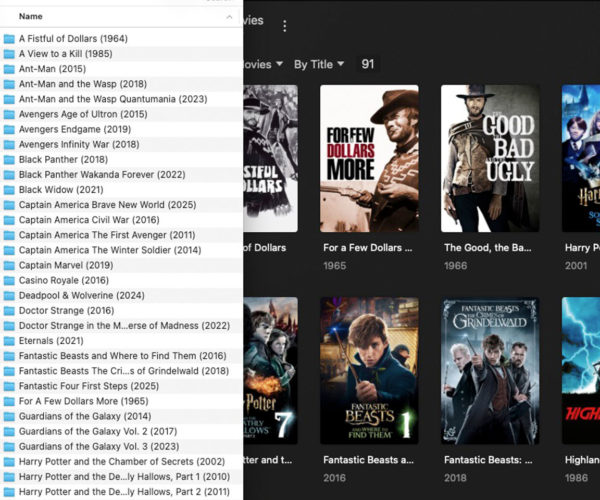
Many collectors take that idea one step further by creating personal media libraries with software such as Plex. By ripping movies they already own on Blu-ray or DVD, they can enjoy much of the convenience associated with streaming while maintaining control over their own collection. It requires more work than subscribing to another service, but it also means a favorite movie does not disappear because a licensing agreement came to an end.
Can Fans Help a Movie Get Released?
Collectors understandably wonder whether there is anything they can do when a favorite movie remains unavailable.
There is no guaranteed formula, but there are constructive ways to demonstrate interest.
Many boutique labels regularly ask collectors what films they would most like to see released. Participating in those surveys, contacting distributors through official channels, and supporting similar catalog releases all help companies understand where demand exists.
Just as importantly, buying the releases that do make it to market helps demonstrate that there is an audience for restored catalog films. Every successful boutique release makes it a little easier for that company to pursue another licensing agreement or restoration project in the future.
No amount of enthusiasm can overcome complicated rights issues or a studio that refuses to license a movie. But when the necessary pieces are in place, an active and supportive collector community can make a meaningful difference in whether a project moves from wish list to reality.
Movies That Finally Escaped Blu-ray Limbo
One of the encouraging things about physical media collecting is that “unavailable” does not always mean “unavailable forever.”
Collectors have seen plenty of movies spend years on wish lists before finally receiving the releases fans had been requesting.
James Cameron’s The Abyss and True Lies are two of the best-known recent examples. Both films were the subject of years of speculation before Cameron completed new restorations that ultimately led to their Blu-ray and 4K releases. Likewise, films such as Near Dark, Bringing Out the Dead, The Hitcher, and Freaked eventually found homes with boutique labels after spending years in physical media limbo.
Those releases illustrate an important point. A movie may be missing from Blu-ray because of restoration work, licensing negotiations, or shifting business priorities, but those situations can change. Rights are renegotiated, restorations are completed, and boutique labels continue looking for opportunities to bring overlooked films back to collectors.
Of course, not every story has a happy ending. Some titles remain unavailable despite years of requests, and others are affected by issues that are unlikely to disappear anytime soon.
Movies Collectors Still Hope to See on Blu-ray
Every physical media collector has a personal wish list, but a handful of titles appear in these conversations again and again.
Looking for Mr. Goodbar has remained one of the most requested unreleased studio films for years, with rights and music licensing often cited as major obstacles. Michael Mann’s The Keep continues to generate discussion whenever boutique labels announce new acquisitions, although its complicated production history and the condition of available materials have made a release difficult. Disney’s Song of the South remains absent from the American home-video market because of the company’s longstanding decision not to release it commercially.
The list changes over time. A title that seems permanently unavailable can suddenly appear in a boutique label announcement, while another movie quietly joins collectors’ wish lists after years of being overlooked.
That uncertainty is one reason physical media remains such an active hobby. There is always the possibility that next month’s announcements will include the movie people have been waiting years to own.
Frequently Asked Questions About Movies That Never Reach Blu-ray
Why is a movie available on DVD but not Blu-ray?
Many DVDs were created during the format’s peak years using standard-definition masters. Producing a Blu-ray often requires returning to the original film elements for a new restoration or scan, and the studio may decide the expected sales do not justify that investment.
Why is a movie streaming in HD but unavailable on Blu-ray?
Streaming and physical media rights are often handled separately. A movie may also use an older high-definition master that works well enough for streaming but is not considered suitable for a collector-oriented Blu-ray release.
Can music rights really stop a Blu-ray release?
Yes. Songs that were licensed decades ago may not have included modern home-video formats. Renegotiating those agreements can become expensive enough to delay or prevent a release.
Why don’t boutique labels just release every movie collectors want?
Boutique labels still need permission from the rights holder, access to suitable film materials, and confidence that enough collectors will buy the finished product to recover the costs of licensing and production.
Why do some movies receive Blu-rays overseas first?
Home-video rights are often licensed separately by territory. A distributor in another country may have the rights and the financial incentive to release a movie even when no American company has immediate plans to do so.
Will every movie eventually get a Blu-ray?
Probably not. Some films are held back by rights disputes, restoration costs, missing materials, or business decisions that may never change. Others eventually find new life years after collectors have given up hope. Every title has its own story.
Final Thoughts
It is easy to assume that every movie will eventually find its way to Blu-ray. After all, if a film already exists, how difficult could it be to put it on a disc?
As it turns out, that disc is often the easiest part of the process.
Before a movie reaches store shelves, someone has to control the rights, locate the best available film elements, decide whether restoration work is necessary, estimate whether enough people will buy the finished product, and determine whether the project makes financial sense. If any one of those pieces falls out of place, a release can be delayed for years or disappear altogether.
That may not be the answer collectors want to hear, but it helps explain why some long-requested titles eventually appear while others remain frustratingly out of reach.
The good news is that physical media history is full of surprises. Movies that once seemed permanently trapped have returned through new restorations, boutique labels, or changing business circumstances. There are no guarantees that every film will follow that path, but the continued success of companies dedicated to preserving and releasing catalog titles gives collectors good reason to remain optimistic.
More Movie and Streaming Guides
Physical media and streaming are constantly changing. These guides explain how the industry works and help you get more out of your movie collection.
Fun Jug Media, LLC (operating TheNerdy.com) has affiliate partnerships with various companies. These do not at any time have any influence on the editorial content of The Nerdy. Fun Jug Media LLC may earn a commission from these links.