The Planet of the Apes franchise is one of the strangest long-running science fiction series in movie history, and that is meant as a compliment.
It begins with one of the all-time great movie endings. It continues through a run of increasingly wild 1970s sequels. It gets remade by Tim Burton in 2001. Then, somehow, it comes back decades later as a surprisingly thoughtful modern reboot series about Caesar, humanity’s collapse, and the long road toward a world ruled by apes.
So if you are trying to watch the Planet of the Apes movies in order, the first thing to know is this: there is no single clean timeline that includes every movie.
The original films have their own continuity. Tim Burton’s Planet of the Apes is its own thing. The modern Caesar films are their own timeline, although they clearly echo and build toward the idea of the 1968 original.
That makes release order the best place to start for first-time viewers. But if you want the chronological timeline, especially for the modern movies, we can sort that out too.
Quick Answer: The Planet of the Apes Movies in Release Order
If you want the simplest way to watch the Planet of the Apes movies, release order is the cleanest answer.
| Movie | Year |
|---|---|
| Planet of the Apes | 1968 |
| Beneath the Planet of the Apes | 1970 |
| Escape from the Planet of the Apes | 1971 |
| Conquest of the Planet of the Apes | 1972 |
| Battle for the Planet of the Apes | 1973 |
| Planet of the Apes | 2001 |
| Rise of the Planet of the Apes | 2011 |
| Dawn of the Planet of the Apes | 2014 |
| War for the Planet of the Apes | 2017 |
| Kingdom of the Planet of the Apes | 2024 |
That is the full theatrical release order. It is also the best way to see how the franchise evolved from twist-ending science fiction into sequel cycle, remake, and modern reboot saga.
The Best Way to Watch the Planet of the Apes Movies
For first-time viewers, there are two good options.
The first is to watch everything in release order:
- Planet of the Apes (1968)
- Beneath the Planet of the Apes
- Escape from the Planet of the Apes
- Conquest of the Planet of the Apes
- Battle for the Planet of the Apes
- Planet of the Apes (2001)
- Rise of the Planet of the Apes
- Dawn of the Planet of the Apes
- War for the Planet of the Apes
- Kingdom of the Planet of the Apes
That is the complete franchise experience, including the 2001 remake.
The second option is cleaner if you mainly want the modern story:
- Rise of the Planet of the Apes
- Dawn of the Planet of the Apes
- War for the Planet of the Apes
- Kingdom of the Planet of the Apes
That gives you the Caesar timeline and its aftermath without asking you to jump through the original series’ time-travel loop. It is also the easiest entry point for modern viewers.
Still, if you have never seen the 1968 original, you should eventually fix that. The whole franchise lives in the shadow of that ending.
The Planet of the Apes Movies in Chronological Timeline Order
This is where things get tricky, because the franchise is not one straight continuity.
The most useful way to think about it is by timeline branch.
The Modern Caesar Timeline
| Movie | Timeline Placement |
|---|---|
| Rise of the Planet of the Apes | Caesar’s origin and the beginning of the ape uprising |
| Dawn of the Planet of the Apes | Set years after the Simian Flu devastates humanity |
| War for the Planet of the Apes | Caesar leads the apes through open conflict with humans |
| Kingdom of the Planet of the Apes | Set several generations after Caesar |
This is the cleanest chronological watch order. The modern films tell a mostly linear story about Caesar, the fall of human civilization, and the rise of ape society.
The Original Series Timeline
| Movie | Timeline Placement |
|---|---|
| Planet of the Apes | Astronauts arrive on a future Earth ruled by apes |
| Beneath the Planet of the Apes | Continues after the first film |
| Escape from the Planet of the Apes | Apes travel back to the 20th century |
| Conquest of the Planet of the Apes | Shows Caesar leading an ape revolt |
| Battle for the Planet of the Apes | Set after the revolt as apes and humans struggle to coexist |
The original series starts in the future, then uses time travel to loop back and show how that future might have begun. It is ambitious, strange, sometimes messy, and very 1970s in the best possible way.
The 2001 Remake
| Movie | Timeline Placement |
|---|---|
| Planet of the Apes (2001) | Standalone remake/reimagining |
Tim Burton’s Planet of the Apes does not fit cleanly into the original continuity or the modern Caesar timeline. Treat it as a standalone remake.
How the Planet of the Apes Timeline Works
The easiest mistake is trying to force every Planet of the Apes movie into one tidy timeline. That way lies madness, or at least a very long argument in a comment section.
The original five films work as one continuity, although that continuity folds back on itself through time travel. The modern films work as a reboot timeline that begins with Caesar and moves forward into a world where apes become the dominant species. The 2001 movie is separate from both.
That means you should not watch the 2001 film expecting it to explain the original series, and you should not watch the modern Caesar films expecting them to line up scene-for-scene with the 1968 movie. They share ideas, themes, and destination points, but they are not all the same road.
For practical viewing, think of the franchise like this:
- Original continuity: 1968 to 1973
- Standalone remake: 2001
- Modern reboot timeline: 2011 to present
That keeps the franchise much easier to understand.
Planet of the Apes Movies in Release Order
Planet of the Apes (1968)
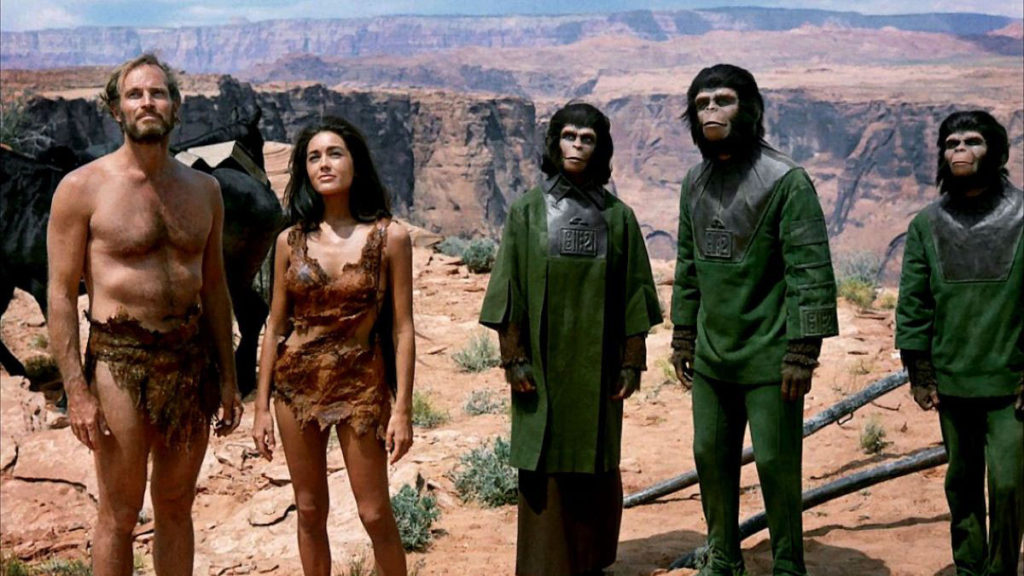
Franklin J. Schaffner’s Planet of the Apes is where the movie franchise begins, and it remains one of the great science fiction films of the 1960s.
Charlton Heston stars as Taylor, an astronaut who crash-lands on a strange world where intelligent apes rule over mute, primitive humans. The setup is pulpy and immediate, but the film is sharper than a simple adventure story. It uses its strange world to talk about power, prejudice, religion, science, and the ugly comfort of assuming your own civilization is the normal one.
And then there is the ending. Even if you know it, the ending still works because the entire movie has been walking toward it with grim confidence. If you somehow do not know it, stop reading summaries and watch the movie. Some reveals deserve to be experienced properly.
Where to watch: Available to stream; sold on physical media and digitally.
Beneath the Planet of the Apes (1970)
Beneath the Planet of the Apes is the first sequel, and it wastes very little time becoming deeply weird.
The movie follows another astronaut who arrives on the ape-ruled future Earth and searches for Taylor. That already sounds like a fairly direct sequel, but then the film pushes further into underground ruins, mutant humans, psychic powers, religious fanaticism, and one of the most unhinged endings a major studio sequel has ever put on screen.
It is not as elegant as the original, but it is important because it proves the franchise was willing to go much stranger than expected. Some sequels expand a world carefully. Beneath expands it by kicking open a basement door and finding nightmare fuel.
Where to watch: Available to stream; sold on physical media and digitally.
Escape from the Planet of the Apes (1971)
Escape from the Planet of the Apes pulls off a clever franchise reversal.
Instead of sending humans to a world ruled by apes, it sends intelligent apes back to modern-day human society. Cornelius, Zira, and Milo arrive in the 20th century, where they become celebrities, curiosities, and eventually threats to a society that realizes they may represent its future.
This is one of the smartest sequels in the original run because it changes the scale. It is smaller and more character-driven than Beneath, but it also gives the franchise a new direction after the previous movie seemingly left very little room to continue.
It is funny, sad, and sharper than its premise might suggest. Also, considering this entire series is about humans making terrible choices when confronted with uncomfortable truths, the movie remains very on brand.
Where to watch: Available to stream; sold on physical media and digitally.
Conquest of the Planet of the Apes (1972)
Conquest of the Planet of the Apes shows the beginning of the ape revolution in the original continuity.
Set in a future where apes have been enslaved by humans, the film follows Caesar, the son of Cornelius and Zira, as he becomes the figure who leads the uprising. It is darker and angrier than the previous film, and it gives the original series one of its most politically charged entries.
This is also where the franchise’s circular timeline becomes clearer. The future seen in the first movie is no longer just a strange destination. It is something history may be building toward, one human mistake at a time.
The modern Rise of the Planet of the Apes would later revisit some of the same broad ideas in a very different way, but Conquest is the original series’ ape revolution story.
Where to watch: Available to stream; sold on physical media and digitally.
Battle for the Planet of the Apes (1973)
Battle for the Planet of the Apes closes the original five-film cycle.
The movie follows Caesar after the revolution, as apes and humans attempt to build a fragile society while old hatreds and new power struggles threaten to destroy it. It is smaller and less forceful than Conquest, but it is important because it tries to imagine what comes after the uprising.
That has always been one of the more interesting parts of this franchise. The movies are not only about the apes taking over. They are about whether any civilization, human or ape, can avoid repeating the same failures once it has power.
Battle is an uneven finale, but it gives the original series a closing argument.
Where to watch: Available to stream; sold on physical media and digitally.
Planet of the Apes (2001)
Tim Burton’s Planet of the Apes is a standalone remake/reimagining, not a continuation of the original series.
Mark Wahlberg stars as Leo Davidson, an astronaut who lands on a world ruled by intelligent apes. The movie uses the basic concept of the franchise, but it does not fit into the 1968 timeline or the modern Caesar timeline.
The 2001 film has strong makeup effects, a big cast, and a few interesting visual ideas, but it is mostly remembered for being a strange detour between the original series and the modern reboot. It also has an ending that seems designed to make people leave the theater asking questions in the parking lot, not necessarily because they were good questions.
For completists, include it. For a clean timeline watch, treat it as optional.
Where to watch: Available to stream; sold on physical media and digitally.
Rise of the Planet of the Apes (2011)
Rise of the Planet of the Apes begins the modern reboot timeline and introduces Caesar, played through motion capture by Andy Serkis.
The story follows a chimpanzee whose intelligence is increased through an experimental drug. What begins as a science story becomes a captivity story, then a revolution story, and by the end the franchise has found a new emotional center.
The surprise of Rise is how well it works. It could have been a cynical franchise restart. Instead, it turns Caesar into one of modern blockbuster cinema’s most compelling characters. The movie takes the broad idea of ape evolution and makes it personal before making it global.
If you are only watching the modern films, start here.
Where to watch: Available to stream; sold on physical media and digitally.
Dawn of the Planet of the Apes (2014)
Dawn of the Planet of the Apes is set years after the events of Rise, after the Simian Flu has devastated humanity and Caesar’s apes have built their own society.
This is where the modern series becomes truly great. The movie is not simply about apes versus humans. It is about fear, trauma, leadership, and how quickly peace can collapse when both sides have reasons not to trust each other.
Caesar is trying to protect his people without becoming the kind of leader who rules by hatred. The humans are trying to survive in a world they no longer control. And Koba, shaped by human cruelty, becomes the living argument that not every wound turns into wisdom.
Dawn is one of the strongest films in the franchise and a major reason the modern timeline earned its place beside the original.
Where to watch: Available to stream; sold on physical media and digitally.
War for the Planet of the Apes (2017)
War for the Planet of the Apes closes Caesar’s trilogy.
Despite the title, this is not just a large-scale battle movie. It is more somber than that. Caesar is older, grieving, and burdened by the choices that come with leadership. The conflict with the Colonel pushes him toward revenge, but the movie is really about whether Caesar can survive without losing the moral center that made him different.
The film brings the modern trilogy to an emotional conclusion while moving the world closer to the ape-dominated future implied by the franchise’s larger mythology.
If you watch only the Caesar trilogy, War gives that story a proper ending. It is heavy, but it earns the weight.
Where to watch: Available to stream; sold on physical media and digitally.
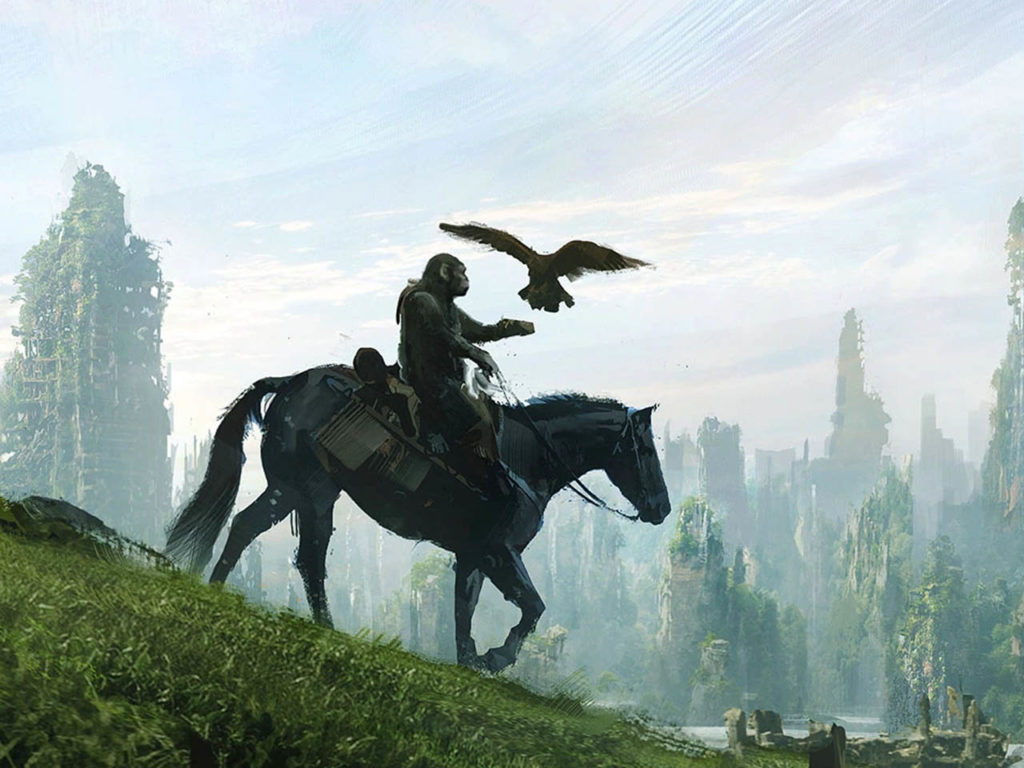
20th Century Studios
Kingdom of the Planet of the Apes (2024)
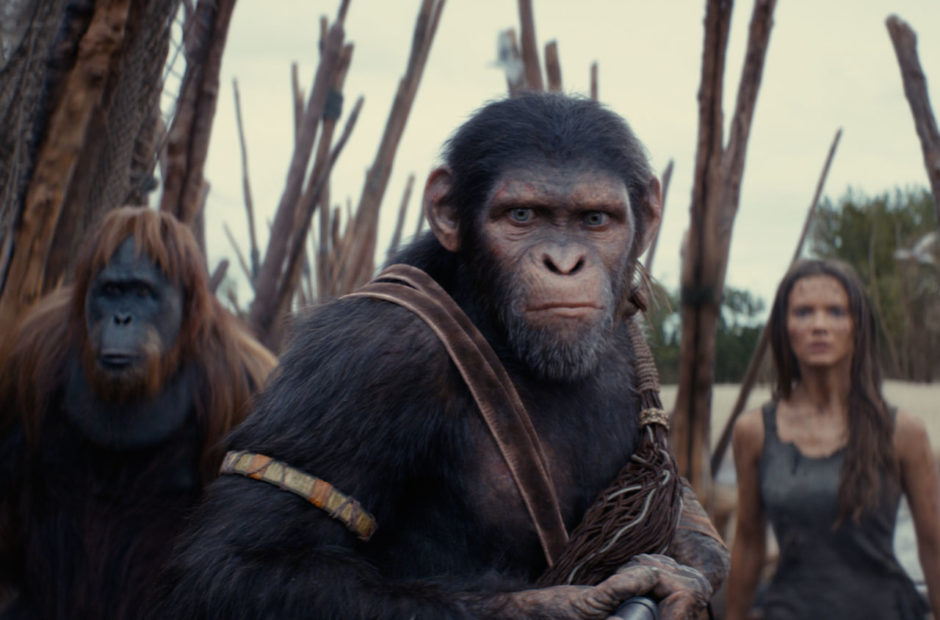
Kingdom of the Planet of the Apes takes place several generations after Caesar’s time and begins a new chapter in the modern timeline.
The movie follows Noa, a young ape whose world is disrupted by Proximus Caesar, a ruler who twists Caesar’s legacy for his own purposes. That is a smart direction for the franchise because it asks what happens when history becomes myth, and myth becomes something powerful people can misuse.
Instead of simply continuing Caesar’s story, Kingdom deals with the world he left behind. Apes have developed different cultures and beliefs, humans have fallen further from dominance, and the meaning of Caesar’s teachings is no longer fixed.
For viewing order, this comes after War for the Planet of the Apes. It is not a reboot of the reboot, but it is a fresh starting point within the modern timeline.
Where to watch: Available to stream; sold on physical media and digitally.
Do the Original and Modern Planet of the Apes Movies Connect?
The modern movies connect to the original Planet of the Apes mostly through theme, concept, and destination, not through a perfectly locked timeline.
The Caesar films show how apes become intelligent, how human civilization weakens, and how a new ape society begins to rise. That clearly points toward the broad idea of the 1968 film, where apes rule and humans have lost their place at the top of the world.
But the modern timeline is not a scene-by-scene prequel path to the original movie. It is better understood as a rebooted version of the franchise mythology. It is telling its own version of how the planet becomes the planet of the apes.
That is why the cleanest answer is this: the modern films spiritually and thematically lead toward the original idea, but they are not simply the missing chapters before Charlton Heston shows up.
Where Does Tim Burton’s Planet of the Apes Fit?
Tim Burton’s 2001 Planet of the Apes does not fit into either major timeline.
It is not the sixth chapter of the original series. It is not the beginning of the modern Caesar timeline. It is a standalone remake/reimagining that uses the basic premise of astronauts encountering an ape-ruled world.
That makes it easy to place: watch it after the original five films if you are going in release order, or skip it if you only want the clean modern timeline.
This is not a continuity problem. It is a labeling problem. The movie is called Planet of the Apes, but it is not the same Planet of the Apes as the 1968 film or the modern reboot series.
Helpful? Not really. But at least it keeps the timeline from collapsing under its own monkey business. And yes, that sentence was probably inevitable.
Where Do the Planet of the Apes TV Shows Fit?
This is a movie guide, so the TV shows should not be counted in the main film list. But the franchise did have television spinoffs after the original movie cycle.
Planet of the Apes TV Series
The live-action Planet of the Apes TV series aired in 1974 and followed human astronauts in an ape-dominated future. It is connected more to the original era of the franchise than to the modern reboot timeline.
Return to the Planet of the Apes
Return to the Planet of the Apes was an animated series that aired in 1975. Like the live-action series, it belongs to the broader original-era franchise, but it is not required viewing for the movies.
For most viewers, the TV shows are optional historical curiosities. If you are here for the movie timeline, you can safely focus on the films.
Should You Watch Planet of the Apes in Release Order or Chronological Order?
For most viewers, release order is better.
Release order lets you experience the original film first, which matters because so much of the franchise is built around its reveal, its tone, and its social commentary. It also lets you see how the series changed over time, from the 1970s sequel cycle to the 2001 remake to the modern Caesar films.
Chronological order works best for the modern timeline. If you only care about Caesar and the newer films, start with Rise, then continue through Dawn, War, and Kingdom.
The one thing I would not recommend is starting with the 2001 remake. That movie is best treated as a side trip, not the doorway into the franchise.
Which Planet of the Apes Movies Are Essential?
If you want the essential classic experience, watch:
- Planet of the Apes (1968)
- Escape from the Planet of the Apes
- Conquest of the Planet of the Apes
That gives you the original premise, the cleverest sequel pivot, and the original version of Caesar’s uprising.
If you want the essential modern experience, watch:
- Rise of the Planet of the Apes
- Dawn of the Planet of the Apes
- War for the Planet of the Apes
- Kingdom of the Planet of the Apes
If you want the complete movie experience, watch all ten films in release order.
Frequently Asked Questions About the Planet of the Apes Movies
What is the first Planet of the Apes movie?
The first Planet of the Apes movie is Planet of the Apes, released in 1968 and starring Charlton Heston.
What is the best Planet of the Apes movie to watch first?
Start with the 1968 Planet of the Apes if you want the full franchise experience. Start with Rise of the Planet of the Apes if you only want the modern Caesar timeline.
Are all the Planet of the Apes movies connected?
No, not all of them. The original five films form one continuity, the 2001 remake is standalone, and the modern films form a reboot timeline beginning with Rise of the Planet of the Apes.
Is Rise of the Planet of the Apes a prequel?
Rise of the Planet of the Apes is the start of the modern reboot timeline. It works like an origin story for the rise of intelligent apes, but it is not simply a direct prequel to the 1968 film.
Where does Kingdom of the Planet of the Apes fit?
Kingdom of the Planet of the Apes takes place several generations after War for the Planet of the Apes. It continues the modern timeline after Caesar’s death.
Does the 2001 Planet of the Apes connect to the other movies?
No. Tim Burton’s 2001 Planet of the Apes is best treated as a standalone remake/reimagining. It does not fit cleanly with the original continuity or the modern Caesar timeline.
Do I need to watch the old Planet of the Apes movies before the new ones?
No. You can watch the modern films starting with Rise of the Planet of the Apes without seeing the original movies first. However, the original 1968 film is still worth watching because it defines the franchise.
How many Planet of the Apes movies are there?
There are ten theatrical Planet of the Apes movies: five original-era films, one 2001 remake, and four modern reboot films.
Final Thoughts on Watching the Planet of the Apes Movies in Order
The best way to watch the Planet of the Apes movies is release order if you want the full franchise experience. Start with the 1968 original, continue through the 1970s sequels, treat the 2001 remake as a standalone detour, and then move into the modern Caesar timeline.
If you want the cleanest modern story, start with Rise of the Planet of the Apes and continue through Kingdom of the Planet of the Apes. That gives you the rise of Caesar, the fall of human dominance, and the beginning of a world where apes inherit history, power, and all the terrible ways those things can be misused.
That is what has always made this franchise more interesting than the title alone suggests. It is not just “what if apes ruled the world?”
It is “what if they inherited it from us?”
Given the evidence, they may want a receipt.
- The Alien Movies in Order: Complete Timeline Guide
- The Predator Movies in Order: Complete Timeline Guide
- The Terminator Movies in Order: Complete Timeline Guide
- The Jurassic Park and Jurassic World Movies in Order
- What Is a Legacy Sequel?
Fun Jug Media, LLC (operating TheNerdy.com) has affiliate partnerships with various companies. These do not at any time have any influence on the editorial content of The Nerdy. Fun Jug Media LLC may earn a commission from these links.