Some toy lines feel like they were designed by committee.
Visionaries: Knights of the Magical Light feels like someone at Hasbro walked into a room in 1987 and said, “What if knights had holograms in their chests, magic staffs, animal spirits, laser light, medieval armor, post-apocalyptic technology problems, and names that sound like someone rolled dice on a fantasy paperback?”
And somehow, everyone else said yes.
That is why Visionaries still lingers in toy collector memory. It was not the biggest action figure line of the 1980s. It was not the longest lasting. It did not have the cultural footprint of G.I. Joe, Transformers, Masters of the Universe, or The Real Ghostbusters. But it had one of the strangest hooks of the decade, and unlike a lot of toy lines that disappear, Visionaries is hard to confuse with anything else.
The line was built around a world where technology had failed and magic had returned. Instead of guns, gadgets, or transforming vehicles, the heroes and villains had mystical animal totems embedded in their armor and magical staffs topped with holographic spell symbols. These were not just knights. They were knights who looked like they had wandered out of a fantasy novel, taken a wrong turn through a laser tag arena, and ended up in the Hasbro showroom.
That should have been too much.
Maybe it was too much.
But that is exactly why collectors still remember it.
What Visionaries Toys Were
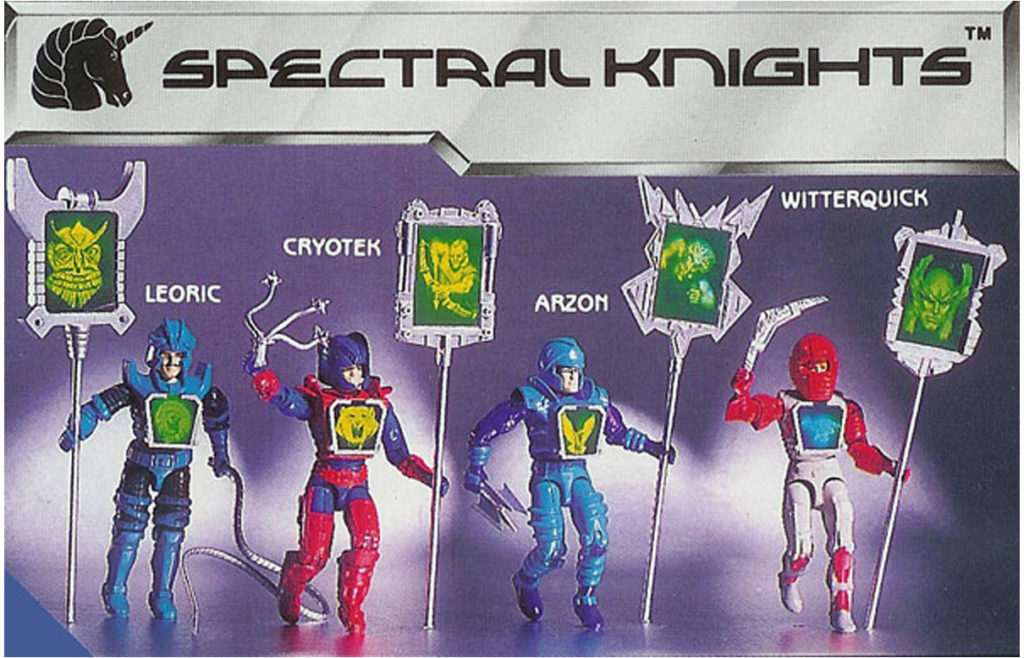
Visionaries: Knights of the Magical Light was a Hasbro toy line released in 1987. The figures were divided between the heroic Spectral Knights and the villainous Darkling Lords, two factions fighting on the planet Prysmos after advanced technology stopped working and magic returned to power.
That setup mattered because it gave the toy line a very specific flavor. Visionaries was not standard sword-and-sorcery. It was not straightforward science fiction. It was a strange hybrid: armored knights in a post-technological world, using magical powers represented by holograms.
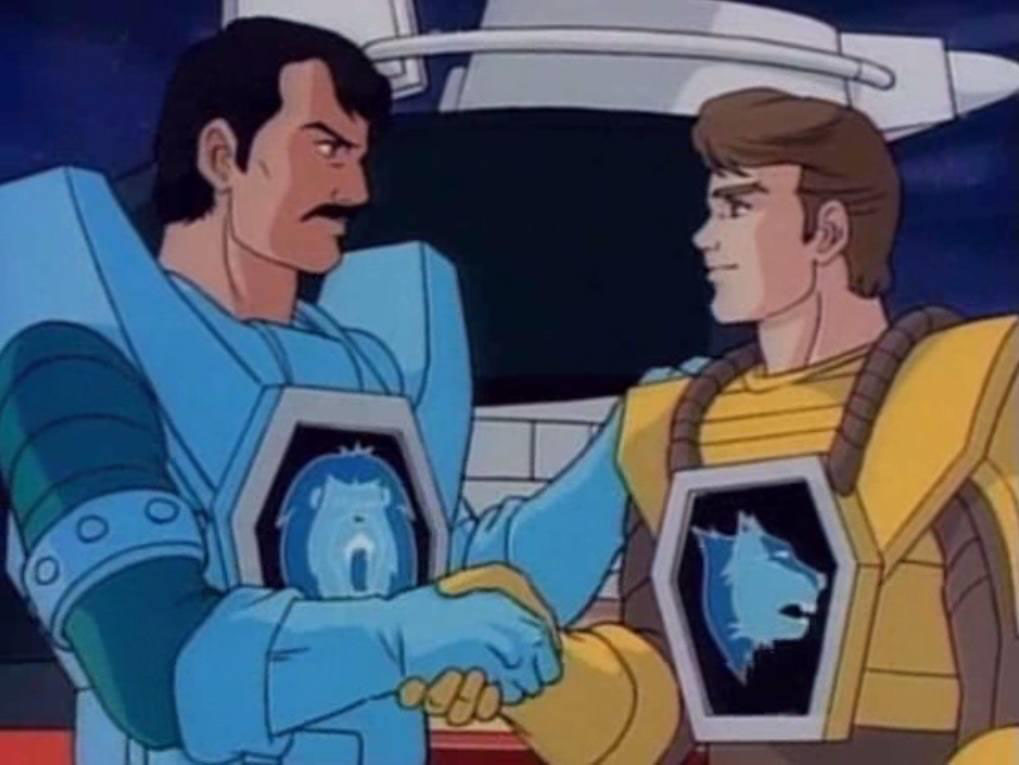
The figures were larger and more detailed than many 3.75-inch toy lines of the era, and the sculpting leaned into armor, helmets, capes, weapons, and faction identity. The central gimmick was the hologram. Each main figure had a holographic chest emblem representing an animal totem, while the magical staffs featured larger holograms tied to spell powers.
That gave the line an immediate shelf identity. You did not have to understand every piece of the story to understand that these toys were doing something unusual. They caught the light. They shimmered. They looked expensive, mysterious, and slightly forbidden in the way good 1980s toy gimmicks often did.
For a kid in a toy aisle, that mattered.
The Holograms Were the Whole Spell
The psychology of Visionaries begins with the holograms.
Holograms felt special in the 1980s. They were not just pictures. They were pictures that changed when you moved them. They seemed futuristic, even when attached to characters who were swinging axes and wearing armor. That contradiction was part of the appeal. The figures looked medieval, but the gimmick felt like magic made with technology.
That is a powerful toy combination.
A sticker can be decoration. A hologram feels like a secret. Tilt the figure, and the image shifts. Move the staff, and the spell symbol catches the light. The toy seems to be holding something that is not entirely flat, not entirely normal, and not entirely explainable to a child who simply knows it looks cooler than a regular emblem.
That made Visionaries feel different from other action figure lines. The gimmick did not involve a spring-loaded punch, a transforming vehicle, a slime feature, or a missile launcher. It was quieter than that. It asked the child to look.
That may have been part of the problem at retail, but it is also part of the reason the line remains memorable.
The best Visionaries toys had a strange kind of presence. They were not just figures. They were little magical objects.
The Line Made Mysticism Feel Like an Action Feature
One of the most interesting things about Visionaries is that it tried to turn mysticism into a toy gimmick.
That is not easy.
Most 1980s action figure lines had very physical hooks. Vehicles transformed. Figures punched. Armor snapped on. Monsters opened their mouths. Ghosts popped apart. Playsets had traps. Visionaries worked differently. Its main fantasy was transformation through identity. A character was not just a knight. He or she had an animal spirit. A staff was not just an accessory. It represented a spell.
That gave the toys a different emotional charge.
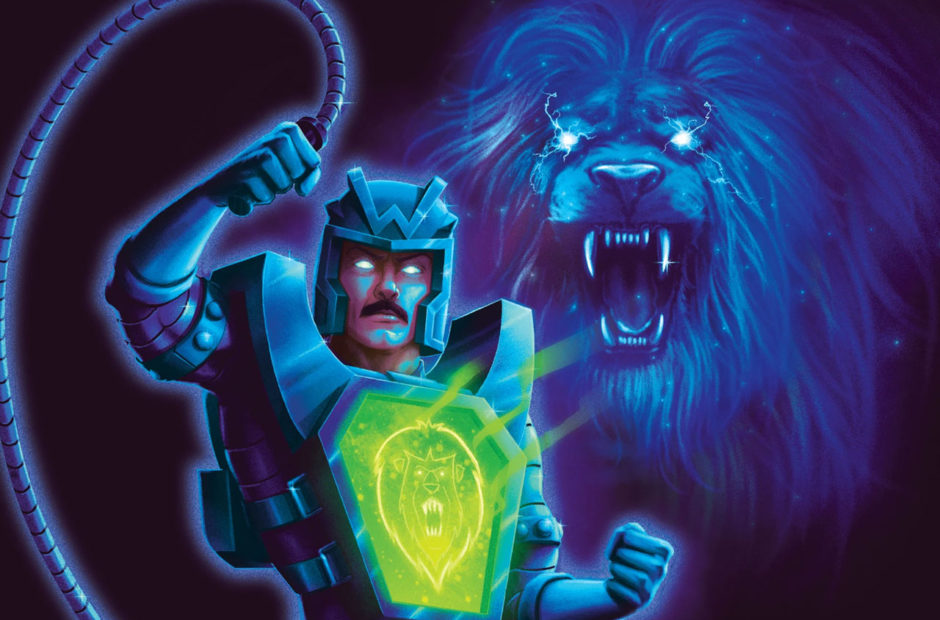
Kids could still stage battles, of courseWhy Visionaries Toys Were Too Weird to Forget – Artwork for the relaunch of the line via ReAction The figures had weapons, vehicles, and opposing factions. But the line was also asking kids to buy into something more symbolic. A lion, an eagle, a wolf, a bear, a shark, a fox, or another totem was not just decoration. It was supposed to reveal something about the character.
That is unusually abstract for a mass-market 1980s toy line.
And that abstraction is part of why Visionaries feels so odd now. It was trying to make inner power, magical identity, and spiritual symbolism feel as playable as a blaster rifle or a transforming robot. That is fascinating. It is also a harder sell when the kid next to you in the aisle is making a robot turn into a truck.
The Cartoon Helped Explain the Weirdness
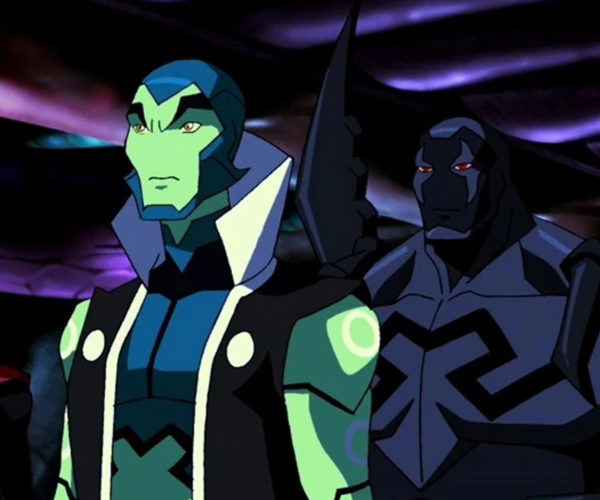
The Visionaries animated series, produced by Sunbow, aired in 1987 and ran for 13 episodes. Like many 1980s cartoons tied to toy lines, it had a lot of work to do. It needed to introduce the world of Prysmos, explain why technology had failed, establish the Spectral Knights and Darkling Lords, define the magical powers, and make all of that feel like something kids could follow between cereal commercials.
That is a lot to put on one short-lived cartoon.
But the cartoon did help. It gave the line a mood. The Why Visionaries Toys Were Too Weird to Forget – Artwork for the relaunch of the line via ReAction of a technological society forced back into magic was stronger than the average toy-commercial setup, and the show leaned into the idea that these characters were living in the aftermath of a world-changing collapse. That gave Visionaries a slightly more elaborate atmosphere than many of its competitors.
The trouble is that atmosphere does not always translate into toy sales.
A child could understand Transformers by watching one transformation. A child could understand M.A.S.K. by seeing a car reveal hidden weapons. Visionaries needed a little more explanation. Why did the hologram matter? What did the staff do? Why did technology stop? Who was Merklynn? What made the Spectral Knights different from the Darkling Lords beyond the usual toy aisle division of good guys and bad guys?
None of that made the line bad, it just made it demanding.
How Visionaries Fit the 1980s Toy Aisle
Visionaries arrived in a toy aisle that was already full of strong identities.
By 1987, kids had been trained to recognize toy lines quickly. G.I. Joe had military hardware and file-card specificity. Transformers had disguise and transformation. Masters of the Universe had muscle fantasy and monstrous color. The Real Ghostbusters had slime, ghosts, and comedy horror. M.A.S.K. had secret vehicles. Teenage Mutant Ninja Turtles was about to kick open an entirely different door.
Into that world came Visionaries, with holographic knights and magical staffs.
That made it stand out, but standing out is not the same as being easy to sell. The line had visual drama, but it did not have the same instantly physical demonstration that powered some of its competitors. A hologram is cool, but it is not a vehicle changing shape in your hand. A staff spell is imaginative, but it is not a missile launching across the room.
That may be the heart of Visionaries as a toy aisle object. It looked premium. It felt mysterious. It had an unusually rich premise. But its central play feature was more about looking and imagining than triggering and repeating.
For some kids, that was magical. For others, the aisle had louder options.
The Vehicles Were Strange in the Right Way
Visionaries was mostly remembered for its figures, but the vehicles helped make the world feel larger.
They also showed how hard the line was trying to create its own identity. These were not sleek science-fiction ships or conventional military vehicles. They were awkward, armored, medieval-futurist machines that looked like they belonged to a world trying to remember how technology used to work while magic was moving into the spare bedroom.
That is meant as a compliment.
The vehicles had the same tension as the figures. They were part machine, part fantasy object, part battle platform, and part toy aisle experiment. Some included holographic elements as well, keeping the visual gimmick tied to the larger line rather than limiting it only to the characters.
That helped Visionaries feel more complete, even if the line never had enough time to grow into a massive world of vehicles and playsets. You could see the shape of a bigger toy universe. You could imagine where Hasbro might have gone with more waves, more factions, more beasts, more bases, and more magic-powered machinery.
That sense of unrealized possibility is a big part of why the line still has collector pull.
Why the Line Did Not Last
Visionaries is usually described as short-lived, and that is accurate. The cartoon lasted 13 episodes. The Star Comics series lasted six issues. The toy line did not become a long-running Hasbro pillar.
It is tempting to turn that into a simple story: the line failed because it was too weird.
That may be partly true, but it is probably too clean.
The late 1980s toy aisle was brutal. Stronger brands were already entrenched, new ones were arriving, and retailers had limited patience for lines that did not move quickly enough. Visionaries also had the challenge of being both visually striking and conceptually complicated. It needed the cartoon to explain the world, but the cartoon did not run long enough to make the property feel unavoidable.
The hologram gimmick was memorable, but it may not have been enough by itself to keep the line alive. Once a child had seen the hologram, the toy still had to compete as an action figure. Against lines with deeper rosters, more vehicles, more episodes, and clearer play patterns, that was a difficult fight.
So yes, Visionaries was weird.
But the bigger issue may be that it was weird in a way that required commitment from the toy aisle, the cartoon schedule, and the child’s imagination all at the same time.
That is a lot to ask from a line that only got one real shot.
Why Collectors Still Care About Visionaries
Collectors still care about Visionaries because the line feels unfinished in the most tantalizing way.
It had a strong premise. It had a distinctive look. It had an unusual gimmick. It had factions, characters, vehicles, magic, mythology, and a world that seemed larger than the number of toys that actually reached shelves. That combination is collector fuel.
There is also the physical appeal of the holograms themselves. A complete Visionaries figure is not just about having the helmet, weapon, and staff. It is about having the holographic elements intact and still visually effective. The gimmick was the identity, which makes condition especially important for collectors.
That gives the line a different kind of collecting tension than many vintage figure lines. Missing weapons matter, of course. Missing staffs matter. But damaged or dull holograms affect the entire point of the toy. If the magical emblem no longer catches the light, the figure loses some of its spell.
There is also the nostalgia of rarity, or at least perceived rarity. Many people remember Visionaries as something they saw briefly, owned partially, or wanted without ever finding much of it. Short-lived lines often gain power because they never had time to become ordinary. They remain suspended in memory as possibilities.
Visionaries benefits from that.
It was there, it was strange, and then it was gone.
The Weirdness Was the Point
The reason Visionaries toys were too weird to forget is that their weirdness was not accidental.
The line was built around contradictions. Medieval armor and futuristic holograms. Magic and failed technology. Action figures and symbolic animal spirits. Toy aisle combat and mystical identity. It looked like a fantasy line, behaved like a science-fantasy line, and sold itself through a visual gimmick that felt unlike almost anything else around it.
That made it harder to explain than some 1980s competitors.
It also made it harder to erase.
Not every toy line that works in memory was a massive success at retail. Some survive because they were everywhere. Others survive because they were so specific that the people who noticed them never quite stopped thinking about them.
Visionaries belongs to that second group.
It may not have conquered the toy aisle, but it did something almost as valuable for collectors. It became one of those lines people still bring up with a particular look in their eyes, as if they are trying to describe a dream they are pretty sure Hasbro actually produced.
And in 1987, Hasbro did.
Holographic knights. Magic staffs. Animal spirits. A dying technological world. One short-lived toy line that still feels like it came from some alternate version of the 1980s.
Too weird to last forever.
Too weird to forget.
Further Retro Toy Box Reading
- Why Masters of the Universe Toys Became a Toy Aisle Powerhouse Again
- Why M.A.S.K. Toys Still Have One of the Best Gimmicks of the 1980s
- Why The Real Ghostbusters Toys Were Stranger Than the Cartoon