Some 1980s toy lines were weird because the story was strange.
Sectaurs was weird because the toys themselves looked like they might crawl away if you stopped watching them.
Released by Coleco in 1985, Sectaurs: Warriors of Symbion combined action figures, insectoid warriors, telepathic bug companions, hand-puppet mounts, comics, animation, and one of the most uncomfortable toy-line textures of the decade. It was a fantasy world where humans had taken on insect and arachnid characteristics after a failed genetic experiment, and where warriors bonded with giant creatures that were part steed, part weapon, and part nightmare fuel.
That is a lot to put on a toy shelf.
But that is also why Sectaurs still stands out. Plenty of 1980s lines had monsters. Plenty had vehicles. Plenty had fantasy warriors. Sectaurs had heroes and villains riding oversized insects you could operate with your hand inside them, which gave the whole line a tactile weirdness that no amount of lore could fully explain away.
The result was not just another sword-and-sorcery action figure line. It was one of the strangest attempts of the 1980s to turn creature play, action figures, and puppet interaction into one toy aisle ecosystem.
What Sectaurs Toys Were
Sectaurs: Warriors of Symbion was a Coleco toy line released in 1985. The property was set on the planet Symbion, where a failed genetic experiment caused insects and arachnids to grow enormous while the inhabitants developed insect-like traits of their own.
The story centered on the heroic Shining Realm of Prosperon and the villainous Dark Domain of Synax. Prince Dargon and the other heroic Sectaurs battled General Spidrax and the forces of the Dark Domain over the Hyves, ancient fortresses tied to the lost powers of Symbion.
As a toy line, the basic structure was familiar enough: heroes, villains, weapons, creatures, a playset, comics, and an animated tie-in. The unfamiliar part was almost everything else. The figures were roughly 6-inch warriors with insectoid features, detailed armor, weapons, and companion creatures called Insectoids. Some of those creatures were smaller action bugs, while the larger mounts were the line’s most memorable pieces.
Those large Insectoids were not just vehicles. Several were hand puppets with plush or creature-like bodies, hard plastic heads, and internal movement features that let a child make the bug legs, wings, or mandibles move by operating them directly.
That one decision changed the whole feel of the line.
The Hand-Puppet Insects Were the Main Event
The psychology of Sectaurs starts with the hand-puppet mounts.
Most action figure vehicles put a layer of plastic between the child and the fantasy. You roll a vehicle. You open a cockpit. You press a button. The toy performs. With Sectaurs, the largest creatures asked for something more intimate and much stranger: put your hand inside the bug.
That made the line feel different from almost everything around it.
The large Insectoids were not merely ridden by the figures. They were animated by the child’s hand. That meant the creature was not just an accessory to the action figure. It was a performance object. A child could make it crawl, attack, bite, fly, or menace another figure in a way that felt more organic than pushing a vehicle across the carpet.
There is a reason collectors still talk about that feature. It was deeply toyetic, but not in the standard 1980s way. It was not a spring-loaded missile or a transforming panel. It was tactile creature control. The toy became alive because the child supplied the body movement from inside it.
That is brilliant, and also just unsettling enough to be memorable.
The Line Felt More Tactile Than Most Action Figure Worlds
Sectaurs had a texture problem, and that is meant as praise.
Many 1980s action figure lines were built around hard plastic. Figures, vehicles, bases, armor, weapons, and monsters usually shared the same general toy feel. Sectaurs mixed that with soft-bodied creatures, puppet mechanics, and insect designs that made the line feel more physical than usual.
That matters because the subject was already about bugs.
Insects and arachnids can make people uncomfortable because they are small, quick, jointed, alien-looking things that move in ways mammals do not. Sectaurs made them huge, then asked children to control them. The toys were not gross in the slime-toilet way that some later lines would be. They were strange in a more tactile, creaturely way.
The big mounts gave the line a sense of movement and contact that a normal plastic vehicle could not. Even when the fiction was complicated, the physical experience was simple: this thing is a giant bug, and your hand makes it attack.
That is the part kids remembered.
The Figures Were Bigger Than the Usual Small-Scale Heroes
The figures themselves also helped Sectaurs stand apart.
At roughly 6 inches, they were larger than many of the 3.75-inch figure lines that had dominated so much of the early 1980s action aisle. That put them closer in shelf presence to lines such as Masters of the Universe, but the design language was very different. These were not muscle-bound barbarians with bright fantasy colors. They were insect warriors with segmented armor, antennae, claws, helmets, bug-like facial features, and weapons that suggested a world where everything had evolved slightly too far in the wrong direction.
The larger scale gave the sculpting room to breathe. Armor details, facial features, weapons, and faction differences were easier to read. It also helped the figures work with the larger Insectoid mounts. The riders looked substantial, but the creatures still felt large enough to dominate the presentation.
That balance was important. If the figures had been too small, the mounts might have felt like separate plush gimmicks. If the figures had been too large, the creatures might not have felt impressive enough. Coleco found a scale where the warriors and bugs looked like they belonged together.
The result was a line that felt less like soldiers with vehicles and more like riders bonded to living war creatures.
The Tele-Bonding Concept Made the Bugs More Than Vehicles
The fiction around Sectaurs gave the Insectoids a stronger role than simple mounts.
Characters were connected to their companions through a telepathic bond, often described through the idea of tele-bonding. That relationship meant the warriors and creatures shared a deeper connection than rider and vehicle. In the story, the Insectoids were intelligent partners, not just transportation.
That was a smart way to support the toys.
Children did not need to recite the lore to understand the play value, but the concept made the creatures feel more important. A horse, spaceship, or motorcycle can be replaced by another vehicle. A bonded creature feels personal. It gives the figure a companion, and it gives the child a reason to treat the bug as part of the character’s identity.
That emotional connection mattered because the Insectoids were the line’s most distinctive feature. The fiction told children that the weird bug thing was not optional background decoration. It was central to who these characters were.
That helped make the line feel like a world rather than a loose assortment of bug-themed warriors.
The Hyve Playset Was Exactly the Kind of Bad Idea the Line Needed
A toy line about insect warriors and ancient powers needed a big playset, and Sectaurs got one with the Hyve.
The Hyve was one of those 1980s playsets that seems almost impossible to separate from the ambition of the line around it. It was large, strange, and full of features: a trap door, bridge, cage, weapon elements, and a bio-laboratory-style interior that fit the idea of ancient, dangerous Symbion technology.
It also gave the line a destination.
That was important because Sectaurs could easily have become just figures and bugs. The Hyve told kids there was a larger mystery at the center of the world. The characters were not simply fighting because one side was good and the other was evil. They were searching for access to ancient fortresses and lost power.
For play purposes, that meant the Hyve could be a base, a prize, a trap-filled ruin, or the center of the conflict. It gave the figures somewhere to go and the Insectoids something to attack. A line this weird needed a setting that felt just as weird, and the Hyve understood the assignment.
More Retro Toy Box Reading
The toy aisle was bigger, weirder, and more dangerous to your allowance than any one article can cover.
The Cartoon and Comics Had a Lot of Explaining to Do
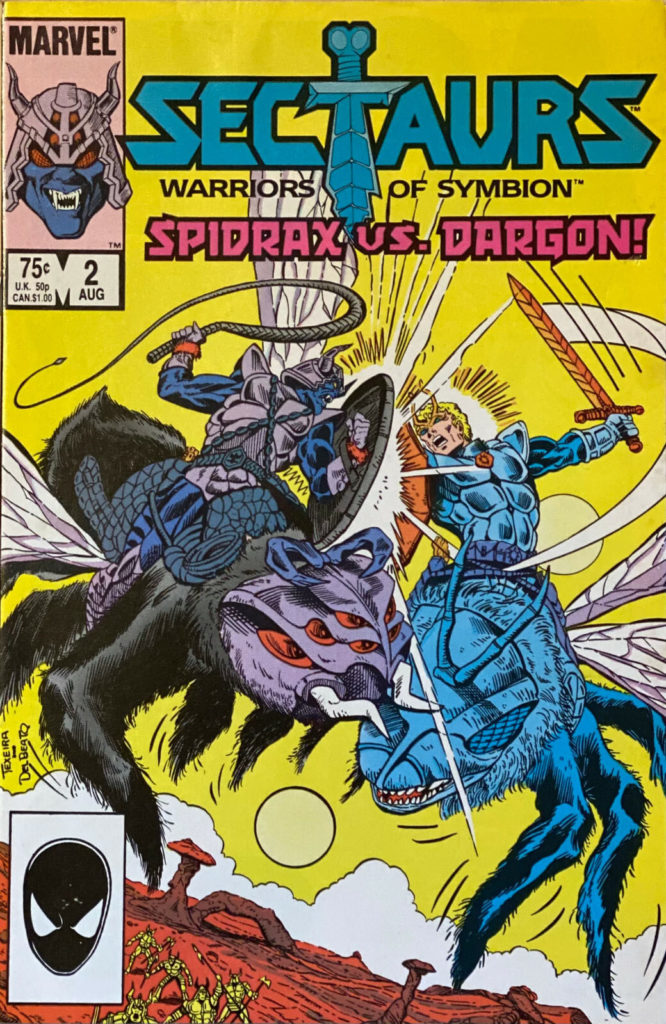
Sectaurs had media support, but the property was asking a lot from its tie-ins.
Ruby-Spears produced a five-episode animated miniseries in 1985, and Marvel published an eight-issue comic series from 1985 to 1986. The story world had heroes, villains, factions, Hyves, ancient powers, genetic history, tele-bonding, strange geography, and enough proper nouns to make the line feel much larger than its retail life.
That was both a strength and a challenge.
The cartoon and comics gave the line more atmosphere than a simple bug-war premise would have had on its own. They explained Symbion and gave the toys a mythic adventure structure. But they also had to sell a concept that was not as instantly clean as “robots turn into vehicles” or “soldiers fight terrorists.”
The toys were visually immediate. The story was denser.
That mismatch may be part of why Sectaurs is so interesting now. It looks like a line that expected to grow into a larger mythology, but it had to do a lot of world-building very quickly. The media support gave collectors more to revisit later, but the toy aisle still had to do most of the selling in the moment.
How Sectaurs Fit the 1980s Toy Aisle
Sectaurs arrived in 1985, which means it entered an action figure aisle already crowded with strong identities.
Masters of the Universe had fantasy muscle. G.I. Joe had military detail. Transformers had conversion. M.A.S.K. had secret vehicles. The Real Ghostbusters would soon bring comedy monsters into the aisle. Every successful line needed a hook that could be understood quickly and demonstrated clearly.
Sectaurs certainly had a hook.
The challenge was that the hook was unusual in a way that may have been easier to admire than mass-market. Giant insect mounts with hand-puppet features were unforgettable, but they were also big, strange, and likely more expensive than smaller figure-and-accessory combinations. The line did not just ask a kid to want an action figure. It asked them to want a whole insect-warrior ecosystem.
That made Sectaurs visually powerful, but also commercially demanding. A child might be fascinated by the toys. A parent might look at the price, the size, and the giant bug body and require additional negotiations.
That is not a small factor in a toy aisle.
Why Sectaurs Did Not Last
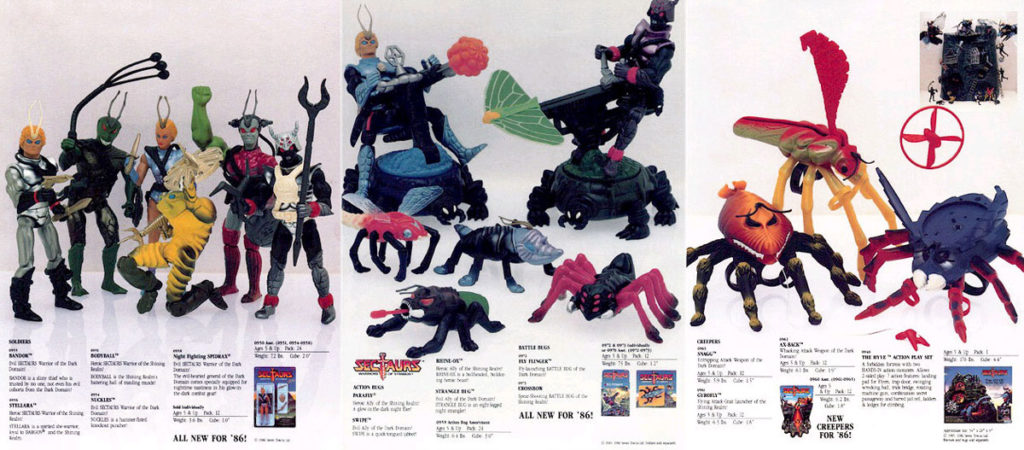
Sectaurs is remembered as a short-lived line, and the available history supports that. The core Coleco toy line was released in 1985, with planned additional figures and creatures that did not fully reach the market. Night Fighting Dargon is often noted as the only figure from the planned second wave that was actually released, while other planned pieces became part of collector lore.
There are several likely reasons the line did not become a long-running brand, though it is worth being careful with certainty.
The toys were distinctive, but distinctive can be risky. The large Insectoid puppets made the line stand out, but they also made it harder to collect casually. The fiction was imaginative, but not instantly simple. The media support existed, but the animated series was only five episodes. Coleco itself was also facing broader business problems in the mid-to-late 1980s, which likely did not help any ambitious new toy property that needed sustained support.
None of that means Sectaurs was a bad idea.
It means it was a big, weird, tactile, expensive-looking idea in a toy aisle that was already full of big ideas. Some toy lines can survive by being easy to expand. Sectaurs may have been harder to grow because its most memorable feature was also its most unusual and demanding one.
Why Collectors Still Care About Sectaurs
Collectors still care about Sectaurs because the line is almost impossible to mistake for anything else.
The figures have a strong look. The insect mounts have an even stronger one. The Hyve is a major display piece. The whole line feels like a fragment from an alternate 1980s where toy companies went further into tactile fantasy-horror than they usually did.
Completeness is a major part of the collector appeal. Weapons, shields, accessories, Insectoids, wings, puppet bodies, and playset parts all matter. The large bug companions are not optional bonuses. They are the identity of the line. A figure without its creature can still be interesting, but the full effect depends on seeing the warrior and Insectoid together.
Condition also matters in a specific way. Hard plastic figures have one set of aging problems. Soft-bodied or plush-like creature elements introduce another. Puppet features, fabric, wings, legs, and internal movement mechanisms all create preservation issues that make complete, clean examples more compelling.
That gives Sectaurs a collector texture that matches the line itself: odd, specific, and a little more complicated than it first appears.
The Weirdness Was Physical
The reason Sectaurs toys remain one of the weirdest lines of the 1980s is that the weirdness was not only in the story.
It was in the object.
A child did not just imagine riding a giant insect. They put their hand inside one and made it move. The toy line turned creature fantasy into a hand-operated performance, and that gave Sectaurs a quality most action figure lines did not have. It was not just visual. It was tactile.
That is why the line still feels so singular. The concept was strange, the world was dense, and the retail life was short, but the toys themselves did something memorable. They made the child part rider, part puppeteer, and part bug monster operator.
There is no clean modern equivalent for that feeling, which is probably why collectors still remember it so strongly.
Sectaurs did not become one of the decade’s dominant toy brands. It did not need to. Some lines survive because they were everywhere. Others survive because they were so odd that the people who noticed them never really filed them away.
Coleco put insect warriors, giant bug puppets, telepathic bonds, ancient fortresses, and fantasy weapons into one toy line.
That is not the kind of thing toy memory lets go of easily.
SEO Metadata
SEO title: Why Sectaurs Toys Were One of the Weirdest Lines of the 1980s
Meta description: Sectaurs toys mixed insect warriors, giant bug puppets, telepathic mounts, and Coleco fantasy into one of the strangest 1980s toy lines.
Slug: sectaurs-toys-weirdest-1980s-lines
Focus keyword: Sectaurs toys
Secondary keywords: Sectaurs Warriors of Symbion, Coleco Sectaurs, 1985 toy lines, insect action figures, hand puppet toys, Hyve playset, vintage Sectaurs, 1980s fantasy toys
Internal Link Ideas
- Link to the Retro Toy Box article on Visionaries toys when discussing short-lived 1980s fantasy lines with unusually dense worlds.
- Link to the Retro Toy Box article on vintage toy playsets when discussing the Hyve and playsets as destinations.
- Link to the Retro Toy Box article on Dino-Riders toys when discussing large creature-based play patterns.
- Link to the Retro Toy Box article on Food Fighters toys when discussing lines remembered for being too specific to forget.
- Later, link this article to future Retro Toy Box entries on Coleco, creature-based toy lines, and 1980s toy lines that were too weird to last.
Image Suggestions
- Main image: Coleco Sectaurs figures with large Insectoid hand-puppet mounts. Alt text: Coleco Sectaurs toys with action figures and insect puppet mounts
- Secondary image: Prince Dargon with his Insectoid companion Dragonflyer. Alt text: Sectaurs Prince Dargon figure with Dragonflyer insect mount
- Secondary image: General Spidrax with Spider-Flyer. Alt text: Sectaurs General Spidrax figure with Spider-Flyer insect mount
- Secondary image: The Hyve playset with figures and insect creatures. Alt text: Coleco Sectaurs Hyve playset with figures and insect creatures
- Secondary image: Carded or boxed Sectaurs toy packaging showing the fantasy insect artwork. Alt text: Vintage Coleco Sectaurs toy packaging with insect warrior artwork
Fact-Check Note
Key details checked for this article: Sectaurs: Warriors of Symbion was a Coleco toy line released in 1985; the property centered on the Shining Realm of Prosperon and the Dark Domain of Synax on the planet Symbion; the toy line included roughly 6-inch figures, Insectoid companions, large hand-puppet-style steeds, Action Bugs, Battle Bugs, and the Hyve playset; Ruby-Spears produced a five-episode animated miniseries in 1985; and Marvel published an eight-issue comic series from 1985 to 1986. Some planned second-wave toys were not broadly released, with Night Fighting Dargon commonly noted as the limited release from that planned assortment.