Television doesn’t change all at once.
Usually, one show tries something different. Maybe it tells stories in a way networks previously considered too risky. Maybe it reaches an audience broadcasters had largely ignored. Sometimes it introduces a production technique that eventually becomes standard, or proves that viewers will embrace a type of program executives were convinced could never work.
Then everyone else starts paying attention.
Throughout television history, certain series have created clear dividing lines between what came before them and what followed. I Love Lucy helped establish production techniques that would influence sitcoms for decades. All in the Family demonstrated that a network comedy could confront subjects television had traditionally avoided. Hill Street Blues helped transform the structure of the television drama, while The Sopranos permanently changed expectations for what a cable series could accomplish.
That doesn’t necessarily mean these are the greatest television shows ever made. Some were enormously popular, while others attracted relatively small audiences. Some innovations associated with them had been attempted elsewhere before. What matters is that these were the shows that made audiences, networks, and other television creators take notice.
Their influence can still be seen in the programs we watch today.
From the earliest days of network television through cable, reality TV, and the modern streaming era, these are the shows that didn’t simply become successful. They helped change what television could be.
I Love Lucy (1951–1957)
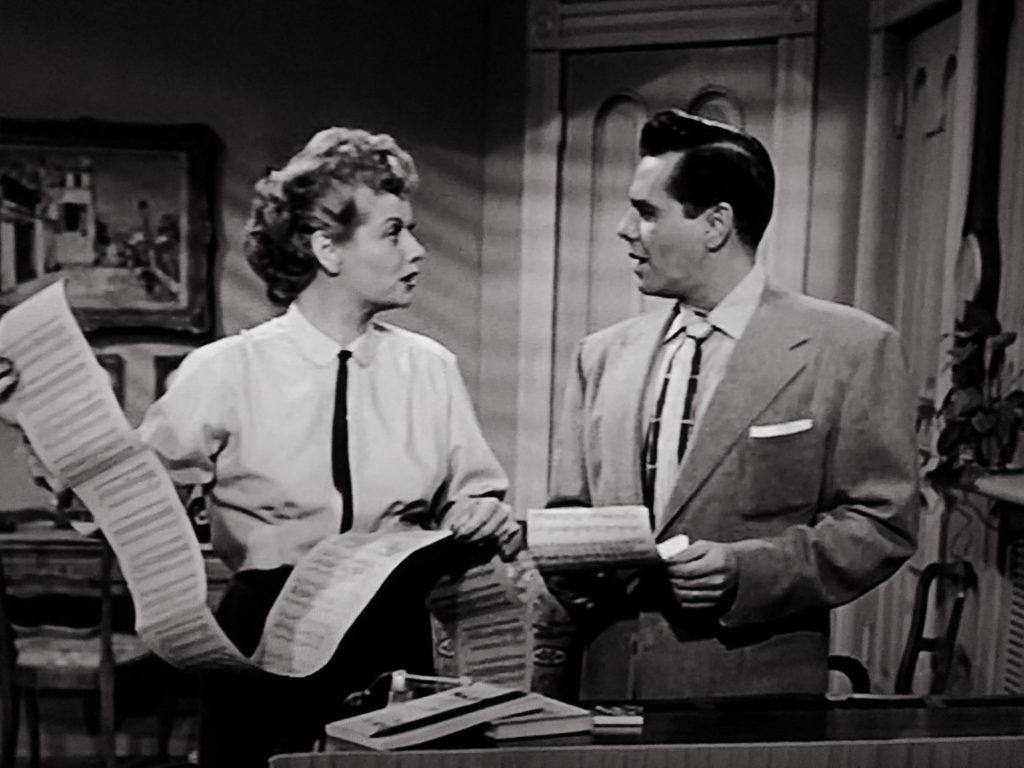
It’s difficult to talk about television history without eventually arriving at I Love Lucy. Lucille Ball and Desi Arnaz didn’t invent the situation comedy, but their series helped establish how sitcoms would be produced, preserved, and enjoyed for generations.
How it changed television
Most television programs in the early 1950s originated in New York and were broadcast live, with lower-quality recordings sometimes made for stations in other time zones. Ball and Arnaz wanted to produce I Love Lucy in Hollywood and shoot the series on film before a live studio audience.
Working with cinematographer Karl Freund, the production used multiple film cameras simultaneously to capture different angles of each performance. The approach preserved the energy of a live audience while giving editors coverage of the action without requiring actors to repeatedly perform scenes for different camera setups. The basic multi-camera format became a television comedy standard that remains in use decades later.
Filming the episodes also produced high-quality copies that could be shown again. Desilu’s ownership arrangements helped turn those episodes into valuable assets and demonstrated the enormous potential of television reruns.
Its lasting influence
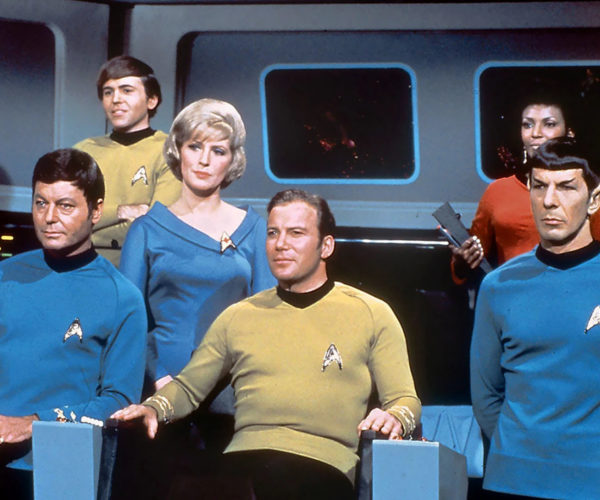
The show’s impact extends well beyond production techniques. Lucille Ball became one of television’s defining comedy stars, while Ball and Arnaz built Desilu into a major independent production company. The company would later play an important role in bringing series including Star Trek and Mission: Impossible to television.
Modern multi-camera sitcoms may look considerably different from I Love Lucy, but much of the production language remains recognizable. More than 70 years later, the series isn’t merely an early television classic. It’s part of the foundation on which American television was built.
Where to watch: Available to stream; sold on physical media and digitally.
The Twilight Zone (1959–1964)
Science fiction existed on television before The Twilight Zone, but Rod Serling demonstrated just how powerful fantastic storytelling could become when it was used to examine the real world. The anthology series wrapped stories about prejudice, conformity, nuclear war, authoritarianism, loneliness, and human nature inside tales of aliens, monsters, time travel, and impossible events.
How it changed television
Serling had already experienced the frustrations of writing socially conscious television drama while dealing with network and sponsor interference. Science fiction gave him another way to approach controversial subjects. A story set in an ordinary American neighborhood might encounter resistance, but move the same ideas to an alien planet or an alternate reality and suddenly there was room to explore them.
The Twilight Zone also demonstrated the strengths of anthology television. New characters and settings could appear every week, allowing writers to experiment with genres, tones, and ideas without maintaining a continuing storyline. Episodes could function as horror stories, comedies, morality plays, or science fiction while still unmistakably belonging to the same series.
Its lasting influence
The show’s influence can be found throughout decades of genre television. Series including The Outer Limits, Tales from the Crypt, and Black Mirror owe an obvious debt to the format Serling helped popularize, while countless other shows have borrowed its combination of speculative storytelling and social commentary.
Even the phrase “Twilight Zone” escaped the series itself and became shorthand for any bizarre or inexplicable situation. That’s an extraordinary cultural footprint for a television program that originally ran for only five seasons.
More importantly, The Twilight Zone helped establish that science fiction television could do far more than provide escapism. Sometimes the strangest imaginary worlds offered the clearest way to examine our own.
Where to watch: Available to stream; sold on physical media and digitally.
All in the Family (1971–1979)
Television sitcoms had tackled serious subjects before All in the Family, but Norman Lear’s groundbreaking series brought arguments about American society directly into millions of living rooms. Race, religion, politics, women’s rights, sexuality, and generational conflict became material for a prime-time comedy in ways that were startling for network television in the early 1970s.
How it changed television
At the center of the series was Archie Bunker, a working-class husband and father whose prejudices frequently collided with the rapidly changing world around him. Instead of avoiding uncomfortable conversations, All in the Family made those conflicts the foundation of the show.
The approach was risky. Archie could be funny and occasionally sympathetic without the series pretending his bigotry was harmless. Other characters challenged him directly, allowing episodes to explore disagreements rather than simply delivering tidy lessons at the end of 30 minutes.
Its enormous popularity demonstrated that audiences would watch sitcoms dealing with subjects network executives had often considered too controversial for comedy. That success helped open the door for a wave of socially conscious television during the 1970s.
Its lasting influence
The impact spread almost immediately. All in the Family produced or helped launch a remarkable collection of successful spinoffs, including Maude and The Jeffersons, which tackled additional subjects rarely explored so openly on television.
More broadly, the series changed expectations for what sitcoms could discuss. Decades of comedies that use humor to examine politics, prejudice, class, and social change followed a path that All in the Family helped make viable in prime time.
Television comedy didn’t have to exist apart from difficult conversations happening in the real world. It could walk directly into the middle of them.
Where to watch: Available to stream; sold on physical media and digitally.
Saturday Night Live (1975–Present)
NBC
When Saturday Night Live premiered in 1975, late Saturday night wasn’t considered one of television’s most valuable destinations. The series turned that overlooked stretch of the schedule into a showcase for live comedy, music, political satire, and performers who would shape American entertainment for generations.
How it changed television
The show’s live format made unpredictability part of its identity. Sketches could succeed spectacularly or collapse in front of millions of viewers, while topical material could respond to events far more quickly than most scripted television programs of the era.
That immediacy became especially important to political comedy. Presidential candidates, elected officials, and major news events could be transformed into sketches almost as soon as they entered the national conversation. Impersonations of political figures became cultural touchstones in their own right, sometimes shaping public perceptions of the people being portrayed.
The series also combined sketch comedy with musical performances and celebrity hosts, creating a format flexible enough to constantly reinvent itself as popular culture changed.
Its lasting influence
Perhaps the clearest measure of Saturday Night Live‘s influence is the extraordinary number of careers it helped launch. Chevy Chase, John Belushi, Dan Aykroyd, Gilda Radner, Eddie Murphy, Mike Myers, Dana Carvey, Adam Sandler, Will Ferrell, Tina Fey, Amy Poehler, Kristen Wiig, and many others became major comedy stars after appearing on the show.
Its influence also extends far beyond its cast. Countless sketch programs and late-night comedy series have borrowed elements of its topical humor, live energy, and willingness to react immediately to popular culture.
More than 50 years after its debut, Saturday Night Live has survived countless cast changes, shifting comedy trends, and predictions of its demise. In the process, it transformed a forgotten corner of the weekly television schedule into an American institution.
Where to watch: Available to stream and digitally.
Hill Street Blues (1981–1987)
Hill Street Blues asked television audiences to watch a drama differently. Cases overlapped, characters carried problems from one episode into the next, and the police station operated as a complicated workplace filled with people whose personal lives could be every bit as messy as the streets they patrolled.
How it changed television
Created by Steven Bochco and Michael Kozoll, Hill Street Blues rejected the clean structure common to many earlier police procedurals. An investigation didn’t necessarily begin and end within a single hour. Multiple stories unfolded simultaneously, minor characters could gradually become important, and consequences frequently carried across episodes.
The series also embraced a large ensemble instead of building every story around one dominant star. That gave the fictional Hill Street precinct the feeling of an actual workplace where dozens of lives and problems were constantly intersecting.
Its visual presentation contributed to that sense of controlled chaos. Handheld cameras, overlapping dialogue, crowded rooms, and scenes that appeared to capture events already in progress gave the show an immediacy that distinguished it from more polished television dramas of the period.
Its lasting influence
The fingerprints of Hill Street Blues can be found across decades of television drama. St. Elsewhere, NYPD Blue, ER, Homicide: Life on the Street, and countless serialized ensemble dramas followed approaches it helped establish with mainstream audiences.
Modern viewers are accustomed to remembering character relationships and continuing storylines from week to week. In 1981, asking audiences to pay that much attention was considerably less common.
Hill Street Blues helped prove they would.
Where to watch: Available to stream; sold on physical media and digitally.
The Simpsons (1989–Present)
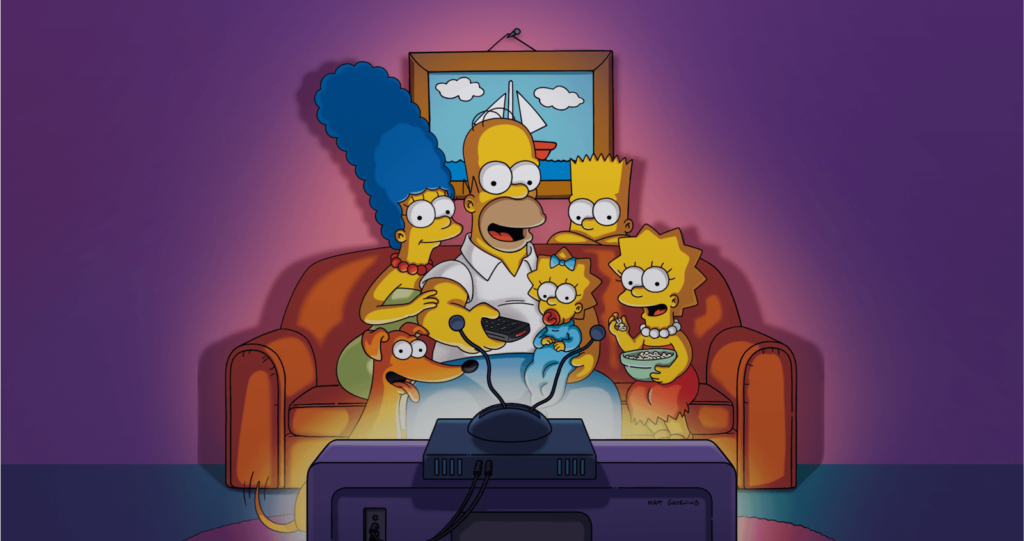
By the early 1990s, Bart Simpson was everywhere. T-shirts, toys, catchphrases, and controversy turned The Simpsons into a cultural phenomenon, but its most important accomplishment was much bigger: it helped make prime-time animation a major force in American television again.
How it changed television
When the Simpson family graduated from shorts on The Tracey Ullman Show to its own series in 1989, American network television had little resembling it. The show looked like a family sitcom, but animation allowed Springfield to expand into an enormous world filled with recurring characters, absurd situations, celebrity appearances, and satire that could target virtually every corner of American culture.
Its early success gave the young Fox network one of its first signature hits. More importantly, The Simpsons demonstrated there was a substantial prime-time audience for animation aimed at adults as well as younger viewers.
Its lasting influence
The wave that followed reshaped television animation. Beavis and Butt-Head, King of the Hill, South Park, Family Guy, Futurama, and numerous other series benefited from a marketplace in which animated programs were no longer viewed primarily as children’s entertainment.
The show’s influence also extends into comedy itself. Its rapid-fire references, layered jokes, enormous supporting cast, and willingness to parody everything from politics to movies became part of the language of modern television comedy.
After decades on the air, it’s easy to take The Simpsons for granted. Its greatest influence may be that an animated comedy airing in prime time no longer seems remotely unusual.
Where to watch: Available to stream; sold on physical media and digitally.
Twin Peaks (1990–1991)
For several months in 1990, one question seemed to be everywhere: Who killed Laura Palmer? Twin Peaks turned the murder of a teenage girl in a small Washington town into a national obsession, but the series’ greater legacy came from everything creators David Lynch and Mark Frost built around that mystery.
How it changed television
Twin Peaks looked and sounded unlike almost anything airing on American network television at the time. Lynch brought a cinematic sensibility to the series, combining murder mystery, soap opera, comedy, horror, surrealism, and supernatural elements without worrying about whether they comfortably belonged together.
The series also demanded patience from its audience. Mysteries stretched across episodes, strange details weren’t immediately explained, and characters who initially appeared peripheral could become essential to the larger story. Viewers were encouraged to search for clues and discuss theories between episodes, turning the show into an early example of the kind of intensely analyzed serialized television that would become increasingly common decades later.
Its lasting influence
The influence of Twin Peaks can be seen in series ranging from The X-Files and Lost to Fargo and countless other dramas willing to combine genre storytelling, serialized mysteries, and distinctive visual styles.
Its original network run lasted only two seasons, but its impact far exceeded its ratings longevity. Twin Peaks helped demonstrate that television could be strange, cinematic, demanding, and deliberately difficult to categorize.
Decades later, a television series being described as “Lynchian” still tells audiences exactly what kind of experience they should expect.
Where to watch: Available to stream; sold on physical media and digitally.
The Real World (1992–2017)
Seven strangers picked to live in a house and have their lives taped sounded like a relatively simple experiment when MTV launched The Real World in 1992. What followed helped establish a television genre that would eventually occupy enormous portions of network and cable schedules around the world.
How it changed television
The Real World placed young adults with different backgrounds, personalities, and beliefs under one roof and allowed their relationships and conflicts to become the story. There were no fictional characters or conventional scripts driving the action. The participants themselves supplied the drama.
The show’s producers then shaped hundreds of hours of footage into continuing narratives, using interviews with cast members to provide commentary on events. That combination of observational footage, interpersonal conflict, and direct-to-camera confessionals became fundamental to reality television.
The series also addressed subjects that weren’t always receiving comparable attention elsewhere on television. The third season’s Pedro Zamora brought conversations about HIV/AIDS and LGBTQ issues into homes across America, demonstrating that unscripted television could produce moments with significance beyond interpersonal drama.
Its lasting influence
The reality television explosion that followed went far beyond the format of The Real World, but many of its storytelling techniques became genre standards. Confessionals, carefully assembled character arcs, strangers placed together specifically to generate interaction, and ordinary people becoming television personalities are now so familiar that it’s easy to forget how unusual they once seemed.
MTV also turned the concept into a larger franchise, most notably through The Challenge, while reality television eventually expanded into competition shows, dating programs, lifestyle series, and countless other formats.
The Real World didn’t just put cameras in a house. It helped convince the television industry that ordinary people could provide enough story to build an entire genre around them.
Where to watch: Select seasons are available to stream; episodes and seasons may also be available digitally.
The Sopranos (1999–2007)
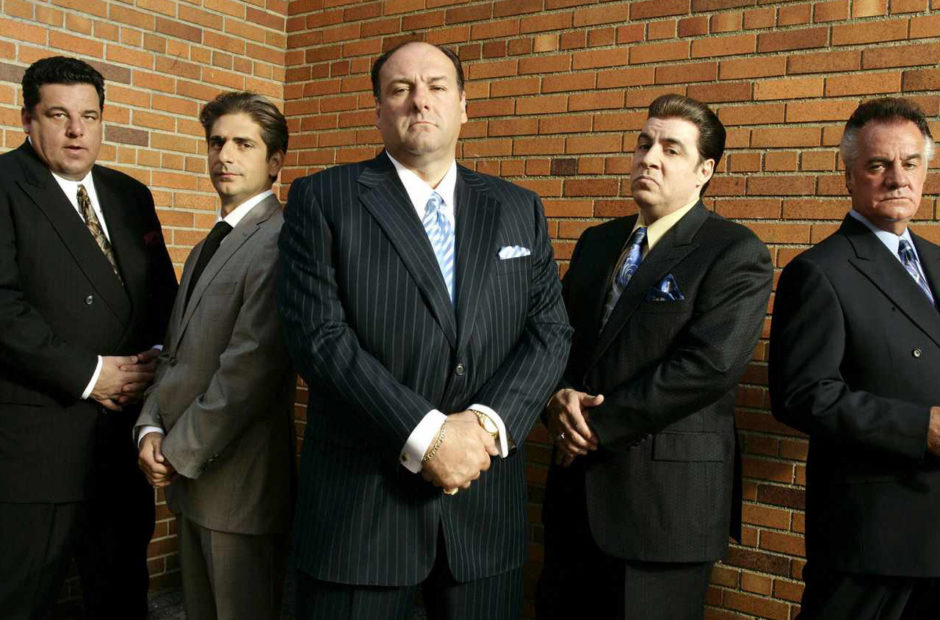
When Tony Soprano walked into Dr. Jennifer Melfi’s office, television gained a leading man who would have been difficult to imagine at the center of a major drama only a few years earlier. He was a murderer, an adulterer, a mob boss, and frequently a terrible person. The Sopranos nevertheless asked audiences to spend years trying to understand him.
How it changed television
David Chase’s series rejected the idea that a television protagonist needed to be conventionally heroic or even particularly likable. Tony could be charming and vulnerable in one scene and horrifying in the next. His therapy sessions allowed the series to examine him psychologically without providing easy excuses for his behavior.
The show also benefited enormously from airing on HBO. Freed from many of the content restrictions and commercial considerations of broadcast television, The Sopranos could approach violence, sexuality, language, and storytelling with considerably more freedom. Episodes didn’t always resolve neatly, supporting characters could carry substantial stories of their own, and major developments could occur without following familiar network formulas.
Its critical acclaim and enormous cultural impact helped establish original cable programming as a destination rather than an alternative to the broadcast networks.
Its lasting influence
The wave of morally complicated television protagonists that followed is difficult to separate from Tony Soprano. The Shield, Mad Men, Breaking Bad, Dexter, and numerous other dramas asked audiences to invest in deeply flawed central characters without requiring those characters to become traditional heroes.
The series also helped accelerate the rise of what became known as prestige television, where ambitious serialized dramas attracted major creative talent and were discussed with the same seriousness traditionally reserved for film.
HBO’s famous slogan promised that what it was making wasn’t television. Ironically, The Sopranos helped change television so thoroughly that television itself eventually caught up.
Where to watch: Available to stream; sold on physical media and digitally.
Survivor (2000–Present)

During the summer of 2000, millions of Americans became intensely invested in a group of strangers voting one another off an island. By the time Survivor reached its first finale, the question of who would win the million-dollar prize had become a national event, and American television schedules were about to change dramatically.
How it changed television
Survivor combined competition, strategy, interpersonal conflict, and unscripted storytelling into an extraordinarily effective format. Contestants weren’t merely competing in physical challenges. They had to build alliances, manipulate rivals, manage relationships, and ultimately convince eliminated competitors that they deserved to win.
That social strategy gave producers an enormous amount of material from which to construct continuing stories. Heroes and villains emerged, alliances collapsed, betrayals became major television moments, and viewers returned each week to discover who would be eliminated next.
The show’s enormous ratings demonstrated that reality competition could compete directly with expensive scripted programming in prime time. Networks responded quickly, launching or importing formats in hopes of finding the next phenomenon.
Its lasting influence
The reality competition boom produced series including The Amazing Race, American Idol, The Bachelor, and countless others, while elimination ceremonies and strategic gameplay became familiar pieces of television vocabulary.
Survivor itself proved remarkably durable. The basic structure has evolved over the years, but the central idea of strangers forming a temporary society while competing for a prize has remained compelling across dozens of seasons.
Reality television was already developing when Survivor arrived, but its blockbuster success changed the economics and priorities of American prime time. After the summer of 2000, every major network knew an unscripted format could become one of the biggest shows on television.
Where to watch: Available to stream; select seasons are also available digitally.
Lost (2004–2010)
On Sept. 22, 2004, Oceanic Flight 815 crashed onto a mysterious island and television audiences immediately started asking questions. What was the monster in the jungle? Why was there a polar bear on a tropical island? Who was John Locke before the crash? Lost turned those questions into more than plot points. They became the foundation of a massive conversation that continued between episodes, seasons, and eventually across the internet.
How it changed television
Lost combined the production scale of an action movie with an enormous ensemble cast, serialized storytelling, science fiction, character drama, and an expanding mythology. Its flashback structure allowed episodes to concentrate on individual survivors while the island story continued moving forward, gradually revealing connections between characters who appeared to have been strangers.
The series also arrived at exactly the right moment for online fandom. Viewers analyzed screenshots, searched for hidden clues, debated theories on message boards, investigated mysterious websites, and scrutinized everything from background props to seemingly insignificant lines of dialogue. Watching the episode was only the beginning of the experience.
ABC encouraged that participation with online material and alternate reality games that expanded the world beyond the weekly broadcast. Television fandom had existed for decades, but Lost demonstrated how effectively a network series could build an ongoing relationship with an increasingly connected audience.
Its lasting influence
The success of Lost inspired networks to pursue their own mythology-heavy serialized dramas, although many discovered that creating a compelling mystery was considerably easier than sustaining one.
Its broader influence has lasted. Modern audiences routinely dissect episodes online within minutes of release, develop elaborate theories, and expect creators to hide details intended for repeat viewing. That culture didn’t begin with Lost, but the series helped move it into the television mainstream.
It turned “What happens next?” into only half the conversation. The other half became, “What does all of this mean?”
Where to watch: Available to stream; sold on physical media and digitally.
The Office (2005–2013)
A glance at television comedy in the years after The Office reveals just how thoroughly its style became part of the medium. Characters acknowledging the camera, awkward silences allowed to linger, documentary interviews interrupting the action, and humor built around uncomfortable workplace interactions all became increasingly familiar elements of American sitcoms.
How it changed television
Adapted from the British series created by Ricky Gervais and Stephen Merchant, the American Office initially stayed relatively close to its source before developing its own identity. The fictional documentary format eliminated the traditional studio audience and allowed characters to communicate with viewers simply by looking into the camera.
That changed the rhythm of the comedy. A reaction shot could become the punchline. Jim Halpert didn’t need to explain what he thought of Michael Scott’s latest disaster. One glance toward the documentary crew could say everything.
The series also found comedy in an intentionally ordinary environment. Dunder Mifflin wasn’t a glamorous workplace filled with extraordinary people. It was a regional paper company populated by coworkers who irritated, entertained, befriended, and occasionally fell in love with one another.
Its lasting influence
The mockumentary format spread throughout American television comedy, most visibly in series such as Parks and Recreation and Modern Family. Even shows that didn’t adopt the format borrowed elements of its naturalistic performances, uncomfortable pauses, and character-driven humor.
Its second life through streaming made its influence even larger. New generations discovered the series years after its NBC run ended, helping turn it into one of the defining comfort shows of the streaming era.
The Office didn’t need elaborate sets or high-concept premises to change sitcom comedy. Sometimes all it needed was a character staring silently into a camera.
Where to watch: Available to stream; sold on physical media and digitally.
Game of Thrones (2011–2019)
For most of television history, the biggest visual spectacles were reserved for movie theaters. Then Game of Thrones started staging enormous battles, creating armies of supernatural creatures, building entire fantasy kingdoms, and sending its cast across continents. By its later seasons, an episode of television could feel like a major Hollywood production.
How it changed television
HBO treated George R.R. Martin’s sprawling fantasy saga with an ambition rarely associated with weekly television. The series featured an enormous cast, multiple interconnected storylines, elaborate costumes and sets, extensive location shooting, and increasingly sophisticated visual effects.
It also trusted audiences to follow a complicated world without simplifying every relationship or political conflict. Major characters could disappear for episodes at a time, storylines unfolded thousands of miles apart, and seemingly central characters could die with little warning.
As the audience grew, so did the scale. Episodes such as “Blackwater,” “Hardhome,” and “Battle of the Bastards” demonstrated that television could deliver large-scale action sequences once considered impractical outside feature films.
Its lasting influence
The success of Game of Thrones accelerated an industry-wide pursuit of blockbuster television. Streaming services and traditional networks invested enormous sums in ambitious genre projects, hoping to create their own global event series.
It also helped move fantasy further into the television mainstream. Expensive adaptations of The Witcher, The Wheel of Time, and The Lord of the Rings followed in a marketplace where elaborate fantasy television no longer seemed like an impossible gamble.
Whatever viewers thought of its controversial final season, the show’s impact was undeniable. Game of Thrones helped erase one of the remaining boundaries between the scale audiences expected from movies and what they believed television could deliver.
Where to watch: Available to stream; sold on physical media and digitally.
House of Cards (2013–2018)
On Feb. 1, 2013, Netflix released all 13 episodes of the first season of House of Cards at once. There was no weekly schedule and no waiting until next Friday to continue the story. Viewers could decide for themselves whether they wanted to watch one episode or spend the entire weekend with Frank Underwood.
How it changed television
House of Cards wasn’t Netflix’s first original program, but it became the clearest early declaration that the company intended to compete directly with HBO and the television networks for major scripted productions. David Fincher directed the opening episodes, Kevin Spacey and Robin Wright led the cast, and the series arrived looking like prestige television rather than an inexpensive experiment made for the internet.
Just as important was how Netflix distributed it. Releasing an entire season simultaneously encouraged the behavior that became known as binge-watching. Viewers no longer had to organize their schedules around a network’s programming decisions. The audience controlled the pace.
The lack of a traditional broadcast schedule also changed how people discussed television. Some viewers finished a season within days while others took weeks, creating new challenges around spoilers and changing the familiar rhythm of weekly television conversation.
Its lasting influence
The success of Netflix’s original programming helped ignite the streaming wars. Amazon, Hulu, Apple, Disney, and other companies dramatically expanded their investments in exclusive scripted series as audiences increasingly expected streaming services to offer original programming rather than merely libraries of older shows and movies.
Not every streamer ultimately embraced the all-at-once release model, and even Netflix has experimented with different approaches. But House of Cards helped demonstrate that a television series didn’t need a television network, a conventional time slot, or even a weekly release schedule to become a major cultural production.
The streaming era was coming regardless. House of Cards helped show the industry just how quickly it could arrive.
Where to watch: Available to stream; select seasons are also available on physical media.
Orange Is the New Black (2013–2019)
Netflix needed more than one successful original drama to prove its new strategy wasn’t a novelty. Five months after House of Cards arrived, Orange Is the New Black demonstrated that streaming could build a major television hit around characters and stories that traditional television had frequently pushed to the margins.
How it changed television
Jenji Kohan’s series initially used Piper Chapman as the audience’s entry point into Litchfield Penitentiary, but the show quickly expanded beyond her. Episodes devoted substantial time to the lives of other incarcerated women, gradually transforming what appeared to be one woman’s story into a sprawling ensemble drama.
That ensemble included women of different races, ages, body types, economic backgrounds, gender identities, and sexual orientations. Characters who might have been supporting players on another series received complicated histories, relationships, flaws, and stories of their own.
The show’s willingness to move between comedy and drama also made it difficult to fit into traditional television categories. That became especially apparent at awards shows, where its classification shifted as organizations tried to decide exactly what kind of series it was.
Its lasting influence
Orange Is the New Black helped establish Netflix as a home for original television rather than simply a service people used to watch older programs. Its popularity reinforced the idea that streaming audiences would embrace large ensemble casts and stories centered on people who had historically received limited screen time.
It also became one of the defining early shows of binge-era television. Entire seasons arrived at once, encouraging viewers to spend long stretches inside Litchfield and allowing supporting characters to develop across hours rather than competing for attention within a rigid weekly schedule.
If House of Cards announced that Netflix intended to become a television powerhouse, Orange Is the New Black helped prove that announcement wasn’t a bluff.
Where to watch: Available to stream; select seasons are also available on physical media.
Stranger Things (2016–2027)
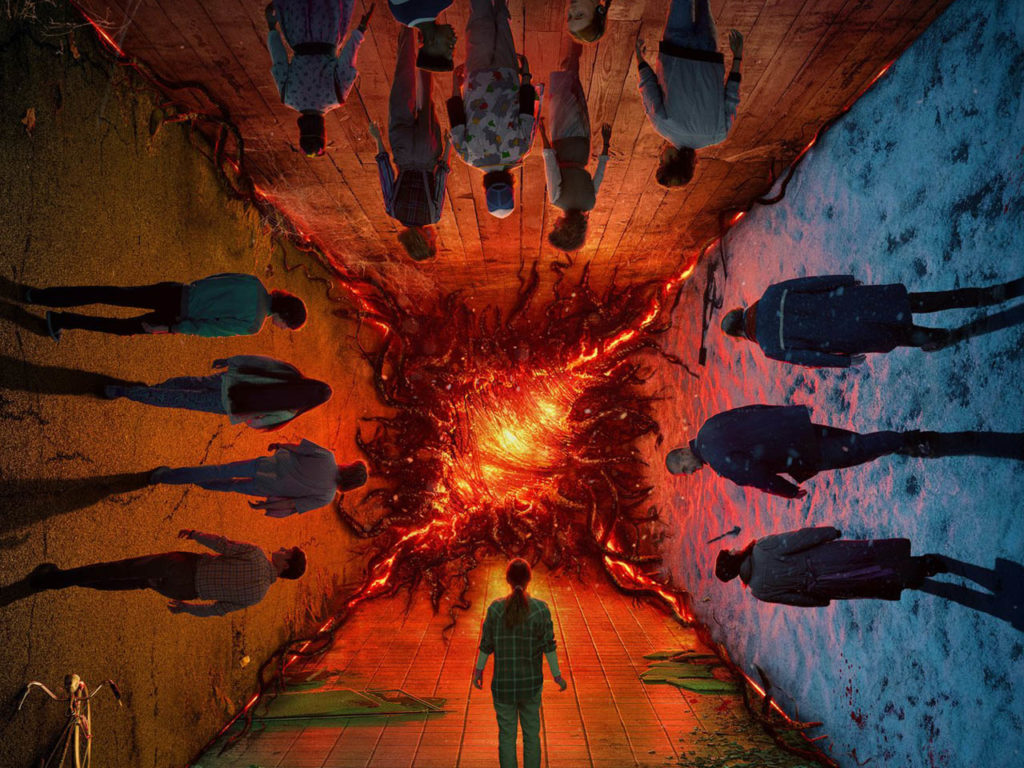
Netflix
When Stranger Things arrived in the summer of 2016, Netflix dropped eight episodes with relatively little of the traditional machinery associated with launching a major network series. Within weeks, Eleven, the Upside Down, and Hawkins, Indiana, were everywhere. The series demonstrated just how quickly streaming could create a worldwide television phenomenon.
How it changed television
The show’s success reflected a major change in how hits could emerge. There was no traditional time slot to protect, no overnight rating to determine whether the premiere had succeeded, and no requirement that audiences discover the show at the same moment. Viewers encountered Stranger Things through recommendations, social media, word of mouth, and Netflix itself, then watched at their own pace.
Its combination of science fiction, horror, coming-of-age drama, and 1980s nostalgia also demonstrated the global potential of highly specific genre television. A story filled with references to Steven Spielberg, Stephen King, tabletop gaming, shopping malls, and American pop culture became an international success.
As its popularity grew, the series increasingly resembled a movie franchise delivered through television. Seasons became major events, episode lengths expanded, budgets increased, and years could pass between installments without audiences simply forgetting the show existed.
Its lasting influence
Stranger Things became a model for the streaming-era franchise series: fewer episodes, cinematic production values, enormous gaps between seasons, and launches treated as global entertainment events rather than entries on a weekly schedule.
It also demonstrated the extraordinary cultural reach a streaming hit could achieve. Songs returned to the charts, old products found new audiences, and relatively unknown young performers became international stars.
Television had spent decades measuring success by how many people showed up at the same hour every week. Stranger Things helped illustrate a new reality: a show could become a worldwide phenomenon even if almost nobody watched it on exactly the same schedule.
Where to watch: Available to stream; select seasons have also been released on physical media.
Sesame Street (1969–Present)
For generations of children, a television set became a classroom the moment they heard someone ask how to get to Sesame Street. The series combined puppets, animation, music, celebrity guests, and short comedy segments with a carefully designed educational curriculum, proving that children’s television could entertain young viewers while deliberately helping them learn.
How it changed television
Created by Joan Ganz Cooney and Lloyd Morrisett, Sesame Street was developed with educators and researchers involved in determining what the program should teach and how those lessons could reach preschool children effectively. Letters and numbers shared the screen with lessons about cooperation, emotions, families, and everyday life.
The show’s structure was particularly suited to young viewers. Instead of expecting children to follow a single half-hour narrative, episodes moved among short segments featuring the Muppets, animation, songs, and live-action material. Repetition reinforced educational concepts while humor and memorable characters encouraged children to keep watching.
Its distribution through public television was equally important. The goal wasn’t simply to create successful children’s entertainment, but to make educational programming broadly accessible, including to families who might have fewer opportunities for preschool education.
Its lasting influence
Sesame Street helped establish educational television as a field in which entertainment and research could work together. Countless children’s programs that followed adopted the idea that television could actively teach rather than merely occupy a child’s attention.
The series also became an international institution, with localized versions and adaptations bringing its educational approach to children around the world. Characters such as Big Bird, Elmo, Cookie Monster, and Oscar the Grouch became cultural icons recognizable far beyond the show’s preschool audience.
More than half a century after its debut, the basic idea behind Sesame Street remains enormously influential: if children are already watching television, television can give them something valuable in return.
Where to watch: Select episodes and seasons are available to stream; episodes and collections are also available digitally and on physical media.
ER (1994–2009)
The opening minutes of ER could feel less like watching a television drama than being dropped into the middle of an actual emergency room. Doctors and nurses moved through crowded hallways, medical terminology flew by without lengthy explanations, patients arrived without warning, and the camera often seemed to race alongside the staff trying to keep up.
How it changed television
Created by Michael Crichton, ER brought an unusually kinetic visual style to network drama. Long Steadicam shots followed characters through the emergency department as multiple conversations and medical crises unfolded around them, giving episodes a sense of movement and urgency that became one of the show’s signatures.
The series trusted viewers to enter a complicated professional environment without having every procedure translated into simple language. Characters spoke like people who worked together every day, while medical cases could move rapidly from routine treatment to life-or-death emergencies.
Its enormous ensemble also allowed the series to balance medical stories with long-running personal arcs. Careers advanced, relationships changed, characters left the hospital, and new doctors arrived, allowing the show to continually refresh itself across 15 seasons.
Its lasting influence
ER became one of the defining dramas of the 1990s and demonstrated that ambitious, visually sophisticated television could also attract a massive broadcast audience. Its rapid pacing and immersive approach influenced generations of medical and workplace dramas that followed.
The series also helped establish George Clooney as a major star and showed that television could serve as a launching point for performers without making their work on the smaller screen seem like a lesser accomplishment.
Modern medical dramas have taken the genre in numerous directions, but the frantic hallways, overlapping emergencies, and intensely personal stories of ER helped establish a vocabulary that television is still using decades later.
Where to watch: Available to stream; sold on physical media and digitally.
American Idol (2002–Present)
For several years in the 2000s, television’s biggest stars weren’t necessarily actors playing fictional characters. They could be unknown singers standing on a stage waiting to hear whether millions of viewers had voted to keep them in a competition. American Idol turned that simple idea into a ratings powerhouse and made audience participation a central part of prime-time television.
How it changed television
Adapted from the British series Pop Idol, American Idol combined a talent competition with reality television storytelling. Audition episodes introduced contestants and their backgrounds, judges provided instant reactions, and live performances gave viewers reasons to develop favorites long before the winner was announced.
The crucial ingredient was participation. Once voting opened, audiences weren’t simply watching the competition. They were helping determine its outcome. That created an unusually strong investment in contestants and gave viewers a reason to return for both the performances and the results.
The judges became celebrities as well. Simon Cowell’s often brutal criticism, Paula Abdul’s encouragement, and Randy Jackson’s commentary became as much a part of the show’s identity as many of the performers.
Its lasting influence
American Idol dominated television ratings during its peak years and helped establish the modern talent competition as a major prime-time format. America’s Got Talent, The Voice, The X Factor, and numerous other series followed variations on the formula.
It also proved that reality television could produce genuine entertainment careers. Kelly Clarkson, Carrie Underwood, Jennifer Hudson, and others moved far beyond the program that introduced them to national audiences.
Most importantly, American Idol helped transform viewers from spectators into participants. Television had always encouraged audiences to care about who won. Now it could hand them a phone and ask them to help decide.
Where to watch: Recent episodes are available to stream; select episodes are also available digitally.
Breaking Bad (2008–2013)
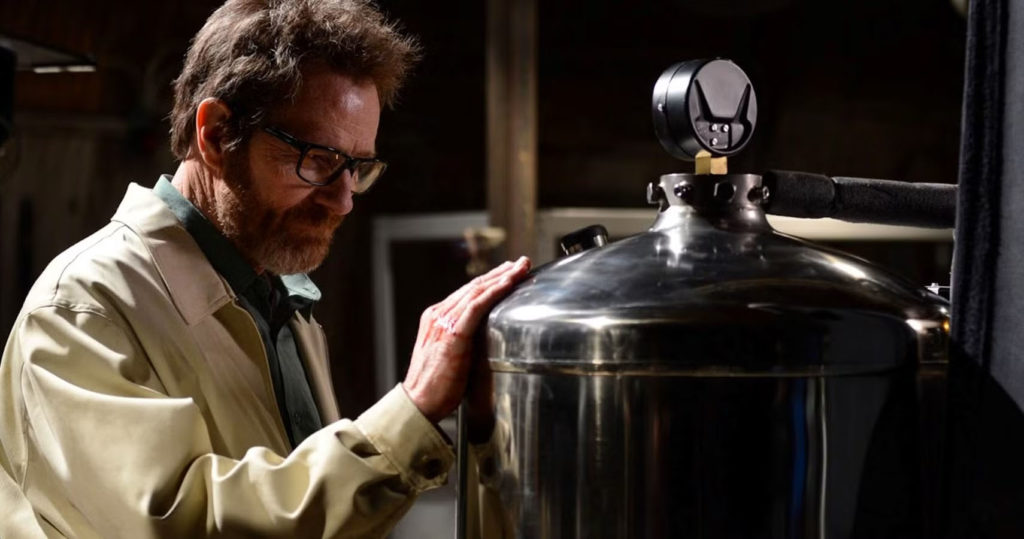
Breaking Bad didn’t begin as television’s biggest phenomenon. Its audience grew dramatically as viewers discovered Walter White’s transformation through DVDs, streaming, and word of mouth, creating a striking example of how changing viewing habits could turn a modestly rated cable drama into a cultural event.
How it changed television
Vince Gilligan built the series around an unusually direct proposition: the protagonist was going to change. Walter begins as a frustrated high school chemistry teacher diagnosed with cancer who decides to manufacture methamphetamine to provide money for his family. Over five seasons, the compromises accumulate until the frightened amateur of the pilot bears little resemblance to the man he becomes.
That transformation required audiences to remember choices and consequences across years of storytelling. Small decisions could return much later, while seemingly minor characters and details gained importance as Walter’s criminal life expanded.
Just as significant was how audiences found the show. Earlier seasons became available through Netflix while new episodes continued airing on AMC, allowing viewers to catch up rapidly rather than waiting for reruns or purchasing every previous season. The streaming audience fed directly into the audience for new episodes.
Its lasting influence
Breaking Bad became one of the clearest early demonstrations of streaming’s ability to increase the audience for a television series that was still producing new episodes. Its ratings grew rather than declined as the series approached its conclusion, with the final season becoming a much larger television event than its early years suggested was possible.
Its creative influence was substantial as well. Walter White became one of the defining examples of the television antihero, while the show’s carefully constructed long-form storytelling reinforced the idea that an entire series could function as one extended character transformation.
Television was entering an era when viewers no longer had to discover a show at the beginning. Breaking Bad demonstrated what could happen when millions of people were suddenly given an easy way to catch up.
Where to watch: Available to stream; sold on physical media and digitally.
The Mary Tyler Moore Show (1970–1977)
Mary Richards arrived in Minneapolis as a single 30-year-old woman looking for a job and a new life. She wasn’t searching for a husband, raising children, or defined primarily by her relationship to a man. That seemingly straightforward premise made The Mary Tyler Moore Show an important reflection of a rapidly changing America and helped expand what a woman could be at the center of a television sitcom.
How it changed television
Mary’s career at Minneapolis television station WJM wasn’t simply a backdrop for jokes. Her professional ambitions, friendships, romantic relationships, mistakes, and successes all mattered, giving the series room to portray an independent working woman whose life didn’t need to follow the traditional domestic sitcom formula.
The workplace itself became equally important. Lou Grant, Murray Slaughter, Ted Baxter, and the rest of the WJM staff formed a second family around Mary, helping establish the workplace ensemble as fertile ground for character-driven comedy.
The writing also trusted comedy to coexist with more serious subjects. Episodes dealt with equal pay, divorce, sexuality, workplace discrimination, death, and changing social expectations without abandoning the warmth that made the characters appealing.
Its lasting influence
The series helped establish a template for comedies centered on independent women and their careers, while its workplace ensemble influenced generations of sitcoms that followed. Its DNA can be found in everything from Murphy Brown to 30 Rock and countless other shows built around people whose coworkers become an essential part of their lives.
Its influence extended directly through spinoffs as well. Rhoda, Phyllis, and the dramatic Lou Grant expanded characters introduced on the series into programs of their own.
Mary Richards didn’t need television to declare her revolutionary. She simply lived an independent adult life on her own terms, and millions of viewers watched her do it every week.
Where to watch: Available to stream; sold on physical media and digitally.
Miami Vice (1984–1989)
Pastel suits, expensive cars, neon-lit streets, speedboats, and contemporary pop songs made Miami Vice instantly recognizable. More importantly, the series approached television as something that could look, sound, and move with the style of the music videos and feature films reshaping popular culture during the 1980s.
How it changed television
Executive producer Michael Mann and the show’s creative team gave Miami Vice a carefully constructed visual identity. Location shooting turned Miami itself into a character, while lighting, architecture, fashion, and color were used deliberately to create an atmosphere far removed from the functional look associated with many television procedurals.
Music was just as important. Instead of relying solely on a traditional score, the series incorporated popular recordings from major artists into extended sequences where the song and imagery worked together. Phil Collins’ “In the Air Tonight” accompanying Crockett and Tubbs’ nighttime drive became one of the defining examples of how effectively popular music could be integrated into dramatic television.
The result frequently felt closer to a short film or music video than a conventional weekly cop show.
Its lasting influence
Miami Vice helped raise expectations for the visual presentation of network television. Style wasn’t merely decoration added after the story had been written. Cinematography, music, clothing, locations, and production design could all become essential parts of a show’s identity.
That approach became increasingly important as television competed with movies, music videos, and eventually premium cable and streaming productions for viewers’ attention.
The fashions that made Miami Vice unmistakably a product of the 1980s may have changed, but the larger lesson endured: television didn’t have to look like television.
Where to watch: Available to stream; sold on physical media and digitally.
More Television History
Television has spent decades changing how stories are told and how audiences experience them. Explore more of the moments and techniques that helped define the medium.
Television has never stopped reinventing itself.
The shows on this list changed the medium in very different ways. Some introduced production techniques that became industry standards. Others challenged assumptions about what stories television could tell, who could occupy the center of those stories, or how much attention audiences were willing to give them. Still others changed how programs were distributed, discovered, and watched.
Not every innovation began with these shows. Television history is far too complicated for any single series to receive sole credit for creating a genre, format, or storytelling technique. What these programs did was demonstrate the possibilities on a scale that audiences and the television industry couldn’t ignore.
That’s ultimately what makes a television show influential. Success can produce a hit. Influence produces imitators, changes expectations, and leaves ideas behind that future creators build upon.
Decades after many of these shows left the air, we’re still watching television they helped shape. And somewhere, another series is probably experimenting with an idea that seems unusual today but will feel completely ordinary 20 years from now.