Great television doesn’t just surprise us.
It changes the way we see everything that came before it.
The best plot twists aren’t random shocks thrown in for the sake of creating buzz. They’re carefully constructed moments that reward attentive viewers while sending everyone else scrambling to rethink earlier episodes. The clues were there all along. We just didn’t recognize them until the truth was revealed.
When a twist is done well, it instantly becomes part of television history. Fans spend years debating where they should have seen it coming, whether the writers planned it from the beginning, and how differently the story feels on a second viewing. Some twists completely redefine a character. Others change the audience’s understanding of an entire series.
Of course, not every surprise works. A great plot twist has to feel inevitable in hindsight, not like the writers simply changed the rules. The revelation should deepen the story rather than distract from it.
From shocking betrayals and hidden identities to revelations that transformed entire television series, these are the plot twists that left audiences staring at their screens in disbelief before immediately wanting to watch the episode all over again.
The Good Place: Eleanor Isn’t in the Good Place (2016)

Most sitcoms spend an entire season building toward a happy ending. The Good Place did exactly that, only to reveal in its first-season finale that everything viewers thought they understood about the series was wrong. It’s one of the rare plot twists that didn’t just surprise audiences. It completely reinvented the show.
Why it shocked viewers
Throughout the first season, Eleanor Shellstrop struggles to hide the fact that she doesn’t belong in the Good Place. As the neighborhood descends into increasingly bizarre chaos, she becomes convinced that her presence is causing everything to fall apart. The finale appears to be building toward Eleanor confessing the truth and accepting whatever punishment awaits her.
Instead, the audience discovers that Eleanor’s assumption was only part of a much larger deception.
Why it worked
The brilliance of the twist is that every strange event suddenly makes perfect sense. Michael’s oddly specific neighborhood, the constant mishaps, the impossible soulmates, and the escalating disasters weren’t signs that the Good Place was malfunctioning.
They were the torture.
Michael’s gleeful declaration, “This is the Bad Place!” instantly recontextualizes nearly every scene that came before it. Rather than relying on information the audience couldn’t have known, the twist rewards viewers who revisit earlier episodes with an entirely new perspective.
Its lasting legacy
The first-season finale transformed The Good Place from a clever fantasy sitcom into one of television’s most ambitious comedies. Critics immediately praised the reveal, and the episode is now frequently cited as one of the greatest television plot twists of the 21st century. More importantly, it gave the writers permission to reinvent the series every season without losing sight of the philosophical questions at its heart.
Where to watch: Available to stream; sold on physical media and digitally.
Lost: “We Have to Go Back” (2007)
By the end of its third season, Lost had trained viewers to expect flashbacks. Every episode used them to reveal another piece of a survivor’s life before Oceanic Flight 815 crashed on the island. After nearly three full seasons, audiences thought they understood the show’s storytelling language.
Then Lost changed the rules.
Why it shocked viewers
The season finale follows what appears to be another Jack Shephard flashback. But something feels different. Jack is disheveled, depressed, abusing prescription drugs, and desperately trying to contact someone from his past. The pieces don’t fit the confident surgeon viewers had come to know before the crash.
For most of the episode, audiences assumed they were watching another previously unseen chapter of Jack’s life before Flight 815.
They weren’t.
Why it worked
The twist succeeds because the writers never lied to the audience. They simply relied on viewers’ expectations. Since every previous character-focused episode had used flashbacks, almost no one questioned whether this one might be doing something different.
When Kate suddenly appears and the two discuss returning to the island, the truth becomes impossible to ignore. This isn’t the past.
It’s the future.
Jack’s desperate plea, “We have to go back!” instantly transforms the entire episode and opens an entirely new chapter for the series. Rather than asking how the survivors would escape the island, Lost suddenly asked why they would ever want to return.
Its lasting legacy
“We have to go back!” has become one of the defining moments of modern television. The reveal demonstrated how a series could completely reinvent its storytelling structure without betraying its audience, while proving that some of the greatest plot twists don’t answer a mystery at all. They replace it with an even bigger one. Nearly two decades later, the line remains instantly recognizable to television fans and stands as one of Lost‘s most celebrated moments.
Where to watch: Available to stream; sold on physical media and digitally.
24: Nina Myers Is the Mole (2002)
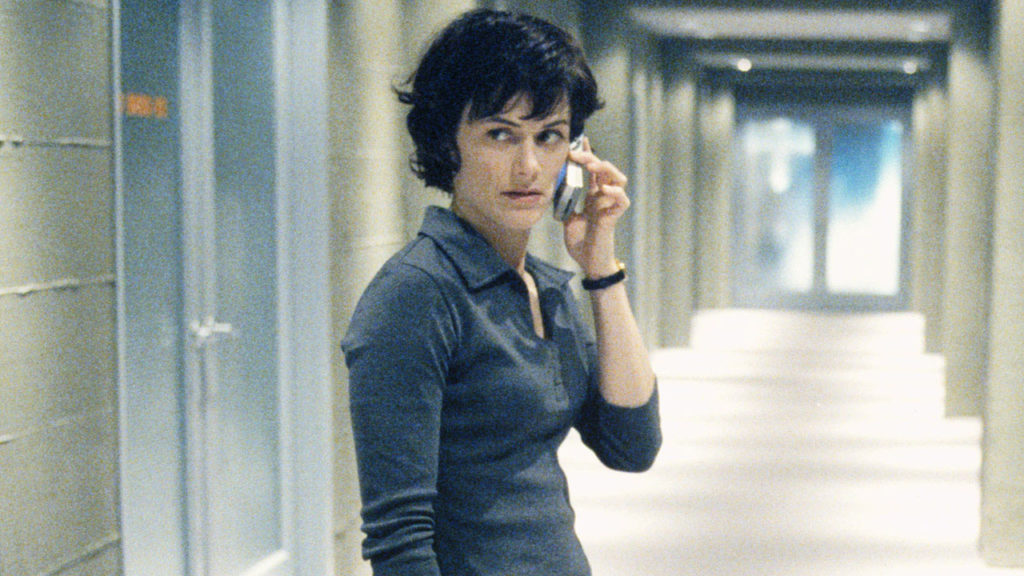
Few television series built suspense as relentlessly as 24. Every hour introduced another crisis, another betrayal, or another impossible decision for counterterrorism agent Jack Bauer. Yet despite all the gunfights, terrorist attacks, and ticking clocks, the biggest shock of the first season came from someone viewers thought they could trust.
Why it shocked viewers
Throughout the season, Nina Myers appears to be one of CTU’s most capable and dependable agents. She repeatedly works alongside Jack, helps investigate the conspiracy, and earns the audience’s confidence through countless moments where she seems committed to stopping the terrorists.
At the same time, the series constantly hints that someone inside CTU is feeding information to the enemy.
Most viewers suspected nearly everyone except Nina.
Why it worked
The reveal succeeds because it feels both surprising and inevitable. Looking back, the clues are scattered throughout the season, but they’re subtle enough that they rarely attract attention on a first viewing. Nina’s betrayal isn’t the result of a random last-minute decision. It’s woven into the story from the beginning.
The twist also carries genuine emotional weight. Jack doesn’t simply discover that a fellow agent is corrupt. He learns that someone he trusted completely has been manipulating him throughout the day.
Its lasting legacy
Nina Myers’ betrayal remains one of the defining television twists of the early 2000s. It elevated 24 from an innovative action series into a drama willing to fundamentally change the audience’s understanding of its own characters. The reveal also paved the way for the devastating final moments of the season, proving that the greatest plot twists don’t exist for shock value alone. They permanently reshape everything that follows.
Where to watch: Available to stream; sold on physical media and digitally.
The Twilight Zone: “To Serve Man” (1962)
Long before audiences debated plot twists on social media, The Twilight Zone built its reputation on delivering unforgettable final revelations. Rod Serling’s anthology series regularly challenged viewers’ expectations, but few episodes have become as iconic as “To Serve Man,” a story that turned one simple phrase into one of television’s greatest punchlines.
Why it shocked viewers
When the peaceful, technologically advanced Kanamits arrive on Earth, they appear to offer humanity a better future. They eliminate hunger, share remarkable scientific advances, and seem genuinely interested in helping the human race. Even when a mysterious book titled To Serve Man is discovered, most people assume it’s a guide to improving civilization.
That’s exactly what the audience is supposed to believe.
Why it worked
The brilliance of the twist lies in its simplicity. The title is perfectly honest. The audience simply misunderstands its meaning.
As one of the Kanamits prepares to escort a human delegation back to his home world, the final page of the book is translated. The frantic warning comes too late:
“It’s a cookbook!”
In an instant, every act of generosity, every invitation, and every smiling alien takes on an entirely different meaning. The episode never cheats the audience. It simply exploits the assumptions people naturally make about language and intention.
Its lasting legacy
“To Serve Man” remains one of the most famous television plot twists ever written. Even people who have never seen The Twilight Zone often recognize the punchline, which has been referenced and parodied for decades across television, film, and popular culture. More than 60 years after it first aired, the episode stands as proof that the most memorable twists don’t require elaborate special effects or complicated mythology. Sometimes all it takes is one perfectly timed sentence.
Where to watch: Available to stream; sold on physical media and digitally.
Westworld: William Is the Man in Black (2016)
HBO’s Westworld asked viewers to question everything they were seeing from its very first episode. Was anyone truly in control? Could the hosts become self-aware? Were all of the storylines happening at the same time? The first season encouraged endless theorizing, but its biggest revelation fundamentally changed how audiences viewed nearly every episode that came before it.
Why it shocked viewers
Throughout the season, viewers followed two seemingly separate stories. One focused on the mysterious Man in Black, a ruthless guest searching for the park’s deepest secrets. The other followed William, a young newcomer who gradually became captivated by both the park and Dolores.
Because the two stories appeared to unfold simultaneously, most viewers assumed William and the Man in Black were simply very different people experiencing Westworld in different ways.
They weren’t.
Why it worked
The reveal succeeds because the series carefully hides the truth in plain sight. The writers never claim the stories are happening concurrently. They simply allow viewers to make that assumption.
When it becomes clear that William eventually grows into the Man in Black decades later, countless earlier scenes suddenly take on entirely new meaning. The twist doesn’t just surprise the audience. It rewards a second viewing, where subtle clues that once seemed insignificant become impossible to miss.
Its lasting legacy
The William reveal helped establish Westworld as one of television’s most intellectually ambitious dramas. Critics praised the twist for being both meticulously constructed and emotionally resonant, proving that a great revelation should deepen a character rather than simply exist for shock value. Even as later seasons divided audiences, the first season’s central twist remains one of the defining television surprises of the streaming era.
Where to watch: Available to stream; sold on physical media and digitally.
The Twilight Zone: “Time Enough at Last” (1959)
Rod Serling’s The Twilight Zone built its reputation on unforgettable endings, and few are more devastating than “Time Enough at Last.” While the episode doesn’t rely on a shocking betrayal or hidden identity, its final moments completely redefine everything that came before them, delivering one of television’s most famous twists.
Why it shocked viewers
Henry Bemis loves books more than anything else in the world, but his demanding job and unhappy home life leave him almost no time to read. When a nuclear explosion suddenly wipes out civilization, Henry appears to become the sole survivor.
For the first time in his life, he has all the time he could ever want.
He gathers stacks of books from the ruins of a library, carefully organizing years’ worth of reading into neat piles. At last, Henry believes he’s found happiness.
Why it worked
The episode’s final twist isn’t random cruelty. It’s the inevitable conclusion to Henry’s lifelong struggle between desire and circumstance.
Just as he prepares to begin reading, Henry accidentally drops his glasses, shattering the thick lenses he depends on to see. Surrounded by every book he ever wanted to read, he can no longer make out a single word.
The reveal transforms what seemed like an uplifting ending into one of television’s most heartbreaking ironies, perfectly illustrating Serling’s gift for moral storytelling.
Its lasting legacy
“Time Enough at Last” has become one of the defining episodes of The Twilight Zone and one of the most famous television twists ever written. Burgess Meredith’s performance, Henry’s shattered glasses, and the cruel irony of the ending have been referenced and parodied for decades. More than 65 years later, the episode remains a masterclass in how a perfectly constructed twist can elevate a simple premise into something unforgettable.
Where to watch: Available to stream; sold on physical media and digitally.
Buffy the Vampire Slayer: Dawn Has Always Been There (2000)
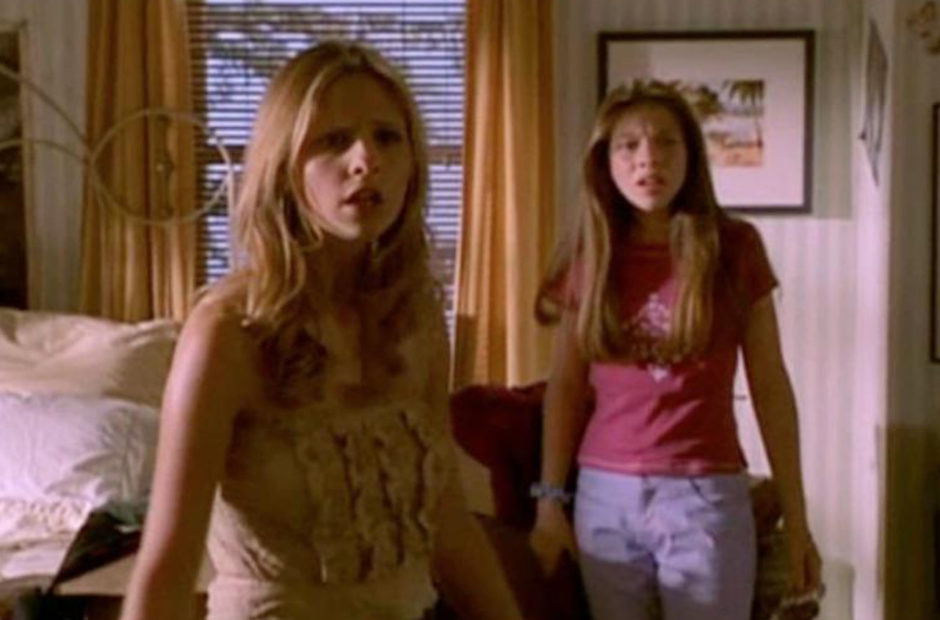
By the beginning of its fifth season, Buffy the Vampire Slayer had earned the trust of its audience. For four years, viewers had come to know Buffy’s family, friends, and the rhythms of life in Sunnydale. Then, without warning, the series introduced a new character who behaved as though she had been part of the show all along.
Why it shocked viewers
The season premiere ends with Buffy returning home after defeating a vampire, only to be greeted by her younger sister, Dawn. The problem, of course, was that Buffy had never had a sister.
Neither the characters nor the story acknowledged anything unusual. Dawn was treated as though she had always existed, leaving viewers wondering if they had somehow missed an entire season.
The twist immediately became one of television’s most talked-about mysteries.
Why it worked
Rather than treating Dawn as a simple retcon, the writers slowly revealed that reality itself had been altered. Powerful monks had transformed a mystical energy known as the Key into human form, rewriting the memories of everyone Buffy knew in order to protect it from the hell-god Glory.
The explanation sounds almost absurd on paper, yet it works because the series fully commits to the emotional consequences. Dawn isn’t merely a plot device. She becomes Buffy’s sister in every way that truly matters.
Its lasting legacy
Dawn’s introduction remains one of television’s boldest examples of challenging audience expectations. Instead of announcing a major twist through dramatic dialogue or shocking violence, Buffy the Vampire Slayer simply acted as though viewers had forgotten someone important. The gamble paid off, creating one of the series’ most memorable mysteries and proving that the most effective plot twists sometimes begin with a single impossible question:
“Wait… who is Dawn?”
Where to watch: Available to stream; sold on physical media and digitally.
Twin Peaks: Laura Palmer’s Killer Is Revealed (1990)
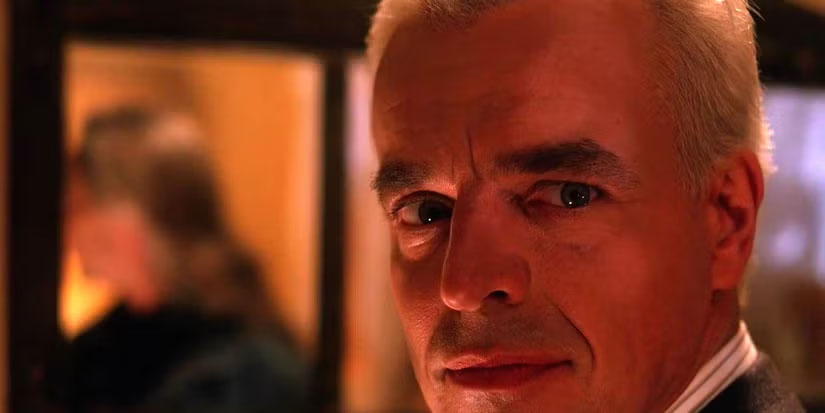
When Twin Peaks premiered, the question “Who killed Laura Palmer?” became one of the biggest mysteries on television. Week after week, viewers searched for clues alongside FBI Special Agent Dale Cooper, convinced the truth would expose a single murderer hiding in the quiet town. The eventual revelation did something far more unsettling.
Why it shocked viewers
For much of the series, the investigation unfolds like a traditional murder mystery. Every resident of Twin Peaks seems to have secrets, motives, or suspicious behavior. The audience naturally expects the killer to be another flawed member of the community.
Instead, the series reveals that Laura’s father, Leland Palmer, committed the murder while possessed by the malevolent spirit known as BOB.
The twist forces viewers to confront both a horrifying family tragedy and the series’ growing supernatural mythology at the same time.
Why it worked
The reveal succeeds because it operates on multiple levels. Even without the supernatural elements, the revelation that Laura’s killer was someone she should have been able to trust is emotionally devastating. The addition of BOB transforms the story into something even more disturbing, blurring the line between literal evil and the darkness that can exist within ordinary people.
Rather than replacing the human tragedy, the supernatural elements deepen it.
Its lasting legacy
Although the reveal was controversial among some fans who preferred the mystery remain unsolved, it remains one of television’s most unforgettable plot twists. The image of Leland’s confession, BOB’s terrifying presence, and the emotional fallout that follows helped cement Twin Peaks as one of the medium’s most influential dramas. More than three decades later, Laura Palmer’s murder remains one of television’s defining mysteries and one of its most shocking revelations.
Where to watch: Available to stream; sold on physical media and digitally.
Mr. Robot: Mr. Robot Isn’t Real (2015)
From its very first episode, Mr. Robot encouraged viewers to question reality. Elliot Alderson frequently admitted he wasn’t a reliable narrator, speaking directly to the audience while struggling with anxiety, depression, and dissociative episodes. Even so, few viewers were prepared for the revelation that redefined the entire first season.
Why it shocked viewers
https://screenrant.com/twin-peaks-tv-show-laura-palmer-killer-revealed-early-why/Throughout the series, Elliot is recruited by the mysterious anarchist known as Mr. Robot to help bring down the world’s largest corporations. Mr. Robot serves as Elliot’s mentor, partner, and occasional adversary, seemingly interacting with numerous other characters as the fsociety revolution gains momentum.
As the season progresses, however, small inconsistencies begin to emerge. Conversations don’t quite make sense. Certain characters react strangely. Elliot’s memory becomes increasingly fragmented.
Why it worked
The reveal that Mr. Robot is actually a manifestation of Elliot’s deceased father succeeds because the series plays fair with its audience. The clues are scattered throughout the season, but they’re filtered through Elliot’s unreliable perspective. Rather than lying to viewers, the show simply limits what they can trust.
The twist doesn’t exist solely for shock value, either. It deepens Elliot’s emotional journey, forcing him to confront both his fractured identity and the trauma that shaped his life.
Its lasting legacy
The first season twist immediately established Mr. Robot as one of television’s boldest dramas. Critics praised the reveal for rewarding careful viewers while giving the entire season new meaning on a second watch. More importantly, it demonstrated that an unreliable narrator could be used not as a gimmick, but as the emotional foundation of an entire series. Years later, it remains one of modern television’s most celebrated plot twists.
Where to watch: Available to stream; sold on physical media and digitally.
Battlestar Galactica: The Final Five Revealed (2007)
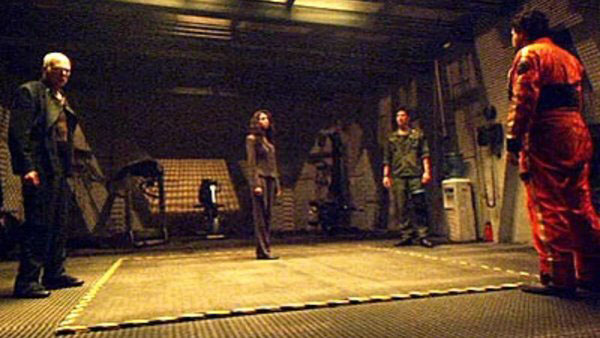
From the moment the reimagined Battlestar Galactica introduced the Cylons, viewers knew some of them looked human. The series slowly revealed the identities of several infiltrators while repeatedly hinting that five more remained hidden among the fleet. Their identities became one of science fiction television’s biggest mysteries, fueling years of speculation.
Why it shocked viewers
Fans spent countless hours trying to identify the so-called Final Five. Every suspicious glance, unusual decision, or unexplained event became evidence supporting one theory or another. Most viewers assumed the remaining Cylons would be characters who had always seemed mysterious.
Instead, the third-season finale revealed that four of the Final Five had been hiding in plain sight all along: Saul Tigh, Galen Tyrol, Samuel Anders, and Tory Foster.
The discovery stunned both the audience and the characters themselves, who had no idea of their true identities until they simultaneously began hearing the same mysterious music.
Why it worked
The twist succeeds because it immediately creates more questions than answers. None of the newly revealed Cylons had knowingly been working against humanity, forcing viewers to reconsider years of character development rather than dismissing them as secret villains.
Instead of reducing beloved characters to simple traitors, the revelation deepened the series’ central themes about identity, destiny, and what it truly means to be human.
Its lasting legacy
The Final Five reveal remains one of the defining moments of modern science fiction television. While fans continue to debate every aspect of Battlestar Galactica‘s mythology, few question the impact of the twist itself. By revealing that some of the fleet’s most trusted leaders were unknowingly Cylons, the series demonstrated how a great plot twist can fundamentally reshape the audience’s understanding of characters they thought they knew.
Where to watch: Available to stream; sold on physical media and digitally.
St. Elsewhere: Tommy Westphall’s Snow Globe (1988)
Few television endings have sparked as much discussion as the final moments of St. Elsewhere. After six seasons of medical drama inside Boston’s St. Eligius Hospital, viewers expected an emotional farewell to the doctors and patients they had come to know. Instead, the series delivered one of the most astonishing twists in television history.
Why it shocked viewers
Throughout its run, St. Elsewhere built a reputation as one of television’s smartest and most realistic dramas. The finale appears to conclude much like any other series, wrapping up character arcs and bringing the story to a close.
Then the camera quietly pulls away from the hospital.
Viewers discover that the entire series may have existed only within the imagination of Tommy Westphall, a young autistic boy staring into a snow globe containing a miniature model of St. Eligius Hospital.
Why it worked
The twist succeeds because it completely reframes everything the audience has spent six years watching. Rather than serving as a simple surprise ending, it invites viewers to reconsider the nature of storytelling itself. Was everything imaginary? Or was the snow globe merely symbolic?
The finale deliberately refuses to answer those questions, allowing audiences to draw their own conclusions.
Its lasting legacy
The “Tommy Westphall Universe” has become one of television’s most famous fan theories, suggesting that because St. Elsewhere crossed over with numerous other series, hundreds of television shows could theoretically exist inside Tommy’s imagination. Whether taken seriously or simply enjoyed as an entertaining thought experiment, the finale remains one of the boldest twists ever attempted on television. Nearly four decades later, it continues to be discussed whenever fans debate the most unforgettable plot twists in TV history.
Where to watch: Available to stream; sold on physical media and digitally.
The greatest plot twists don’t exist simply to surprise us.
They reward our attention.
When writers carefully lay the groundwork, a shocking revelation doesn’t feel like a trick. It feels inevitable. The clues were always there, hiding in plain sight, waiting for the audience to connect the dots. That’s why the best twists become even more enjoyable on a second viewing, when every seemingly insignificant detail suddenly takes on new meaning.
Of course, not every surprise stands the test of time. Some twists generate headlines for a week before fading into obscurity. The ones on this list have endured because they changed more than a single episode. They reshaped entire series, redefined beloved characters, and influenced how television writers approached storytelling for decades.
Whether they left you staring at the screen in disbelief or immediately reaching for the remote to watch the episode again, these unforgettable moments prove that sometimes the most powerful line in television isn’t the final one. It’s the revelation that changes everything you thought you knew.
Fun Jug Media, LLC (operating TheNerdy.com) has affiliate partnerships with various companies. These do not at any time have any influence on the editorial content of The Nerdy. Fun Jug Media LLC may earn a commission from these links.