Cancellation is supposed to be the end of a television show. The network makes its decision, the sets come down, the actors move on, and viewers are left wondering what might have happened if the series had been given another season.
Every so often, cancellation turns out to be considerably less permanent.
Television history is filled with shows that escaped what appeared to be certain death. Some convinced their existing networks to reconsider, while others found new homes in syndication, on cable channels or, eventually, on streaming services. The reasons behind those rescues changed along with the television business itself.
During the 1960s, viewers could demonstrate their support by filling a network’s mailroom with letters. Decades later, strong syndication sales could prove that a canceled series still had considerable value outside its original network. DVD sales provided another measurement of an audience that traditional ratings hadn’t necessarily captured, while the streaming era made it increasingly possible for an entirely different company to pick up a show its original network no longer wanted.
Fan campaigns are an important part of several of these stories, but they’re rarely the entire explanation. Television is a business, and even an enthusiastic audience needs to be accompanied by circumstances that make producing more episodes worthwhile. Ownership arrangements, international sales, rerun ratings, home video revenue and streaming performance have all helped turn cancellation notices into unexpected new seasons.
For this list, we’re looking at TV shows saved from cancellation after their futures were genuinely in jeopardy. That includes series that were formally canceled and subsequently revived as well as shows that received an unexpected renewal after organized efforts to keep them alive. We’re not including programs that merely inspired rumors about possible cancellation or shows revived decades later primarily as nostalgic reboots.
Arranged by when their rescues occurred, these 12 shows also trace more than 50 years of changes in how television is produced, distributed and watched. The methods may have changed from handwritten letters to streaming data, but the result remained the same.
Some television shows simply refused to stay dead.
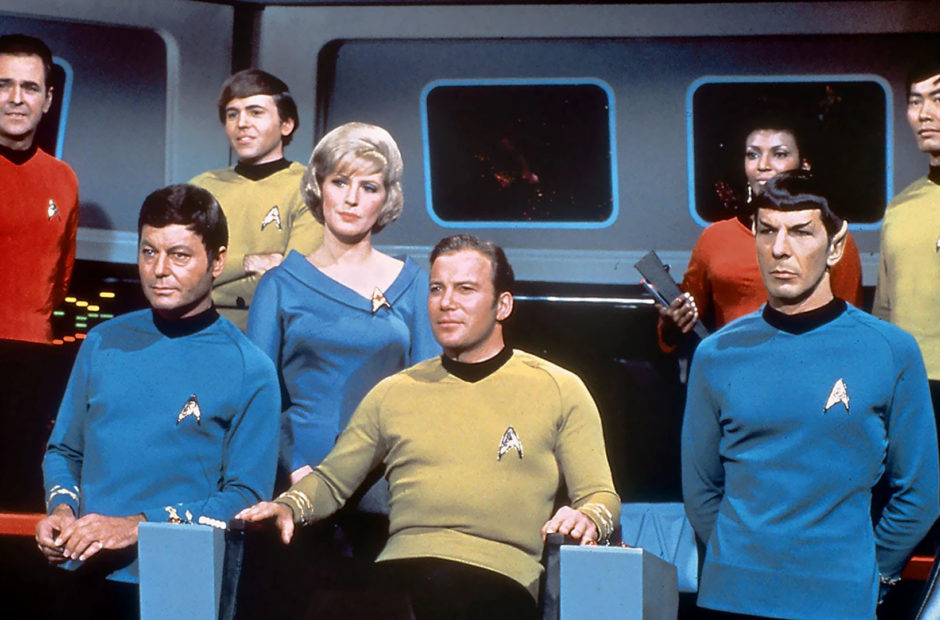
Star Trek
Before streaming services, social media campaigns and online petitions made it relatively easy for viewers to demonstrate support for a television series, Star Trek fans had to rely on considerably older technology: envelopes, stamps and an NBC mailroom that was about to become very busy.
The original Star Trek struggled in the ratings during its first two seasons, leaving its future uncertain as Season 2 approached its conclusion in 1968. Fans Bjo and John Trimble helped organize a letter-writing campaign encouraging viewers to contact NBC and ask the network to keep the series on the air.
How it was saved
The campaign became enormous by the standards of television fandom at the time. Creator Gene Roddenberry later estimated that NBC was receiving thousands of letters supporting Star Trek each week. Fans weren’t merely discussing their disappointment among themselves. They were creating a physical demonstration of the audience’s enthusiasm that network executives couldn’t easily overlook.
NBC ultimately renewed Star Trek for a third season and took the unusual step of announcing the decision directly to viewers. Following the March 1968 episode “The Omega Glory,” the network broadcast a message stating that Star Trek would continue and asking fans to stop writing because the series had been renewed.
The letter campaign became an important part of the show’s survival story, but it shouldn’t be treated as proof that viewers single-handedly forced NBC to reverse a cancellation. The network was making a programming decision involving ratings, scheduling and its own assessment of the show’s value. What the campaign unquestionably demonstrated was an unusually organized and passionate audience at a time when networks had relatively few ways to measure enthusiasm beyond ratings.
What happened next
The victory proved temporary. NBC moved Star Trek to Friday nights at 10 p.m. for its third season, a difficult time slot for a series with a significant younger audience. Ratings continued to struggle, and NBC canceled the show in 1969 after 79 episodes.
That should have been the end of the story. Instead, those 79 episodes entered syndication and found new viewers, helping transform a canceled network series into a growing cultural phenomenon. Conventions followed, as did an animated series, feature films, additional television series and one of the largest science-fiction franchises ever created.
Saving Star Trek for one additional season didn’t prevent its eventual cancellation. It did, however, produce 24 more episodes that became part of the syndication package that introduced the Enterprise to generations of viewers.
For television fans trying to save endangered shows in the decades that followed, Star Trek also provided something almost as important: proof that making enough noise could at least make a network listen.
Where to watch: Check current streaming availability; sold on physical media and digitally.
Cagney & Lacey
Cagney & Lacey didn’t merely survive cancellation. CBS gave up on the police drama, brought it back, watched it struggle again, and then discovered that the series it had nearly abandoned was about to become one of television’s most acclaimed dramas.
Sharon Gless and Tyne Daly starred as New York City detectives Christine Cagney and Mary Beth Lacey, combining police cases with stories about their careers, relationships and the challenges faced by women working in a male-dominated profession. Critical respect didn’t initially translate into the ratings CBS wanted, and the network canceled the series in 1983.
How it was saved
Executive producer Barney Rosenzweig refused to quietly accept the decision. A publicity campaign drew attention to the cancellation, while viewers organized their own efforts supporting the series. The National Organization for Women also advocated for its return, and favorable press helped keep Cagney & Lacey in the conversation after CBS had decided to move on.
CBS eventually reconsidered. Rather than immediately committing to another full season, the network ordered seven additional episodes that aired in 1984, effectively giving Cagney & Lacey another opportunity to prove itself.
This is another case where saying “the fans saved it” would simplify a more complicated television business decision. Viewer support mattered, as did the organized campaign surrounding the cancellation, but critical acclaim, publicity and CBS’s willingness to test the series again all contributed to the reprieve.
The important part is that the reprieve worked.
What happened next
Cagney & Lacey returned as a regular series and remained on CBS through 1988. What had looked like a failed drama became an awards fixture, with the series winning the Emmy for Outstanding Drama Series twice. Daly and Gless also dominated the Outstanding Lead Actress in a Drama Series category, combining to win the award six consecutive times during the show’s run.
The series ultimately became far more significant than its initial ratings struggles suggested. Its portrayal of two female detectives allowed it to explore workplace discrimination, alcoholism, breast cancer and other subjects while still functioning as a weekly police drama.
Several television series on this list found salvation because another network or streaming service saw value their original home no longer recognized. Cagney & Lacey accomplished something different. It convinced the same network that had canceled it to take another look.
CBS did, and the supposedly expendable series stayed around for years collecting Emmys.
Where to watch: Check current streaming availability; sold on physical media and digitally.
Baywatch
Baywatch eventually became such an enormous international success that it’s easy to forget NBC canceled it after a single season.
The series premiered in 1989 with David Hasselhoff starring as Los Angeles County lifeguard Mitch Buchannon. Its combination of action, rescues and beachside drama attracted an audience, but production costs were high and the ratings weren’t strong enough for NBC to justify continuing. The network canceled Baywatch in 1990.
Under normal circumstances, that would have ended the series before most of the world had even discovered it. Baywatch, however, was already demonstrating that its value extended considerably beyond NBC’s schedule.
How it was saved
International sales helped reveal a market that the show’s American network performance didn’t fully reflect. Baywatch had been sold into dozens of countries, with particularly strong interest in markets including the United Kingdom and Germany.
The people behind the series began exploring whether it could survive outside the traditional network system. Rights were reacquired, production costs were substantially reduced, and Baywatch was rebuilt as a first-run syndicated series. Hasselhoff also became more deeply involved in the show’s future, accepting a reduced salary in exchange for a financial stake in the production.
That combination changed the economics. Instead of needing to satisfy NBC’s requirements for a relatively expensive network drama, Baywatch could sell directly into domestic syndication while using international licensing to help support production.
The show returned in 1991, roughly a year after NBC had canceled it.
What happened next
The syndicated version didn’t merely survive. It became the Baywatch most people remember.
The series continued for another decade, added performers including Pamela Anderson to its increasingly recognizable cast and expanded its international audience enormously. At its peak, Baywatch was distributed around the world and became one of the defining television exports of the 1990s.
Its resurrection is particularly important because nobody simply moved the existing show from NBC to another conventional network. The business model itself changed. International demand, lower production costs and first-run syndication turned something NBC no longer wanted into a viable global television property.
Plenty of canceled shows later discovered that another network might want them. Baywatch demonstrated that sometimes you don’t need another network at all.
Where to watch: Check current streaming availability; sold on physical media and digitally.
Family Guy
Fox had plenty of reasons to believe it was finished with Family Guy. The animated comedy had struggled with scheduling changes and inconsistent ratings, disappeared from the network’s schedule, returned, and was eventually canceled after its third season.
Then something unusual happened. Once Fox stopped making new episodes, audiences started providing increasingly persuasive evidence that considerably more people wanted Family Guy than its network ratings had suggested.
How it was saved
Two developments were particularly important.
Adult Swim began airing Family Guy reruns in 2003, where the series performed extremely well with the cable network’s young audience. Around the same time, Fox released the existing episodes on DVD.
The DVDs became a major success. The first releases sold more than a million copies, providing Fox with something television ratings hadn’t: direct evidence that viewers were willing to spend money to own a show the network had already canceled.
The combination of strong DVD sales and successful cable reruns fundamentally changed the calculation. Fox announced that Family Guy would return with newly produced episodes, making it one of the rare television series at the time to resume regular production after cancellation rather than returning years later as a nostalgic revival.
What happened next
Family Guy returned to Fox in 2005, almost three years after its last original episode had aired.
The revival completely overwhelmed the length of the show’s original life. What had been a three-season canceled animated comedy became a long-running Fox institution, producing hundreds of additional episodes and expanding into an enormous collection of merchandise, home video releases and other media.
Its resurrection also arrived at an important transitional moment in television. For decades, network ratings had been the dominant measurement determining whether a series had enough of an audience to continue. Home video and cable reruns suddenly offered additional ways to demonstrate that viewers existed even if they hadn’t been watching according to the schedule and circumstances under which the original network expected them to.
Family Guy wasn’t rescued because Fox suddenly decided it had made a terrible creative mistake. The economics changed because the audience revealed itself somewhere else.
Fox canceled the show. Then viewers bought enough DVDs and watched enough reruns to help make producing it look like a good business decision again.
Peter Griffin has been causing problems ever since.
Where to watch: Check current streaming availability; sold on physical media and digitally.
Futurama
If any television series belongs on a list about surviving cancellation, it’s Futurama. The animated science-fiction comedy has spent much of its existence demonstrating that an ending is apparently just an opportunity to negotiate another beginning.
Created by Matt Groening and David X. Cohen, Futurama premiered on Fox in 1999. The network frequently moved the series around its schedule, and by 2003 Fox had stopped ordering new episodes. The remaining completed installments were aired, bringing the original run to an end.
For Fry, Leela and Bender, however, cancellation turned out to be considerably less permanent than being frozen for a thousand years.
How it was saved
As happened with Family Guy, life after Fox revealed that Futurama still had a valuable audience. Reruns performed well on cable, particularly on Adult Swim, while DVD releases gave fans another way to support the series.
The first resurrection didn’t immediately take the form of another television season. Instead, four feature-length Futurama movies were produced for direct-to-DVD release beginning with Bender’s Big Score in 2007. Comedy Central subsequently aired the movies divided into episodes.
The experiment worked well enough that Comedy Central went further. In 2009, the network ordered 26 new episodes, restoring Futurama to regular television production years after Fox had stopped making it.
What happened next
The Comedy Central era lasted several years before the network announced in 2013 that it wouldn’t order additional episodes. The series concluded again with “Meanwhile,” an episode designed to function as a genuine ending for Fry and Leela.
For most television shows, being canceled twice would probably settle the matter.
Not Futurama.
Hulu eventually ordered another revival, with new episodes beginning in 2023. The show’s history consequently spans Fox, direct-to-DVD movies, Comedy Central and Hulu, with multiple stretches in which it appeared that the Planet Express crew had made its final delivery.
Futurama also illustrates the same changing television economics that helped revive Family Guy. A network cancellation no longer necessarily meant a show’s audience had disappeared. Cable reruns and home video could reveal continuing demand, while new distribution outlets created opportunities that hadn’t existed when the original cancellation decision was made.
Good news, everyone. Cancellation apparently isn’t fatal in the 31st century.
Where to watch: Check current streaming availability; sold on physical media and digitally.
Community
Community spent years turning the possibility of cancellation into part of its identity. Ratings were frequently precarious, NBC repeatedly left fans wondering whether another season would happen, and the show’s own characters eventually adopted a rallying cry that seemed deliberately unrealistic: six seasons and a movie.
After five seasons, NBC finally made the first half of that goal considerably harder.
The network canceled Community in May 2014.
How it was saved
Sony Pictures Television wasn’t ready to abandon the series and began looking for another outlet. Hulu emerged as an obvious possibility, but discussions failed to produce a deal.
Time was becoming a serious problem. The cast’s existing contracts were approaching expiration at the end of June, meaning the practical ability to keep the series together was rapidly disappearing.
Then Yahoo entered the picture.
On June 30, 2014, Yahoo Screen announced that it had ordered a 13-episode sixth season of Community. The deal arrived on the same day the cast contracts were due to expire, turning what had looked like the end of the series into one of the more literal last-minute television rescues.
The move also reflected how rapidly the definition of a television network was changing. A series that had spent five seasons on NBC was continuing through the streaming-video service of a company best known to many people for its web portal, search engine and email.
What happened next
Season 6 premiered on Yahoo Screen in 2015. The transition brought changes, including new cast members and longer episodes unconstrained by NBC’s traditional half-hour schedule, but it gave creator Dan Harmon and the remaining cast an opportunity to provide the series with a deliberate conclusion.
Yahoo Screen itself didn’t enjoy the same longevity. The service shut down in 2016 after Yahoo’s original programming initiative failed to establish a sustainable business.
Community, meanwhile, had accomplished the seemingly ridiculous goal embedded in its own running joke. It had six seasons.
That left only the movie.
Years later, the second half of “#SixSeasonsAndAMovie” moved from fandom slogan toward reality when a Community movie was put into development with Peacock and much of the original cast involved.
Whatever ultimately happens with Greendale’s graduates, Yahoo’s eleventh-hour rescue permanently changed the joke. Five seasons and a cancellation would have been painfully close.
Six seasons and a movie sounds much better.
Where to watch: Check current streaming availability; sold on physical media and digitally.
Longmire
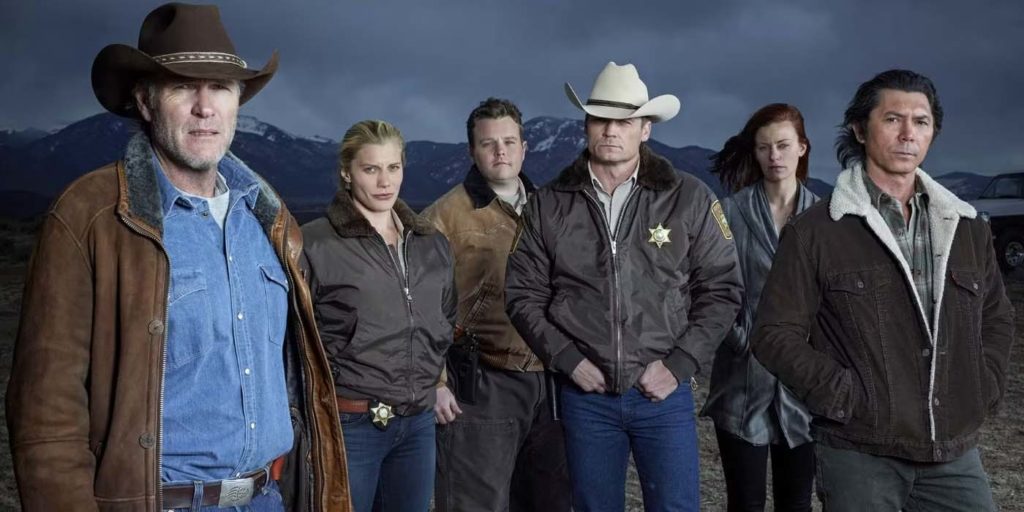
When A&E canceled Longmire in 2014, the decision demonstrated one of television’s more frustrating realities: having a large audience doesn’t necessarily guarantee survival.
Based on the novels by Craig Johnson, Longmire starred Robert Taylor as Walt Longmire, the sheriff of fictional Absaroka County, Wyoming. The contemporary Western had become A&E’s most-watched original scripted series, drawing millions of viewers. After three seasons, however, the network decided not to order a fourth.
The problem wasn’t simply how many people were watching. The composition of that audience and the economics surrounding the series also mattered.
How it was saved
Warner Horizon Television, which produced Longmire, immediately began looking for another home. The show’s sizable audience provided an obvious argument that cancellation by A&E didn’t necessarily mean the series lacked value elsewhere.
Netflix ultimately agreed.
In November 2014, approximately three months after A&E canceled the series, Netflix ordered a 10-episode fourth season. The streaming service already carried earlier seasons of Longmire, giving it access to an audience familiar with the show and a natural place to continue the story.
The move also highlighted an increasingly important difference between traditional television and streaming. A series that didn’t fit one network’s demographic or business priorities could potentially become attractive to a service measuring its value differently.
What happened next
Netflix didn’t simply provide Longmire with a short farewell season. It produced three additional seasons, effectively doubling the length of the show’s original A&E run.
The move allowed several ongoing stories to continue and eventually gave the series an opportunity to construct an intentional conclusion. Longmire ended in 2017 after six seasons and 63 episodes.
Its rescue became an early example of Netflix establishing itself as a possible destination for canceled television. That reputation would grow considerably over the following years as viewers began responding to cancellation announcements with an increasingly familiar demand: maybe Netflix will save it.
Netflix obviously couldn’t rescue everything, nor did it want to. Longmire demonstrated why the idea wasn’t completely unrealistic.
A&E looked at the audience and decided the show no longer worked for its business. Netflix looked at the same basic property and found three more seasons in it.
Where to watch: Check current streaming availability; sold on physical media and digitally.
Nashville
By the time ABC canceled Nashville in 2016, the country-music drama had already spent four seasons building a fictional version of Nashville around established superstar Rayna Jaymes, rising singer Juliette Barnes and a sprawling collection of musicians, executives and family members.
Production company Lionsgate wasn’t ready to close down the Grand Ole Opry just because ABC was finished with the show.
How it was saved
ABC announced the cancellation in May 2016. Lionsgate quickly made clear that it intended to search for another home, and Nashville had several characteristics that made a rescue plausible. It had an established audience, a recognizable brand, a substantial music catalog and a particularly obvious connection to the country-music world.
That made CMT an unusually natural destination.
In June 2016, approximately a month after ABC canceled the series, CMT announced that it would become the new television home of Nashville. Hulu, which had already streamed episodes of the series, remained involved as the streaming home for episodes following their CMT broadcasts.
The rescue wasn’t simply a case of a cable network grabbing an abandoned broadcast series. Nashville fit directly into CMT’s country-music identity, giving the channel a recognizable scripted drama centered on the same industry that defined much of its programming and audience.
What happened next
Nashville returned for Season 5 on CMT in late 2016 and continued through a sixth and final season.
The additional episodes became particularly significant because the series underwent an enormous creative transition following Connie Britton’s departure as Rayna. Rather than ending with ABC’s cancellation, Nashville received enough time at its new network to move beyond one of its central characters and eventually bring the larger story to a planned conclusion.
CMT announced before the sixth season finished airing that it would be the show’s last, allowing the creative team to construct an actual series finale rather than leaving viewers with the ending ABC’s cancellation would have produced.
The rescue also showed why finding the right new home could matter as much as finding any new home. A drama about Nashville’s country-music industry moving to Country Music Television required very little explanation.
Sometimes television matchmaking really isn’t complicated.
Where to watch: Check current streaming availability; sold on physical media and digitally.
Brooklyn Nine-Nine
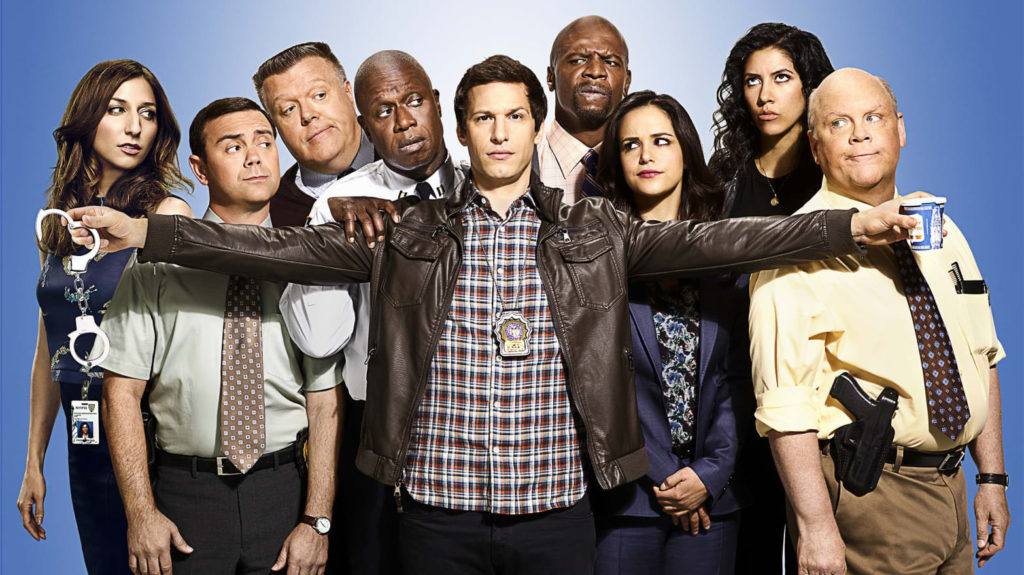
The cancellation of Brooklyn Nine-Nine demonstrated just how quickly a television rescue could happen in the social media era. Fox canceled the comedy on May 10, 2018. By the following day, it had another network.
The series had spent five seasons following Jake Peralta, Captain Holt and the rest of the detectives at Brooklyn’s fictional 99th Precinct. Although it had earned critical acclaim and a devoted audience, its ratings were no longer enough for Fox to continue carrying it.
The cancellation immediately produced an enormous public reaction.
How it was saved
Fans flooded social media with support for the series, while prominent viewers including Mark Hamill, Lin-Manuel Miranda and Seth Meyers publicly expressed their disappointment. Brooklyn Nine-Nine quickly became one of the dominant topics on Twitter, making the enthusiasm surrounding the canceled series extremely visible.
That response was important, but NBC’s interest wasn’t simply the result of executives seeing a popular hashtag.
Universal Television produced Brooklyn Nine-Nine, giving NBC’s corporate family an existing connection to the series. NBC Entertainment chairman Robert Greenblatt also explained that NBC had originally wanted the show when it was first being developed but had lost it to Fox.
On May 11, NBC announced that it had picked up Brooklyn Nine-Nine for a sixth season.
The entire period between cancellation and rescue lasted roughly a day.
What happened next
Brooklyn Nine-Nine premiered on NBC in January 2019 and remained there for three additional seasons. The network initially ordered 13 episodes for Season 6 before expanding the order, an encouraging start for a series that had been unemployed only months earlier.
The NBC years allowed the show to continue developing its characters while also tackling subjects including sexual harassment, racial profiling and police reform. It ultimately concluded in 2021 after eight seasons and more than 150 episodes.
The speed of the rescue made Brooklyn Nine-Nine one of the defining examples of modern cancellation campaigns, but its survival also demonstrates why the complete story matters. Fans made their enthusiasm impossible to miss, while NBC had a preexisting interest in the series and a corporate relationship with its production studio.
Sometimes the audience makes enough noise at exactly the moment another network is already positioned to listen.
Nine-Nine!
Where to watch: Check current streaming availability; sold on physical media and digitally.
Lucifer
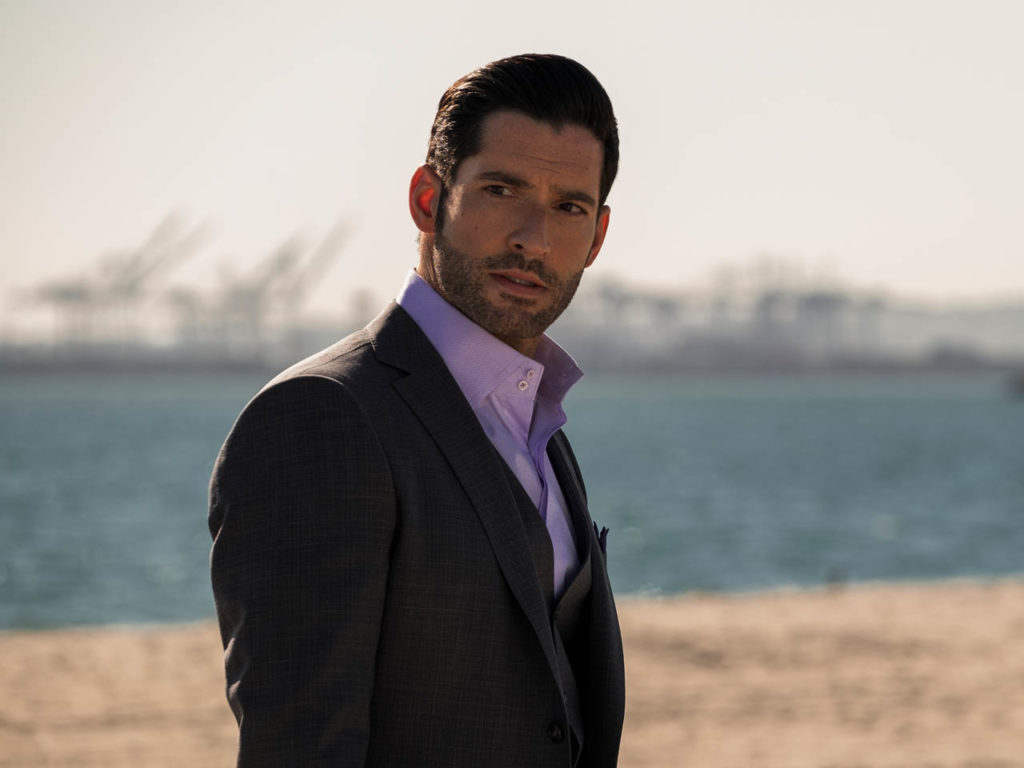
May 2018 was apparently a dangerous time to be a television series on Fox. Just days after the network canceled Brooklyn Nine-Nine, it also canceled Lucifer after three seasons.
Based on the DC Comics character, Lucifer starred Tom Ellis as Lucifer Morningstar, who abandoned Hell for Los Angeles, opened a nightclub and became a consultant for the LAPD. The procedural framework gradually expanded into a larger supernatural story involving Lucifer’s family, his relationship with Chloe Decker and questions about free will, redemption and his complicated relationship with God.
Fox’s cancellation arrived with another problem: Season 3 ended with a major development that demanded a continuation.
How it was saved
Warner Bros. Television began searching for another outlet while viewers rallied around the #SaveLucifer campaign. The show’s international audience and strong fan response helped demonstrate that interest in the series extended beyond its Fox ratings.
About a month after the cancellation, Netflix announced that it had picked up Lucifer for a fourth season.
The streaming service gave the show something more valuable than a temporary reprieve. Moving away from broadcast television changed both its episode count and some of the restrictions under which the series had previously operated. Season 4 consisted of 10 episodes, allowing the storytelling to become considerably more concentrated than the 26-episode third season Fox had aired.
What happened next
Netflix initially renewed Lucifer for a fifth season and announced that it would be the last. Then the series managed to escape death again.
Plans changed, negotiations followed, and Netflix ultimately ordered a sixth season. Lucifer concluded in 2021 after 93 episodes, with nearly half of its run arriving after Fox had decided the series was finished.
The Netflix years also gave the creative team enough time to complete the larger story surrounding Lucifer and Chloe rather than leaving the series at the Season 3 cliffhanger. Whatever viewers thought of the eventual ending, they at least received one.
The fan campaign became an important part of the show’s rescue, but Warner Bros. Television’s effort to find another buyer and Netflix’s assessment of the series as a viable streaming property turned that enthusiasm into additional seasons.
Getting canceled by Fox ultimately sent Lucifer somewhere unexpected.
Not Hell. Netflix.
Where to watch: Check current streaming availability; sold on physical media and digitally.
The Expanse
By its third season, The Expanse had built an enormous fictional universe encompassing Earth, Mars, the Belt and a mysterious alien technology capable of transforming humanity’s future. Then Syfy canceled it.
The science-fiction drama, based on the novels by James S.A. Corey, had earned critical acclaim and a passionate audience, but its television ratings were modest. The economics were also complicated because Syfy didn’t own the series and had limited rights to its distribution, reducing the ways the network could benefit from audiences watching through other platforms.
In May 2018, Syfy announced that Season 3 would be its last.
How it was saved
The cancellation immediately produced an organized campaign from viewers, including the #SaveTheExpanse hashtag, petitions and other efforts designed to demonstrate the size and enthusiasm of the audience. The show’s producers were simultaneously searching for another company willing to continue it.
Amazon quickly emerged as a possibility.
Amazon founder Jeff Bezos was already a fan of the series, but personal enthusiasm alone wasn’t the business case for bringing it to Prime Video. The Expanse had an established international following, fit naturally alongside Amazon’s growing investment in ambitious genre programming, and could operate under a streaming model that wasn’t dependent on Syfy’s traditional linear ratings.
The rescue became official in particularly appropriate surroundings. On May 25, 2018, Bezos appeared at the National Space Society’s International Space Development Conference, where members of the Expanse cast were also attending, and announced that Amazon would continue the series.
Syfy’s cancellation and Amazon’s rescue were separated by approximately two weeks.
What happened next
The Expanse returned on Prime Video with Season 4 in 2019 and continued for two more seasons after that. The move allowed the series to explore major portions of the novels that otherwise would never have reached television.
Amazon ultimately announced that Season 6 would conclude the television series. The final season premiered in 2021 and completed its run in January 2022, giving the story a deliberate stopping point rather than leaving it where Syfy’s cancellation would have ended things.
The rescue also demonstrated why a show’s value can change dramatically depending on who controls it and how it is distributed. Syfy had legitimate business reasons for deciding that The Expanse no longer worked for its model. Amazon could evaluate the same series according to an entirely different set of priorities.
The fans made sure everyone knew they wanted more. The producers kept searching for another home. Amazon had both the platform and a reason to say yes.
Sometimes saving a television series requires the right company to enter the Ring.
Where to watch: Check current streaming availability; sold on physical media and digitally.
Manifest
When NBC canceled Manifest after three seasons in 2021, the decision couldn’t have arrived at a more awkward moment. The supernatural drama had spent years constructing a mystery surrounding the passengers of Montego Air Flight 828, and Season 3 ended with major developments that left the story nowhere near finished.
Then, almost simultaneously with its cancellation, millions of Netflix subscribers started discovering it.
How it was saved
The first two seasons of Manifest arrived on Netflix in the United States and Canada shortly before NBC canceled the series. Instead of quietly joining the service’s enormous catalog, the show became a streaming phenomenon.
Manifest spent weeks near the top of Netflix’s viewing rankings, including an extended stretch at No. 1. Netflix later reported that viewers watched more than 100 million hours of the series globally during July 2021 alone.
Fans simultaneously campaigned for another season under the #SaveManifest banner, while creator Jeff Rake continued advocating for an opportunity to finish the story he had planned.
Netflix initially passed on rescuing the series, but the extraordinary streaming performance changed the situation. Warner Bros. Television and Netflix resumed discussions, and on Aug. 28, 2021, the service announced that Manifest would return for a fourth and final season.
The announcement date wasn’t accidental. Aug. 28 is 8/28, a direct reference to Flight 828.
What happened next
Netflix didn’t simply order a conventional short final season. It commissioned 20 episodes, released in two parts, giving Rake and the writers substantial room to resolve the mythology surrounding the passengers, the Callings and the approaching Death Date.
The first half arrived in November 2022. The final episodes were released on June 2, 2023, another date connected to the series because June 2 was the passengers’ predicted Death Date.
Manifest provides perhaps the clearest example on this list of streaming data directly changing the perceived value of a canceled television series. NBC had three seasons of traditional ratings on which to base its decision. Netflix suddenly had evidence that an enormous audience was willing to consume those same episodes when they were made easily available on demand.
The #SaveManifest campaign kept the cancellation visible, but the viewing numbers gave Netflix a powerful business reason to reconsider.
For decades, fans trying to save television shows wrote letters, bought DVDs, organized campaigns and hoped another network was paying attention. By the time Manifest was canceled, viewers could demonstrate demand simply by pressing play.
Flight 828 disappeared once and came back five and a half years later. Compared with that, surviving a television cancellation almost seems routine.
Where to watch: Check current streaming availability; sold on physical media and digitally.
More Television History
There has never been a single formula for saving a canceled television show. Star Trek viewers filled NBC’s mailroom with letters. Baywatch found a completely different business model. Family Guy and Futurama benefited from audiences buying DVDs and watching cable reruns, while shows such as Longmire, Lucifer and The Expanse arrived during an era when streaming services could provide entirely new homes.
What changed most dramatically was the amount of information available about an audience. Traditional ratings once provided networks with the primary measurement of whether enough people were watching. Syndication, home video and eventually streaming created additional opportunities for viewers to demonstrate that a series still had value even after its original network decided otherwise.
That doesn’t mean every cancellation campaign can succeed. Passionate fans can’t eliminate production costs, solve complicated rights agreements or force another company to make a television series it doesn’t believe makes financial sense. The shows that escaped cancellation usually benefited from several circumstances coming together at exactly the right moment.
Sometimes, however, viewers can help make sure the people making those decisions understand that an audience is still waiting.
The methods have changed considerably since Star Trek fans started writing letters in the 1960s. More than five decades later, Manifest viewers could send essentially the same message by streaming millions of hours of a canceled series.
Don’t count this show out just yet.
Fun Jug Media, LLC (operating TheNerdy.com) has affiliate partnerships with various companies. These do not at any time have any influence on the editorial content of The Nerdy. Fun Jug Media LLC may earn a commission from these links.