Television audiences become accustomed to seeing the same actors play their favorite characters week after week. When one of those actors leaves, producers occasionally make a surprisingly simple decision: hire somebody else and keep going.
Recasting a television character can be considerably more noticeable than replacing an actor in a movie franchise. Viewers may have already spent dozens of episodes watching the original performer, learning their mannerisms and accepting their face as part of the show’s familiar world. Then a new season begins and somebody completely different walks into the room while every other character behaves as though nothing has changed.
Sometimes audiences quickly accept the replacement. In other cases, the change becomes part of television history precisely because viewers never quite stop noticing it. A few shows have even acknowledged the situation themselves, turning their own recasting into a joke.
For this list, we’re looking specifically at TV characters who were recast after the original actor had already appeared in episodes broadcast to the public. Changes made between an unaired pilot and the regular series don’t count, nor do deliberate storytelling devices such as regeneration on Doctor Who. These are characters viewers actually watched before another performer stepped into the role.
The reasons behind the changes vary considerably. Actors left voluntarily, production circumstances changed, personal situations made continuing difficult, and sometimes producers simply decided they wanted someone different. Whatever the reason, the series then faced the same challenge: convincing viewers to accept a familiar character with a brand-new face.
Here are 12 memorable TV characters who were recast during their shows.
Darrin Stephens – Bewitched
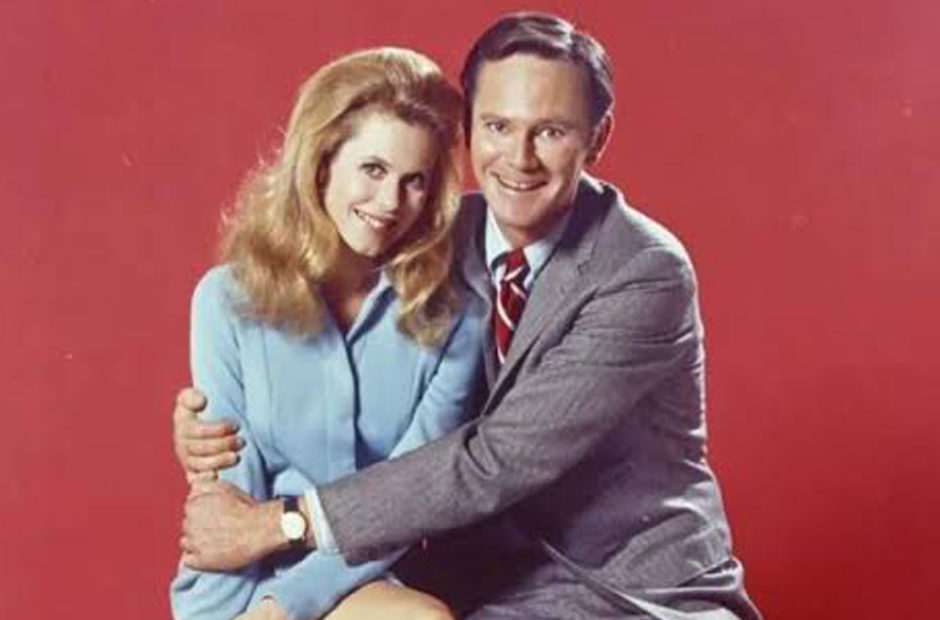
If television recasting has a patron saint, it may be Darrin Stephens. Dick York played Samantha’s perpetually bewildered mortal husband for the first five seasons of Bewitched, establishing a character audiences already knew extremely well before Dick Sargent took over the role in Season 6.
The series offered essentially no explanation. Samantha still had a husband named Darrin. Endora still disliked him. Larry Tate still employed him. He just looked different now.
The original actor
York had suffered a serious back injury years before Bewitched, and the resulting chronic pain became increasingly difficult to manage during production. His physical condition deteriorated as the series continued, sometimes requiring accommodations that allowed him to work while minimizing the strain.
Eventually, continuing became impossible. York became seriously ill while filming a fifth-season episode and was taken to the hospital. He subsequently told producer William Asher that he needed to leave the series.
Rather than write Darrin out and fundamentally alter the Stephens family, the producers recast him.
The replacement
Dick Sargent assumed the role when Bewitched returned for its sixth season in 1969. There was no magical accident explaining Darrin’s new appearance and no elaborate story designed to introduce the replacement. Sargent simply became Darrin Stephens.
The two actors brought noticeably different energies to the character. York’s Darrin often seemed one magical disaster away from complete nervous collapse, while Sargent’s version could come across as more irritated and resigned to the insanity surrounding him. Both nevertheless occupied the same basic position as the mortal husband trying to maintain an ordinary suburban life while married to a witch.
Sargent remained through the end of Bewitched in 1972, meaning viewers ultimately received five seasons of York and three seasons of Sargent.
The change became so famous that replacing one actor with another in an established television role is still sometimes described as the “Darrin syndrome.” Bewitched didn’t invent television recasting, but few shows have ever provided a more recognizable example.
Two Darrins. One Samantha. No explanation necessary.
Where to watch: Check current streaming availability; sold on physical media and digitally.
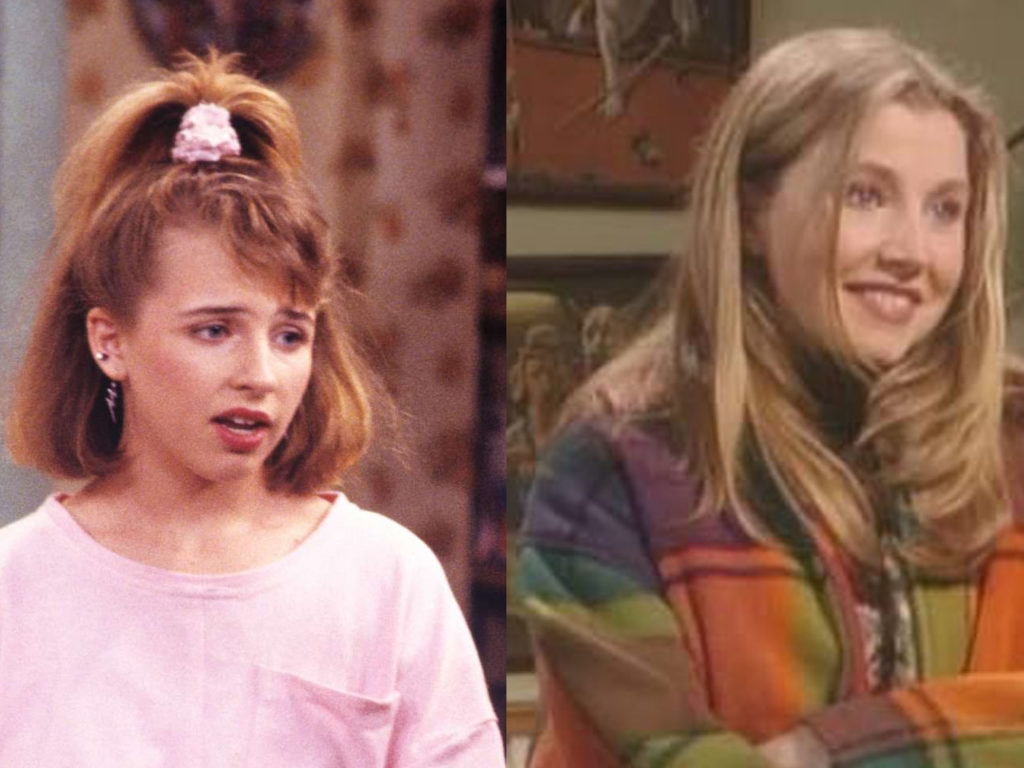
Becky Conner – Roseanne
Most television shows try to make a recasting as unobtrusive as possible. Roseanne eventually took the opposite approach. After Becky Conner changed actresses more than once, the series began openly joking about the fact that apparently nobody in Lanford could keep track of what the oldest Conner daughter looked like.
The original actor
Lecy Goranson originated the role of Becky when Roseanne premiered in 1988. As the oldest of Roseanne and Dan’s children, Becky developed from an academically successful teenager into a young woman increasingly frustrated with the limitations of her working-class family and hometown.
Goranson eventually enrolled at Vassar College, making the demands of a weekly television series increasingly difficult to balance with her education. Her appearances became less frequent before Becky was written out by having her elope with Mark Healy and move away.
The character was too important to leave permanently, however, so the producers eventually decided to recast her.
The replacement
Sarah Chalke took over as Becky during Season 6, and for a while the arrangement seemed straightforward. Goranson had left, Chalke was the new Becky, and the series continued.
Then Goranson came back.
When her schedule permitted, Goranson returned to the role in Season 8. Chalke subsequently stepped back in when Goranson was unavailable, creating the unusual situation in which two actresses alternated as the same character during the original run.
At that point, Roseanne stopped pretending the audience hadn’t noticed.
The series made repeated jokes about Becky’s changing appearance. When Goranson returned, Roseanne looked at her daughter and remarked, “Where the hell have you been?” In another episode, the family watches Bewitched and discusses how much they preferred the first Darrin. Chalke’s Becky is standing right there.
The joke extended beyond the original series. Goranson returned as Becky for the 2018 revival and continued playing her on The Conners, while Chalke appeared in the revival as an entirely different character who initially planned to hire Becky as a surrogate.
Plenty of television characters have been recast. Becky Conner belongs to the much smaller group whose changing face became part of the joke.
Where to watch: Check current streaming availability; sold on physical media and digitally.
Aunt Vivian – The Fresh Prince of Bel-Air
When The Fresh Prince of Bel-Air returned for its fourth season in 1993, Vivian Banks was still married to Philip, still the mother of the Banks children, and still Will’s aunt. There was only one fairly obvious difference: Janet Hubert wasn’t playing her anymore.
Daphne Maxwell Reid had taken over the role, creating one of the most recognizable recastings in sitcom history.
The original actor
Hubert originated Vivian when The Fresh Prince of Bel-Air premiered in 1990. Her version of Aunt Viv was intelligent, outspoken and formidable enough to challenge both Will and Uncle Phil. Stories also established an accomplished life beyond her family, including her career in academia and a memorable episode in which she demonstrated that she could still command a dance floor.
Hubert remained with the series for three seasons, including the storyline surrounding Vivian’s pregnancy and the birth of Nicky.
Her departure subsequently became surrounded by years of public discussion about her relationship with Will Smith and what had happened behind the scenes. During the 2020 Fresh Prince reunion, Hubert and Smith discussed the situation directly and reconciled after decades of tension.
Hubert explained that she had been dealing with serious difficulties in her personal life and had been offered a new contract that would have limited the amount of work available to her. She declined the offer, ending her time on the series. The fuller story was considerably more complicated than the simple feud narrative that had followed the recasting for years.
The replacement
Daphne Maxwell Reid debuted as Vivian in the Season 4 premiere, “Where There’s a Will, There’s a Way.”
The show wasted little time acknowledging what viewers were seeing. Jazz looks at Vivian and remarks that there’s “something different” about her, providing a quick wink at the audience before everyone moves on.
Reid remained in the role for the final three seasons. Her Vivian generally occupied a somewhat different position within the ensemble, but the character’s fundamental relationships remained intact. She was still Philip’s wife, Will’s aunt and the mother of the Banks family.
The recasting became particularly notable because Hubert had already spent three full seasons defining Vivian. This wasn’t a character who had appeared once or twice before being replaced. Half of The Fresh Prince of Bel-Air features Hubert as Aunt Viv, while the other half features Reid.
Decades later, the 2020 reunion finally put both actresses together. Hubert and Reid met on camera, allowing the two Aunt Vivs to discuss the unusual connection they shared through the same character.
For viewers who watched the series in its original run, however, the transition remains wonderfully abrupt. Aunt Viv went upstairs at the end of one season and came back down the next year looking like an entirely different person.
Where to watch: Check current streaming availability; sold on physical media and digitally.
Chris Partridge – The Partridge Family
Chris Partridge provides a classic example of how casually television could once handle a recasting. Jeremy Gelbwaks played the young drummer throughout the first season of The Partridge Family. When Season 2 began, Brian Forster was sitting behind the drums instead.
The Partridges apparently saw no reason to discuss it.
The original actor
Gelbwaks was one of the five Partridge children when the series premiered in 1970. Chris played drums in the family’s musical group alongside his siblings Keith, Laurie, Danny and Tracy, with their mother Shirley serving as lead singer.
Because Chris and Tracy were the youngest members of the family, neither received the amount of story attention given to Keith, Laurie or especially Danny. Gelbwaks nevertheless appeared throughout the first season and was part of the family audiences had come to recognize.
After that season, Gelbwaks left the series. Accounts surrounding the change have varied over the years, with former cast members offering different recollections about his experience on the show. Gelbwaks himself has said his family moved from California to Virginia after his father’s work took them there, making his continued participation impractical.
Whatever combination of circumstances led to the decision, the producers chose the simplest solution available: Chris Partridge would stay and another young actor would play him.
The replacement
Brian Forster joined the cast beginning with Season 2 and remained Chris for the rest of the show’s run.
There was no storyline explaining the change and no attempt to transform the character. Chris was still the same member of the Partridge family and still played drums when everyone climbed aboard the psychedelic bus to perform another show.
Forster ultimately spent three seasons in the role compared with Gelbwaks’ one, making him the Chris Partridge most closely associated with the series despite not originating the character.
The relatively smooth transition was helped by Chris’s supporting role. Replacing Keith, Laurie or Danny after an entire season would have created a much larger disruption because those characters regularly drove stories. Chris was familiar enough for viewers to notice his new face but peripheral enough that the show could continue without rebuilding anything around him.
There was also no internet waiting to produce side-by-side screenshots before the Season 2 premiere had finished airing. One week, Jeremy Gelbwaks was Chris Partridge. When the family returned for another season, Brian Forster was Chris Partridge.
Everybody got back on the bus.
Where to watch: Check current streaming availability; sold on physical media and digitally.
Lionel Jefferson – The Jeffersons
Lionel Jefferson had already been part of television history before The Jeffersons premiered. Mike Evans originated the character on All in the Family, where Lionel and his parents lived near Archie and Edith Bunker. When George and Louise Jefferson moved on up to their own series in 1975, Evans went with them.
Then Lionel changed actors. Several years later, he changed back.
The original actor
Evans first appeared as Lionel during the first season of All in the Family. The character frequently provided an effective counterpoint to Archie Bunker, sometimes responding to Archie’s racism with sarcasm that sailed directly over Archie’s head.
Lionel became even more important when The Jeffersons began. His relationship with Jenny Willis connected the Jefferson and Willis families, eventually leading to their marriage and the birth of their daughter Jessica.
Evans left The Jeffersons after its first season. Over the years, simplified accounts have sometimes reduced his departure to a single behind-the-scenes explanation, but Evans himself discussed wanting to pursue other opportunities rather than remaining in a role that wasn’t providing the creative satisfaction he wanted.
The producers didn’t remove Lionel from the Jefferson family. They hired another Evans.
No relation.
The replacement
Damon Evans took over the role beginning with Season 2 and continued playing Lionel through Season 4.
As with many recastings of the era, The Jeffersons didn’t construct an elaborate explanation for Lionel’s new appearance. Damon Evans simply stepped into the existing character’s relationships and storylines.
Then the unusual part happened.
After Damon Evans left, Mike Evans returned to the role he had originated. Beginning in Season 6, the original Lionel was once again part of The Jeffersons, remaining in the role on a recurring basis for several more seasons.
That gives Lionel a television recasting history similar to Becky Conner’s years later: original actor, replacement actor, original actor again.
Mike Evans’ return also restored the performer who had helped create Lionel years before The Jeffersons even existed. His connection to the character stretched back to the Bunkers’ neighborhood on All in the Family, making his eventual return feel less like another recasting than a familiar face reclaiming the role.
Two actors named Evans played Lionel Jefferson, and the first one eventually came back. Sometimes television casting history is considerate enough to make itself easy to remember.
Where to watch: Check current streaming availability; sold on physical media and digitally.
Meg Griffin – Family Guy
Mila Kunis has voiced Meg Griffin for so long that it’s easy to forget she wasn’t the original voice of the character. When Family Guy began in 1999, Lacey Chabert was the performer behind the Griffin family’s frequently mistreated teenage daughter.
Unlike most recastings on this list, Meg didn’t suddenly acquire a different face. Unless viewers recognized the voice, the transition could pass almost unnoticed.
The original actor
Chabert voiced Meg during the show’s first production season while simultaneously starring as Claudia Salinger on Party of Five. She was still a teenager at the time and balancing television work with school.
Chabert has subsequently explained that leaving Family Guy was her decision. Her existing workload made continuing difficult, and she didn’t remain with the animated series as it moved forward.
Because animated episodes aren’t always produced and broadcast in a simple chronological sequence, Chabert’s voice can be heard across episodes associated with the early portion of the series rather than disappearing at a perfectly clean broadcast dividing line.
The important part was that Family Guy needed a new Meg.
The replacement
Mila Kunis took over the character and quickly became the voice permanently associated with her.
Kunis was already starring as Jackie Burkhart on That ’70s Show when she joined Family Guy. Her version of Meg remained recognizably the same character, but the show’s treatment of her gradually evolved as the series itself became more exaggerated.
Meg eventually became the Griffin family’s favorite target. Peter openly insults her, her siblings ridicule her, and even Lois frequently participates in treating her terribly. “Shut up, Meg” became one of the show’s most recognizable recurring lines.
Kunis remained with the series through cancellations, revivals and hundreds of episodes, giving her decades to define a character Chabert had originated during the show’s earliest production period.
That’s what makes this one of television’s most successful recastings. There wasn’t a famous controversy surrounding the change, the show didn’t need to explain it, and the replacement became so thoroughly identified with the role that the original casting became television trivia.
For an animated character, that’s about as seamless as a recasting can get.
Where to watch: Check current streaming availability; sold on physical media and digitally.
Daario Naharis – Game of Thrones
Some television recastings at least give viewers a replacement actor who bears a passing resemblance to the original performer. Game of Thrones took a different approach with Daario Naharis. Ed Skrein introduced the character during Season 3. When Daario returned in Season 4, Michiel Huisman had taken over the role, sporting a substantially different appearance.
Daenerys Targaryen didn’t seem confused, so viewers were expected to catch up.
The original actor
Skrein’s Daario enters the story as a lieutenant in the Second Sons, a mercenary company hired to fight against Daenerys. Rather than follow orders to assassinate her, Daario kills his fellow captains and pledges the Second Sons to Daenerys instead.
The character quickly becomes more than another soldier in her growing army. Daario is openly attracted to Daenerys, and his confidence and willingness to take risks distinguish him from the increasingly formal collection of advisers surrounding her.
Skrein appeared in three episodes near the end of Season 3. When Game of Thrones returned the following year, however, he was gone.
The precise circumstances surrounding Skrein’s departure have never been fully explained publicly. Skrein later pushed back against reports that he simply chose to leave Game of Thrones for another project, instead referring to “politics” behind the change. Without a fuller account from those involved, the safest conclusion is simply that the production decided to move forward with another actor.
The replacement
Michiel Huisman debuted as Daario in the Season 4 premiere and remained in the role through Season 6.
Huisman’s appearance was so different from Skrein’s that viewers unfamiliar with the casting news could reasonably wonder whether Daenerys had acquired another handsome mercenary while the first one was somewhere offscreen.
Instead, everyone treated him as the same Daario.
Huisman’s version received considerably more screen time, allowing the character’s relationship with Daenerys to develop into a romance. He accompanies her through her struggles to rule Meereen and remains one of her most loyal military supporters.
Daario’s story ends, at least within the television series, when Daenerys prepares to sail for Westeros. Tyrion advises her that bringing a lover to Westeros could complicate the political marriage she may eventually need, so Daenerys orders Daario to remain behind in Meereen with the Second Sons.
Huisman ultimately played Daario for three seasons compared with Skrein’s three episodes, making the replacement actor the version audiences spent substantially more time watching.
The recasting remains memorable largely because Game of Thrones made virtually no effort to disguise it. Daario left the screen looking like Ed Skrein and returned looking like Michiel Huisman.
Apparently that’s just something that happens when you cross the Narrow Sea.
Where to watch: Check current streaming availability; sold on physical media and digitally.
Carol Willick – Friends
Carol Willick was part of Friends almost immediately. Ross’s recently separated wife appears in the second episode, “The One with the Sonogram at the End,” revealing that she is pregnant with his child. Anita Barone played Carol in that episode, establishing a storyline that would remain important throughout the first season.
The next time Carol appeared, Jane Sibbett was playing her.
The original actor
Barone’s single appearance establishes most of the situation that would define Carol’s early role. She has left Ross after realizing she is a lesbian and beginning a relationship with Susan Bunch, but her pregnancy means Ross will remain part of her life.
That arrangement creates one of the show’s most important recurring relationships outside the central six characters. Ross, Carol and Susan have to determine how the three of them will raise Ben while Ross also deals with the emotional fallout from the end of his marriage.
Barone didn’t remain with the series after that initial appearance. She reportedly wanted to pursue opportunities for regular roles rather than commit to what was expected to be a relatively limited recurring part.
Instead of dropping Carol after introducing her pregnancy, Friends recast the role.
The replacement
Jane Sibbett became Carol for her subsequent appearances and remained in the role for the rest of the series.
Sibbett had an interesting history with Friends even before becoming Carol. She has discussed being considered for the role of Rachel Green, an opportunity that didn’t proceed because she was pregnant at the time.
Carol ultimately proved to be more substantial than the small recurring role initially envisioned. Sibbett has credited co-creator Marta Kauffman with responding positively to what she brought to the character, and Carol and Susan became recurring figures throughout the early seasons.
Their wedding in Season 2 was particularly notable for network television in 1996, while Ross’s complicated relationship with both women allowed the series to explore a family arrangement that was rarely depicted in mainstream sitcoms at the time.
Because Barone appeared only once, this is also one of the easiest recastings for viewers to forget. Sibbett had enough time to become thoroughly identified with Carol, while the original performance remained tucked into an episode near the very beginning of a 10-season series.
Anyone starting another Friends rewatch may therefore experience a brief moment during Episode 2: Wait, that’s Carol?
Yes. It was.
Where to watch: Check current streaming availability; sold on physical media and digitally.
Mandy Milkovich – Shameless
When Shameless introduced Mandy Milkovich during its first season, Jane Levy played the tough South Side teenager who quickly became connected to Ian and Lip Gallagher. By the time Season 2 began, Levy had landed a starring role on another series, leaving Shameless with a choice between losing Mandy or finding someone else to play her.
The producers chose someone else.
The original actor
Levy appeared as Mandy throughout the first season. Initially, Mandy develops an attraction to Ian Gallagher and reacts badly when he rejects her, but their relationship changes after Ian tells her that he is gay. Mandy becomes one of his closest friends and helps conceal his sexuality from her volatile family.
Her connection to the Gallaghers also brings her into Lip’s orbit, laying the groundwork for a relationship that would become considerably more important after the first season.
Levy’s departure had a straightforward explanation. She was cast as the lead in ABC’s Suburgatory, which premiered in 2011 and gave her the opportunity to headline a network comedy.
Shameless wasn’t finished with Mandy, so the role was recast for Season 2.
The replacement
Emma Greenwell took over as Mandy and remained in the role for several seasons.
The change was noticeable, but Greenwell quickly inherited substantially more material than Levy had received during the character’s introductory season. Mandy’s relationship with Lip became central to her story, revealing both her fierce devotion to him and the increasingly destructive ways she responded when she believed someone threatened his future.
Mandy also became a more complicated representation of life within the Milkovich family. Her home environment was abusive and dangerous, providing context for some of the behavior that could otherwise seem shockingly extreme.
Greenwell’s longer tenure meant her interpretation ultimately became the version of Mandy most closely associated with many of the character’s major storylines. Levy originated the role and established Mandy’s connection to Ian and the Gallaghers, but Greenwell had the opportunity to develop the character across multiple seasons.
The recasting also demonstrates how timing can shape which performer audiences ultimately associate with a television character. Levy left just as her own career was accelerating, while Mandy was simultaneously about to become much more important to Shameless.
One actress moved on to become the star of another television series. The other inherited a supporting character who was about to receive some of her biggest stories.
Where to watch: Check current streaming availability; sold on physical media and digitally.
Kristin Baxter – Last Man Standing
Last Man Standing returned for its second season with several changes to the Baxter family, but one was particularly difficult to miss. Kristin Baxter, Mike and Vanessa’s oldest daughter, had been played by Alexandra Krosney throughout Season 1. Beginning with Season 2, Amanda Fuller took over the role.
Unlike some television recastings prompted by an actor choosing to leave, this one was initiated by the production.
The original actor
Krosney established Kristin as a young single mother living with her parents while raising her son Boyd. Her circumstances gave the series another generation within the Baxter household and frequently put her at odds with Mike over parenting, politics and the decisions she was making about her future.
Kristin’s relationship with Boyd’s father, Ryan, also became an increasingly important part of her story as the series developed.
After the first season, however, the producers decided to make a change. Contemporary reporting described Krosney’s departure as a decision made for “creative reasons,” and the role was recast rather than written out.
The show didn’t offer an elaborate explanation for why Kristin suddenly looked different. She was still Mike and Vanessa’s daughter, still Boyd’s mother, and still part of the Baxter household.
The replacement
Amanda Fuller joined Last Man Standing with the Season 2 premiere and remained Kristin for the rest of the series.
The transition coincided with other adjustments to the Baxter family. Boyd was also recast as the producers aged the character, while the series increasingly developed Kristin as an independent adult rather than simply the oldest daughter living back at home.
Fuller’s Kristin eventually married Ryan, built a family with him and pursued her own career, including taking a larger role at the Outdoor Man restaurant. The character consequently grew far beyond the circumstances that had defined her during the first season.
The length of Fuller’s tenure also changed the balance between the two performances. Krosney played Kristin for one season. Fuller played her across the remaining eight seasons, including the show’s cancellation by ABC, revival by Fox and eventual conclusion in 2021.
For anyone who discovered Last Man Standing after its early years, Fuller could easily seem like the only Kristin Baxter. Returning to Season 1 then produces the same peculiar experience created by several recastings on this list: the character is completely familiar, but the person playing her isn’t.
Where to watch: Check current streaming availability; sold on physical media and digitally.
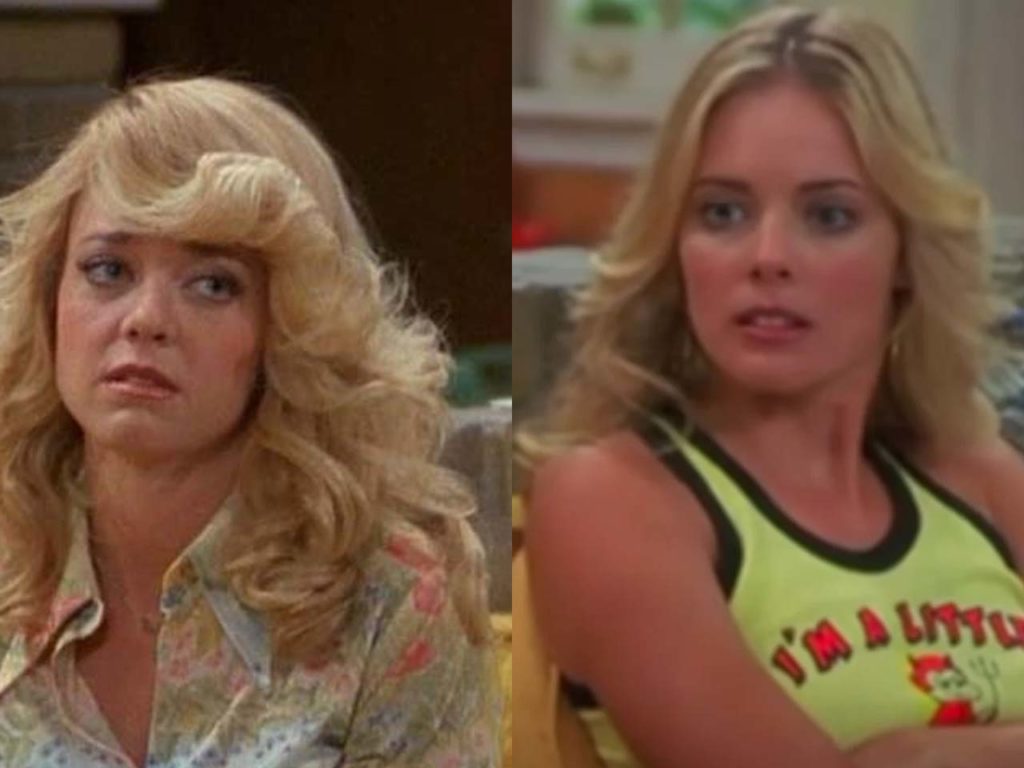
Laurie Forman – That ’70s Show
Laurie Forman was never going to win any awards for being a supportive older sister. Eric’s manipulative, frequently cruel sibling spent much of That ’70s Show tormenting him, manipulating their parents and demonstrating exactly how much she could get away with as Red’s favorite child. Lisa Robin Kelly established that version of Laurie during the show’s early seasons, but personal difficulties eventually interrupted her time on the series.
When Laurie returned as a regular presence, another actress was playing her.
The original actor
Kelly introduced Laurie during the first season and quickly established her contentious relationship with Eric. Red frequently overlooked behavior that would have earned Eric an immediate threat of a foot in his ass, while Kitty generally had a much clearer understanding of what her daughter was actually like.
Laurie’s relationships were equally chaotic. She had an affair with Kelso while he was dating Jackie and regularly used other people to get whatever she wanted. Kelly’s performance made Laurie an effective antagonist within the Forman household because she understood precisely how to manipulate nearly everyone around her.
Kelly’s appearances became less frequent as the series continued. She later spoke publicly about struggles with alcohol and personal problems that affected her career. After being absent for much of the series, she returned for several episodes during Season 5 but subsequently left again.
When the writers wanted Laurie back for Season 6, the role was recast.
The replacement
Christina Moore took over as Laurie beginning with the Season 6 premiere.
The timing made the change particularly conspicuous because Laurie had just become central to a major storyline. At the end of Season 5, she married Fez so he could remain in the United States, creating plenty of reasons for the character to continue appearing.
Moore inherited that storyline, but Laurie never regained the prominence she had enjoyed during the earlier seasons. She appeared only occasionally before disappearing from the series again.
Unlike several recastings on this list, there wasn’t enough time for the replacement performer to become the version most viewers associated with the character. Kelly had already defined Laurie’s personality and her relationships with the Forman family, while Moore arrived relatively late in the show’s run.
Kelly later spoke publicly about struggles with alcohol and personal problems that affected her career. She died in 2013 at the age of 43. Her difficulties during this period make her departure from That ’70s Show more complicated than simply another amusing example of a sitcom suddenly changing faces.
The recasting nevertheless remains part of That ’70s Show history. Eric Forman left Point Place before the final season, but Laurie managed to leave, return, change actresses and disappear again before her little brother even made it to Africa.
Where to watch: Check current streaming availability; sold on physical media and digitally.
Morgan Matthews – Boy Meets World
Morgan Matthews was Cory’s younger sister when Boy Meets World premiered, providing another child for Alan and Amy to raise while Cory navigated adolescence. Lily Nicksay played Morgan during the first two seasons before the character abruptly vanished for an extended stretch of episodes.
When Morgan finally returned, she had a new face and apparently a pretty good idea of how long she had been missing.
The original actor
Nicksay began playing Morgan at a very young age and appeared regularly throughout the show’s first two seasons. Morgan wasn’t central to Cory’s school stories, but she was an established part of the Matthews household and frequently provided the kind of blunt observations only a sitcom’s youngest child could get away with making.
Then Morgan disappeared.
The precise reason for Nicksay’s departure has never been established clearly enough to justify attaching a dramatic behind-the-scenes explanation to it. What viewers saw was much simpler: Morgan stopped appearing during Season 2 and remained absent for a significant portion of the series.
The Matthews family didn’t permanently lose its youngest daughter, however.
The replacement
Lindsay Ridgeway took over as Morgan during Season 3.
Boy Meets World immediately acknowledged that the character had been gone. Upon returning, Morgan remarked that it was the “longest time-out” she had ever had, allowing the series to joke about her lengthy absence without directly addressing why she suddenly looked different.
Ridgeway continued playing Morgan for the remainder of the original series, although the character remained secondary to Cory, Shawn, Topanga and Eric as their stories increasingly moved beyond the Matthews household.
The recasting received an unexpected epilogue years later on the sequel series Girl Meets World. When the Matthews family gathered in the series finale, both Nicksay and Ridgeway appeared as Morgan. The episode deliberately treated the two actresses as though both versions of the character belonged to the family, turning a decades-old recasting into one final joke.
It’s difficult to imagine a television series acknowledging its own casting history much more directly than that. Boy Meets World didn’t simply have two Morgan Matthews.
Eventually, it put both of them in the same room.
Where to watch: Check current streaming availability; sold on physical media and digitally.
More Television History
Recasting a television character is ultimately an agreement between a show and its audience. The producers are asking viewers to accept that this new person is the same character they already know, even when every instinct tells them otherwise.
Sometimes that agreement is surprisingly easy to make. Mila Kunis has played Meg Griffin for so long that Lacey Chabert’s original performance has become trivia, while Amanda Fuller spent eight seasons as Kristin Baxter after Alexandra Krosney originated the role for only one. Jane Sibbett similarly had almost the entire run of Friends to make Carol Willick her own after Anita Barone’s single appearance.
Other changes never become invisible. The two Darrins remain one of the most famous pieces of Bewitched history, and anyone watching Game of Thrones straight through is going to notice that Daario Naharis underwent one hell of a transformation between seasons.
Then there are shows such as Roseanne and Boy Meets World that eventually decided acknowledging the absurdity was more fun than ignoring it. Becky Conner’s changing appearance became a recurring joke, while the two actresses who played Morgan Matthews eventually shared the screen decades after the original recasting.
That’s probably the most practical lesson television has learned about replacing an established actor. Audiences aren’t stupid. They know perfectly well that somebody new just walked onto the set. If the replacement works, eventually viewers may stop caring. If it doesn’t, no amount of pretending will make them forget.
And sometimes you can just make a joke about the first Darrin.