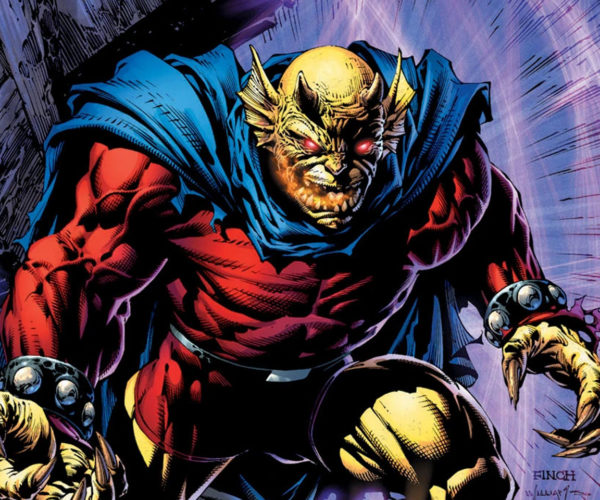
Clayface is one of Batman’s most visually distinctive enemies, a shape-shifting villain capable of changing his face, body, and entire appearance at will. The name has belonged to several different characters over the decades, but Basil Karlo has become the version most closely associated with the identity in modern DC Comics.
What makes Clayface especially interesting is that the character has never been limited to one simple origin or personality. Some versions are tragic, some monstrous, and some outright criminal, while Basil Karlo has even spent periods attempting to reform and work alongside Batman’s allies.
Who Is Clayface?
Clayface is the name used by multiple shape-shifting villains and antiheroes in DC Comics. Most versions possess bodies made from a clay-like or protoplasmic substance that can be reshaped into other people, objects, or weapons.
The character is closely associated with Batman and Gotham City, although different Clayfaces have appeared throughout the wider DC Universe.
Basil Karlo was the original Clayface and remains the most prominent version today. He began as an actor rather than a superpowered monster, making his transformation into one of Gotham’s most dangerous shape-shifters an evolution that took place over many years of comic book history.
When Did Clayface First Appear?
Clayface debuted in Detective Comics #40 in 1940.
The original Basil Karlo was a horror movie actor who became furious when one of his old films was being remade without him. He adopted the identity of the movie’s masked villain, Clayface, and began murdering members of the new production.
At this stage, Karlo did not possess shape-shifting powers. He was a human killer using a disguise and theatrical identity.
Later versions of the character introduced the clay-based powers now associated with the name, and Basil himself eventually acquired similar abilities.
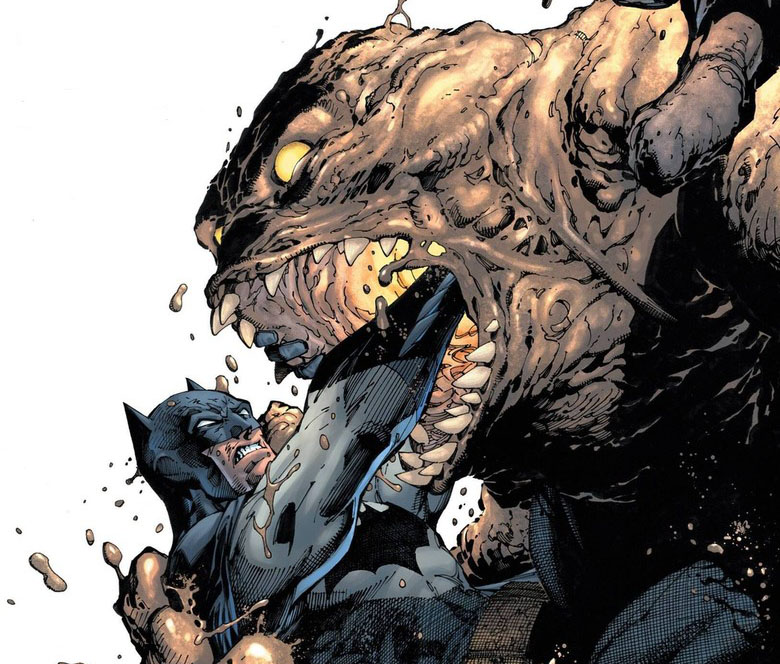
Who Is Basil Karlo?
Basil Karlo is an actor whose obsession with fame and identity has repeatedly shaped his life.
His original Golden Age story focused on jealousy and murder rather than superpowers, but later DC continuity transformed him into the mud-like shape-shifter modern readers recognize.
Basil’s acting background fits his abilities particularly well. He can physically become almost anyone, making him capable of impersonating other people with extraordinary accuracy.
That combination of theatrical talent and literal shape-shifting makes him especially dangerous. Batman may know that Clayface is nearby without knowing which person in the room he actually is.
How Did Basil Karlo Get His Powers?
Basil did not originally possess any metahuman abilities.
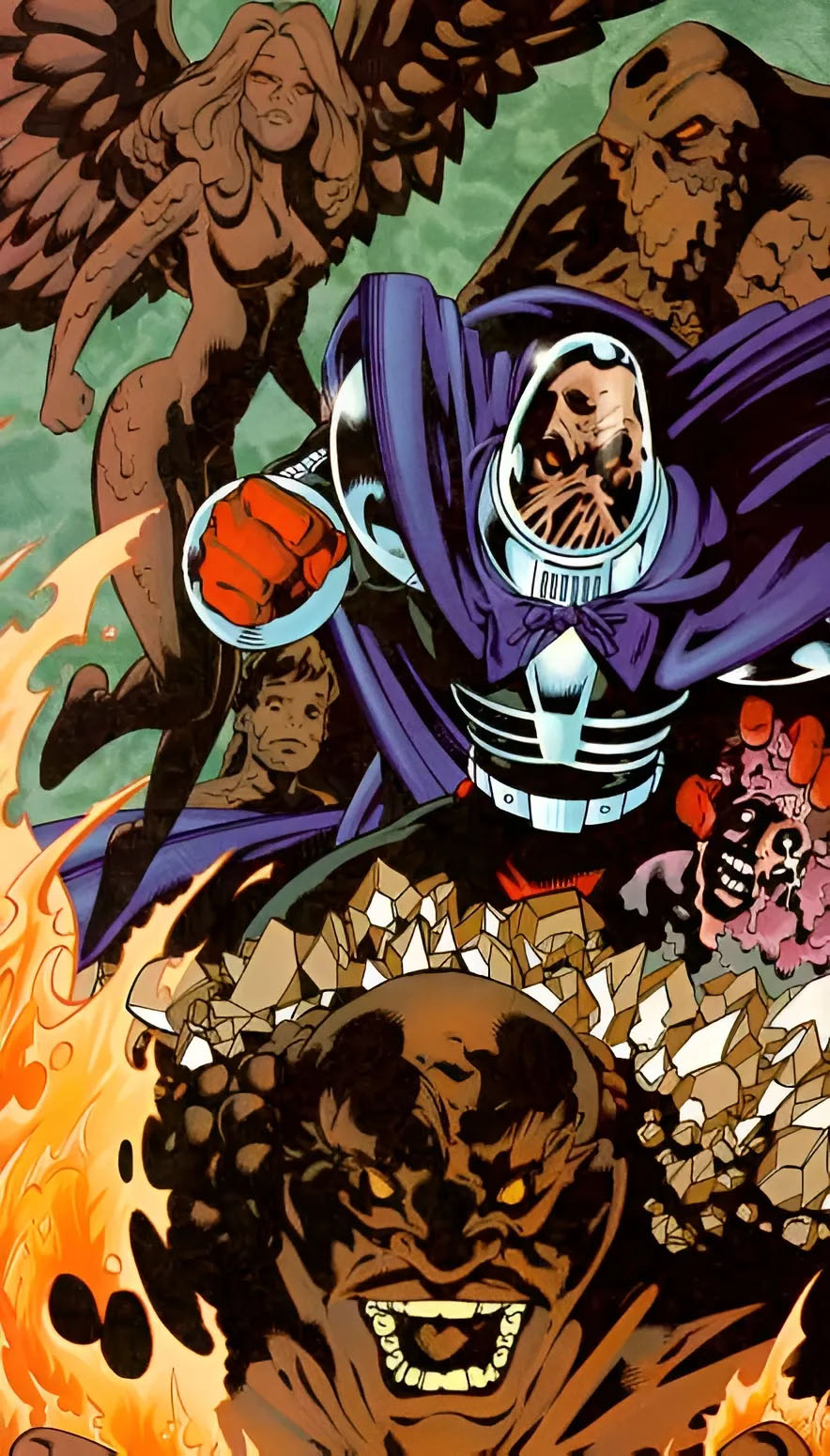
His transformation into a superpowered Clayface came much later, after he gathered several other people who had used the name. During the storyline commonly known as the Mud Pack, Karlo obtained samples from other Clayfaces and combined their abilities with his own body.
The process transformed him into a powerful shape-shifting creature sometimes known as Ultimate Clayface.
Later continuity has revised details of his origin and powers, but the basic idea remains that Basil eventually became the kind of living clay monster that earlier versions of the identity had already established.
What Powers Does Clayface Have?
Clayface’s abilities vary depending on which version of the character is being used, but the most familiar powers include:
- Shape-shifting – Clayface can alter his appearance to impersonate other people.
- Body manipulation – He can reshape his limbs into weapons, tools, or other forms.
- Size alteration – Some versions can dramatically increase or reduce their mass.
- Superhuman strength – His clay-like body can generate tremendous physical force.
- Durability – Conventional attacks may pass through or deform his body without causing permanent injury.
- Regeneration – Clayface can often reform himself after sustaining severe damage.
These abilities make him particularly difficult for Batman to fight directly. Punching or shooting a body that can simply reshape itself is rarely an effective long-term solution.
How Does Batman Defeat Clayface?
Because Clayface’s body is so difficult to damage conventionally, Batman often has to rely on chemistry, temperature, technology, or environmental conditions rather than physical force.
Different stories have shown Clayface vulnerable to substances or conditions that can harden, freeze, dissolve, destabilize, or otherwise interfere with his unusual body.
Batman also has to contend with Clayface’s ability to impersonate other people. Identifying him can be just as difficult as defeating him.
This combination makes Clayface both a physical threat and a mystery villain. Batman may need to determine who has been replaced before he can even begin figuring out how to stop him.
How Many Different Clayfaces Are There?
Clayface is unusual among Batman villains because the name has been used by numerous characters rather than belonging exclusively to one person.
DC has recognized at least eight characters as major holders of the Clayface identity, while other stories and continuity changes have pushed the total even higher.
The most important versions include Basil Karlo, Matt Hagen, Preston Payne, Sondra Fuller, and Cassius Payne.
Who Is Matt Hagen?
Matt Hagen was the second major Clayface and the character who introduced the shape-shifting powers most people now associate with the name.
He debuted in Detective Comics #298 in 1961.
Hagen encountered a mysterious pool of protoplasm that transformed his body, allowing him to reshape himself into virtually any form.
Unlike Basil Karlo’s original version, Hagen was a true superpowered criminal. His abilities established the basic visual and physical template that would influence nearly every later interpretation of Clayface.
Who Is Preston Payne?
Preston Payne became the third major Clayface.
Payne was a scientist suffering from a severe medical condition who attempted to cure himself using material connected to Matt Hagen.
The experiment transformed him instead.
His version of the Clayface condition was particularly horrifying because his body constantly deteriorated, forcing him to use his powers in increasingly dangerous ways simply to survive.
Payne’s stories leaned heavily into body horror and tragedy, demonstrating how flexible the Clayface concept could be.
Who Is Sondra Fuller?
Sondra Fuller, also known as Lady Clayface, became another major figure in the Clayface legacy.
Her powers allowed her to reshape her appearance and body like other versions, but she also became notable for her relationship with Preston Payne.
Their son, Cassius Payne, inherited unusual abilities of his own and became another member of the expanding Clayface family.
The existence of multiple related characters transformed Clayface from a single Batman villain into something closer to a shared condition or legacy.
Was Clayface Ever a Hero?
Basil Karlo has not always remained one of Batman’s enemies.
During the DC Rebirth era, Batman recruited Basil into a team of Gotham-based heroes that also included Batwoman, Tim Drake, Stephanie Brown, and Cassandra Cain.
Basil attempted to control his condition and use his abilities for good, creating one of the most sympathetic periods in the character’s history.
His struggle was complicated by the psychological effects of maintaining his monstrous form and by the fear that he could lose control.
This period emphasized an idea that has become increasingly important to Basil’s modern characterization: Clayface may be dangerous, but Basil Karlo is not necessarily beyond redemption.
Why Is Clayface Often a Tragic Villain?
Many Batman villains are defined by a single obsession, but Clayface’s stories frequently revolve around identity.
Basil Karlo wanted to be admired as an actor. After gaining the ability to look like anyone, he became physically capable of assuming any role imaginable, yet that power did not solve the insecurities and obsessions that drove him in the first place.
Other Clayfaces have similar tragedies. Some were transformed by accidents, medical experiments, or desperate attempts to fix their bodies.
The result is a villain whose frightening appearance often hides a deeply human problem underneath.
Clayface in Batman: The Animated Series
One of the most influential versions of Clayface appeared in Batman: The Animated Series.
The two-part story “Feat of Clay” introduced Matt Hagen as a successful actor whose face had been badly injured. He became dependent on an experimental substance called Renuyu, which temporarily restored his appearance.
After exposure to a massive amount of the chemical, Hagen’s body became a shape-shifting clay-like substance.
This version combined elements of several comic book interpretations and reinforced the idea of Clayface as a tragic actor whose desire to control his appearance ultimately destroyed his normal life.
Clayface in Other DC Media
Versions of Clayface have appeared in numerous Batman television series, animated films, video games, and other adaptations.
Some use Basil Karlo, while others draw more heavily from Matt Hagen or combine traits from several comic book versions.
That flexibility has become part of the character’s appeal. An adaptation can emphasize horror, crime, tragedy, mystery, comedy, or superhero action without abandoning the fundamental concept.
Clayface and the 2026 DC Movie
Clayface is headlining his own DC Studios movie, scheduled to arrive in theaters on October 23, 2026.
The film brings one of Batman’s oldest enemies into the spotlight as the central character rather than simply using him as another villain in a larger Batman story.
That makes the character’s long comic book history especially useful for viewers discovering him for the first time. The Clayface identity has changed dramatically since Basil Karlo first appeared in 1940, leaving filmmakers with decades of horror, crime, tragedy, and shape-shifting mythology to draw from.
Why Clayface Matters
Clayface has lasted for more than eight decades because the concept can continually be reinvented.
The original version was a masked actor committing murders. Later versions became science-fiction monsters. Others turned the identity into body horror, tragedy, or stories about rehabilitation and redemption.
The shape-shifting powers also give writers endless possibilities. Clayface can be a giant monster in one story and an invisible infiltrator in the next.
At the center of nearly every version, however, is the same unsettling question: if someone can become anyone, how do you know who they really are?
FAQs
Who is the original Clayface?
Basil Karlo is the original Clayface. He debuted in Detective Comics #40 in 1940.
Was Basil Karlo always a shape-shifter?
No. The original Basil Karlo was a human actor and murderer with no superpowers. He gained shape-shifting abilities much later.
Who was the first superpowered Clayface?
Matt Hagen, the second major Clayface, introduced the shape-shifting powers now most closely associated with the identity.
How many Clayfaces have there been?
Numerous characters have used the name. DC currently recognizes multiple major Clayfaces, with Basil Karlo, Matt Hagen, Preston Payne, Sondra Fuller, and Cassius Payne among the most important.
Can Clayface impersonate anyone?
Most major versions can alter their bodies and appearance enough to convincingly impersonate other people.
Has Clayface ever worked with Batman?
Yes. Basil Karlo spent a significant period attempting to reform and worked alongside Batman and other Gotham heroes.
When does the Clayface movie come out?
DC Studios’ Clayface is scheduled to open in theaters on October 23, 2026.
Conclusion
Clayface has evolved from a Golden Age murderer into one of the most versatile characters in Batman mythology. Basil Karlo remains the best-known version, but the identity has passed through numerous people, each adding something new to the concept.
Whether portrayed as a monster, criminal, tragic figure, or reluctant hero, Clayface remains dangerous because his greatest weapon is uncertainty. Batman may know exactly what he is fighting without ever being certain who is standing in front of him.