Television has always had one advantage that movies never will.
It can make you wait.
For decades, viewers didn’t have the luxury of binge-watching an entire season over a weekend. When a shocking episode ended with a major question unanswered, that was it. You waited until next week. Sometimes you waited all summer. Occasionally, you waited more than a year.
Those waiting periods became part of the experience.
Friends debated theories at school and around the office. Newspapers published speculation. Radio hosts took calls from listeners convinced they had figured out what would happen next. Long before social media, television cliffhangers became shared cultural events that kept audiences talking long after the credits rolled.
Of course, not every cliffhanger paid off. Some resolutions were every bit as satisfying as fans hoped, while others struggled to match the anticipation they created. But that’s part of what makes a great cliffhanger memorable. The question itself becomes just as important as the answer.
From legendary mysteries that captivated entire countries to season finales that left millions staring at a blank screen in disbelief, these are the television cliffhangers that had viewers counting the days until the story continued.
Dallas: “Who Shot J.R.?” (1980)
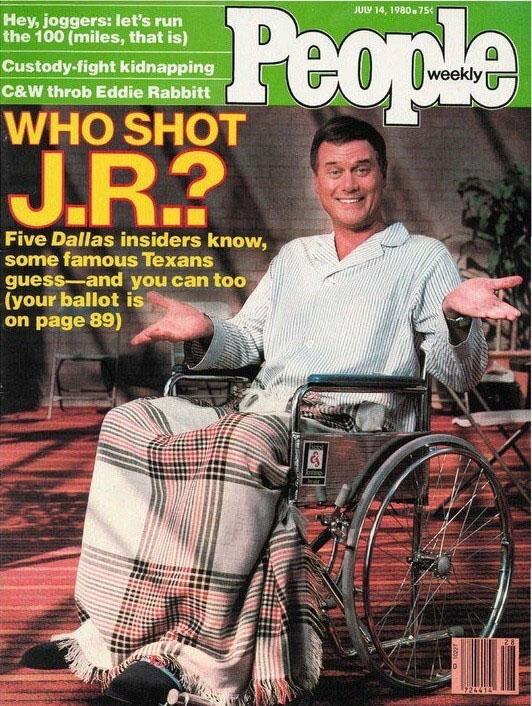
Before the internet, before social media, and before binge-watching, there was one television mystery that seemed to consume the entire world.
Who shot J.R. Ewing?
The third-season finale of Dallas, titled “A House Divided,” transformed a prime-time soap opera into a cultural phenomenon. When the ruthless oil baron was gunned down by an unknown assailant in the closing moments, viewers had no choice but to spend the entire summer wondering who had pulled the trigger.
Why it worked
The cliffhanger succeeded because almost everyone on the series had a reason to want J.R. dead. He had manipulated business partners, betrayed friends, cheated on his wife, and bullied members of his own family. By the time the gunshots rang out, the suspect list was enormous, giving audiences months to debate motives and opportunities.
Rather than feeling like a cheap surprise, the shooting was the natural consequence of J.R.’s own actions. The mystery grew organically out of the story the writers had been telling all season.
The question everyone asked
“Who shot J.R.?” quickly became far more than a television storyline. It became a worldwide catchphrase.
Newspapers ran theories. Radio hosts debated possible suspects. People wore T-shirts asking the question, and betting pools sprang up around the globe. Even those who had never watched Dallas knew exactly what “Who shot J.R.?” meant. Few television cliffhangers have ever escaped popular culture so completely.
Its lasting legacy
When the mystery was finally resolved several months later, more than 80 million Americans tuned in, making it one of the highest-rated television episodes in U.S. history. More importantly, “Who shot J.R.?” established the blueprint for every major television cliffhanger that followed. Networks realized that the right unanswered question could keep audiences talking for months, turning a season finale into a genuine cultural event.
More than 45 years later, it remains the standard against which television cliffhangers are measured.
Where to watch: Available to stream; sold on physical media and digitally.
Star Trek: The Next Generation: “The Best of Both Worlds” (1990)
Some cliffhangers leave viewers wondering what happens next. Others leave them wondering whether the hero can possibly survive. Star Trek: The Next Generation accomplished both with “The Best of Both Worlds,” an episode so influential that many fans still consider it the greatest season finale in science fiction television history.
Why it worked
Throughout its first three seasons, Captain Jean-Luc Picard had become one of television’s most respected leaders. Calm, intelligent, and deeply principled, he represented the very best of what Star Trek believed humanity could become. Turning him into the Borg’s newest weapon was almost unthinkable.
The cliffhanger also raised the stakes for the entire Federation. This wasn’t simply another encounter with a dangerous alien race. It was a battle against an enemy that had already assimilated one of Starfleet’s greatest captains, making victory seem almost impossible.
The question everyone asked
Could Captain Picard actually be saved?
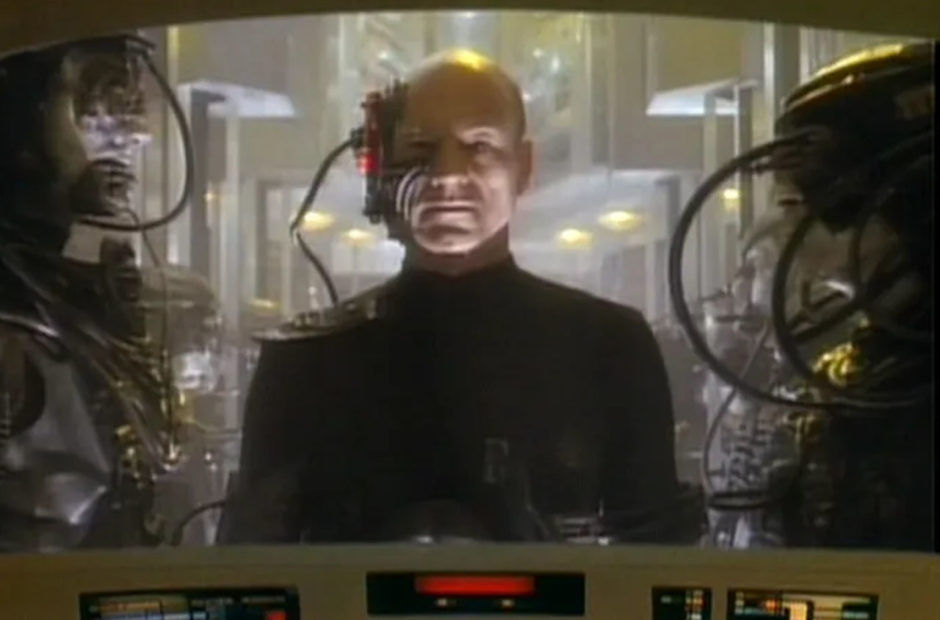
After being transformed into Locutus of Borg, Picard stood before his former crew as the face of humanity’s greatest enemy. The Enterprise prepared to fire its newly developed weapon, only for Commander Riker to issue the unforgettable command: “Mr. Worf… fire.”
The screen immediately faded to black.
Fans spent the entire summer debating whether Patrick Stewart was leaving the series, whether Picard would die, and how the Enterprise could possibly defeat the Borg after losing its captain.
Its lasting legacy
“The Best of Both Worlds” demonstrated just how powerful a television cliffhanger could be when it fundamentally changed everything audiences thought they knew about a series. The episode is consistently ranked among the greatest hours of Star Trek ever produced, while its cliffhanger remains one of the defining moments in television science fiction. More than three decades later, Riker’s final command is still instantly recognizable to generations of Star Trek fans.
Where to watch: Available to stream; sold on physical media and digitally.
Lost: “Exodus” (2005)
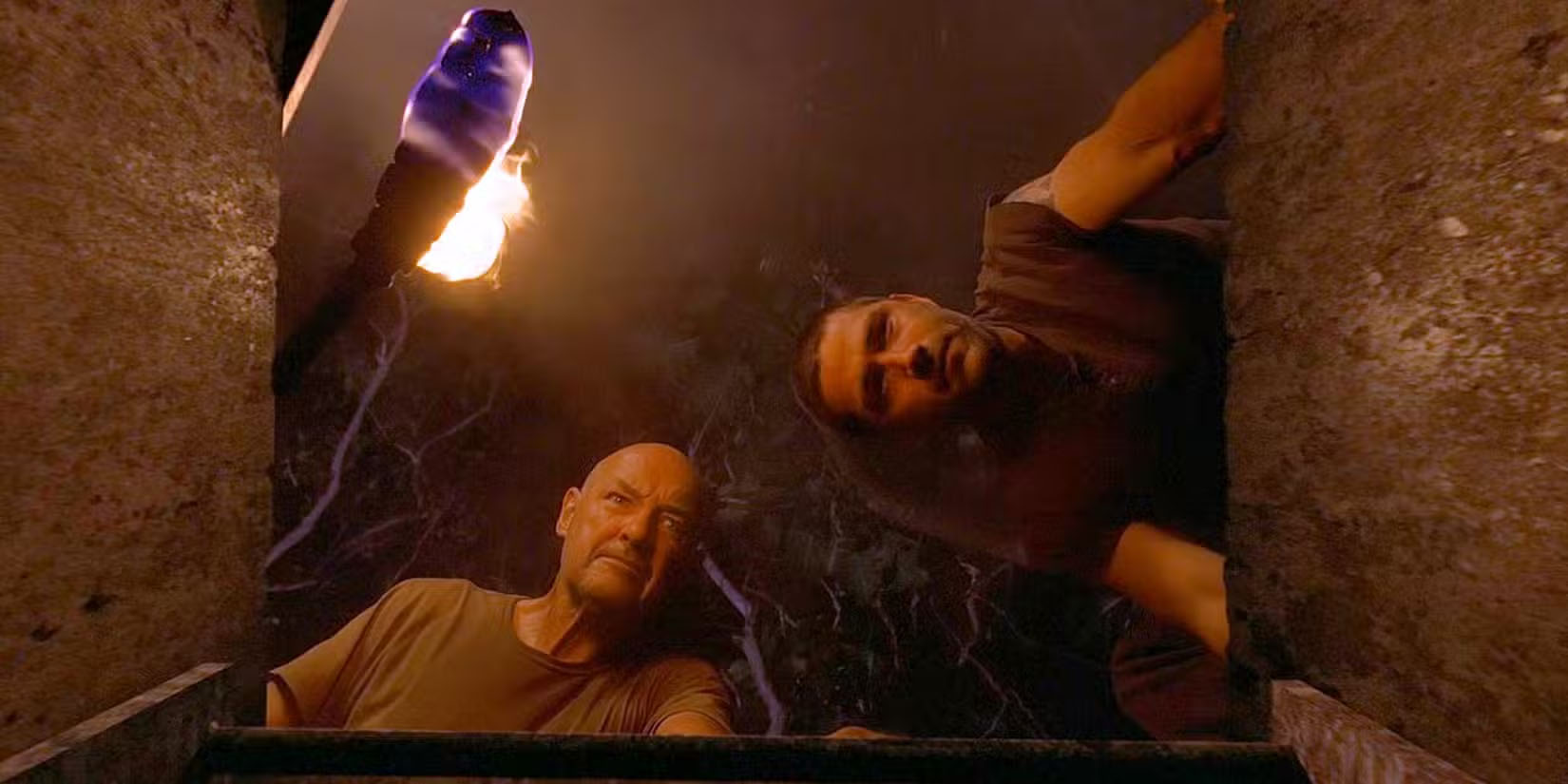
Few television series have embraced mystery as completely as Lost. From its very first episode, the ABC drama rewarded viewers with new questions almost as quickly as it answered old ones. At the end of its first season, however, the series delivered a cliffhanger so compelling that it dominated fan discussions for months.
Why it worked
Unlike many cliffhangers that rely on immediate danger, “Exodus” centered on pure curiosity. Throughout the season, survivors repeatedly encountered references to a mysterious hatch buried beneath the jungle floor. No one knew what it contained, who built it, or why it was there.
The writers carefully built anticipation over more than 20 episodes, making the hatch one of television’s most effective long-term mysteries before audiences ever saw what was inside.
The question everyone asked
What was in the hatch?
After finally blowing open the buried steel door with stolen dynamite, John Locke and Jack Shephard peer inside. Instead of revealing the answer, the camera simply looks down into a dark shaft as a bright light shines upward from the unknown below.
The season ends without another clue.
For months, viewers filled internet forums with theories. Was it a bunker? A laboratory? An alien spacecraft? A government experiment? The speculation became almost as entertaining as the series itself, demonstrating how a single unanswered question could captivate millions of people.
Its lasting legacy
The hatch remains one of television’s defining cliffhangers because it perfectly captured what made Lost such a phenomenon during its early years. It encouraged audiences to become active participants, searching for clues and debating possibilities between episodes. While opinions remain divided about the series’ later mythology, the question “What’s in the hatch?” stands as one of the most memorable cliffhangers television has ever produced.
Where to watch: Available to stream; sold on physical media and digitally.
The West Wing: “What Kind of Day Has It Been” (2000)
A great cliffhanger doesn’t always require explosions or gunfire, but The West Wing proved that both can be devastating when they arrive at exactly the right moment. Aaron Sorkin’s first-season finale transformed a fast-paced political drama into one of television’s most talked-about summer mysteries.
Why it worked
Throughout its first season, The West Wing had established President Josiah Bartlet and his senior staff as brilliant professionals navigating the pressures of governing. While political crises regularly threatened the administration, the characters themselves often felt protected by the structure of the series.
The finale shattered that assumption.
As the president exits a town hall meeting, gunfire suddenly erupts. Chaos breaks out, Secret Service agents rush into action, and multiple people collapse to the ground. The series had never suggested that anyone could be this vulnerable, making the attack all the more shocking.
The question everyone asked
Who had been shot?
The episode deliberately avoids revealing the victims. Instead, it flashes forward to the aftermath as the president recalls the events leading up to the shooting. Only in the final moments does the story catch up to the attack, ending before viewers learn who survives.
For months, audiences debated whether President Bartlet, Josh Lyman, or another member of the administration had been hit, creating one of the defining television cliffhangers of the early 2000s.
Its lasting legacy
The resolution, “In the Shadow of Two Gunmen,” is widely regarded as one of The West Wing‘s finest hours, but it was the cliffhanger that made it possible. By placing beloved characters in genuine peril without relying on cheap tricks, the finale demonstrated how even a dialogue-driven political drama could leave viewers desperate for the next episode. It remains one of the most memorable season finales in the history of network television.
Where to watch: Available to stream; sold on physical media and digitally.
Twin Peaks: “Beyond Life and Death” (1991)
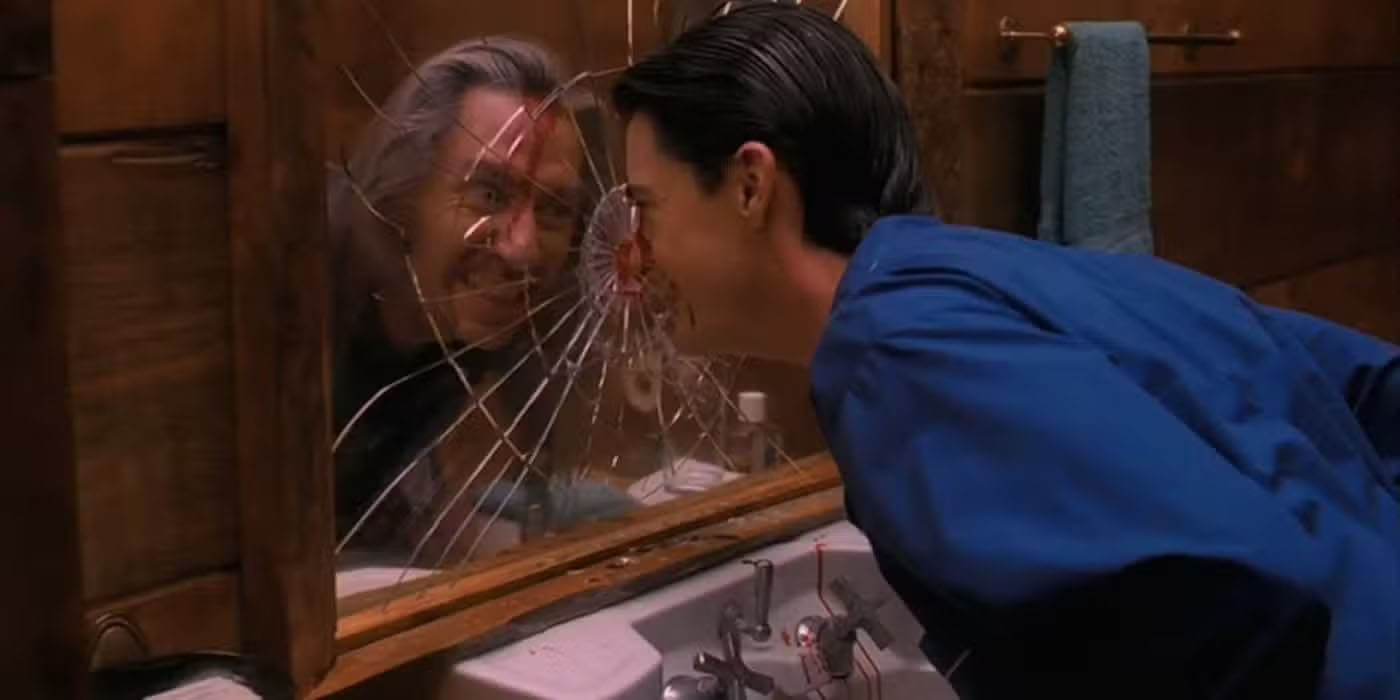
Sometimes the most unforgettable cliffhangers aren’t the ones that leave a single question unanswered. They’re the ones that leave viewers questioning everything they just watched. David Lynch and Mark Frost’s Twin Peaks ended its original run with one of the strangest, most unsettling finales television had ever attempted, a conclusion that audiences debated for the next 25 years.
Why it worked
By the time the second-season finale aired, Twin Peaks had already established itself as unlike anything else on television. What began as a murder mystery had gradually evolved into a surreal exploration of dreams, supernatural forces, and the darkness lurking beneath small-town America.
The finale embraced that identity completely. Instead of providing clear answers, it plunged Special Agent Dale Cooper into the mysterious Black Lodge, where reality itself seemed to break apart.
The question everyone asked
What happened to Agent Cooper?
After escaping the Black Lodge, Cooper appears to return safely to the Great Northern Hotel. But moments later, he repeatedly smashes his head into a bathroom mirror while laughing maniacally, revealing the grinning face of his doppelgänger staring back.
As Cooper asks, “How’s Annie?” over and over again, viewers are left to realize that something terrible has followed him home.
With the series canceled shortly afterward, fans spent decades wondering whether the real Cooper was trapped inside the Black Lodge forever and what had become of the man who returned.
Its lasting legacy
Few cliffhangers have remained unresolved for as long as Twin Peaks. The finale’s mystery lingered for more than two decades until the series returned with Twin Peaks: The Return in 2017, yet even that continuation embraced ambiguity rather than simple answers. The original ending remains one of television’s boldest creative risks and a landmark example of how a cliffhanger can become part of pop culture simply by refusing to explain itself.
Where to watch: Available to stream; sold on physical media and digitally.
The X-Files: “Anasazi” (1995)
During the 1990s, few television series inspired as much speculation as The X-Files. Every new revelation about the government’s conspiracy only seemed to raise even more questions. The second-season finale, “Anasazi,” delivered one of the show’s biggest shocks, leaving viewers to wonder whether its central character had survived at all.
Why it worked
Unlike many procedural dramas, The X-Files balanced standalone “Monster of the Week” episodes with an ongoing mythology involving alien life, secret government programs, and an increasingly desperate search for the truth. By the end of the second season, Fox Mulder had uncovered evidence powerful enough to threaten people willing to kill to keep those secrets buried.
The cliffhanger dramatically raised the stakes, making it clear that the conspiracy was no longer content to simply mislead Mulder. It wanted him eliminated.
The question everyone asked
Was Mulder dead?
After uncovering a hidden train car filled with evidence tied to the government’s alien conspiracy, Mulder becomes trapped inside when the Smoking Man orders it set ablaze. The season ends with the railcar engulfed in flames as Scully desperately races toward the inferno.
Viewers were left to spend the summer wondering how the series could possibly continue if its lead character had just been burned alive.
Its lasting legacy
“Anasazi” helped cement The X-Files as appointment television during the 1990s. The episode demonstrated how effectively the series could combine its overarching mythology with genuine suspense, ensuring fans would spend months debating what came next. While the conspiracy itself grew increasingly complex over the years, the image of Mulder trapped inside the burning railcar remains one of the defining cliffhangers of the show’s original run.
Where to watch: Available to stream; sold on physical media and digitally.
Alias: “The Telling” (2003)
By the end of its second season, Alias had established itself as one of television’s smartest and most unpredictable action dramas. Sydney Bristow had survived impossible missions, uncovered shocking family secrets, and exposed conspiracies that stretched around the globe. Then the series delivered a cliffhanger that changed everything with a single revelation.
Why it worked
The brilliance of the finale is that it doesn’t rely on a life-or-death situation. Instead, it completely upends the audience’s understanding of the story. Throughout the episode, Sydney believes she’s simply completing another dangerous mission. Only after escaping does she discover that something far stranger has happened.
The twist instantly raises dozens of new questions while forcing viewers to reconsider everything they thought they knew about the series going forward.
The question everyone asked
Where had Sydney been?
After returning to Los Angeles, Sydney is stunned to discover that nearly two years have passed. Friends have moved on with their lives, relationships have ended, and the world she knew has changed without her. She has no memory of what happened during the missing years, leaving both Sydney and the audience desperate for answers.
It was one of the boldest status-quo changes attempted by a network drama and fueled months of speculation before the third season premiered.
Its lasting legacy
The missing-two-years twist remains one of the defining moments of Alias. While later seasons divided some fans, the second-season finale is still remembered as a masterclass in how to reinvent a series without betraying its central premise. It proved that the most effective cliffhangers don’t always ask whether a character survived. Sometimes they ask how the entire world changed while the audience wasn’t looking.
Where to watch: Available to stream; sold on physical media and digitally.
Sherlock: “The Reichenbach Fall” (2012)
Few modern television cliffhangers generated as much immediate speculation as the third episode of Sherlock‘s second season. The BBC’s contemporary take on Arthur Conan Doyle’s famous detective had already earned a devoted following, but “The Reichenbach Fall” transformed the series into a worldwide guessing game that lasted for two years.
Why it worked
The episode brilliantly adapts one of Sherlock Holmes’ most famous stories while convincing viewers that this version might not follow the same path. Jim Moriarty systematically destroys Sherlock’s reputation, leaving the detective with seemingly no way to clear his name or protect the people closest to him.
As Sherlock’s options disappear one by one, the impossible begins to feel inevitable.
The question everyone asked
How did Sherlock survive?
After a heartbreaking conversation with John Watson, Sherlock appears to leap from the roof of St. Bartholomew’s Hospital to his death. John rushes to his friend’s side and mourns over what appears to be Sherlock’s lifeless body.
Moments later, however, viewers catch a brief glimpse of Sherlock watching from a distance as John walks away.
The revelation ignited endless theories. Fans analyzed camera angles, studied frame-by-frame screenshots, and debated elaborate explanations for nearly two years until the series finally returned.
Its lasting legacy
“The Reichenbach Fall” demonstrated the unique power of the internet age to amplify a television cliffhanger. While earlier generations debated mysteries around the water cooler, Sherlock fans built entire online communities devoted to solving the puzzle before the writers revealed the answer. The episode remains one of the defining television cliffhangers of the 21st century and a perfect example of how leaving audiences with the right question can become every bit as memorable as the eventual solution.
Where to watch: Available to stream; sold on physical media and digitally.
The Walking Dead: “Last Day on Earth” (2016)
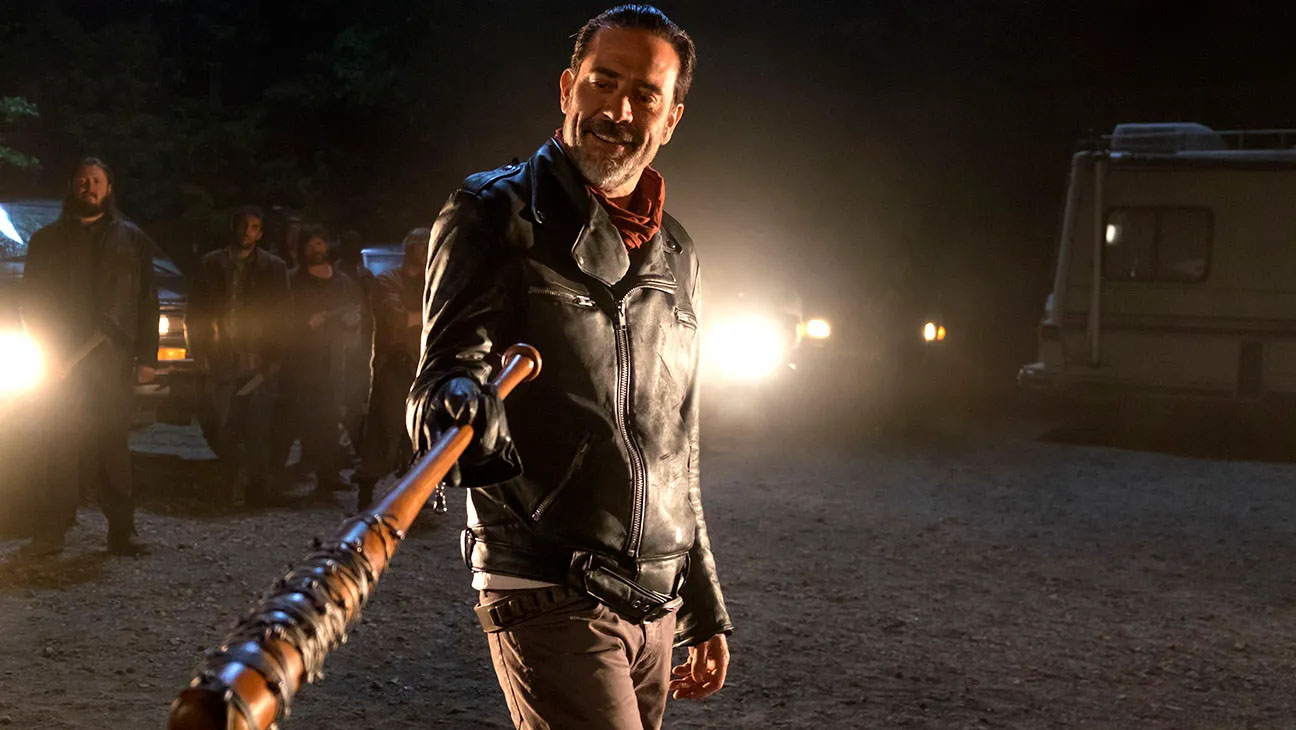
Sometimes a cliffhanger becomes unforgettable because of the anticipation it creates. Other times it becomes unforgettable because nearly everyone has an opinion about it. The sixth-season finale of The Walking Dead accomplished both, delivering one of the most talked-about endings in modern television.
Why it worked
For six seasons, Rick Grimes and his group had repeatedly found ways to survive impossible situations. Negan’s introduction changed that dynamic immediately. Confident, charismatic, and terrifyingly unpredictable, he made it clear that the survivors were no longer in control.
The finale steadily tightens the tension as Rick’s group realizes every possible escape route has already been anticipated. By the time they are forced to kneel before Negan, viewers understand they are witnessing a turning point for the entire series.
The question everyone asked
Who did Negan kill?
Armed with his barbed-wire-wrapped baseball bat, Lucille, Negan selects a victim using a twisted game of “eeny, meeny, miny, moe.” The camera abruptly shifts to the victim’s point of view as Negan delivers the fatal blows, splattering blood across the screen before the episode cuts to black.
The identity of the victim became one of television’s biggest mysteries that summer. Fans dissected camera angles, audio clues, and comic book storylines, trying to determine who had died at Negan’s hands.
Its lasting legacy
Although many viewers criticized the decision to withhold the victim’s identity until the following season, there’s little debate about the cultural impact of the cliffhanger itself. It dominated entertainment news, fueled months of fan theories, and drew enormous attention to the season premiere. Whether remembered as brilliant suspense or an example of stretching a mystery too far, “Last Day on Earth” remains one of the defining television cliffhangers of the streaming era.
Where to watch: Available to stream; sold on physical media and digitally.
24: “Day 1: 11:00 p.m. – 12:00 a.m.” (2002)
From the moment 24 premiered, viewers knew they weren’t watching a typical action series. Each season unfolded in real time over the course of a single day, with every episode representing one hour. The first season finale resolved the immediate terrorist threat but left audiences with a devastating final twist that guaranteed they would return for another day.
Why it worked
Unlike many action thrillers, 24 never suggested that saving the country would automatically lead to a happy ending. Jack Bauer repeatedly sacrificed his personal life to complete the mission, and the finale reinforced that heroism often comes at an unbearable cost.
After hours spent racing to prevent an assassination and stop a terrorist plot, viewers expected Jack to finally have a moment of peace. Instead, the series delivered one last emotional gut punch.
The question everyone asked
How could Jack Bauer possibly recover from this?
Returning home after the longest day of his life, Jack discovers that his wife, Teri, has been murdered by the treacherous Nina Myers. The season ends with Jack collapsing to the floor in grief, his victory rendered almost meaningless by the loss that awaits him.
Rather than wondering how the immediate crisis would be resolved, viewers were left asking what kind of person Jack Bauer would become after enduring such unimaginable heartbreak.
Its lasting legacy
The first season of 24 proved that serialized television could combine blockbuster action with genuine emotional consequences. Its closing moments redefined Jack Bauer for the remainder of the series, establishing the pattern of personal sacrifice that would become his defining characteristic. While later seasons featured their own memorable cliffhangers, the ending of Day 1 remains one of the most emotionally effective and influential in modern television.
Where to watch: Available to stream; sold on physical media and digitally.
More Television Reading
Some TV moments leave viewers cheering, while others leave them arguing for years. Explore more of television’s most unforgettable endings and defining moments.
The greatest television cliffhangers don’t simply delay the ending. They become part of the story itself.
Whether it was wondering who shot J.R., what was hidden inside the hatch on Lost, or whether Captain Picard could ever be rescued from the Borg, these moments kept audiences talking for days, weeks, and sometimes years. They reminded viewers that television wasn’t just something you watched. It was something you experienced together.
Not every resolution lived up to the anticipation, but that doesn’t diminish the power of the questions themselves. A truly great cliffhanger captures our imagination, sparks endless debate, and makes the wait for the next episode feel almost unbearable.
Even in the age of streaming and binge-watching, the best cliffhangers continue to prove that sometimes the most memorable moment in a television series isn’t the answer. It’s the question that leaves everyone counting the days until they find out what happens next.