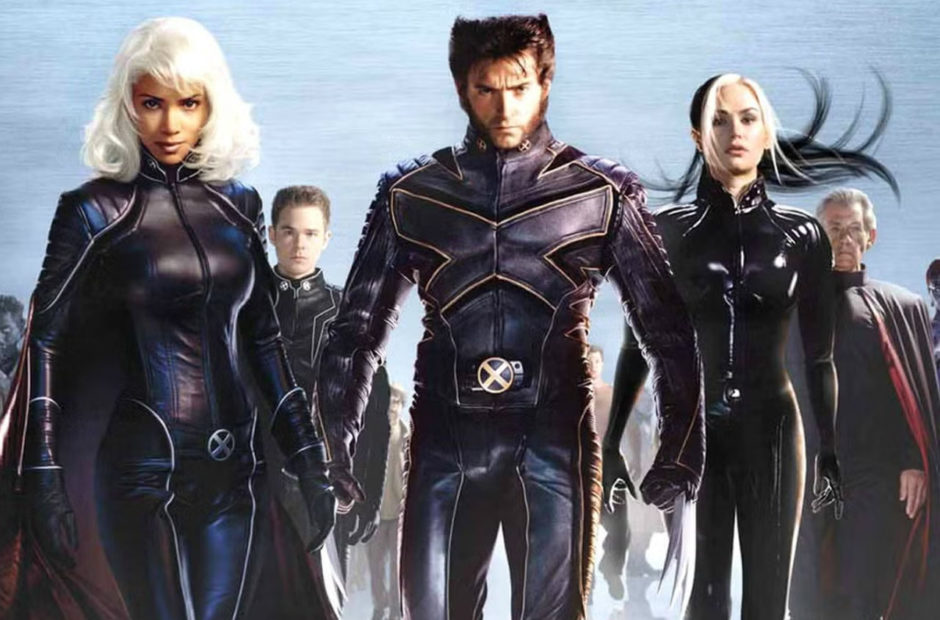
Figuring out the X-Men movies in order is considerably more complicated than watching them by release date. Over more than two decades, the series produced prequels, sequels, Wolverine spin-offs, Deadpool movies, an altered timeline, contradictory character histories, and a finale set years beyond most of the other films. Then Deadpool & Wolverine arrived and connected the old Fox universe to Marvel’s larger multiverse.
The easiest way to watch the X-Men movies is still release order, particularly for a first viewing. Trying to arrange everything chronologically creates problems almost immediately because X-Men: Days of Future Past changes history, while several movies contradict dates and events established elsewhere in the series.
There is still a chronology underneath the chaos, however. You just have to accept that the X-Men movies do not form one perfectly consistent timeline.
X-Men Movies in Release Order
For anyone watching the franchise for the first time, this is the order we recommend:
- X-Men (2000)
- X2: X-Men United (2003)
- X-Men: The Last Stand (2006)
- X-Men Origins: Wolverine (2009)
- X-Men: First Class (2011)
- The Wolverine (2013)
- X-Men: Days of Future Past (2014)
- Deadpool (2016)
- X-Men: Apocalypse (2016)
- Logan (2017)
- Deadpool 2 (2018)
- Dark Phoenix (2019)
- The New Mutants (2020)
- Deadpool & Wolverine (2024)
Release order allows the franchise’s revelations to occur when filmmakers intended them. More importantly, it prevents Days of Future Past from becoming needlessly confusing. The movie assumes viewers understand both the original X-Men cast and the younger versions introduced in First Class.
It also means watching Logan before Deadpool & Wolverine, which becomes rather important once Wade Wilson gets involved.
Why Is the X-Men Movie Timeline So Complicated?
The X-Men movies did not begin with a plan for a sprawling 24-year continuity. The original trilogy told a relatively straightforward story beginning with X-Men in 2000. After The Last Stand, the franchise expanded backward with X-Men Origins: Wolverine and First Class, while The Wolverine moved Logan’s story forward again.
Then Days of Future Past did something far more consequential. Wolverine’s consciousness was sent from 2023 back to 1973 to prevent an event that eventually led to a catastrophic future. He succeeded, creating an altered history.
From that point forward, the franchise effectively had two versions of its own history: the original timeline leading to the Sentinel-controlled future of Days of Future Past, and the revised timeline created by Logan’s actions in 1973.
Unfortunately, time travel does not explain everything. The movies also contain ordinary continuity errors. Character ages do not always work, versions of some characters appear in periods that are difficult or impossible to reconcile, and later filmmakers occasionally ignored details that earlier movies established.
There is therefore no chronological X-Men viewing order that makes every contradiction disappear.
The Original X-Men Timeline
The original continuity is the version of history that exists before Wolverine changes the past in Days of Future Past.
A useful viewing order for that timeline is:
- X-Men: First Class (primarily 1962)
- X-Men Origins: Wolverine (primarily 1979)
- X-Men (2000)
- X2: X-Men United (2003)
- X-Men: The Last Stand (2006)
- The Wolverine (after The Last Stand)
- X-Men: Days of Future Past (2023 portions)
Even this list needs qualifications. X-Men Origins: Wolverine begins much earlier than 1979, opening with Logan as a child in the 19th century before following him and Victor Creed through several wars. Its primary story, however, takes place years before the original X-Men.
First Class is also unusual because it precedes the timeline split. Its major events occur in 1962, meaning they are part of the history Wolverine remembers when he travels back to 1973. It therefore functions as background for both versions of the timeline.
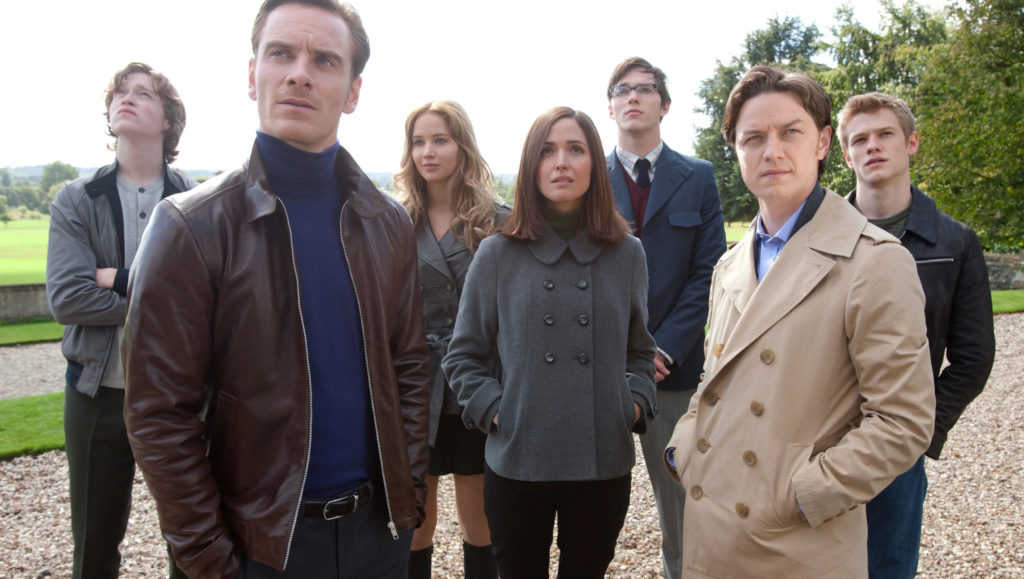
X-Men: First Class — 1962
X-Men: First Class goes back decades before the original trilogy and introduces younger versions of Charles Xavier and Erik Lehnsherr before they become Professor X and Magneto.
The story is built around the Cuban Missile Crisis in 1962 and shows Charles and Erik working together before their ideological differences finally separate them.
Because the movie occurs before Wolverine changes history in 1973, First Class can reasonably be treated as part of the background to both major X-Men timelines.
Where to watch: Check current streaming availability; sold on physical media and digitally.
X-Men Origins: Wolverine — Primarily 1979
X-Men Origins: Wolverine traces Logan’s life from childhood through his time fighting alongside Victor Creed and eventually into the Weapon X program.
The bulk of the story is generally placed in 1979, although the movie covers a much larger period through its opening sequences.
This is where the continuity problems become visible. The movie introduces its own versions of characters who later appear elsewhere in ways that do not always fit comfortably together. Its version of Wade Wilson becomes particularly amusing in retrospect once the Deadpool movies arrive.
For timeline purposes, Origins belongs to the original history that existed before the events of Days of Future Past altered 1973 and everything that followed.
Where to watch: Check current streaming availability; sold on physical media and digitally.
X-Men — 2000
The original X-Men introduced movie audiences to Professor Xavier’s school, Magneto’s Brotherhood, Wolverine, Rogue, Cyclops, Jean Grey, and Storm.
For the original continuity, this is the beginning of the main X-Men story. Logan joins Xavier’s team while Magneto attempts to use a machine to transform world leaders into mutants.
Where to watch: Check current streaming availability; sold on physical media and digitally.
X2: X-Men United — 2003
X2 continues directly from the first film and brings the X-Men and Magneto’s forces into an uneasy alliance against William Stryker.
The movie also begins revealing more about Logan’s connection to Weapon X, material that X-Men Origins: Wolverine would later attempt to expand.
Where to watch: Check current streaming availability; sold on physical media and digitally.
X-Men: The Last Stand — 2006
The Last Stand combines the emergence of a mutant “cure” with the return of Jean Grey as the Phoenix. Its ending dramatically changes the original X-Men lineup and leaves Logan carrying considerable emotional baggage into his next movie.
Those events are why The Wolverine belongs after The Last Stand rather than simply being treated as an unrelated Wolverine adventure.
Where to watch: Check current streaming availability; sold on physical media and digitally.
The Wolverine — After The Last Stand
The Wolverine follows a Logan still haunted by Jean Grey’s death. He travels to Japan, where an encounter with a man he saved during World War II becomes tied to an attempt to take away Logan’s healing ability.
The movie is firmly connected to the original trilogy, and its mid-credits scene leads toward the dystopian future seen in Days of Future Past.
Where to watch: Check current streaming availability; sold on physical media and digitally.
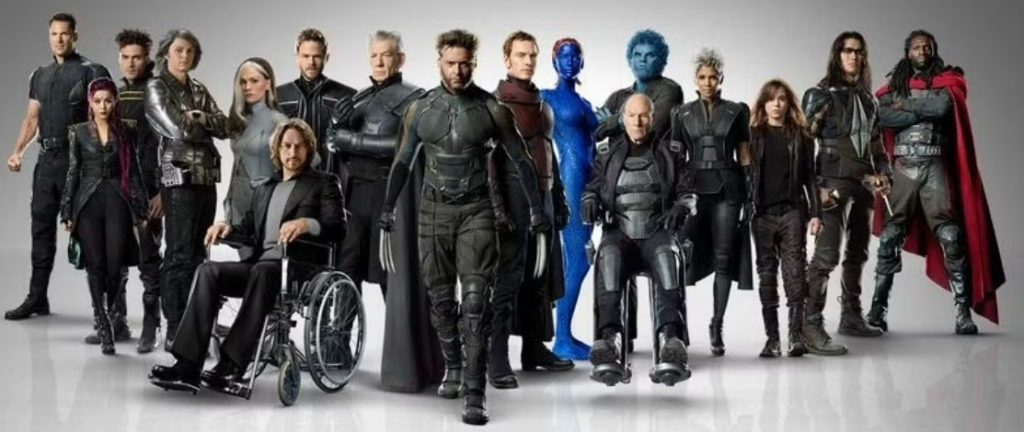
X-Men: Days of Future Past — 1973 and 2023
This is the movie that breaks the X-Men timeline in half.
By 2023, Sentinels have devastated mutantkind and much of humanity. The surviving X-Men send Wolverine’s consciousness back into his younger body in 1973 so he can prevent Mystique from assassinating Bolivar Trask.
Logan succeeds in changing the crucial events of 1973. When his consciousness returns to the future, he awakens in a peaceful version of Xavier’s school where characters killed during the original trilogy are alive again.
That ending establishes that the history shown in the original trilogy has been altered. The original movies still happened in the timeline Wolverine remembers, but the world he returns to has followed a different path.
This is the dividing line that makes chronological X-Men viewing so awkward: most of Days of Future Past simultaneously serves as the ending of one timeline and the beginning of another.
Where to watch: Check current streaming availability; sold on physical media and digitally.
The Revised X-Men Timeline
Once Wolverine changes history in 1973, the franchise moves into its revised timeline.
The broad chronological order becomes:
- X-Men: First Class — 1962
- X-Men: Days of Future Past — 1973 portions
- X-Men: Apocalypse — 1983
- Dark Phoenix — 1992
- Deadpool — contemporary setting
- Deadpool 2 — after Deadpool
- The New Mutants — broadly contemporary, exact placement uncertain
- Logan — 2029, although its precise relationship to the revised timeline is intentionally awkward
- Deadpool & Wolverine — multiverse story occurring primarily after the previous Deadpool films
That list should be treated as a guide rather than sacred scripture. Fox never made all of these movies fit together with the precision of a carefully maintained cinematic timeline.
X-Men: Apocalypse — 1983
Apocalypse jumps ten years beyond the altered events of Days of Future Past. Charles Xavier’s school has expanded, Magneto has attempted to build a quiet life, and younger versions of Cyclops, Jean Grey, and Nightcrawler enter the story.
The ancient mutant Apocalypse awakens and recruits four followers, including Magneto, as part of his attempt to remake civilization.
Because this is the revised history, it does not need to lead precisely into the versions of these characters seen in the original 2000 film.
Where to watch: Check current streaming availability; sold on physical media and digitally.
Dark Phoenix — 1992
Dark Phoenix moves the revised timeline forward another nine years. Jean Grey encounters a cosmic force during a rescue mission in space, dramatically increasing her abilities while destabilizing her control over them.
The film effectively serves as the ending of the First Class generation’s main series, although its conclusion creates some obvious questions when compared with the peaceful future glimpsed at the end of Days of Future Past.
This is one of the places where trying to force every X-Men movie into flawless continuity becomes an exercise in frustration. The franchise simply does not provide clean answers for every discrepancy.
Where to watch: Check current streaming availability; sold on physical media and digitally.
Where Do the Deadpool Movies Fit?
This is where anyone attempting to construct an immaculate X-Men chronology should probably stop expecting one.
Deadpool and Deadpool 2 clearly exist in the world of Fox’s X-Men movies. Colossus and Negasonic Teenage Warhead connect Wade Wilson to the X-Men, while Deadpool 2 briefly shows the younger First Class cast hiding from Wade inside Xavier’s mansion.
The problem is that Deadpool knows he is in a movie franchise. He jokes about different actors playing Professor Xavier, references Logan, mocks the confusing X-Men timeline, and generally treats continuity as another object available for ridicule.
Trying to use Wade’s jokes to establish exact dates is therefore a very bad idea.
Deadpool — Contemporary Setting
Deadpool introduces Ryan Reynolds’ completely reinvented Wade Wilson after the version seen in X-Men Origins: Wolverine. The movie does not spend time explaining the contradiction because it has no interest in doing so.
The revised timeline created by Days of Future Past provides an easy way to regard this Wade as the new version, but the movie itself is far more interested in jokes, revenge, and breaking the fourth wall than explaining temporal mechanics.
Where to watch: Check current streaming availability; sold on physical media and digitally.
Deadpool 2 — After Deadpool
Deadpool 2 continues Wade’s story and introduces Cable, whose arrival from the future adds yet another time traveler to a franchise already suffering from temporal complications.
Wade eventually gains access to Cable’s time-travel device and uses it with exactly the degree of responsibility anyone familiar with Deadpool would expect.
The movie’s time-travel jokes include Wade revisiting X-Men Origins: Wolverine, but treating every gag in the credits as a literal restructuring of X-Men continuity will only make an already complicated subject worse.
Where to watch: Check current streaming availability; sold on physical media and digitally.
Where Does The New Mutants Fit?
The New Mutants is connected to the Fox X-Men universe but does not provide a particularly useful date for placing itself within the timeline.
The film follows five young mutants held in an isolated facility where they are supposedly being evaluated before potentially joining a superior mutant organization. References and visual connections tie the movie to the larger X-Men world, including material associated with the Essex Corporation.
For a chronological marathon, placing it after the two Deadpool movies and before Logan is workable, but viewers should not mistake that placement for a precisely established date.
Where to watch: Check current streaming availability; sold on physical media and digitally.
Where Does Logan Fit in the X-Men Timeline?
Logan takes place in 2029, years after most of the X-Men have disappeared and mutant births have become extraordinarily rare.
The movie was deliberately created with considerable distance from the increasingly tangled continuity of the other X-Men films. It clearly draws upon the history audiences associate with Hugh Jackman’s Wolverine and Patrick Stewart’s Professor Xavier, but attempting to make every detail conform perfectly to either Fox timeline creates more questions than answers.
The safest approach is to treat Logan as a possible future for the Fox X-Men world rather than the mandatory endpoint of every movie preceding it.
That distinction became even more useful after Deadpool & Wolverine, which explicitly recognizes Logan and his history while operating within a much larger multiverse.
Where to watch: Check current streaming availability; sold on physical media and digitally.
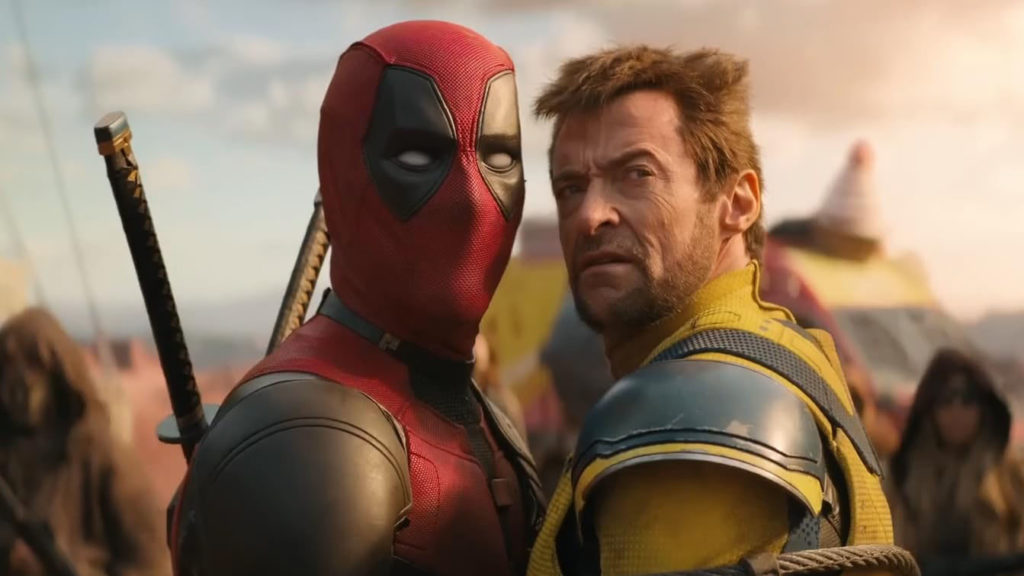
Where Does Deadpool & Wolverine Fit?
Deadpool & Wolverine turns the continuity problem into part of the story.
Wade’s home reality is identified as Earth-10005, the designation associated with the Fox X-Men movie universe. The death of Logan has enormous consequences for that reality, leading Wade into an adventure involving the Time Variance Authority, the Void, and numerous characters drawn from Marvel movies that existed before the Marvel Cinematic Universe consolidated much of the company’s film output.
The Wolverine who accompanies Wade for most of the movie is not simply the Logan who died in Logan. He is a variant from another reality, allowing Hugh Jackman to return without undoing the ending of the 2017 film.
By this point, asking where the movie belongs on a single linear X-Men timeline is almost the wrong question. Deadpool & Wolverine treats the Fox films as one reality within Marvel’s larger multiverse and uses that history as part of its story.
For viewing purposes, watch it after Deadpool, Deadpool 2, and Logan. Familiarity with the broader Fox Marvel era makes many of its appearances and jokes more rewarding, but watching every non-X-Men Marvel movie from that period is not necessary for following the plot.
Where to watch: Check current streaming availability; sold on physical media and digitally.
What Is the Best Order to Watch the X-Men Movies?
Release order is the best way to watch the X-Men movies for the first time.
Chronological order sounds appealing until Days of Future Past arrives and changes the history you have been trying to follow. Release order lets viewers experience that change from the intended perspective. You first learn the original history, then see First Class introduce its younger characters, and finally understand what Wolverine is changing when he travels back to 1973.
Release order also prevents later prequels from introducing versions of characters before viewers have seen the performances and stories they were designed to reference.
A chronological viewing can be fun on a repeat marathon, particularly if you want to compare the original and revised timelines, but it should not be expected to solve the franchise’s contradictions. Some of them simply cannot be solved.
What About the X-Men and Avengers: Doomsday?
Avengers: Doomsday serves as an important bridge between the Fox era of the X-Men and the characters’ future in the Marvel Cinematic Universe. The movie brings several actors from the earlier X-Men films into the MCU’s multiverse story, building on the groundwork established by Deadpool & Wolverine and allowing Marvel to revisit those versions of the characters without pretending their complicated history occurred within the MCU’s primary timeline.
That distinction becomes particularly important as Marvel Studios moves forward with its own version of the X-Men. The MCU’s X-Men are a new chapter for the franchise rather than a continuation that suddenly makes the Fox movies part of the MCU timeline. The older films remain their own continuity, while the multiverse lets characters and performers from that era cross into MCU stories when appropriate.
For viewers interested in the X-Men’s movie history, that makes the Fox films worth understanding without requiring them to fit into the MCU chronology. Release order remains the easiest way to follow how these versions of Professor X, Magneto, Wolverine, Cyclops, Storm, and the rest of the X-Men developed on screen before Marvel Studios began building its own interpretation of the team.
More Movie Timeline Guides
If the X-Men timeline hasn’t completely destroyed your enthusiasm for movie continuity, several other franchises have histories worth untangling.
X-Men Movies in Order FAQ
How many X-Men movies are there?
There are 14 films in the Fox X-Men movie franchise when the three Wolverine films, two original Deadpool films, The New Mutants, and Deadpool & Wolverine are included alongside the main X-Men movies.
What is the best order to watch the X-Men movies?
Release order is the best choice for first-time viewers. It preserves the franchise’s major reveals and makes the timeline changes in X-Men: Days of Future Past much easier to understand.
Did Days of Future Past erase the original X-Men movies?
Days of Future Past changes history beginning in 1973, creating a revised future. The original movies remain the history Wolverine remembers, but many of their events no longer occur in the altered timeline he creates.
Is Logan in the same timeline as the X-Men movies?
Logan is connected to the Fox X-Men films, but it works best as a possible future for that world rather than an endpoint that must perfectly follow every previous movie. Its filmmakers intentionally gave the story some distance from the franchise’s complicated continuity.
Are the Deadpool movies part of the X-Men universe?
Yes. The Deadpool films directly use X-Men characters and locations, and Deadpool & Wolverine identifies Wade’s home reality with the Fox X-Men universe. Deadpool’s fourth-wall-breaking humor means his movies should not be used to establish precise chronology, however.
Do I need to watch the X-Men movies before Avengers: Doomsday?
The X-Men movies provide useful background for the Fox versions of Marvel’s mutant characters, but they are not one continuous part of the MCU timeline. Watching them in release order is the simplest way to understand their history before those characters become relevant to Marvel’s larger multiverse story.
Fun Jug Media, LLC (operating TheNerdy.com) has affiliate partnerships with various companies. These do not at any time have any influence on the editorial content of The Nerdy. Fun Jug Media LLC may earn a commission from these links.