Some TV characters who disappeared were minor figures whose absence was easy to overlook. Others were main-cast members, important supporting characters, or even members of a show’s central family who seemingly vanished from existence without anyone bothering to explain where they went.
Then there are the TV characters who disappeared without receiving anything resembling a proper goodbye.
These aren’t characters who were killed off or given an obvious exit that viewers simply didn’t like. We’re talking about established characters who were part of a show’s world until, suddenly, they weren’t. Sometimes the writers decided a character wasn’t working. Sometimes an actor left. Sometimes production circumstances changed so dramatically that an unfinished storyline was simply abandoned.
And occasionally, television appears to misplace an entire member of a family.
For this list, we’re focusing on characters whose disappearances were noticeable precisely because the shows gave viewers little or no explanation for what happened to them. A later revival or spin-off may have eventually filled in some of the blanks, but that doesn’t change what audiences watching the original series experienced.
Some of these disappearances became running jokes among fans. Others were eventually acknowledged by the shows themselves. Two became so famous that television viewers created terminology around them.
And one poor kid apparently went upstairs for his skis and entered another dimension.
Coco – The Golden Girls
Before Dorothy, Rose, Blanche, and Sophia became one of television’s most beloved foursomes, there was another person living in that house.
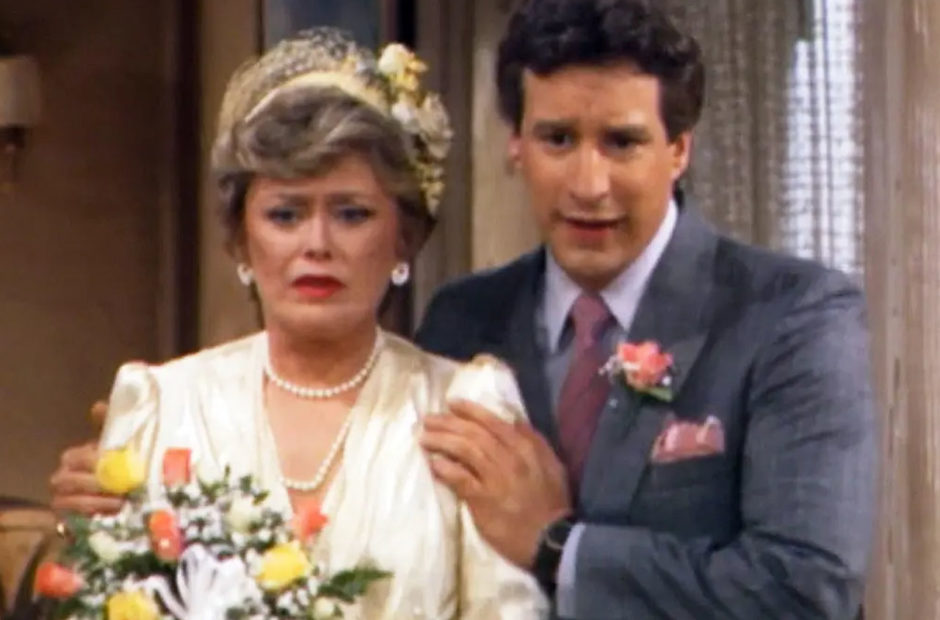
Coco, played by Charles Levin, appears in the 1985 pilot of The Golden Girls as a gay cook who works for Blanche. He’s not treated like a background employee, either. Coco participates in the household banter, prepares meals, and is clearly positioned as a recurring member of the show’s domestic world.
Coco participates in the household banter, prepares meals, and is clearly positioned as a recurring member of the show’s domestic world. But after the pilot, he simply disappears. There is no farewell, no explanation that Blanche can no longer afford a cook, and no announcement that Coco has taken another job. He simply ceases to exist within the series.
There is no farewell, no explanation that Blanche can no longer afford a cook, and no announcement that Coco has taken another job. He simply ceases to exist within the series.
How he disappeared
Coco’s disappearance is especially interesting because it reflects how quickly The Golden Girls discovered the ensemble that would actually make the series work.
Sophia Petrillo, played by Estelle Getty, was initially conceived as a recurring character rather than one of the central women. The pilot establishes why she suddenly moves in with Dorothy: the retirement home where Sophia had been living, Shady Pines, burned down.
Getty’s Sophia immediately provided something the series didn’t need another character to duplicate. She could enter scenes, puncture the other women’s conversations, deliver outrageous observations, and create conflict inside the house. As Sophia became a permanent member of the household, Coco’s function became increasingly unnecessary.
The women also didn’t need a cook to give them a reason to gather together. The kitchen table, and eventually a seemingly inexhaustible supply of cheesecake, could handle that perfectly well.
What happened behind the scenes
After the pilot, the producers decided to focus on the four women and dropped Coco from the series. Levin never returned to the role.
It’s a fascinating example of how different a television classic can look before everyone involved realizes exactly what they have. Had the original configuration survived, Coco might have spent seven seasons trading lines with Dorothy, Rose, Blanche, and Sophia.
Instead, The Golden Girls found its quartet almost immediately, and Coco became one of television’s great pilot-episode disappearing acts.
Where to watch: Check current streaming availability; sold on physical media and digitally where available.
Robert “Bobby” Martin – All My Children
When All My Children premiered in 1970, Dr. Joe Martin and his wife, Ruth, were at the center of one of Pine Valley’s foundational families. Among their children was young Bobby Martin, whose brief time on the soap would eventually become far more famous for how it ended than for anything the character actually did.
Bobby disappeared during the show’s early years without receiving a conventional exit, and All My Children continued telling stories about the Martin family without him. As the soap remained on the air for decades, viewers never forgot the missing Martin child, and his unexplained absence gradually became one of daytime television’s most enduring pieces of lore.
How he disappeared
The version of the story that has survived in television folklore is wonderfully simple: Bobby went upstairs to get his skis and never came back down.
The disappearance became increasingly absurd as the Martin family remained important to All My Children. Other family members grew older, married, had children, suffered through the usual assortment of soap-opera catastrophes, and continued living their lives in Pine Valley.
Bobby remained wherever television characters go when writers decide they have one child too many.
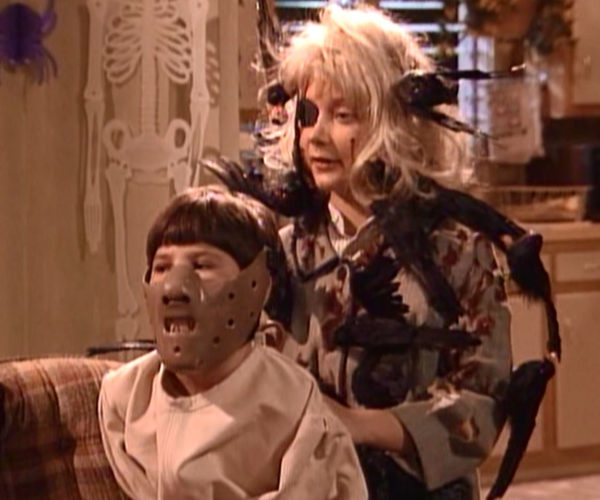
Unlike many forgotten characters, however, Bobby eventually became something of an inside joke. All My Children later made humorous references to its missing Martin, including a gag involving a skeleton with skis. The joke acknowledged what longtime viewers already knew: Bobby’s disappearance had become far more memorable than most of the stories he actually appeared in.
What happened behind the scenes
Bobby was dropped during the early development of the Martin family as the series streamlined its cast. What makes the case remarkable isn’t simply that a child character disappeared. Early soap operas regularly altered families and quietly discarded characters as their fictional worlds developed.
It’s that All My Children lasted long enough for viewers to keep remembering him.
The series remained on ABC until 2011, meaning the legend of Bobby Martin had decades to grow. Eventually, the missing child who went looking for his skis became one of the classic examples of a television series simply deciding a character no longer needed to exist.
At least the show eventually demonstrated that it was in on the joke. Whether anyone ever checked the attic thoroughly is another matter.
Where to watch: Check current streaming availability; selected episodes and collections may be available on physical media.
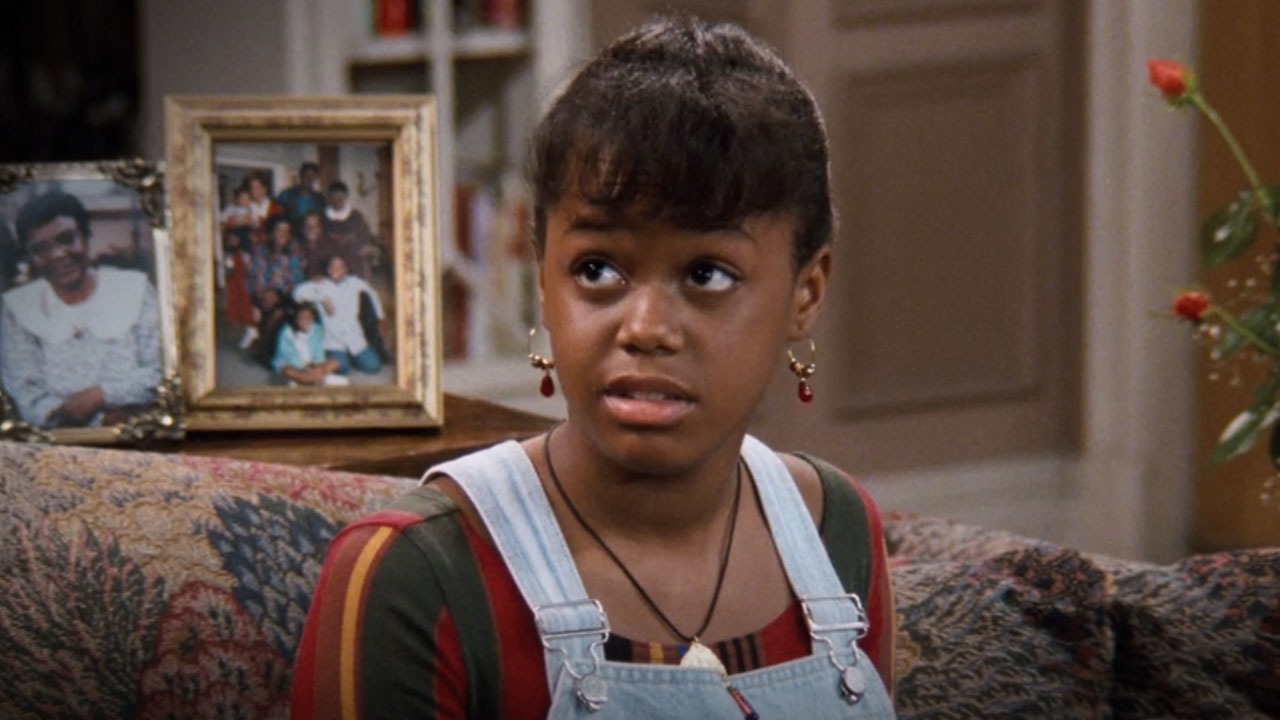
Judy Winslow – Family Matters
The Winslows were central to Family Matters long before Steve Urkel transformed the series into something considerably different from the family sitcom it originally was. Carl and Harriette Winslow began the show with three children: Eddie, Laura, and their youngest daughter, Judy.
Judy, played by Jaimee Foxworth, was never as prominent as her older siblings, but she was hardly an obscure background character. She appeared throughout the show’s first four seasons, participated in family stories, and was unmistakably established as one of Carl and Harriette’s children.
Then Family Matters decided the Winslows only needed two kids.
How she disappeared
Judy’s final appearance came during Season 4. No storyline showed her moving away, going to boarding school, or living with another relative. The character simply stopped appearing when the series returned for its fifth season.
What makes Judy’s disappearance particularly notorious is that Family Matters didn’t merely stop showing her. The series effectively rewrote the Winslow family around her absence. Carl and Harriette continued raising Eddie and Laura, while Judy was no longer discussed as their younger sister.
For a sitcom built around a close family, quietly eliminating one of that family’s children required an impressive commitment to pretending nothing unusual had happened.
What happened behind the scenes
As Steve Urkel became the breakout character and increasingly dominated Family Matters, the series shifted away from some of the family-focused storytelling that had defined its earliest episodes. Judy had received comparatively little development, and Foxworth was dropped from the cast after Season 4.
The show continued for another five seasons without bringing Judy back or providing an on-screen explanation for her absence. By the end, the Winslows that viewers were watching bore one significant difference from the family introduced at the beginning: they had apparently always had two children.
Chuck Cunningham may have given the phenomenon its name, but Judy Winslow became one of its most famous victims.
Where to watch: Check current streaming availability; sold on physical media and digitally where available.
Mandy Hampton – The West Wing
Mandy Hampton wasn’t somebody viewers could reasonably be expected to forget. Played by Moira Kelly, she was introduced as a significant character in the first season of The West Wing, working as a political consultant who eventually joined the Bartlet administration as a media director.
She also had a history with Josh Lyman, giving her connections to the show’s characters that extended beyond her White House job. Mandy appeared throughout the first season and was included in the opening credits as part of the regular cast.
When Season 2 began, however, Mandy was simply gone.
How she disappeared
The first season ends with the assassination attempt on President Bartlet and his staff in Rosslyn, creating an obvious opportunity for the beginning of Season 2 to account for everyone involved. Mandy wasn’t among the victims, nor did the series explain that she had resigned or taken another political job. She just stopped appearing without a word.
Considering how carefully The West Wing built its interconnected workplace, the disappearance was conspicuous enough to inspire its own piece of fan terminology. Viewers began referring to the imaginary place where abandoned television characters go as “Mandyville.”
Being forgotten by a television series is one thing. Having your disappearance become shorthand for everyone else who suffers the same fate is quite another.
What happened behind the scenes
Series creator Aaron Sorkin ultimately concluded that the character wasn’t working within the ensemble. The problem wasn’t that Kelly couldn’t handle Sorkin’s rapid-fire dialogue or that Mandy lacked material. Rather, the character never found a natural place within the chemistry of the White House staff.
Instead of constructing an exit story, the series moved forward without her. Kelly did not return after Season 1, and the show never explained Mandy’s absence.
For a series famous for dialogue, one of its original regular characters received a remarkably quiet farewell: none at all.
Where to watch: Check current streaming availability; sold on physical media and digitally where available.
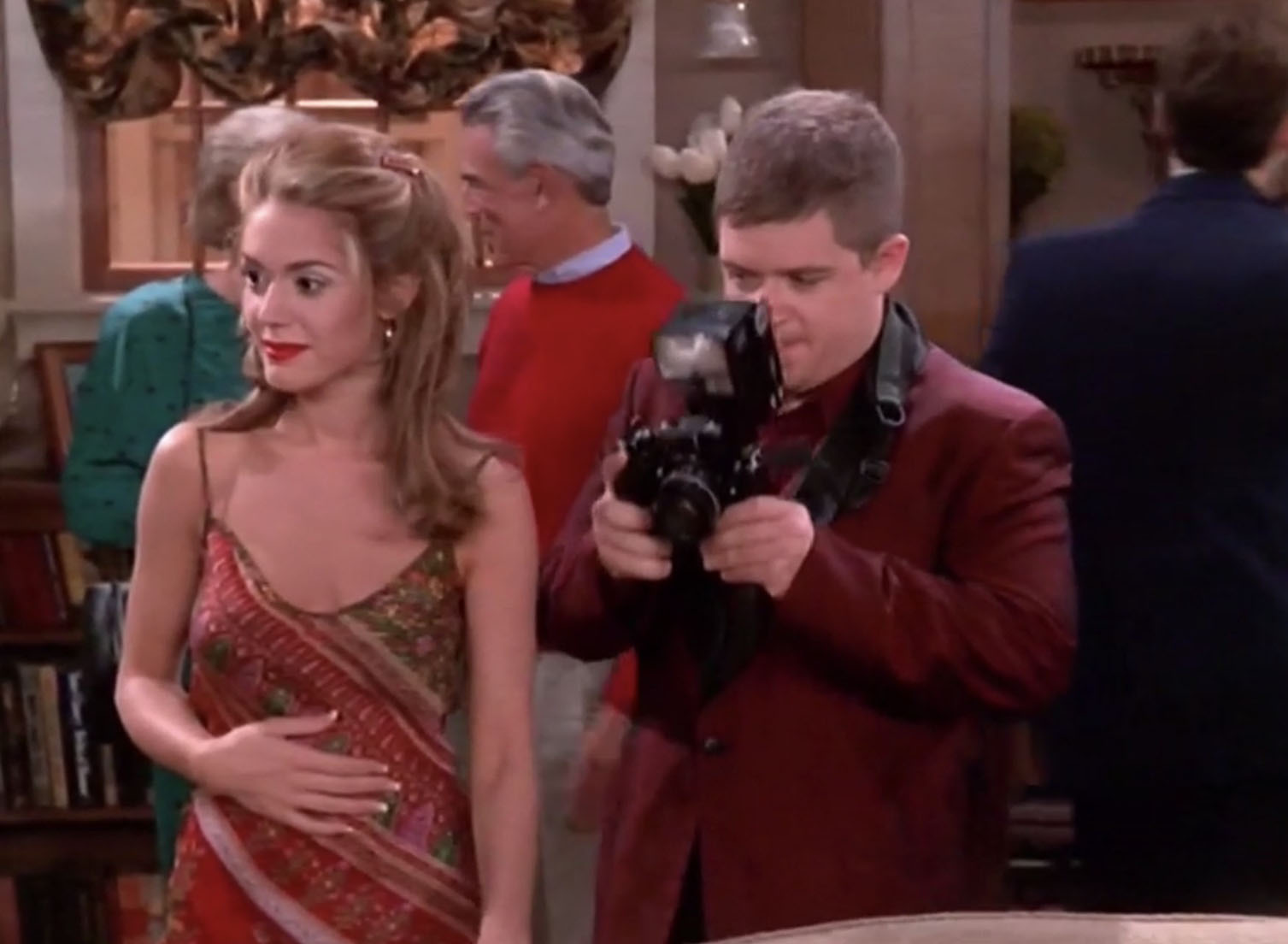
Sara Spooner – The King of Queens
When The King of Queens began, Carrie Heffernan wasn’t an only child. Her younger half-sister, Sara Spooner, played by Lisa Rieffel, appeared in the series premiere and several of the show’s earliest episodes.
Sara was an aspiring actress who was considerably less responsible than Carrie, and her presence helped establish the Spooner family dynamic while Arthur settled into Doug and Carrie’s basement. With Arthur, Carrie, and Sara all appearing regularly at the beginning of the series, the Spooners initially looked like a family the show intended to continue exploring.
Instead, Sara disappeared before the first season was even over, and The King of Queens eventually treated Carrie as though she had never had a sister at all.
How she disappeared
Sara appeared in five episodes early in Season 1, but the series never constructed an exit for her. No one announced that she had landed an acting job, moved somewhere else, or decided to start a new life away from Queens.
Once the character was gone, Arthur remained an enormous part of Doug and Carrie’s lives, making Sara’s absence particularly noticeable. A daughter disappearing from a family might ordinarily be something her father would mention from time to time.
Arthur Spooner was not exactly known for keeping his thoughts to himself. Nevertheless, Sara faded out of the show’s continuity, and Carrie was subsequently treated as Arthur’s only child.
What happened behind the scenes
The early episodes of The King of Queens show a sitcom still determining which supporting characters it actually needed. Sara was dropped as the series increasingly concentrated on Doug and Carrie’s marriage, Arthur’s disruptive presence in their home, and the couple’s circle of friends.
Rieffel never returned to the role, and the show never tried to explain Sara’s absence for the rest of its nine-season run.
It’s one thing for an early supporting character to disappear when a sitcom adjusts its ensemble. It’s considerably stranger when that character is the sister of a lead and the daughter of someone who remains a main character for the entire series.
Where to watch: Check current streaming availability; sold on physical media and digitally where available.
Tina Pinciotti – That ’70s Show
For most of That ’70s Show, Donna Pinciotti is Bob and Midge’s only child. That makes perfect sense unless you happen to remember the first season, when Donna had a younger sister named Tina.
Played by Amanda Fuller, Tina appears in the Season 1 episode “Eric’s Burger Job.” She isn’t merely an unnamed relative glimpsed at a family gathering. She’s explicitly introduced as Donna’s younger sister, briefly establishing that another Pinciotti child is living somewhere in Point Place.
After that single appearance, Tina vanishes from the story, and the series proceeds as if Donna is an only child.
How she disappeared
That ’70s Show never gives Tina a conventional departure. Bob and Midge don’t send her away, Donna doesn’t discuss a sister living somewhere else, and Tina doesn’t return for the major changes that subsequently affect the Pinciotti family.
The writers did, however, eventually acknowledge that something strange had happened.
At the end of the Season 2 episode “Vanstock,” the show uses a melodramatic soap-opera-style voice-over to tease several questions, including, “And whatever happened to Midge’s daughter Tina?” That joke confirms that the writers knew perfectly well they had misplaced a Pinciotti. It doesn’t actually explain where she went.
What happened behind the scenes
Tina was simply part of the show’s early family setup that didn’t survive as That ’70s Show settled on its characters and relationships. The series ultimately treated Donna as Bob and Midge’s only child, which fit the family stories the writers wanted to tell going forward.
Interestingly, Tina wasn’t even the only evidence that the Pinciotti family was initially envisioned differently. The first-season episode “Eric’s Birthday” references Donna having an older sister, Valerie, who is away at college. Valerie never appears, while Tina managed exactly one episode before joining her in Pinciotti oblivion.
By the time the series had fully established Donna’s family, both sisters were gone. Tina at least received the distinction of having the show itself ask the question viewers might have been wondering.
No one ever supplied the answer.
Where to watch: Check current streaming availability; sold on physical media and digitally where available.
Mr. Turner – Boy Meets World
Jonathan Turner, played by Anthony Tyler Quinn, began as one of Cory and Shawn’s teachers at John Adams High, but his importance to Boy Meets World quickly extended beyond the classroom. His relationship with Shawn became particularly significant, with Turner providing stability and eventually taking Shawn into his home when the teenager’s family situation deteriorated.
That made Turner’s disappearance especially strange because the series didn’t lose him between seasons or quietly stop using him after an uneventful episode. It sent him to the hospital following a serious motorcycle accident and then never showed him again.
How he disappeared
In the Season 4 episode “Cult Fiction,” Shawn becomes involved with the Centre, a cult-like organization led by the manipulative Mr. Mack. Turner is badly injured in a motorcycle accident during the episode and lies unconscious in the hospital while Shawn, frightened by what has happened, finally rejects Mr. Mack.
It’s an important episode for Shawn, and Turner’s condition provides much of its emotional weight. The obvious expectation is that viewers will eventually learn what happened to him.
Instead, “Cult Fiction” became Turner’s final appearance on Boy Meets World.
The original series does eventually make a joke about the disappearance. In the Season 5 episode “Graduation,” Stuart Minkus returns after being absent since Season 1 and explains that he spent the intervening years on the other side of the school. He then calls out to Mr. Turner in that direction, acknowledging that another familiar character has apparently been hanging around somewhere beyond the camera’s reach.
Funny as the gag is, it isn’t much of a conclusion for a character whose previous appearance ended with him unconscious in a hospital.
What happened behind the scenes
Turner had largely served as a younger alternative to Mr. Feeny, but the characters’ move toward the later years of high school changed the show’s needs. Quinn left the regular cast after Season 4, and Boy Meets World continued without resolving Turner’s story beyond the later graduation joke.
Nearly two decades later, Girl Meets World finally brought Quinn back as Jonathan Turner and established that the character had survived his accident and gone on to become superintendent of the New York school system. It was a welcome bit of closure, but it arrived in a different television series long after Boy Meets World ended.
Where to watch: Check current streaming availability; sold on physical media and digitally where available.
Santiago Herrera – Friday Night Lights
Friday Night Lights introduced Santiago Herrera, played by Benjamin Ciaramello, during its second season. Recently released from juvenile detention, Santiago first meets Buddy Garrity while working at Buddy’s car dealership and eventually moves in with him.
Buddy sees potential in him and encourages Santiago to join the Dillon Panthers. Coach Eric Taylor initially has his doubts, but Santiago begins to develop as a football player while adjusting to a life considerably different from the one he knew.
It wasn’t a minor subplot. The series spent a substantial portion of Season 2 building Santiago’s relationship with Buddy and establishing a redemption story that appeared designed to continue for some time.
It didn’t.
How he disappeared
Santiago’s final appearance comes in “Leave No One Behind,” the 14th episode of Season 2. Despite the title, Santiago was very much left behind when the series returned.
Season 3 begins without him. There is no scene explaining that he moved away, returned to his family, left school, or abandoned football. Buddy remains an important character, and the Dillon Panthers obviously stay central to the series, but Santiago is simply no longer part of either man’s life.
The abrupt disappearance is even more noticeable because his storyline hadn’t reached anything resembling a natural conclusion. Viewers had been watching Santiago gradually build a new life, not preparing to leave one.
What happened behind the scenes
Santiago’s disappearance is closely tied to one of the biggest disruptions in television production during the 2000s. The 2007-08 Writers Guild of America strike halted production on Friday Night Lights before it could complete its second season.
The season had been expected to run 22 episodes but ended after 15. When the series returned for Season 3, several Season 2 storylines were abandoned as the writers moved the show forward rather than attempting to reconstruct everything that had been interrupted.
Santiago was one of the most conspicuous casualties. A storyline that appeared to be heading somewhere simply stopped, leaving a character who had become intertwined with both Buddy Garrity and the Panthers missing from Dillon without explanation.
No one on this list has a more aptly titled final appearance than “Leave No One Behind.”
Where to watch: Check current streaming availability; sold on physical media and digitally where available.
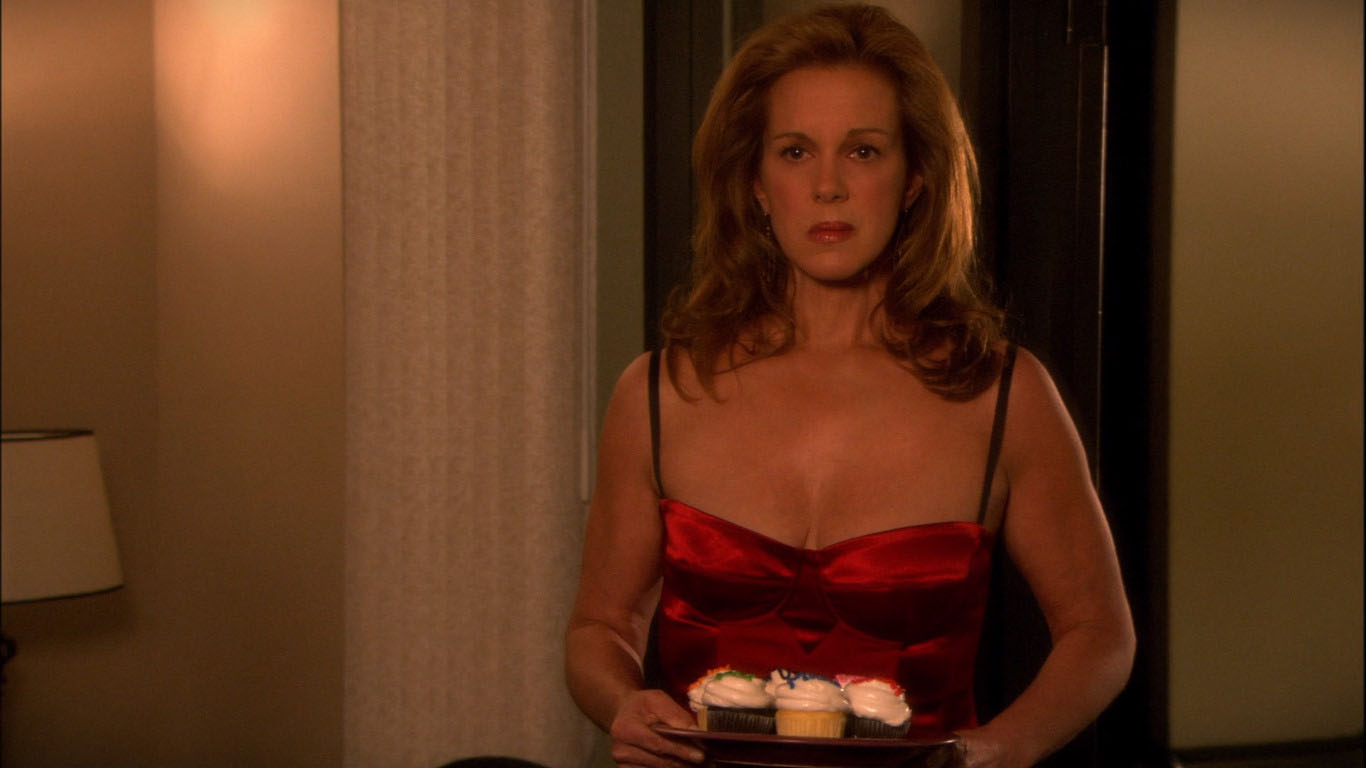
Celia Hodes – Weeds
Celia Hodes, played by Elizabeth Perkins, wasn’t the sort of character anyone expected Weeds to quietly forget. Introduced in the first episode, Celia spent five seasons colliding with Nancy Botwin and nearly everyone else unfortunate enough to cross her path.
Over those seasons, Celia survived cancer, became a city councilwoman, developed a cocaine addiction, traveled to Mexico, was kidnapped by her daughter, and became increasingly entangled in the drug business herself. By the end of Season 5, the series had even positioned her to begin building her own marijuana operation.
Then a character who had been part of Weeds since its premiere stopped appearing with three seasons still to go.
How she disappeared
Celia’s final storyline finds her attempting to create her own drug operation, complete with a sales team assembled from other characters. It isn’t presented as a farewell, nor does it permanently remove her from the series.
When Season 6 begins, however, Weeds shifts its attention elsewhere, and Celia doesn’t return. The series continues through Season 8 without giving one of its longest-running characters a proper on-screen conclusion.
Her disappearance stands out because Celia wasn’t simply attached to one storyline that had run its course. For five seasons, she repeatedly survived the show’s tendency to blow up its status quo and find a new, often disastrous direction for its characters.
What happened behind the scenes
Perkins left Weeds after Season 5, but even she expected that Celia might eventually return. In later interviews, Perkins said she was disappointed the character didn’t return before the series ended and that she believed viewers deserved some resolution to Celia’s story.
That makes Celia unusual even among TV characters who disappeared. Her absence wasn’t merely something viewers noticed years later. The actor herself expected there might eventually be another chapter.
There wasn’t. After five seasons of surviving practically everything Weeds could throw at her, Celia Hodes finally encountered something she couldn’t overcome: Season 6.
Where to watch: Check current streaming availability; sold on physical media and digitally where available.
Monica Dawson – Heroes
Monica Dawson, played by Dana Davis, joined Heroes during its second season with one of the show’s more visually entertaining abilities. Monica possessed what the series called adoptive muscle memory, allowing her to reproduce physical actions after watching someone else perform them.
See a complicated gymnastics move and she could do it. Watch someone perform a difficult combat maneuver, and her body could replicate it. For a series built around discovering unusual abilities, Monica’s power opened plenty of possibilities.
Her story also connected her to Micah Sanders, one of the show’s established characters, and increasingly pushed Monica toward becoming a genuine superhero rather than someone simply trying to understand what had happened to her.
How she disappeared
Late in Season 2, Monica attempts to recover Micah’s stolen backpack and is captured by a street gang. She’s tied up inside a burning building before Niki Sanders rescues her.
Monica survives, but that effectively ends her televised story. She doesn’t return when Season 3 begins, and the series never provides a meaningful on-screen explanation for where she went or what became of her developing abilities.
Material suggests the writers hadn’t originally intended her story to stop there. Monica appears in a deleted scene from the Season 3 episode “One of Us, One of Them,” but deleted material isn’t the same as an episode that actually aired. For viewers following Heroes on television, Monica simply disappears after surviving the fire.
What happened behind the scenes
Like Santiago Herrera on Friday Night Lights, Monica was caught in the disruption caused by the 2007-08 Writers Guild of America strike. The second season of Heroes ended much earlier than planned, forcing the series to abandon or restructure storylines that were meant to continue.
When Heroes returned, its creative direction had changed significantly. Monica was among the characters who didn’t make the transition into the new story, despite Season 2 having spent considerable time developing her powers, her relationship with Micah, and the possibility that she could use those abilities heroically.
For a show built around the idea that seemingly ordinary people could suddenly become important, Monica demonstrated the reverse could happen just as quickly.
Where to watch: Check current streaming availability; sold on physical media and digitally where available.
Tori Scott – Saved by the Bell
Saved by the Bell managed to make Tori Scott disappear in a way that was strange even by Saturday-morning-television continuity standards. Played by Leanna Creel, Tori arrives during the show’s final season as a leather-jacket-wearing new student who initially clashes with Zack Morris before inevitably becoming one of his girlfriends.
Tori appears in 10 episodes and becomes part of the regular Bayside group, hanging out with Zack, Slater, Screech, and Lisa. Yet Kelly and Jessie are nowhere to be found whenever Tori is around. Stranger still, whenever Kelly and Jessie are present, Tori doesn’t exist.
The explanation has less to do with anything happening at Bayside than with the unusual way the final season was produced.
How she disappeared
After NBC produced the original final-season episodes, it ordered additional episodes. Tiffany Thiessen and Elizabeth Berkley, who played Kelly and Jessie, didn’t participate in the additional production, so they introduced Tori in the newly filmed installments.
Those episodes were then interspersed with episodes already filmed with Kelly and Jessie. The result creates an accidental alternate reality in which Bayside seems to rotate its female students each week.
Tori receives no departure story when her episodes run out. Most conspicuously, she isn’t present for “Graduation,” despite having spent a significant portion of the season as one of Zack’s closest friends and romantic interests. Kelly and Jessie are back with the group instead, and nobody wonders where Tori went.
What happened behind the scenes
Tori existed largely because NBC wanted more episodes after part of the final season had already been completed. Creel gave the newly produced episodes another female character while Thiessen and Berkley had moved on.
Because of the way those episodes were mixed into the broadcast order, the series never had a natural opportunity to introduce Tori, remove her, and then restore the previous group in a coherent sequence. She simply exists in certain episodes and doesn’t in others.
Plenty of television characters have vanished between seasons. Tori Scott managed to repeatedly disappear and reappear during the same one.
Where to watch: Check current streaming availability; sold on physical media and digitally where available.
Chuck Cunningham – Happy Days
Few television characters have accomplished more by doing absolutely nothing than Chuck Cunningham.
When Happy Days began, Howard and Marion Cunningham had three children: Richie, Joanie, and their older son, Chuck. Gavan O’Herlihy first played the character, and later Randolph Roberts, and he was generally associated with two things: college and basketball.
Neither actor remained with the series for long. Eventually Chuck stopped appearing altogether, while Happy Days continued for years with the Cunningham family at its center.
Unlike many forgotten early characters, however, Chuck became so famous for disappearing that his name eventually became shorthand for the entire phenomenon.
How he disappeared
Chuck’s final credited appearance came during the second season. There was no dramatic farewell and no explanation that he had transferred to another college, moved across the country, or begun a professional basketball career.
He simply stopped coming home.
More remarkably, Happy Days eventually began treating Richie and Joanie as Howard and Marion’s only children. In the Season 11 episode “Passages,” Howard proudly remarks that his two children are married, effectively completing Chuck’s erasure from the Cunningham family.
That makes his disappearance more than a case of a supporting character who stopped appearing. The show’s own continuity eventually adjusted to a version of the Cunningham family in which Chuck seemingly had never existed.
What happened behind the scenes
Chuck was part of an early version of Happy Days that changed substantially as the series discovered what worked. The character never developed a particularly important function in the ensemble, while Arthur “Fonzie” Fonzarelli grew from a supporting presence into one of the defining characters of the series.
As the show’s focus and chemistry evolved, there was increasingly little reason to keep an underdeveloped older Cunningham sibling around. Rather than explain Chuck’s departure, the series simply moved on without him.
Viewers didn’t.
The disappearance became famous enough to inspire the term “Chuck Cunningham Syndrome,” used to describe a television character who vanishes from a series and may eventually be treated as though they never existed.
That’s why Chuck is an appropriate place to end a list of TV characters who disappeared. He wasn’t the first character television ever quietly discarded, and he certainly wasn’t the last. He was simply forgotten so thoroughly that everyone remembered him for it.
Where to watch: Check current streaming availability; sold on physical media and digitally where available.
When television simply moves on
Most characters who leave a television series receive some kind of ending, even if it’s only a line of dialogue explaining that they moved away or took another job. The characters on this list demonstrate what happens when a show decides even that much explanation isn’t necessary.
Sometimes the reason is obvious in retrospect. Coco disappeared because The Golden Girls discovered that Dorothy, Rose, Blanche, and Sophia were the ensemble it needed. Sara Spooner and Tina Pinciotti were remnants of family configurations their shows quickly abandoned. Mandy Hampton was removed when The West Wing realized the character didn’t fit its developing chemistry.
Other disappearances were products of circumstances nobody planned. The writers’ strike disrupted stories involving Santiago Herrera and Monica Dawson, while the peculiar production of Saved by the Bell‘s final season created a world where Tori Scott could seemingly blink in and out of existence.
What makes these disappearances memorable isn’t necessarily the importance of the characters themselves. It’s the strange expectation television creates that its fictional worlds will obey their own histories. Once a show tells us that a family has three children, a teacher has become someone’s surrogate parent, or a character has spent years intertwined with everyone around them, viewers tend to notice when that person suddenly isn’t there anymore.
And sometimes viewers notice so emphatically that a forgotten character becomes more famous for disappearing than they ever were while appearing on the show.
Just ask Chuck Cunningham.
Looking for more TV history?
Fun Jug Media, LLC (operating TheNerdy.com) has affiliate partnerships with various companies. These do not at any time have any influence on the editorial content of The Nerdy. Fun Jug Media LLC may earn a commission from these links.