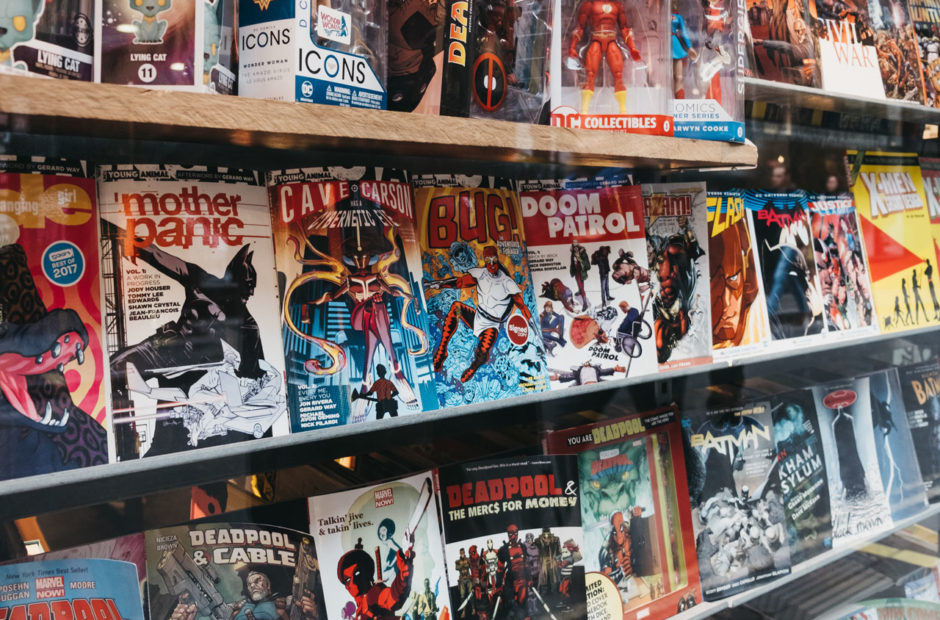
Learning how to start collecting comics can feel daunting at times. Walking into a comic book store for the first time can be intimidating. Thousands of comics line the shelves and back-issue bins: characters with more than 80 years of history, multiple books featuring the same heroes, collected editions in several formats, and terminology everyone else seems to understand already.
The good news is that you don’t need to understand all of it before you start collecting comics.
You don’t need to begin with a character’s first appearance. You don’t need to read every issue that came before the one in your hand. You don’t need an encyclopedic knowledge of continuity, and you certainly don’t need to spend thousands of dollars building a collection overnight.
You really only need to figure out what interests you and start there.
This beginner’s guide will walk you through the basic decisions involved in starting a comic collection, including what to collect, the different formats available, where to buy comics, and some of the terminology you’re going to encounter along the way.
Decide Why You Want to Collect Comics
Before worrying about bags, boards, boxes, grading, or how you’re going to organize everything, start with a much simpler question: What do you want out of your comic collection?
There isn’t one correct way to collect comics.
Some people collect a particular character. Others follow certain writers or artists. You might want every issue of one series, comics from a particular era, stories from one publisher, or books belonging to a genre such as horror, science fiction, superheroes, or romance.
You can also simply collect comics that you want to read.
That last option can sometimes get lost in discussions about comic collecting because so much attention is paid to valuable issues, first appearances, variant covers, grading, and speculation. Comics are also something you can buy because you enjoy reading them.
Your reason for collecting may change over time. You might begin by following Batman, discover that you particularly enjoy the work of one Batman writer, and eventually start looking for that writer’s work on completely different characters. A collection can develop organically rather than following a plan established before you buy your first issue.
You Don’t Have to Start With the First Comic
One of the biggest obstacles facing new comic readers is the belief that they need to start at the beginning.
For some characters, that would be quite an undertaking.
Superman debuted in 1938. Batman followed in 1939, and Wonder Woman arrived in 1941. Thousands of stories featuring those characters have been published since then. Trying to read everything before picking up a current Superman or Batman comic isn’t just unnecessary, it’s an excellent way to turn starting a new hobby into homework.
Comic publishers regularly provide new starting points. A new creative team may begin a run, a series may receive a new first issue, or a storyline may be designed to introduce readers to the characters and their current circumstances.
Even when you’re starting in the middle of an ongoing series, comics usually provide enough context for readers to understand the important parts of the story. You may encounter references to events you haven’t read, but you can decide later whether you’re interested enough to track those stories down.
If you’re interested in a long-established character, another option is to ask for recommendations for a good starting story rather than asking where the character’s entire history begins. A local comic shop can be particularly helpful here because the staff can point you toward stories that match what you’re looking for without requiring decades of previous reading.
Choose What You Want to Collect
There are several easy ways to give a new collection some direction without creating a rigid set of rules.
Collect a Character
If you already have a favorite superhero or comic character, starting there is an obvious choice. You can follow the character’s current series and gradually explore older stories that interest you.
Don’t assume you need every appearance the character has ever made. Long-running characters frequently appear in multiple ongoing titles, limited series, team books, crossovers, guest appearances, and special issues. Decide how broad you want your collection to become.
Collect a Series
You may find one particular comic series you enjoy and decide to collect its entire run. This gives you a clearly defined goal and can introduce the fun of hunting for missing back issues without requiring you to collect everything associated with a character.
Follow a Writer or Artist
Comic creators frequently work on numerous characters and publishers during their careers. If you discover that you particularly enjoy a writer’s stories or an artist’s work, following that creator can lead you toward comics you might never have considered otherwise.
Collect a Genre
Comics cover considerably more territory than superheroes. Horror, fantasy, science fiction, crime, humor, romance, memoir, and numerous other genres are available. If superheroes aren’t what brought you to comics, there is no reason your collection needs to include them.
Collect an Era or Publisher
Some collectors eventually become interested in comics from a particular period or publisher. This can provide a collection with a strong focus, but beginners shouldn’t feel obligated to define their collection this narrowly from the beginning.
It is perfectly reasonable for your first collecting rule to be, “That looks interesting.”
Single Issues vs. Collected Editions
One of the first choices you’ll encounter is whether you want to collect individual comic issues, collected editions, or both.
There is no reason you have to choose only one format.
Single Issues
A single issue is the traditional comic book format, typically containing one installment of an ongoing story. You’ll sometimes hear individual issues referred to as “floppies,” although not everyone uses the term.
Buying single issues allows you to follow a series as it is released. If you enjoy the collecting side of the hobby, individual issues also give you back issues to hunt, covers to collect, and complete runs to assemble.
The tradeoff is that individual issues take up space surprisingly quickly, and following numerous monthly titles can become expensive. A story may also unfold over several months, meaning you’ll be waiting for the next installment rather than reading the entire storyline at once.
Trade Paperbacks
Trade paperbacks, commonly shortened to “trades,” collect multiple comic issues into one paperback volume. A trade might contain one complete storyline, several consecutive issues from an ongoing series, or a selection of related material.
Trades are often an easy way for beginners to explore older stories because you don’t have to locate every individual issue. They’re also convenient if you’re primarily interested in reading rather than assembling a run of original issues.
Hardcovers and Omnibus Editions
Hardcover collections generally offer sturdier bindings and may collect more material than a typical trade paperback. At the larger end of the spectrum are omnibus editions, which can collect substantial portions of a comic run into one oversized volume.
An omnibus can be a convenient way to obtain a large amount of material, but don’t assume bigger automatically means better for a beginner. They can be expensive, heavy, and considerably less comfortable to casually read than a smaller collection.
Graphic Novels
A graphic novel is generally a longer comic work published as a book rather than as individual monthly installments, although the term is sometimes used more broadly in stores and publishing.
For a beginner, the important distinction is simply that you don’t need to buy individual monthly comics to become a comic collector. A shelf of graphic novels and collected editions is every bit as much a comic collection as boxes filled with single issues.
Learn a Few Basic Comic Collecting Terms
You don’t need to memorize an entire vocabulary before visiting a comic shop, but understanding a few common terms will make things considerably easier.
- Issue: An individual installment of a comic series, usually identified by a number.
- Run: A sequence of issues. The term can describe the entire publication history of a series or the period during which a particular creative team worked on it.
- Volume: A term that can have more than one meaning. It may refer to a particular incarnation of a comic series or to a numbered collected edition. Context matters.
- Back issue: An issue that is no longer the current release. Comic shops commonly keep older issues in boxes or bins separate from new releases.
- Trade paperback: A paperback book collecting multiple comic issues, often abbreviated as TPB.
- Variant cover: An alternate cover produced for the same issue. The story inside is generally the same regardless of which cover you choose.
- Key issue: An issue considered significant by collectors, often because it contains a first appearance, major event, or another notable development.
- First printing: Copies produced during the initial print run of an issue or collected edition. If demand exceeds the available supply, a publisher may produce additional printings.
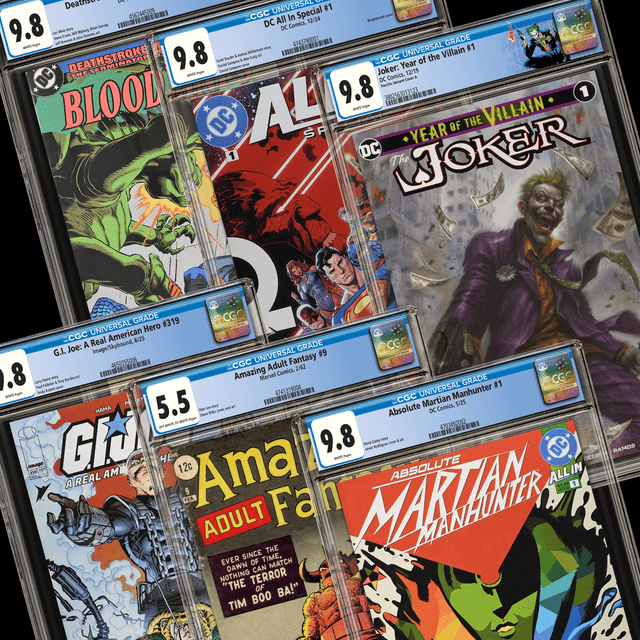
- Slabbed comic: A comic that has been professionally graded and sealed inside a protective plastic holder.
You’ll encounter plenty of additional terminology as you spend time around comics, but you can learn it as you go. Not knowing what every abbreviation on a price tag means isn’t a prerequisite for walking into a comic shop.
Where Can You Buy Comics?
Once you’ve decided what interests you, there are several places to begin building your collection.
Local Comic Book Stores
Credit: iStock/Roman Tiraspolsky
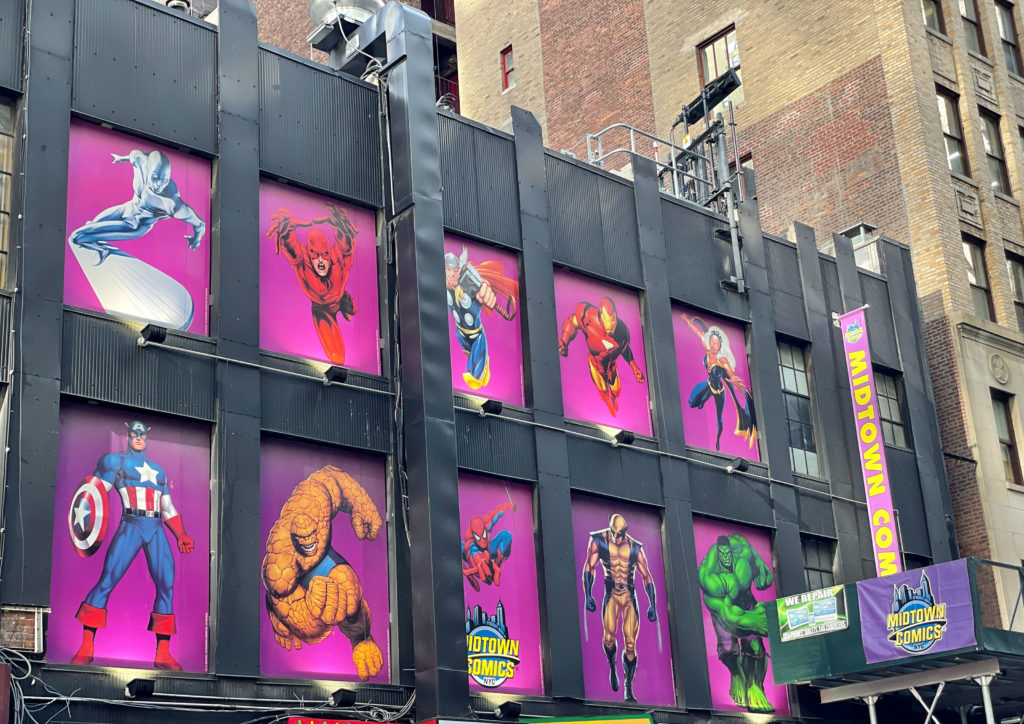
A good local comic shop can be one of the best resources available to a new collector.
In addition to selling new comics, many stores carry trade paperbacks, graphic novels, back issues, storage supplies, and other formats. More importantly, a knowledgeable employee can help you find a starting point based on what you already enjoy.
You don’t need to walk through the door knowing exactly what issue you want. Saying, “I’ve been watching Batman movies, and I’d like to try reading some Batman comics,” is enough information to begin a conversation.
If you’re interested in following new comics regularly, ask whether the store offers a pull list or subscription service. A pull list tells the store which titles you want, and it sets copies aside for you when new issues arrive. Policies vary by store, so ask how often you need to pick up your comics and whether there are any minimum requirements.
Don’t be afraid to ask questions, but also remember that comic stores are retail businesses. If an employee spends time helping you discover books that interest you and the store has what you’re looking for at a reasonable price, supporting the shop helps ensure that resource remains available.
If you are unsure where to find a local comic shop, there are several online services to assist you such as Comic Shop Locator, League of Comic Geeks, Find Your Comic Store, and more.
Bookstores and Online Retailers
Bookstores are particularly useful for graphic novels, trade paperbacks, manga, and other collected editions. Online retailers can provide access to an even larger selection, especially if you’re looking for a specific edition that isn’t available locally.
When buying online, pay attention to exactly which edition you’re ordering. Comics and collected editions are frequently reprinted with different covers, contents, dimensions, or formats.
Libraries
A library may not be the first place that comes to mind when discussing collecting, but it can be one of the best places to begin reading comics.
Borrowing a few books gives you an inexpensive way to discover which characters, creators, and types of stories you actually enjoy before spending money building a collection around them.
Libraries can also be useful when you want to read an earlier storyline for context but don’t necessarily want to own it.
Conventions, Used Bookstores, and Marketplaces
Comic conventions, used bookstores, antique malls, online marketplaces, and other secondary sellers can all be useful places to find older comics.
Prices can vary considerably, especially with collectible issues, so don’t assume that a price is fair simply because someone has put it on a comic. As you become interested in more expensive books, take the time to research recent selling prices and learn how condition affects value before making significant purchases.
There is no need to begin your comic collection with expensive comics. In fact, learning the hobby with inexpensive books gives you time to discover what you genuinely enjoy collecting before larger amounts of money become involved.
New Comics vs. Back Issues
As you begin collecting, you’ll probably encounter two very different sides of the hobby: following comics as they’re released and searching for issues that were published in the past.
New comics give you an easy place to start because you can simply begin following a series from its current issue or find a recent starting point recommended by the publisher or your comic shop. If you discover a series after it has already begun, recent issues may still be available on the shelf or in the store’s back issue section.
Back issue collecting is a different experience. You may be trying to complete a run, find an older story, collect appearances of a favorite character, or simply browse boxes until something catches your attention.
Don’t assume every older comic is rare or expensive. Huge numbers of back issues can be purchased for relatively modest prices. Age alone does not make a comic valuable.
Likewise, don’t assume you need every missing issue immediately. Filling gaps in a run is part of the fun for many collectors, and there is nothing wrong with leaving an empty space until you find the issue at a price you’re comfortable paying.
Set a Comic Collecting Budget
Comic collecting can be an inexpensive hobby, an extremely expensive hobby, or almost anything in between.
The easiest way to keep it enjoyable is to decide how much you’re comfortable spending before your collection begins making that decision for you.
For new comics, pay attention to how quickly several ongoing titles add up. Adding one more monthly series may not seem significant, but a pull list can quietly grow as new series, miniseries, crossovers, annuals, and special issues are added.
You are allowed to stop buying a series you no longer enjoy.
That sounds obvious, but collectors can develop a powerful urge to keep buying something simply because they already own the previous issues. Completing a run can be satisfying, but it shouldn’t turn reading comics into an obligation.
The same principle applies to back issues. Decide what an issue is worth to you before spending significant money on it. A comic can have an established market value without being worth that amount to every collector.
What Are Variant Covers?
When shopping for new comics, you may discover several different covers for what appears to be the same issue.
That’s exactly what they are.
Publishers frequently release comics with variant covers featuring different artwork. In most cases, the comic inside is identical, so you do not need to buy every cover to follow the story.
Some collectors enjoy variants and deliberately collect multiple covers. Others simply choose whichever cover they like best. Either approach is fine.
Variants can become more complicated when retailers offer exclusive covers or when certain variants are produced according to ordering incentives. As a beginner, you don’t need to understand every part of the variant market. The most important thing to know is that seeing four covers for Issue #1 does not usually mean there are four different versions of the story you need to read.
How Should You Store a Comic Collection?
If you’re collecting individual issues, basic storage will help protect them from unnecessary wear and environmental damage.
Comic bags and backing boards are commonly used to protect individual issues. The comic goes inside the bag with a board behind it to provide support. The protected comics can then be stored upright in boxes designed for comic books.
Comic supplies come in different sizes because comics themselves have changed dimensions over the decades. Modern, Silver Age, and Golden Age comics may require different bags and boards, so check the dimensions of your comics and supplies rather than assuming one size fits everything.
Storage materials also vary in quality. If long-term preservation is important to you, research what the bags and boards are made from rather than assuming anything marketed as a comic supply is automatically archival.
Keep comics in a stable indoor environment away from direct sunlight, excessive heat, high humidity, moisture, and other conditions that can damage paper. Avoid locations with obvious environmental risks, such as a damp basement or an attic that experiences major temperature swings.
Collected editions are generally easier to store. A sturdy bookshelf in an appropriate indoor environment will work for most collections. Larger and heavier books may require additional shelf support, and oversized omnibus editions can put considerably more weight on shelving than ordinary books.
How Should You Organize Your Comics?
There is no universal system for organizing a comic collection. The correct system is the one that allows you to find your comics again.
You could organize single issues alphabetically by series title, group them by character, separate them by publisher, arrange them chronologically, or create a combination that makes sense for your collection.
For example, someone with a large Batman collection may prefer to keep Batman-related titles together rather than filing every series strictly alphabetically. Someone collecting across numerous publishers may find a simple alphabetical system easier.
Whatever method you choose, consistency matters more than complexity.
It is also worth leaving some room in your boxes for the collection to grow. Completely filling every box means reorganizing large portions of your collection every time you add new issues to the middle of your filing system.
As the collection grows, consider maintaining a digital inventory. A simple spreadsheet can be enough for a modest collection, while dedicated comic collection apps and databases such as CLZ offer additional features for people managing larger libraries.
An inventory becomes especially useful when you’re buying back issues. It is remarkably easy to stand in front of a box at a convention wondering whether you already own Issue #37.
Do You Need to Grade Your Comics?
Credit: CGC
No.
Professional comic grading is optional, not required to become a comic collector.
Third-party grading services evaluate a comic’s condition, assign it a grade, and encapsulate the comic in a protective holder commonly called a slab. Grading can be useful in portions of the collectible market where condition and authentication significantly affect a comic’s value.
It also costs money, takes the comic out of normal reading circulation, and is unnecessary for the overwhelming majority of comics a new hobbyist is likely to buy.
If you eventually become interested in valuable key issues, signatures, or professionally graded comics, you can learn that side of the hobby when it becomes relevant. You do not need to understand grading scales before buying your first stack of comics.
Don’t Treat Comics as a Guaranteed Investment
Stories about comics selling for enormous amounts of money can make collecting sound like an investment strategy. Those headlines usually involve exceptional books, exceptional condition, or both.
Most comics will never become extraordinarily valuable.
A first issue is not automatically valuable. A variant cover is not automatically valuable. A comic being old does not automatically make it valuable, and a character becoming popular in a movie or television series does not guarantee that every comic featuring that character will permanently increase in price.
If speculation is part of the hobby you enjoy, approach it with the understanding that collectible markets can change. For a beginner, buying comics you would still be happy to own if their monetary value never increases is a considerably safer foundation for a collection.
A Simple Way to Start Collecting Comics
If all of this still feels like a lot of information, starting a collection can be reduced to a handful of steps.
- Choose something that interests you. Pick a character, creator, series, genre, or story you genuinely want to explore.
- Find an accessible starting point. Ask a comic shop for a recommendation, look for a recent first issue or new creative run, or try a collected edition.
- Buy a small number of comics. You don’t need to build an entire collection during your first shopping trip.
- Read what you bought. Find out whether you actually enjoy it before buying another 50 issues.
- Follow what interests you. Explore another story, follow a creator, begin filling in a series, or try something completely different.
- Protect and organize what you decide to keep. Your storage system can grow along with the collection.
The most important step is the one that tends to disappear beneath all the terminology, collecting advice, market values, and continuity discussions: read some comics and figure out what you like.
You Don’t Need to Collect Comics the “Right” Way
Comic collecting can become remarkably specialized. Some collectors pursue complete runs. Some collect only key issues. Some want pristine copies, while others are perfectly happy with well-read comics they can take off the shelf whenever they want. Some collect original single issues, and others would rather have an entire story conveniently sitting in one hardcover.
None of those approaches makes someone more or less of a comic collector.
Your collection also doesn’t need to impress anyone else. If your favorite comic is worth $3 and you’ve read it 20 times, it can matter more to your collection than a valuable issue you bought solely because a price guide told you it was important.
Start with the comics that interest you, learn the hobby as your collection grows, and don’t worry about knowing everything before you begin. Even people who have collected comics for decades are still discovering books they’ve never encountered before.