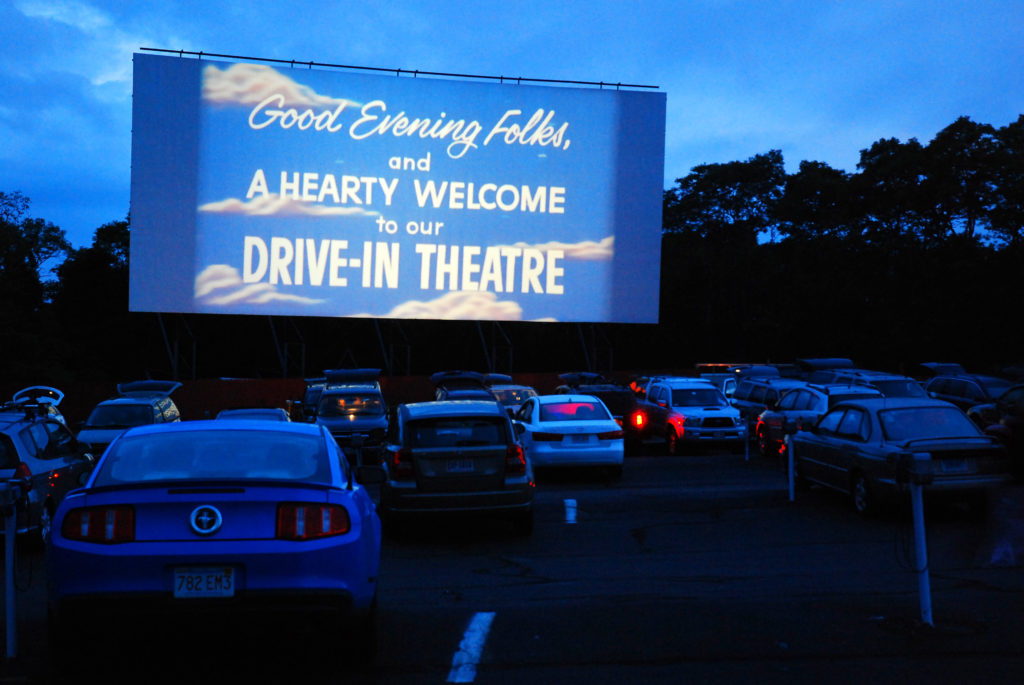
On a warm Friday evening in the late 1950s, highways on the outskirts of nearly every American town saw a steady parade of sedans and station wagons creeping toward massive wooden towers that rose above flat farmland. Parents wore casual clothes, children bounced on back bench seats in their pajamas, and teenagers parked along back ramps to catch double features under open night skies at their nearest drive-in theaters.
For roughly two decades, outdoor exhibition was not an eccentric novelty. It was a primary engine of American moviegoing. At their peak in 1958, more than 4,000 drive-in theaters operated across the United States, accounting for nearly one out of every three movie screens nationwide.
Yet, within a generation, thousands of those giant screens stood abandoned, covered in rust and weeds before being bull-dozed for retail malls, corporate office parks, and suburban tract subdivisions. Today, fewer than 300 traditional drive-in theaters remain open across the country.
How did outdoor moviegoing conquer mid-century America so rapidly, and what were the economic and technological realities that made it disappear? The answer is not that people stopped loving movies under the stars; it was a collision between land values, Daylight Saving Time, audio technology, and the shifting geography of post-war suburbs.
The Invention on Camden Driveway Ramps
The concept of the drive-in theater was invented by a chemical company executive named Richard M. Hollingshead Jr. in Camden, New Jersey.
In 1932, Hollingshead conducted tests in his driveway on 212 Thomas Avenue. He mounted a 1928 Kodak projector on the hood of his automobile, tied a screen between two trees in his yard, and placed a radio behind the canvas. To solve the obvious sightline problem of cars parked behind one another, Hollingshead pioneered a system of graded dirt ramps, allowing front wheels to rest higher than rear tires so every driver possessed an unobstructed view over the vehicle ahead.
Hollingshead secured United States Patent 1,909,537 on May 16, 1933. Three weeks later, on June 6, 1933, he opened the world’s first commercial drive-in theater on Crescent Boulevard in Pennsauken Township, New Jersey. His opening attraction was the British comedy Wives Beware, marketed with the slogan: “The whole family is welcome, regardless of how noisy the children are.”
Credit: iStock/Kirkikis
The Post-War Boom: Cars, Suburbs, and Family Economics
While Hollingshead invented the format in the 1930s, drive-ins did not truly explode until the conclusion of World War II. Between 1947 and 1958, the number of drive-in screens in America skyrocketed from roughly 155 to over 4,000.
This rapid growth was fueled by three powerful cultural and economic currents:
- The Automotive Suburban Migration: Returning GIs took advantage of federally backed mortgages to buy new homes in expanding suburbs. Automobile ownership became universal for middle-class households, turning cars into personal living spaces rather than mere transportation tools.
- The Baby Boom Childcare Problem: Taking three small children to an indoor downtown movie palace required expensive babysitters, dress clothes, and strict silence. At a drive-in, parents paid by the carload or paid nominal individual prices, let children play in pajamas, and did not have to worry about crying babies disturbing nearby patrons.
- Cheap Outlying Agricultural Land: Building an indoor cinema in a downtown core required purchasing expensive commercial property and erecting heavy brick-and-mortar auditoriums. In the late 1940s, buying ten to twenty acres of cleared farmland along a newly paved regional highway was remarkably cheap. An operator needed only a projection shack, graded dirt mounds, gravel, and a timber screen frame to open for business.
Drive-in operators embraced family entertainment by adding full-scale playgrounds beneath the screen, miniature golf courses, petting zoos, pony rides, and even mobile diaper-warming stations operated out of the snack bar.
Solving the Audio Problem: From Mega-Speakers to Radios
Early drive-ins suffered from an obvious technological drawback: sound reproduction. In the 1930s, operators mounted massive directional horn speakers directly beside or behind the projection screen, blasting dialogue across hundreds of vehicles.
The system was a failure. The sound arrived with a noticeable echo delay to vehicles parked on the back ramps. Worse, surrounding residential neighborhoods complained constantly about late-night gunshots, monster roars, and dramatic dialogue reverberating through bedroom windows miles away.
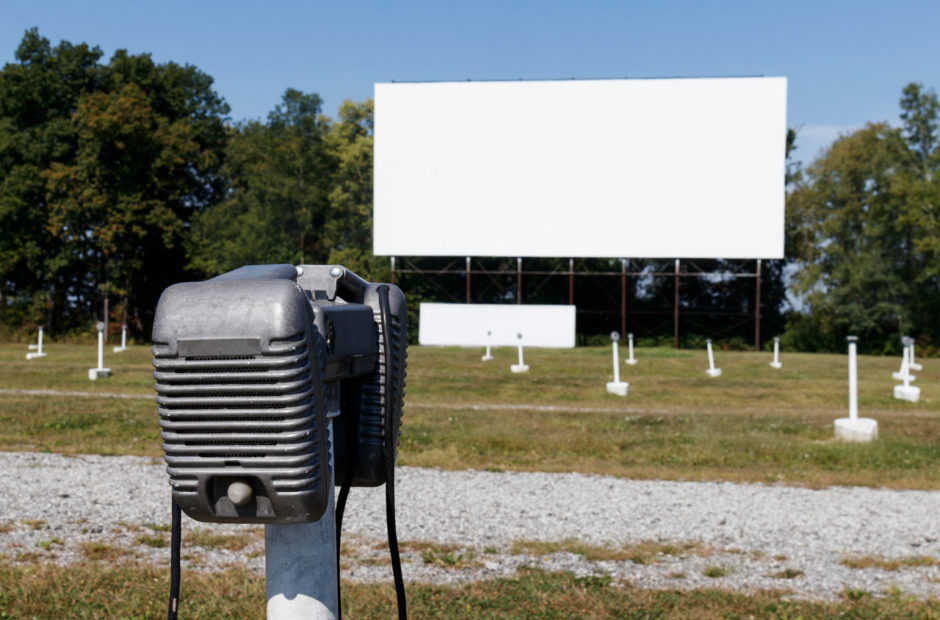
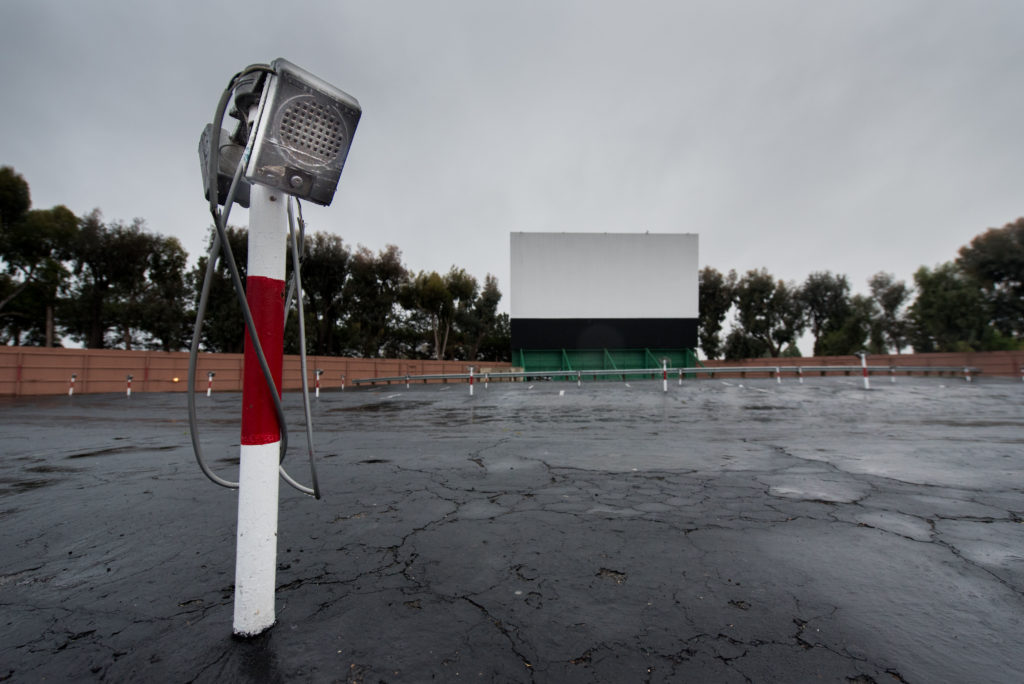
In 1941, RCA introduced the piece of hardware that defined the drive-in aesthetic: the in-car speaker. Operators ran underground electrical wiring out to vertical metal posts beside each parking stall. Drivers pulled alongside the post, lifted a heavy, die-cast aluminum speaker box off its hook, hung it directly over their half-rolled driver window, and controlled the volume with a physical knob.
While in-car speakers solved the noise pollution problem, they created enormous maintenance headaches. Patrons frequently forgot the speaker was attached to the glass, accelerated away at the end of the second feature, and ripped wires out of the ground or shattered their own vehicle windows. Inclement weather, moisture, and vandalism steadily degraded speaker diaphragms.
Beginning in the 1970s and 1980s, operators gradually phased out physical window boxes in favor of low-power AM and micro-watt FM radio transmitters. Drivers tuned their car radios directly to a designated local frequency, instantly delivering static-free, full-fidelity stereo sound directly through the vehicle’s own factory speakers.
Credit: iStock/ffennema
The Concession Stand Lifeline
Just like indoor cinemas, drive-in theaters made very little profit from ticket admission alone, because film distributors commanded significant cuts of the gate receipts. Concessions were the financial engine that kept drive-in lots alive.
Unlike downtown cinemas that restricted offerings to boxed candies and standard popcorn, drive-in concession stands functioned as full-service short-order kitchens. Because families arrived before dusk to secure prime parking positions, operators fed thousands of hungry patrons during the hour leading up to projection.
Snack bars sold cheeseburgers, hot dogs, fried chicken baskets, pizza slices, milkshakes, and regional novelties. To drive sales during fifteen-minute intermissions between features, operators projected iconic animated commercial reels, such as the famous 1953 Technicolor short Let’s All Go to the Lobby, featuring dancing cups, candy boxes, and popcorn tubs chanting their cheerful sales pitch.
The Perfect Storm That Killed the Outdoors
By the late 1970s, the economic foundation that made drive-in theaters profitable began to crack. Their decline was not caused by a sudden drop in film attendance, but by a combination of commercial and regulatory pressures:
- Exploding Suburban Land Values: The cheap farmland purchased on the edges of town in 1950 sat directly in the path of modern suburban sprawl by 1980. A drive-in required fifteen acres of flat land to park several hundred vehicles for one showing per night, weather permitting. Shopping mall developers, corporate distribution hubs, and housing tract builders offered operators millions of dollars for the raw acreage. The land simply became too valuable to use for parking cars in the dark.
- Daylight Saving Time: In 1966, the federal government passed the Uniform Time Act, standardizing Daylight Saving Time across the country. During peak summer business months (June and July), darkness did not fall until nearly 9:00 PM in many northern and central regions. Families with young children could not wait until 9:15 PM for a movie to begin and 1:00 AM for a double bill to end. The lost hour of early evening projection gutted the lucrative family market.
- Climate Limitations: Indoor theaters operated 365 days a year across multiple daily showtimes starting at noon. Most drive-ins in northern states were seasonal businesses, restricted to four or five months of operation and subject to rainouts, fog, and mosquitoes.
- Multiplexes and First-Run Hollywood Lockouts: Major Hollywood studios favored indoor climate-controlled suburban multiplexes, which offered multiple screens under one roof and pristine stereo sound systems. Studios frequently denied drive-in operators first-run access to major blockbusters, forcing them to survive on second-run reissues, low-budget exploitation films, or late-night slasher double bills.
The Modern Survivor and the Pandemic Resurgence
While the thousands of post-war drive-in lots have largely vanished beneath strip malls and housing subdivisions, the few hundred drive-ins that survive today have done so by turning nostalgia into an experience that modern indoor cinemas cannot replicate.
That outdoor format proved remarkably resilient in 2020. During the early days of the COVID-19 pandemic, when indoor theaters shuttered nationwide, drive-in theaters experienced a sudden, unexpected renaissance. Because audiences were safely isolated within their own vehicles, surviving lots became the only operational movie venues in the country, routinely selling out screenings weeks in advance.
The sudden demand spawned pop-up imitations everywhere. Major retailers like Walmart partnered with the Tribeca Film Festival to convert 160 store parking lots into temporary drive-in theaters with mobile screens. Independent promoters staged rooftop screenings, and communities parked on empty downtown lots to watch movies projected directly onto the blank exterior brick walls of commercial buildings. For several months, the simplest exhibition model in cinema history was once again the safest ticket in town.
Equipped with modern high-lumen digital projectors, crystal-clear FM stereo broadcasts, and updated kitchen menus, surviving permanent drive-ins continue to draw crowds who want to break free from the quiet rows of auditorium seats. For generations of moviegoers, the real magic was never just what was flickering on the giant screen; it was the freedom of packing the family into an automobile, turning the headlights off, and watching Hollywood stories light up the summer night.