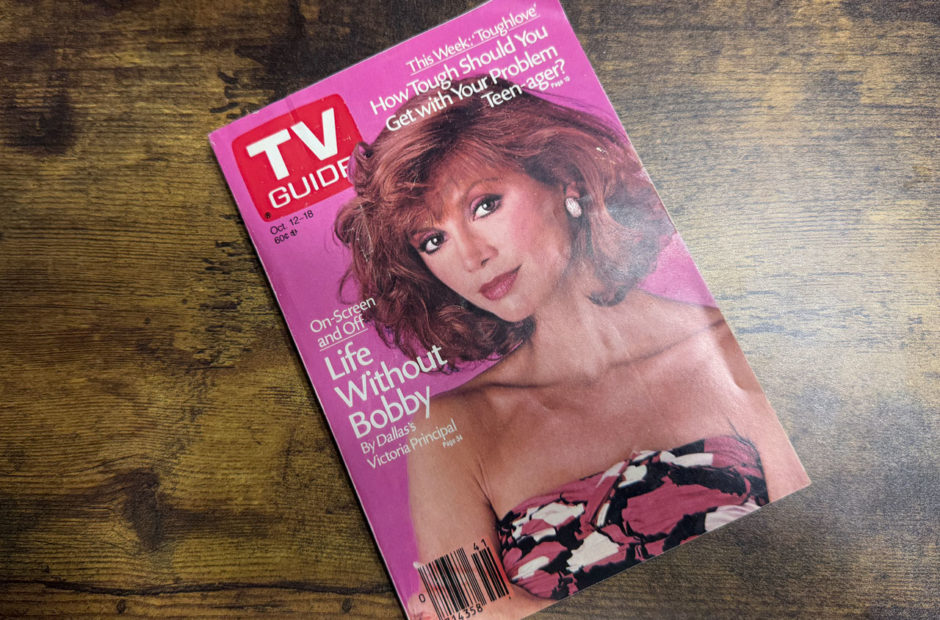
For nearly half a century, the most powerful object in American media was not a Hollywood studio, a network executive suite, or a broadcast transmission tower. It was a tiny, digest-sized booklet made of cheap newsprint that sat on virtually every coffee table between Maine and California.
Every week, tens of millions of households waited for the mail carrier or grabbed a copy at the supermarket checkout line. Its glossy cover featured the biggest stars in show business, from Lucille Ball and Johnny Carson to the cast of Star Trek or Star Wars. Inside, a dense, black-and-white grid charted every single hour of the broadcast week, accompanied by sharp criticism, industry gossip, and crossword puzzles.
That publication was TV Guide. At its peak, it was not merely a convenient directory for channel surfers. It was the best-selling, most profitable weekly magazine in the United States, commanding an empire so influential that a single review or cover placement could rescue a struggling show from cancellation or send a new series into the ratings stratosphere.
How did a humble collection of local television timetables transform into the undisputed king of American print media? The answer is a masterclass in logistical wizardry, ruthless business acumen, and an early understanding of how television would reshape daily life.
The Birth of the Digest
In the late 1940s, television was an erratic, localized experiment. Daily newspapers often refused to print television listings, viewing the new visual medium as an existential threat to their advertising revenue. In response, local entrepreneurs in major cities started printing their own independent programming pamphlets with names like Television Guide in New York, TV Forecast in Chicago, and TV Digest in Philadelphia.
Enter Walter Annenberg. The ambitious publisher of The Philadelphia Inquirer and head of Triangle Publications recognized that television was not a passing fad. It was a cultural revolution. Annenberg realized that while television programming was locally broadcast, the nationwide fascination with television stars was universal.
In 1953, Annenberg bought up the independent regional listings guides in New York, Chicago, Philadelphia, Washington, and several other cities. He merged them into a single national brand. On April 3, 1953, the first national issue of TV Guide hit newsstands, featuring a photograph of Lucille Ball’s newborn son, Desi Arnaz Jr., proudly labeled “Lucy’s $50,000,000 Baby” on the cover.
The first national run sold over 1.5 million copies. Within a few short years, it was clear Annenberg had captured lightning in a bottle.
The Dual-Core Logistical Miracle
What made TV Guide unique from a manufacturing standpoint was its “split-run” printing model. Every single issue was essentially two completely different magazines glued together.
The “outer wrap” consisted of full-color, glossy pages featuring national entertainment reporting, celebrity interviews, recipes, essays, and reviews from respected cultural critics like Cleveland Amory. These national articles were written, edited, and printed at central facilities weeks in advance.
The “inner core” was pure utility. Printed on inexpensive newsprint, it contained the detailed, day-by-day, channel-by-channel broadcast schedules tailored to a specific geographic market. It carried hyper-local program descriptions, late-night movie titles, and listings for small independent and UHF stations that no major newspaper bothered to cover.
Managing this system was a staggering logistical feat. At its height in the 1970s and 1980s, TV Guide published more than 100 separate regional editions every single week. Editorial teams across the country worked around the clock, compiling schedule changes, typesetting local channel numbers with specialized visual keys, and coordinating with dozens of regional printing plants. Millions of copies had to be printed, bound, bundled, and delivered to newsstands, grocery stores, and subscribers before Saturday morning arrived.
The Ultimate Kingmaker in Hollywood
Because TV Guide sat in living rooms seven days a week, it wielded unmatched cultural and financial power. By the mid-1970s, its weekly circulation surpassed 17 million copies, and an estimated 40 million to 50 million people read it every week. It was read by more Americans than Time, Newsweek, and Life combined.
This enormous reach turned the magazine into the ultimate kingmaker for broadcast networks:
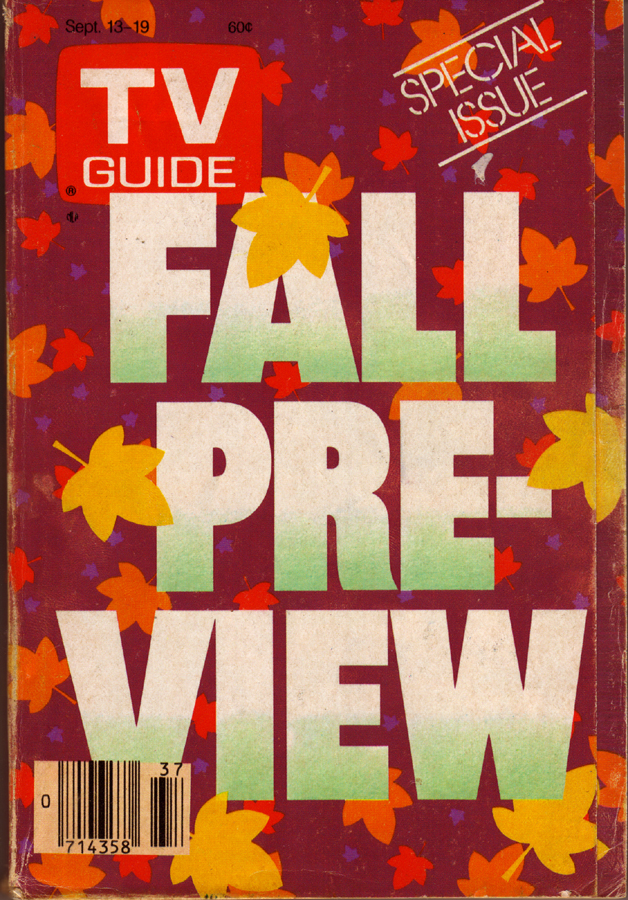
- The Annual Fall Preview Issue: Published every September, the legendary “Fall Preview” was the sacred bible of the television industry. Weighing in at hundreds of pages, this single issue broke down every new pilot, schedule shift, and returning series across ABC, CBS, and NBC. Millions of viewers used it to plan their entire autumn viewing schedules, and network executives sweated over whether the magazine’s critics deemed their expensive new sitcoms “promising” or “destined to fail.”
- The Cover Curse and Blessings: Landing the cover of TV Guide was considered the peak of pop culture relevance. A cover story could provide a struggling new drama like Hill Street Blues or Cheers the critical boost it needed to survive low first-season ratings. Conversely, if a network star refused to cooperate with a TV Guide interview, the magazine could freeze them out entirely.
- The Checkout Counter Monopoly: Annenberg pioneered the practice of buying exclusive rack placement at grocery store checkout registers. By placing the digest right where impulse buyers queued up to pay for their groceries, TV Guide secured an unbreakable retail pipeline that generated hundreds of millions of dollars in annual newsstand revenue.
Advertisers paid astronomical fees for a full-page color ad inside the magazine, knowing their product would sit in front of viewers during prime-time hours when families were actively watching television and consuming commercial breaks.
The Peak and the Multi-Billion-Dollar Deal
By the late 1980s, TV Guide was an unstoppable cash-printing machine. In 1988, media mogul Rupert Murdoch bought Triangle Publications from Walter Annenberg for a staggering $3.2 billion. At the time, it was the largest media transaction in history.
Murdoch’s primary motivation was not just to own a magazine. He wanted to use the immense promotional reach of TV Guide to legitimize his fledgling fourth network, Fox. By securing favorable editorial coverage and prominent listings for upstart series like Married… with Children and The Simpsons, Murdoch leveraged the publication to turn Fox into a legitimate broadcast competitor.
The Interactive Threat That Broke the Empire
Yet, the very technology that fueled the rise of TV Guide eventually sowed the seeds of its downfall.
In 1981, a new cable service called the Electronic Program Guide, later known simply as the Prevue Channel, began appearing on cable systems across the country. Viewers no longer had to flip through paper pages to see what was on; they could simply tune to a dedicated channel and watch a blue-and-orange grid slowly scroll past their screen while elevator music played in the background.
By the late 1990s, digital cable boxes and satellite dishes introduced interactive, on-screen programming menus at the touch of a remote control button. The physical paper guide instantly transformed from an essential daily utility into an obsolete relic. Why pay for a magazine subscription when your television set could tell you what was airing right now, provide a summary, and automatically program your VCR or DVR with a single click?
In 2005, faced with steep circulation declines, the magazine made a desperate pivot. It abandoned its famous, iconic pocket-sized digest format, switched to a standard full-size glossy layout, and eliminated the hyper-local listings entirely to focus purely on national entertainment news and streaming recommendations. The company changed hands multiple times throughout the 2000s and 2010s, eventually selling for a tiny fraction of its former billion-dollar valuation.
Today, finding something to watch requires navigating a maze of algorithms, home screens, and digital search bars. But for two generations of television lovers, navigating that vast media universe started with a trip to the mailbox, a cup of coffee, and a ballpoint pen ready to circle the week’s best shows on the pages of TV Guide.