The Green Lantern Corps may be the most famous group of ring-wielding heroes in DC Comics, but green represents only one part of a much larger mythology. Across the universe, other rings draw power from fear, rage, hope, love, compassion, and even greed, with each color producing its own very different kind of wielder.
Together, these colors form the Emotional Electromagnetic Spectrum, one of the central concepts of modern Green Lantern stories. Some colors have entire armies devoted to them, while others may have only a handful of users or even a single primary wielder.
So what does every Lantern color mean, and how do the different groups fit together? Here are the major power rings and Corps of the DC Universe.
What Is the Emotional Spectrum?
The Emotional Electromagnetic Spectrum is a collection of cosmic energies connected to emotions and states of being. Each part of the spectrum corresponds to a different color and can be harnessed through specialized power rings.
The seven primary colors are:
- Green – Willpower
- Yellow – Fear
- Red – Rage
- Blue – Hope
- Orange – Avarice
- Indigo – Compassion
- Violet – Love
Black and white later became important parts of the mythology as representations of death and life, although they do not function in exactly the same way as the seven emotional colors.

Credit: DC
Green Lantern Corps: Willpower
The Green Lantern Corps is built around willpower. Its rings seek individuals capable of overcoming great fear and using their strength of will to accomplish seemingly impossible tasks.
Founded by the Guardians of the Universe, the Corps divides the known universe into thousands of sectors, with Green Lanterns assigned to protect them. Earth belongs to Sector 2814 and has produced numerous prominent members, including Hal Jordan, John Stewart, Guy Gardner, Kyle Rayner, Simon Baz, and Jessica Cruz.
Green rings can create hard-light constructs based on whatever the wearer imagines, as well as provide flight, protection, translation, energy projection, and numerous other abilities.
The Green Lantern Corps sits near the center of the Emotional Spectrum, reflecting the balance required to control willpower without being consumed by a more extreme emotion.
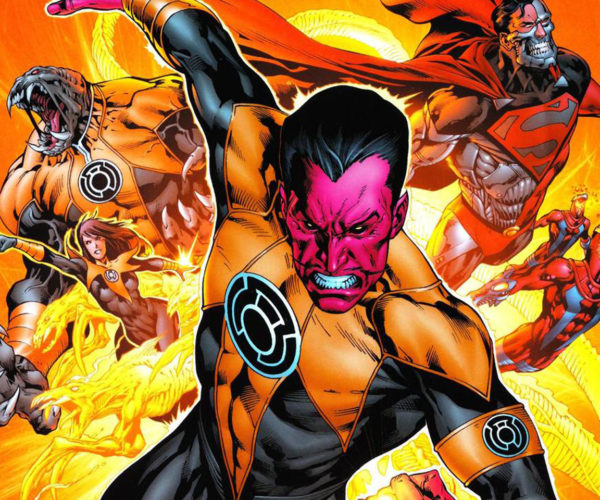
Sinestro Corps: Fear
Yellow rings draw their power from fear.
The Sinestro Corps was founded by former Green Lantern Sinestro as an alternative to the organization that expelled him. Its members are generally selected because they possess the ability to instill great fear in others.
Sinestro believes fear can be used to create order. Rather than hoping people will choose to follow laws, his philosophy is that they can be frightened into obeying them.
Yellow rings provide many of the same basic abilities as green ones, including energy constructs, flight, protection, and energy projection.
You can learn much more about the group in our guide to the Sinestro Corps.
Red Lantern Corps: Rage
The Red Lantern Corps draws its power from rage.
Led by Atrocitus, the group consists largely of individuals who have suffered terrible loss, injustice, or tragedy and allowed their anger to consume them. Rather than controlling their emotions, Red Lanterns often surrender themselves to fury.
Their rings alter their bodies in particularly extreme ways. Red Lanterns can project corrosive red energy that resembles burning blood, and removing a ring can be far more dangerous for them than simply taking away a weapon.
Atrocitus formed the group out of his hatred of the Guardians of the Universe, whose past actions had devastating consequences for his home sector.
Blue Lantern Corps: Hope
Blue represents hope, making the Blue Lantern Corps one of the most optimistic groups within the spectrum.
The organization was founded by Ganthet and Sayd, former Guardians who rejected some of their people’s decisions. Blue Lanterns are selected for their ability to inspire hope in others.
Hope is extraordinarily powerful, but blue rings have an unusual relationship with green ones. A Blue Lantern reaches far greater offensive potential when operating near an active Green Lantern, reflecting the idea that hope requires willpower to turn possibility into action.
Blue energy can also enhance Green Lantern rings and has demonstrated abilities that differ significantly from those of most other colors.
Orange Lantern: Avarice
Orange represents avarice, or overwhelming greed.
Unlike most colors, there generally is not a traditional Orange Lantern Corps filled with independent members. The orange light is primarily associated with Larfleeze, an alien so consumed by greed that he refuses to share its power.
Larfleeze is also known as Agent Orange.
Instead of recruiting willing teammates, he can create orange energy constructs based on beings he has killed, effectively building his own army without surrendering possession of additional rings.
This makes orange perfectly suited to its emotion. A true Corps would require sharing power, which runs directly against the entire concept of avarice.
Indigo Tribe: Compassion
Indigo represents compassion, but the Indigo Tribe is considerably stranger than its peaceful appearance might suggest.
Its members carry indigo rings and staffs and are led by Indigo-1. They can channel compassion and have demonstrated the ability to access or reproduce powers associated with other colors of the Emotional Spectrum when those energies are nearby.
The group’s history also complicates the idea that every member simply joined because of an unusually compassionate nature. The indigo light has been used to force compassion upon people who previously possessed little or none of it.
That makes the Indigo Tribe one of the most mysterious and morally complicated organizations among the ring wielders.
Star Sapphires: Love
Violet represents love and is associated with the Star Sapphires.
Carol Ferris is the character most closely associated with the Star Sapphire identity, but the violet light eventually developed into an entire organization based on the planet Zamaron.
Love may sound less dangerous than rage or fear, but DC stories frequently explore how powerful emotions can become destructive when taken to extremes. The violet light can represent genuine devotion, but obsession and possessiveness can also emerge when love becomes uncontrolled.
Star Sapphire rings provide abilities similar to those of other spectrum users, including flight, energy projection, protection, and construct creation.

Credit: DC
Black Lantern Corps: Death
Black Lanterns are associated with death rather than one of the seven primary emotions.
They became the central threat of the 2009 storyline Blackest Night, when black power rings began resurrecting dead characters throughout the DC Universe.
These resurrected beings were not simply heroes and villains returned to normal life. Black Lanterns were connected to Nekron, a cosmic embodiment of death, and frequently manipulated the emotions of living people around them.
The Black Lantern Corps represented the culmination of years of stories expanding Green Lantern mythology beyond willpower and into the full Emotional Spectrum.
White Lantern Corps: Life
If black represents death, white represents life.
White Lantern power combines the energies of the Emotional Spectrum and is connected to the Life Entity. White rings became particularly important during the conclusion of Blackest Night and the events that followed.
Unlike the Green or Red Lantern organizations, the White Lantern Corps has never functioned primarily as a permanent galactic police force. White Lantern power tends to emerge during extraordinary circumstances connected to life, death, and the balance between them.
Several major DC characters have wielded white rings at different points, making the White Lantern identity more of a rare cosmic state than a conventional Corps with thousands of permanent members.
Do All Lantern Colors Have Their Own Corps?
No. This is where the terminology can become confusing.
Green, yellow, red, and blue have all operated as recognizable organizations with multiple members. The Star Sapphires and Indigo Tribe serve comparable roles for violet and indigo.
Orange is mostly controlled by Larfleeze, while Black and White Lanterns operate under very different circumstances from the traditional organizations.
For that reason, “Lantern Corps” is often used informally when discussing all of the colors together even though not every color maintains a permanent organization structured like the Green Lantern Corps.
Are There Other Power Rings?
Yes. DC has introduced additional rings and colors beyond the classic Emotional Spectrum.
The Phantom Ring, for example, can access different colors of the Emotional Spectrum depending on the emotions of its wearer. Unlike most power rings, it does not permanently belong to one specific color.
The Ultraviolet power introduced another hidden portion of the spectrum connected to suppressed negative emotions and was prominently explored through John Stewart and the Ultraviolet Corps.
DC has also introduced a Gold Lantern in stories involving the Legion of Super-Heroes in the 31st century. Gold Lantern mythology exists outside the traditional seven-color system and has been treated as its own mystery rather than another standard emotional Corps.
These additions expand the mythology, but green, yellow, red, blue, orange, indigo, and violet remain the seven colors most closely associated with the traditional Emotional Spectrum.
Which Lantern Corps Is the Most Powerful?
There is no single answer because power levels vary depending on the wearer, circumstances, and the way different colors interact.
Some energies have natural advantages or special relationships with others. Hope can amplify willpower, for example, while individual characters such as Sinestro, Atrocitus, and Larfleeze have demonstrated vastly greater control over their respective colors than an inexperienced ring bearer might possess.
White Lantern power operates on an especially enormous scale because of its connection to life and multiple portions of the spectrum, but it is also much rarer than a standard power ring.
Why the Different Lantern Corps Matter
Expanding Green Lantern mythology into an entire Emotional Spectrum changed the scale of the franchise. What had once primarily been a story about one intergalactic police organization became a conflict between competing cosmic forces, each representing a different part of emotional existence.
The colors also create natural ideological conflicts. Willpower can overcome fear. Rage can consume compassion. Hope can strengthen will. Love can inspire heroic sacrifice or become dangerous obsession.
That framework helped turn the mythology surrounding the power rings into one of the largest cosmic corners of the DC Universe.
FAQs
How many main Lantern colors are there?
The traditional Emotional Spectrum contains seven primary colors: green, yellow, red, blue, orange, indigo, and violet.
What emotion does each Lantern color represent?
Green represents willpower, yellow fear, red rage, blue hope, orange avarice, indigo compassion, and violet love.
What do Black and White Lanterns represent?
Black Lanterns are associated with death, while White Lanterns are associated with life.
Does every color have a Lantern Corps?
No. Some colors support large organizations, while others operate differently. Orange, for example, is primarily wielded by Larfleeze rather than a traditional Corps of independent members.
Are there power rings outside the Emotional Spectrum?
Yes. DC has introduced unusual variations including the Phantom Ring, Ultraviolet power, and the Gold Lantern, although these are not part of the classic seven-color spectrum.
Conclusion
The Green Lantern Corps may have started it all, but the introduction of the Emotional Spectrum transformed the mythology into something much larger. Willpower, fear, rage, hope, avarice, compassion, and love each have their own place in the cosmic balance, while Black and White Lanterns push the concept into the realms of death and life themselves.
Understanding the different colors also makes the larger Green Lantern universe much easier to follow. A ring’s color is not simply a costume choice. It tells you what powers its wearer, what philosophy they may follow, and often exactly what kind of threat or ally they represent.