There was a time when staying home to watch a broadcast network original movie was a genuine cultural event. Families gathered around the television for gripping, original stories like Brian’s Song, Steven Spielberg’s legendary thriller Duel, or the terrifying nuclear war drama The Day After.
For decades, the major networks pumped out original movies at an astonishing rate. They were cheap to make, heavily promoted, and guaranteed massive ratings. Today, outside of the holiday season on the Hallmark Channel, the traditional broadcast network movie is completely extinct. So where did it go?
The ABC Movie of the Week
The format really exploded in 1969 when ABC launched the “Movie of the Week.” Before this, networks relied heavily on buying the broadcast rights to older theatrical films. However, Hollywood studios started charging exorbitant fees for those rights. ABC executives realized they could produce their own 90-minute movies for a fraction of the cost of licensing a Hollywood blockbuster.
These early TV movies were incredibly efficient. They were shot in a couple of weeks on modest budgets. More importantly, they served as the ultimate testing ground. Networks frequently used the Movie of the Week format to test out backdoor pilots for potential series without fully committing to a massive production order.
The Ratings Behemoths
Credit: TV Guide
As the 1970s rolled into the 1980s, the made-for-TV movie found its definitive niche. While theatrical blockbusters were obsessed with space operas and massive explosions, television movies cornered the market on ripped-from-the-headlines true crime and intense domestic dramas.
This era birthed the somewhat cynical industry term “disease of the week.” Networks realized that melodramatic movies about rare illnesses, family tragedies, or shocking local crimes drew massive viewership. They became reliable, highly profitable anchors for sweeps months. And when a network hit the jackpot on one of these films, the viewership numbers were genuinely staggering.
When ABC aired The Day After in November 1983, it did not just win the night. It completely stopped the nation. The film drew an estimated 100 million viewers. To put that in perspective, a staggering 62 percent of all televisions in use in the United States that night were tuned in to watch it. It pulled Super Bowl-level numbers for a bleak, terrifying movie about nuclear fallout.
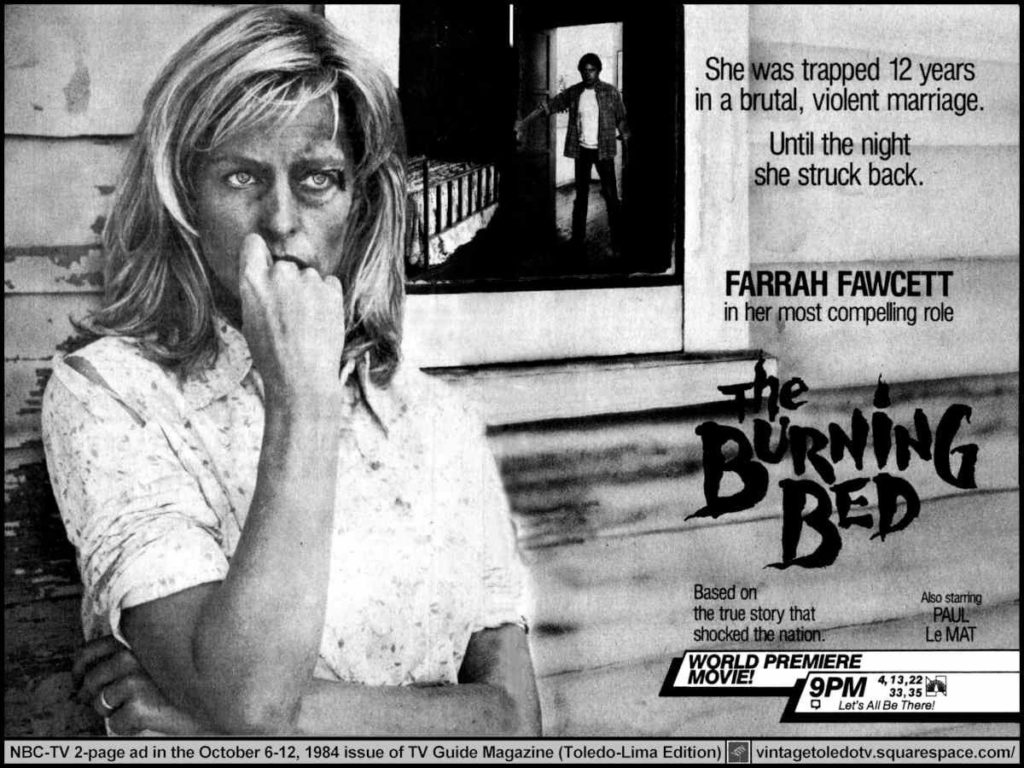
The following year, NBC aired The Burning Bed starring Farrah Fawcett. Based on a harrowing true story of domestic abuse, the film was a massive critical and commercial success. It premiered to a 36.2 household share, making it the highest-rated television movie in NBC’s history at the time. Networks knew that if they tackled a controversial or highly emotional subject, half the country would tune in to watch.
Cable and the Prestige Shift
The traditional broadcast TV movie started to crumble in the late 1990s, and the primary culprit was premium cable. Networks like HBO and Showtime realized they could attract subscribers by producing original movies that were entirely free from FCC broadcast standards.
Cable movies could show violence, use adult language, and tackle controversial subjects that advertisers on ABC or CBS would never allow. When HBO started sweeping the Emmy awards with high-budget, star-studded original films, the broadcast networks simply could not compete creatively.
The Streaming Evolution
By the 2000s, the explosion of the DVD market and the rise of the internet meant viewers no longer had to wait for a network to spoon-feed them a movie on a Tuesday night. The broadcast networks slowly abandoned the format, realizing it was dramatically more profitable to fill those hours with cheap reality television or standard procedural dramas.
The format did not actually die. It just fractured. The cheap, melodramatic thrillers and cozy romances migrated entirely to cable networks like Lifetime and Hallmark. Meanwhile, the high-budget prestige projects shifted to streaming platforms. A massive Netflix Original starring Ryan Reynolds or Sandra Bullock is technically just a modern made-for-TV movie with a Hollywood budget. The delivery method changed, but the appeal of a brand new movie sent directly to your living room is just as powerful as it was in 1969.