When most people talk about Aliens, they talk about the big moments.
The Colonial Marines. The power loader. The alien queen. “Game over, man.” “Get away from her, you bitch.”
I understand why. I saw Aliens in theaters as a kid, and I loved every minute of it. The Marines were cool. The action was incredible. The movie somehow expanded the xenomorph mythology without explaining so much that the creatures stopped being mysterious. Even today, I think it’s one of the best examples of a sequel taking a familiar concept and successfully broadening the world around it.
For years, that’s largely how I thought about the movie. It was an action film that happened to feature some of the most memorable science-fiction monsters ever put on screen.
The older I’ve gotten, though, the less interested I’ve become in the aliens.
What keeps pulling me back is Ripley.
A Woman With Nothing Left
One of the things that strikes me most now is how bleak Ripley’s situation is when the film begins.
She survives the destruction of the Nostromo only to discover that survival came with a terrible price. Fifty-seven years have passed. Everyone she knew is gone. Her career is effectively over. The company treats her like she’s the problem rather than the sole survivor of an unimaginable nightmare.
The boardroom scene lands very differently for me now than it did when I was younger. Ripley sits there listening to people question her decisions and dismiss her experiences, and you can practically see the disbelief on her face. She isn’t angry so much as exhausted. She cannot believe this is what she came back to.
Then there is the scene in her apartment. Ripley sits alone, staring off into space with a cigarette slowly burning itself down. It’s one of the quietest moments in the film, but it tells us an enormous amount about where she is emotionally. This is not a woman rebuilding her life. This is a woman going through the motions because she doesn’t know what else to do.
Honestly, I’ve always felt there is a part of Ripley that would have preferred to stay asleep. She wakes up expecting to return to her life and instead finds herself stranded in a future where she no longer fits. If someone offered her the chance to climb back into hypersleep and never wake up again, I’m not entirely convinced she would refuse.
That may sound harsh, but watch those opening scenes again. This is not a woman looking toward the future. This is a woman trying to figure out why she should care about the future at all.
The Scene I Wish Had Never Been Cut
I’ve always thought one of the strangest editing decisions in movie history was cutting the scene about Ripley’s daughter.
The theatrical version works. Clearly it works. Audiences loved the film long before any of us ever saw the Special Edition.
But that single scene changes almost everything.
Learning that Ripley’s daughter lived an entire life and died while Ripley drifted through space reframes countless moments throughout the rest of the movie. It doesn’t alter the plot. It alters the emotional stakes.
Without that scene, Ripley becomes protective of Newt because Newt is a frightened child trapped in a nightmare. That’s enough. It works perfectly well.
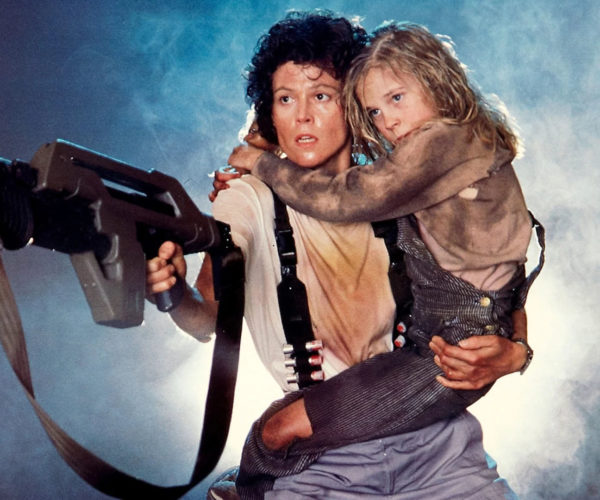
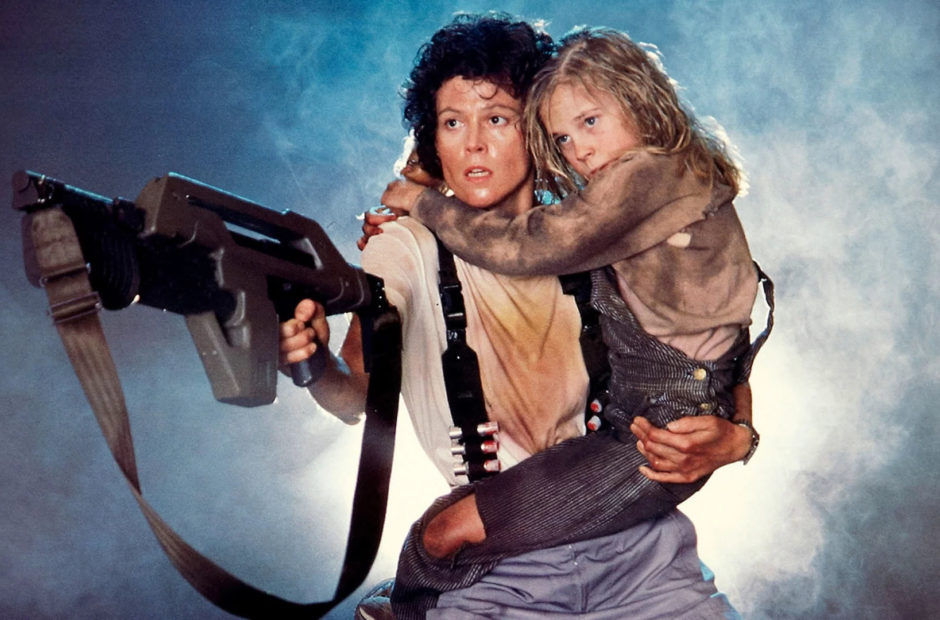
With that scene restored, however, Ripley’s relationship with Newt gains an entirely different layer. Suddenly, this isn’t just a survivor protecting a child. This is a woman confronting a loss she never had the opportunity to process. The movie doesn’t stop being about survival, but it becomes about something more than survival.
It becomes about healing.
When Aliens Stops Being About Aliens
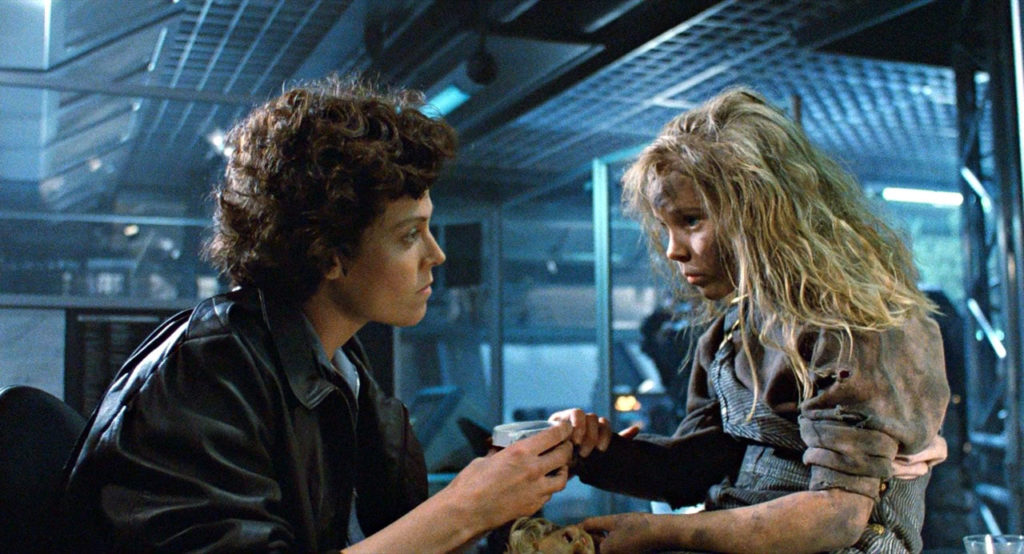
If I had to identify the moment where Aliens stops being a movie about aliens and becomes a movie about Ripley, it would be the scene where Newt is discovered hiding beneath the floor panels.
From that point forward, the emotional center of the movie changes.
Ripley still wants to survive. She still wants to stop the aliens. But now she has someone else to think about. Someone vulnerable. Someone who has been surviving alone in circumstances that should have killed her weeks ago.
One of the first scenes that comes to mind when I think about Aliens is the moment when Ripley explains how Newt survived in the air ducts by herself. Hudson’s response is pure Hudson: “That’s great, man. Why don’t you put her in charge?” It’s a funny line, but underneath the joke is the dawning realization that this little girl understands the situation better than the heavily armed professionals around her.
Ripley recognizes that immediately because she’s been through it before. She’s not looking at Newt as a burden. She’s looking at someone who understands a nightmare nobody else in the room truly comprehends.
The Small Moment That Explains Everything
For all the action in Aliens, one of my favorite moments is almost impossibly quiet. Ripley watches Newt sleep and gently brushes the hair away from her face. It is a simple act of care, but by that point in the film, simple care means everything.
That moment reveals what the action scenes cannot. Ripley is beginning to care again. At the start of the movie, she barely seems connected to her own future. By the middle of the movie, she is worrying about someone else’s. That is not a side detail or a sentimental pause before the next action sequence. That is the character arc.
What Ripley Is Really Fighting
That is why Ripley entering the hive to rescue Newt matters as much as it does. On the surface, it is a rescue mission and one of the greatest action sequences ever filmed. Underneath that, it is the moment when Ripley chooses the first meaningful thing she has found since waking up 57 years too late.
She is not going into the nest because she is fearless, or because she is the toughest person in the room, or because she believes she is guaranteed to succeed. She goes because losing Newt has become unacceptable. For most of the movie, Ripley is trying to survive. By the time she enters the hive, she has found something worth risking survival for.
That distinction is why the sequence carries so much weight. Ripley is not merely staying alive anymore. She is living again, and that means she has something to lose.
Why “Get Away From Her, You Bitch” Works
People remember “Get away from her, you bitch” because it is iconic, and rightly so. But the line does not work simply because it is clever or because Sigourney Weaver delivers it perfectly. It works because the movie has spent its entire runtime earning it.
By the time Ripley confronts the queen, she is carrying the weight of two films worth of frustration, grief, fear, and loss. She has been ignored, dismissed, doubted, and isolated. She has lost her old life, her place in the world, and, depending on which version of the film you are watching, her daughter. The queen is not just threatening another survivor. She is threatening the one thing that has pulled Ripley back from the emotional abyss where the movie found her.
That line is not just defiance. It is Ripley declaring that she is done losing.
Why Aliens Still Works
When I was younger, I thought Aliens worked because of the Marines, the action, and the xenomorphs. Those elements are still fantastic, and they are a huge part of why the movie remains entertaining nearly forty years later. What I appreciate now is how much of the film’s success rests on Ripley.
James Cameron understood that Ripley could not simply become a tough action hero. She had to remain a person carrying grief, trauma, frustration, and uncertainty. More importantly, she had to be someone capable of growing beyond those things without the movie pretending they had never happened.
The reason Aliens still works is not because Ripley is fighting aliens. It is because Ripley is fighting her way back to life. Everything else is just standing in her way.
What to Read Next
- The Scene That Explains Why Star Trek II: The Wrath of Khan Still Works
- The Scene That Made Superman Feel Real
- The Scene That Explains Why Raiders of the Lost Ark Works