For the modern television viewer, the concept of a “summer hiatus” feels increasingly alien. Streaming services drop blockbuster series in July. Cable networks premiere prestige dramas in June. Television is now a 365-day-a-year business designed to keep subscribers from hitting the “cancel” button.
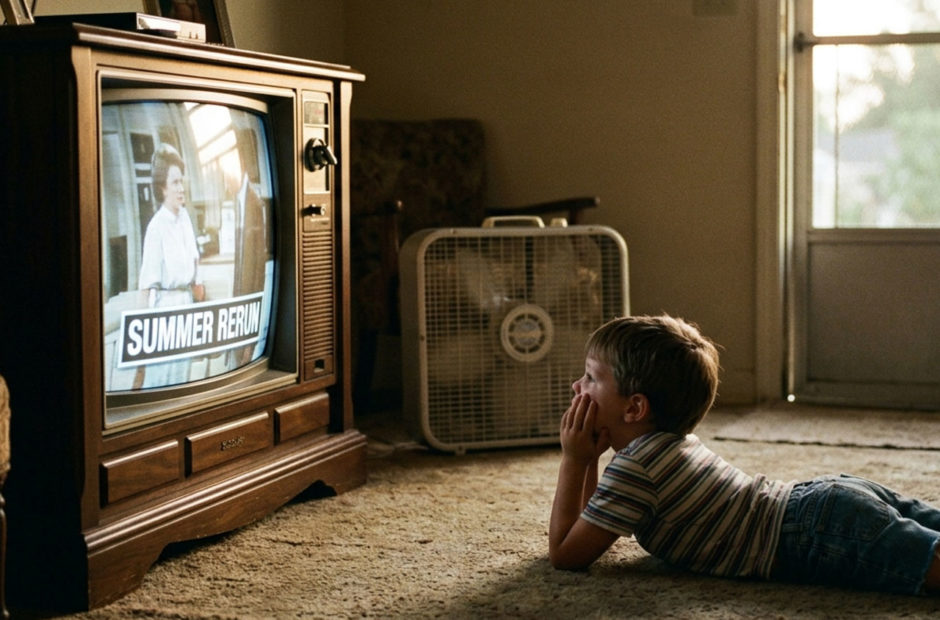
But if you grew up in the era before the DVR, June 1st marked the start of a very specific, three-month-long phenomenon: the summer rerun season. From Memorial Day to Labor Day, the broadcast networks (ABC, CBS, and NBC) essentially turned off the lights on new content. If you missed an episode of your favorite sitcom in October, you had exactly one chance to catch up, and that was when it repeated in July.
Why did the entire television industry simply stop trying for a third of the year? As is usually the case in television history, the answer is a combination of math, money, and the weather.
The September-to-May Mindset
To understand the rerun, you have to understand the traditional broadcast calendar. Historically, the television season was designed to align with the school year and the fall harvest. New cars came out in September, and new TV shows came out right alongside them.
This 39-week window (September through May) is where networks made their money. This is when viewership was at its peak because people were indoors, nights were longer, and school kept families on a predictable routine. Networks focused all their creative energy and massive budgets on producing 22 to 26 episodes to fill this crucial window.
There was zero incentive to produce content for June, July, and August. In the era before central air conditioning became common, American families were largely outside in the evenings. They were on vacation, they were at the drive-in, or they were sitting on the porch. The available audience plummeted, making it impossible for networks to charge top dollar for commercial time.
The Crucial Logic of Nielsen Sweeps
The entire system was locked in place by the financial necessity of “sweeps.” We will dive deeper into this term in a future post, but for now, you just need to know that these were the specific periods in November, February, and May when Nielsen measured audience size to set advertising rates for local stations.
Networks packed these months with their best, newest, most cliffhanger-heavy episodes to ensure ratings were as high as possible. By the time May sweeps wrapped up, writers, actors, and crews were completely exhausted, and the production cycle was over. The summer hiatus was literally a vacation for the people who made television, allowing them to reset and prepare the next full 22-episode order for the fall.
The Economics of Doing Nothing
Airing reruns was also a straightforward way for networks and local stations to maximize their investments. A studio had already paid to produce that episode of Cheers or The Golden Girls. Repeating it in the summer costs them almost nothing, but they could still sell commercials (albeit cheaper ones) during the broadcast.
For the viewer, this deal was acceptable, if boring. There were only three channels. You watched the rerun because the alternative was reading a book or talking to your parents. The system required no effort from the network and provided a low-stakes evening utility for the viewer.
How Cable and Reality TV Broke the Hiatus
The three-network stranglehold on summer finally broke when cable began to establish itself in the 1990s. Cable channels like USA Network, TNT, and eventually HBO realized that the networks were essentially abandoning their audience every June. They saw this “ratings dead zone” as an massive opportunity.
Cable networks started developing “summer series”—shows that premiered when the networks were asleep. By the late 90s, original cable dramas were chipping away significant audience share. The final nail in the coffin, however, arrived in the summer of 2000. That is when CBS premiered a little experiment called Survivor.
Survivor was a massive, unexpected hit that proved summer original content could compete with (and beat) regular-season ratings. Realizing that cheap, reality-based programming could work year-round, networks abandoned the three-month vacation. Today, the concept of a synchronized summer restart is dead, killed by the industry’s need for constant engagement and the absolute collapse of the traditional broadcast calendar.