Learning how to store trading cards properly can make the difference between enjoying a collection for decades and discovering that some of your favorite cards have suffered avoidable damage. Whether you’re collecting Pokémon, Magic: The Gathering, sports cards, or vintage entertainment cards, protecting them requires more than simply finding a box large enough to hold everything.
Trading cards may look sturdy, but they’re surprisingly vulnerable. Corners can be damaged during handling, surfaces can develop scratches, and exposure to moisture can cause cards to warp. Even a collection that’s rarely touched can deteriorate if it’s stored in the wrong environment.
Fortunately, preserving your cards doesn’t require turning your home into a museum or spending a fortune on specialized equipment. A few carefully chosen storage supplies, sensible handling habits, and an appropriate place to keep everything will go a long way toward protecting your collection.
Choosing the Right Trading Card Sleeves and Holders
The first line of defense for most collectible cards is a protective sleeve. It’s also one of the least expensive ways to prevent unnecessary wear.
Before buying sleeves, however, pay attention to their material. Not every clear plastic product is suitable for long-term contact with paper collectibles.
The Library of Congress identifies polyethylene, polypropylene, and polyester as generally suitable materials for preservation enclosures when they’re chemically stable and free of harmful additives.
Polyvinyl chloride, commonly called PVC, is a different matter. PVC can deteriorate over time, potentially releasing substances that damage the materials stored inside it. This is particularly concerning with older plastic pages and sleeves, some of which weren’t manufactured with long-term preservation in mind.
For collectible cards, look for appropriately sized sleeves made from stable, PVC-free materials. Products advertised as acid-free can be useful, but that label alone doesn’t guarantee that every component is suitable for archival storage.
Penny Sleeves and Top Loaders
Soft protective sleeves, commonly called penny sleeves, are a sensible starting point for most collections. They’re inexpensive, easy to use, and provide a barrier against fingerprints, dust, and surface friction.
For cards that need additional protection, a rigid top loader provides resistance against bending and accidental pressure.
The usual approach is to place the card inside a properly sized soft sleeve before inserting it into the top loader. This reduces direct contact between the card and the rigid plastic, helping protect its surface and edges.
Don’t force a card into a holder that’s too small. Standard trading cards and thicker memorabilia cards don’t necessarily require the same size top loader. Cards containing jersey pieces, patches, or other inserts may need holders designed for their additional thickness.
Likewise, a card shouldn’t be so loose inside its holder that it constantly slides around. The goal is protection without unnecessary pressure or movement.
For particularly valuable cards, taking a little extra time to select the correct holder is considerably cheaper than discovering you’ve damaged a corner while trying to squeeze it into the wrong one.
What About Semi-Rigid and Magnetic Holders?
Collectors will also encounter semi-rigid holders, sometimes called Card Savers. These are commonly used when submitting cards to professional grading companies.
For example, Professional Sports Authenticator (PSA) provides specific packaging instructions for cards being submitted for grading, including the use of appropriate protective sleeves and holders.
That doesn’t mean semi-rigid holders are automatically the best choice for permanent storage. Their usefulness in the grading process is partly related to handling and removing cards during examination.
Magnetic holders, often called one-touch holders, are another popular option, particularly for individual cards that collectors want to display or access without dealing with multiple layers of packaging.
These holders come in different thicknesses, so choosing the right size matters. Some are designed to accommodate a card directly, while others can be used with compatible protective sleeves. Follow the holder manufacturer’s instructions rather than assuming every design works the same way.
Magnetic holders can provide excellent physical protection, but they shouldn’t be mistaken for sealed environmental protection. A card inside one can still be affected by excessive heat, moisture, and light.
Are Binders or Storage Boxes Better for Trading Cards?
Collectors have been debating binders versus boxes for decades, but neither method is inherently unsuitable for preserving cards.
Binders have an obvious advantage: you can enjoy looking through your collection without constantly removing individual cards from their protective enclosures. For completed sets, vintage trading card collections, and cards you enjoy browsing, that convenience is difficult to beat.
The important consideration is how the binder supports the cards.
Pages should be made from appropriate storage materials, and their pockets should fit the cards without excessive pressure. Avoid overstuffing pockets with multiple cards, particularly when the pages weren’t designed to accommodate them.
Ring binders require additional care. If the pages shift or the binder becomes overfilled, cards can potentially come into contact with the rings or experience pressure when the binder is closed.
Binders with D-shaped rings can offer advantages in how pages are supported, but ring shape alone doesn’t guarantee that a binder will protect its contents. The quality of the pages, the amount of space available, and how the binder is handled are just as important.
Binders with fixed pages eliminate the possibility of cards contacting metal rings, although they also limit your ability to add or rearrange pages. Side-loading pockets may help reduce the chance of cards slipping out during ordinary handling, but they aren’t automatically superior in every preservation situation.
Whatever binder you choose, don’t pack it so tightly that the pages bow or place pressure on the cards. Store it in the orientation recommended by its manufacturer, with enough support to prevent bending or distortion.
When Storage Boxes Make More Sense
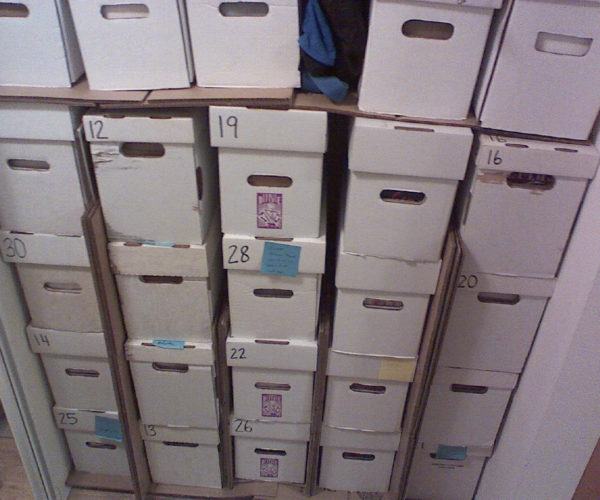
Boxes are often more practical for larger collections, especially when you’re storing hundreds or thousands of cards that don’t need to be displayed.
Dedicated trading card boxes are available in cardboard and plastic, with different sizes designed to accommodate loose cards, sleeved cards, top loaders, and graded holders.
For long-term preservation, pay attention to the materials. Acid-free, lignin-free archival board can be preferable for valuable paper collectibles, while stable plastic containers may also be appropriate.
The cards should fit comfortably without being crushed together. If you’re storing them upright, use appropriate dividers or supports to prevent them from leaning excessively. A box that’s only partially filled can allow cards to shift and slump, potentially placing pressure on corners and edges.
On the other hand, stuffing a box beyond its intended capacity can make removing individual cards difficult and increase the risk of damage.
Boxes also provide a useful barrier against dust and light, particularly when they have properly fitting lids.
One thing they don’t provide, however, is protection against every environmental problem. A sealed plastic container in a damp basement isn’t necessarily a safe place for valuable trading cards.
Temperature, Humidity, and Sunlight Can Damage Your Cards
Protective sleeves and rigid holders are important, but where you store your collection may matter even more over the long term.
Most trading cards are made primarily from paperboard, often combined with printed coatings, foil layers, or other materials. Paper absorbs and releases moisture as the surrounding humidity changes, which can cause expansion, contraction, and distortion.
Excessive humidity can contribute to warping, sticking, and mold growth. Extremely dry conditions and repeated humidity fluctuations can also create problems, particularly when different layers of a card respond differently to changes in moisture.
The Canadian Conservation Institute emphasizes the importance of controlling temperature, relative humidity, and light exposure when preserving paper-based collections.
For most collectors, that means keeping cards in a reasonably cool, dry, climate-controlled area of the home.
Basements, garages, and attics can be problematic because they’re often subject to greater temperature fluctuations, moisture problems, or both. Even if a space feels comfortable when you visit it, conditions may change considerably throughout the year.
There’s also no reason to assume that lower humidity is always better. Paper-based collectibles benefit from stable conditions, not from having every trace of moisture removed from the surrounding air.
Collectors with particularly valuable collections or homes prone to humidity problems may find a digital hygrometer useful for monitoring conditions. Electronic dry cabinets and other humidity-control equipment can provide additional control, but they’re generally unnecessary for ordinary collections stored in a suitable indoor environment.
Silica gel packets are sometimes suggested as an inexpensive alternative. While silica gel can absorb moisture, simply dropping a packet into a card box doesn’t guarantee that the humidity will remain at an appropriate level. Its effectiveness depends on the quantity used, the container, the surrounding conditions, and whether the desiccant has become saturated.
For most collections, choosing a good storage location is more useful than trying to manage humidity with random packets of desiccant.
Be Careful When Displaying Valuable Cards
Sunlight is another concern, particularly for collectors who enjoy displaying their favorite cards. Prolonged exposure to light can cause printed colors to fade, while the heat from direct sunlight can create additional problems for paper-based collectibles. Magnetic holders, framed displays, and graded slabs don’t automatically protect against these effects. Although some holders advertise ultraviolet protection, its effectiveness varies by product, and UV-filtering materials don’t necessarily eliminate the risks associated with prolonged exposure to visible light.
If you’re displaying valuable cards, keep them away from direct sunlight and other intense light sources. Rotating the cards on display can help limit how much continuous exposure any individual card receives. For particularly valuable or irreplaceable cards, you might even consider displaying reproductions while keeping the originals safely stored away from light.
How to Handle Valuable Trading Cards Without Damaging Them
Some of the most frustrating damage to collectible cards happens during ordinary handling. A card might survive decades in storage, only to develop a damaged corner when someone forces it into an undersized sleeve or acquires surface scratches from repeatedly being removed from a rigid holder. Before handling valuable cards, wash and thoroughly dry your hands to reduce the transfer of oils and dirt. Handle cards by their edges whenever practical, avoid touching the printed surfaces unnecessarily, and work on a clean, dry surface with enough room to move everything safely.
Take particular care when inserting cards into protective sleeves and holders. Make sure the sleeve opening is clear and that the card fits comfortably without catching on the plastic. The same applies when placing sleeved cards into top loaders or other rigid holders. If something doesn’t slide into place easily, stop and check the sizing rather than applying more pressure. Every time you remove a valuable card from its protective enclosure, you introduce another opportunity for accidental damage. If you’re simply admiring a card or showing it to someone, there’s usually no reason to remove it from its sleeve or holder.
Credit: iStock/David Shao
Do Graded Cards Need Special Storage?
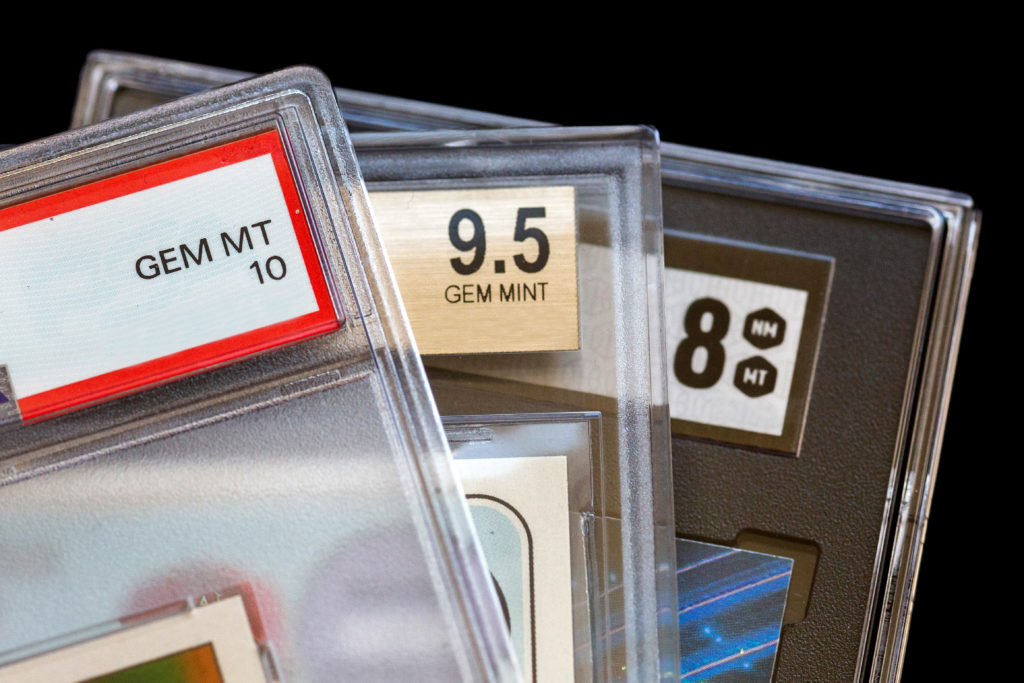
Professionally graded cards are sealed inside rigid plastic holders, commonly called slabs, which protect them from ordinary handling while displaying their grading information. However, these holders aren’t indestructible. They can be scratched or cracked, and they shouldn’t be assumed to be airtight, waterproof, or completely resistant to ultraviolet light. Graded cards still need to be kept away from excessive heat, moisture, and direct sunlight.
For larger collections, dedicated graded-card storage boxes can help keep slabs organized and protected from accidental impacts. Whatever container you choose, make sure the cards have adequate support and aren’t subjected to excessive pressure from stacking. Protective outer sleeves are also worth considering, particularly for valuable cards, since they can help prevent scratches to the slabs themselves.
Protecting Trading Cards During Long-Term Storage
If you plan to put part of your collection away for several years, take a little time to prepare it properly. Make sure the cards are clean and completely dry before placing them in protective sleeves or containers, and avoid using rubber bands to hold stacks together. Rubber bands can deteriorate over time, leaving residue and placing pressure on the edges of cards. Adhesive tape, paper clips, and other ordinary office supplies should also be kept away from direct contact with collectible cards. The Library of Congress cautions against these materials when preserving photographic collections because of the physical and chemical damage they can cause.
Storage boxes should be placed on sturdy shelving rather than directly on the floor, particularly in areas where plumbing leaks or water intrusion are possible. However, avoid stacking heavy containers so high that retrieving them becomes difficult or dangerous. It’s also worth checking your collection periodically for signs of moisture, pests, unusual odors, or changes in storage conditions. You don’t need to remove every card from its sleeve during these inspections. Checking the containers and looking for obvious warning signs is generally sufficient.
What If Your Cards Are Already Curling or Warping?
Some foil cards are particularly prone to curling because their layered materials respond differently to changes in humidity. A curved card doesn’t necessarily mean it has been exposed to liquids, but it’s worth checking the conditions where the collection is stored. If humidity has been unusually high or low, moving the cards to a more stable environment may help prevent further distortion.
Resist the temptation to straighten valuable cards using heat, steam, heavy weights, or deliberate humidity manipulation. These methods can damage printed surfaces, coatings, and the card itself. Cards exposed to actual water require additional care, particularly because sealing damp cards inside sleeves or containers can encourage mold growth. If a valuable card has suffered significant damage, professional conservation advice may be preferable to attempting a home restoration. Unfortunately, some damage cannot be reversed, and preventing further deterioration may be the best available option.
Protecting Your Collection for the Years Ahead
One of the enjoyable things about trading card collecting is how easily a collection can grow. A few packs purchased on a whim can eventually become hundreds of cards, complete sets, or individual collectibles that hold considerable sentimental or financial value.
And while it’s tempting to focus on increasingly elaborate holders and expensive storage equipment, protecting those cards usually comes down to fairly ordinary decisions.
Use materials that won’t harm the cards, give them enough physical support to prevent bending and pressure damage, and keep them somewhere that isn’t exposed to excessive moisture, heat, or sunlight.
Perhaps most importantly, remember that a collection doesn’t need to be particularly valuable to deserve proper care. A childhood Pokémon card, a favorite baseball player’s rookie card, or a trading card picked up at a convention may mean more to its owner than something worth considerably more money.
Years from now, when you pull those cards out to enjoy them again, you’ll be glad you took the time to protect them.