1980s cartoons were an unforgettable staple of childhood, but they were also the product of an unprecedented commercial experiment. If you were a child sitting in front of a television set between 1983 and 1989, your weekday afternoon ritual was an adrenaline-fueled parade of neon lasers, muscle-bound warriors, transforming sports cars, and robotic beasts. From the moment the school bus dropped you off until dinner hit the table, independent broadcast stations treated you to He-Man and the Masters of the Universe, The Transformers, G.I. Joe: A Real American Hero, ThunderCats, and M.A.S.K.
To an eight-year-old, this was a golden age of epic storytelling. To parents, child advocacy groups, and cultural critics, it looked like an aggressive, unregulated psychological assault on young minds. For the first time in the history of broadcasting, the boundary separating a commercial break from the program itself had completely dissolved.
The shows children loved were not original television series that happened to land toy merchandising deals. They were twenty-two-minute commercials conceived inside corporate boardrooms specifically to sell plastic figurines. How the toy industry conquered children’s television is a tale of free-market deregulation, broadcast syndication loopholes, and a radical business inversion that transformed morning cartoons into a multi-billion-dollar marketing pipeline.
The Protective Era: The 1970s Firewall
To appreciate how revolutionary the 1980s toy boom truly was, you have to understand the rigid regulatory straitjacket that governed children’s broadcasting throughout the 1970s.
Under heavy pressure from grassroots advocacy organizations like Action for Children’s Television (ACT), founded by Peggy Charren in 1968, the Federal Communications Commission established strict ground rules for kids’ programming. The FCC determined that young children lacked the cognitive development to distinguish between narrative storytelling and salesmanship.
To protect young audiences, federal regulators erected a high wall between entertainment and advertising:
- Commercial Time Caps: Stations were strictly limited in how many minutes of commercials could air per hour during children’s programming, typically capped at 9.5 to 12 minutes.
- The Host-Selling Ban: Commercials airing during a show could not feature the show’s characters or voice actors. Captain Kangaroo could not pause his show to pitch a box of cereal, and Fred Flintstone could not step out of character to sell vitamins during The Flintstones.
- Program-Length Commercial Prohibitions: The FCC explicitly barred networks from airing shows that were created primarily as advertisements for existing consumer products. If a toy manufacturer pitched a cartoon based on an existing action figure line, network censors immediately rejected it as an illegal program-length commercial.
Because of these strict guidelines, the 1970s was an era dominated by harmless, repetitive Saturday morning staples from studios like Hanna-Barbera and Filmation. If a show featured an action figure deal, like Super Friends, the toy line was a licensed afterthought that arrived long after the animated series was established on the air.
The Toaster with Pictures: Mark Fowler’s Revolution
The regulatory wall did not crumble gradually. It was demolished by federal policy shifts in the early 1980s.
In 1981, President Ronald Reagan appointed Mark S. Fowler as Chairman of the FCC. Fowler arrived with a fiercely libertarian, free-market philosophy. He famously declared that television was not a sacred public trust that required moral government stewardship; it was merely “a toaster with pictures.”
Fowler argued that the public interest was best determined by the open marketplace. If consumers and their children wanted to watch toy-driven programming, the federal government had no business interfering. Between 1983 and 1984, the FCC systematically dismantled children’s television regulations. The Commission abolished limits on commercial minutes per hour and officially eliminated the restrictions governing program-length commercials.
Virtually overnight, the legal definition of what constituted a television show was rewritten. The corporate gates were thrown wide open.
Mattel, Filmation, and the Eternia Blueprint
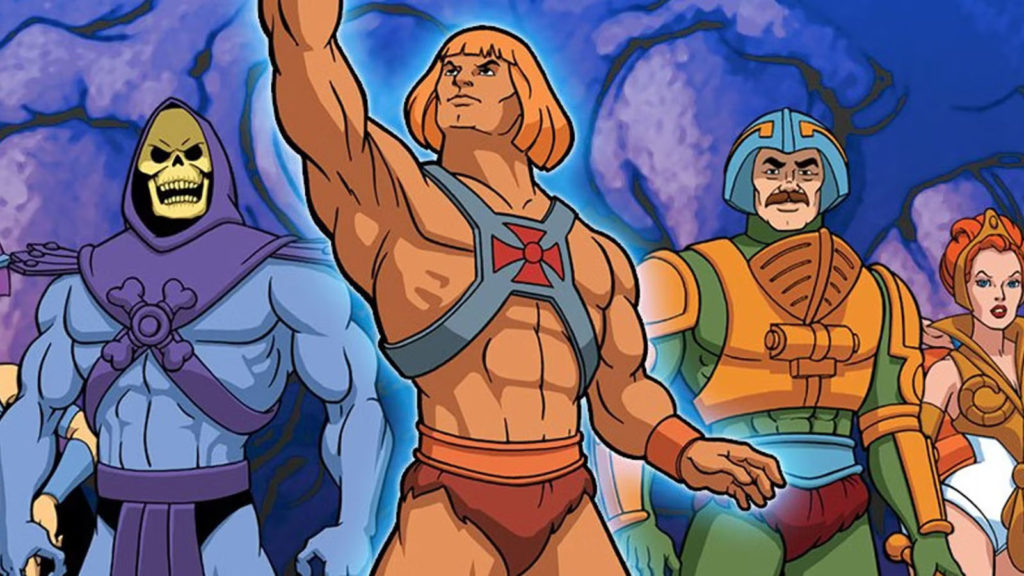
Toy manufacturers did not wait for the dust to settle. Mattel had launched its Masters of the Universe fantasy action figure line in 1982. The toys sold decently through traditional packaging, comic books, and 30-second commercial spots, but Mattel wanted a nationwide promotional blitz that could compete with Kenner’s blockbuster Star Wars dominance.
Mattel approached the major broadcast networks (ABC, CBS, and NBC) to pitch a weekly animated series based on He-Man and Skeletor. The network executives, still squeamish about regulatory scrutiny and standards-and-practices blowback, turned Mattel down.
Rather than walking away, Mattel teamed up with Lou Scheimer’s Filmation animation studio and engineered a bold bypass maneuver: first-run barter syndication.
Instead of relying on the Big Three networks, Filmation and Mattel produced a massive 65-episode order of He-Man and the Masters of the Universe and offered it directly to independent local stations for the fall of 1983. Under the barter deal, local stations received the high-budget animated series for free in exchange for giving Mattel and Filmation a share of the commercial airtime to sell to national sponsors.
The gamble paid off on a scale the toy industry had never seen. By airing Monday through Friday at 4:00 PM, He-Man caught millions of children the second they walked through the front door from school. The show was not just entertainment; it was a daily tutorial teaching kids the names of every vehicle, accessory, villain, and playset they needed to add to their Christmas wish lists.
In 1983, Mattel’s Masters of the Universe toy line generated roughly $80 million in sales. By 1985, fueled by daily animated broadcasts, sales skyrocketed to an astonishing $400 million, turning Prince Adam into a corporate goldmine.
The Hasbro and Sunbow Counter-Offensive
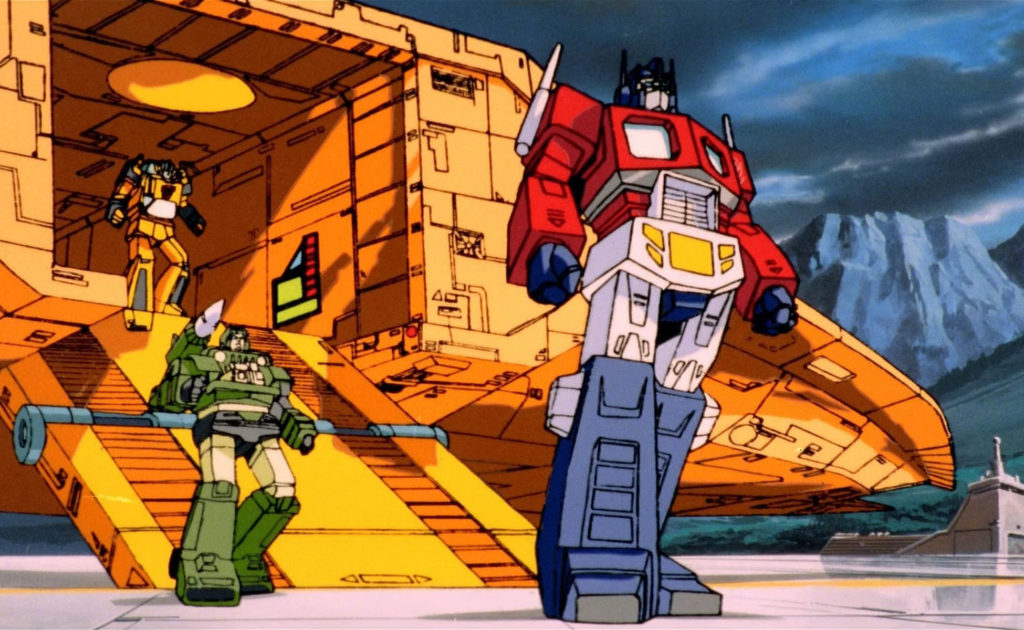
Watching Mattel conquer the toy aisles, rival toy maker Hasbro immediately followed suit, partnering with Marvel Productions and Sunbow Productions to launch their own daily animated syndication offensive.
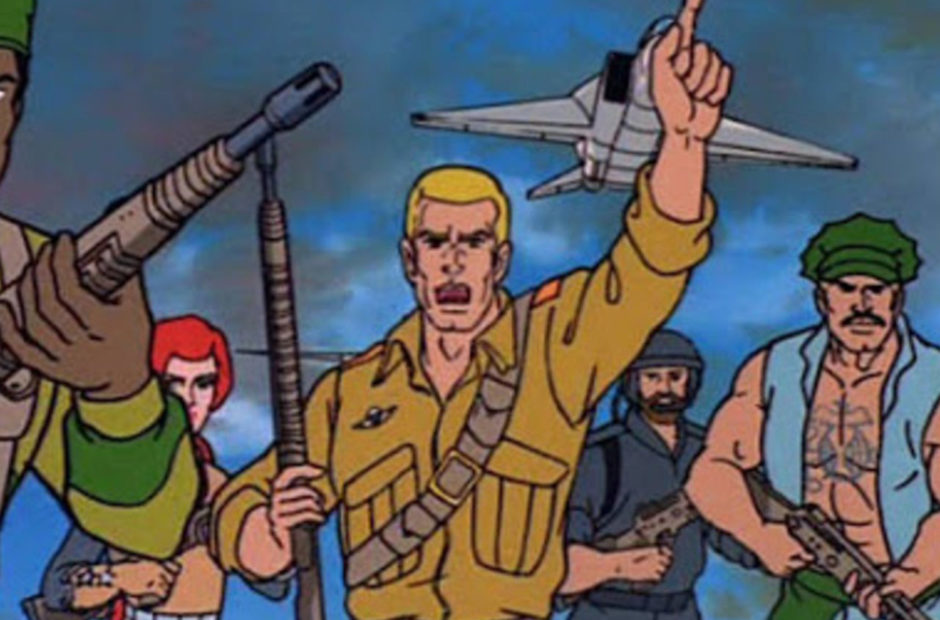
In 1983, Hasbro launched the revitalized 3.75-inch G.I. Joe: A Real American Hero toy line, accompanied by a lavish multi-part animated miniseries. A year later, in the fall of 1984, Hasbro unleashed The Transformers, importing Japanese transforming robot toys and breathing life into them with compelling animated characterization: Optimus Prime, Megatron, Bumblebee, and Starscream.
The animation studios developed a brilliant creative rhythm with corporate marketing teams:
- Character Roster Cycles: When Hasbro or Mattel designed a new wave of action figures for the holiday shopping season, screenwriters received a mandatory design sheet containing the new characters. The writers were tasked with scripting episodes where the new vehicles and figures were introduced as unstoppable heroes or villains, ensuring immediate retail demand.
- The Moral Compromise: To deflect fierce criticism from parenting groups who accused the shows of inciting playground violence, animation studios tacked on an educational public service announcement or moral lesson during the closing credits. Segments like G.I. Joe’s famous “Now you know, and knowing is half the battle” were calculated diplomatic shields designed to give station managers cover against broadcast license challenges.
The Backlash and the Children’s Television Act
By the late 1980s, the toy-driven cartoon model reached a saturation point. Nearly every children’s animated program on television, from Care Bears and My Little Pony to Rainbow Brite and C.O.P.S., was an extension of a consumer product line.
The brazen commercialization finally triggered an overwhelming political counter-reaction. Peggy Charren and Action for Children’s Television lobbied Congress relentlessly, presenting hours of broadcast footage demonstrating that children’s television had become a twenty-four-hour sales catalog.
In October 1990, Congress passed the Children’s Television Act (CTA) into law, allowing it to become law without President George H.W. Bush’s signature. The landmark act forced the FCC to reverse its deregulatory stance:
- Commercial time during children’s programming was once again strictly capped at 10.5 minutes per hour on weekends and 12 minutes per hour on weekdays.
- The law firmly outlawed program-length commercials, barring stations from airing commercials for toys or products associated with the specific cartoon currently on the air.
- Broadcasters were legally mandated to air a minimum threshold of programming dedicated specifically to serving the educational and informational needs of children as an explicit requirement for keeping their broadcast licenses.
The Shift to Creators
The Children’s Television Act of 1990, combined with the saturation of formulaic toy cartoons, effectively ended the era of the half-hour action figure infomercial. In its place, the early 1990s witnessed the rise of creator-driven, cinematic animation: Steven Spielberg’s Tiny Toon Adventures, Bruce Timm and Eric Radomski’s Batman: The Animated Series, and the early Nicktoons lineup (Rugrats, Doug, The Ren & Stimpy Show).
Yet, the 1980s experiment left an indelible mark on modern entertainment. It proved to Hollywood that toys, animation, and transmedia storytelling could create self-sustaining multi-generational pop culture franchises. The plastic toys that once filled children’s bedrooms have become the foundation of billion-dollar live-action cinematic universes today, thanks to a four-year window when television deregulators let the toy aisles write the script.