There is a definitive lifecycle for almost every successful television show. There are the early years of finding a voice, the golden era of peak popularity, and then, inevitably, the decline. When a show begins to run out of ideas, the writers start resorting to absurd gimmicks to keep the audience’s attention.
In the television industry—and now in broader pop culture—the exact moment a show abandons its core premise and turns to desperate stunts is known as “jumping the shark.” But the phrase isn’t just a clever metaphor. It refers to a very real, incredibly bizarre moment in broadcast television history.
The Happy Days Stunt
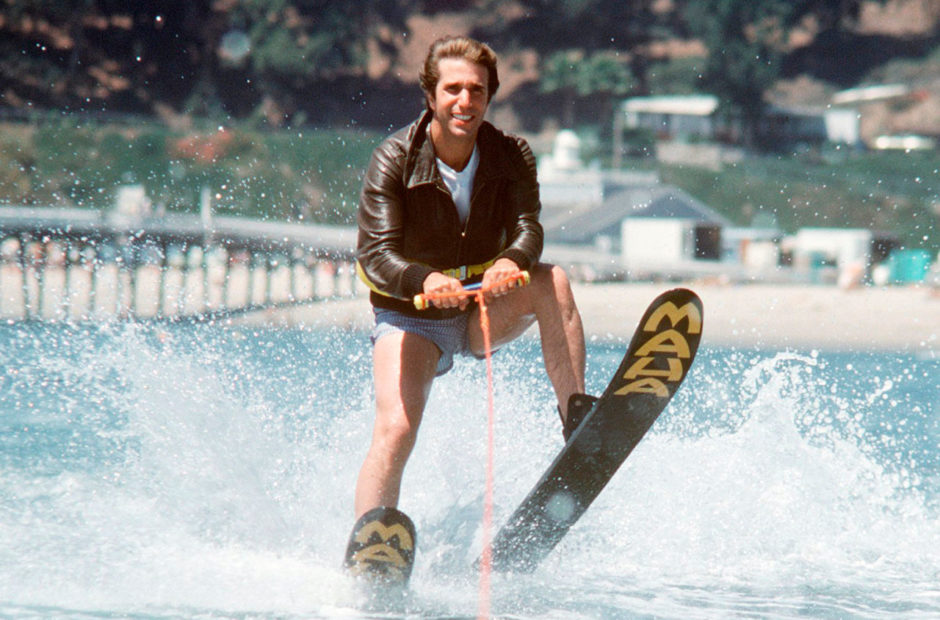
To understand the origin of the phrase, you have to go back to September 20, 1977. ABC’s Happy Days was a massive, undisputed juggernaut of American television. To kick off its fifth season, the network sent the cast to Los Angeles for a three-part sweeps month special.
The writers needed a massive cliffhanger to keep viewers hooked. Their solution was to have the show’s breakout star, Arthur “The Fonz” Fonzarelli (played by Henry Winkler), accept a bet to jump over a confined shark while water skiing. Because the character’s entire identity was tied to his toughness, Winkler performed the stunt while wearing his trademark leather motorcycle jacket over his swim trunks.
The image of Fonzie skiing over a shark in a leather jacket was completely absurd, fundamentally shattering the grounded, nostalgic 1950s Americana tone the show was originally built upon.
Birth of a Catchphrase
While the episode was widely watched, it took another decade for the moment to get a name. In 1985, a college student named Jon Hein was sitting around with his friends at the University of Michigan, debating the exact moment their favorite TV shows started to go downhill. When someone brought up the Happy Days water skiing stunt, Hein realized it was the perfect shorthand for creative decline.
In 1997, Hein registered the domain name JumpTheShark.com. The website featured a massive database of television shows, allowing users to vote on the exact moment a series lost its magic. The site exploded in popularity, and the phrase quickly bled out of internet chat rooms and into the mainstream Hollywood lexicon. (Hein eventually sold the website to TV Guide in 2006 for over $1 million).
Classic Shark Jumps
Once you know what jumping the shark looks like, you start seeing it everywhere in classic television. It almost always involves adding a new, unnecessary character or executing a plot twist that breaks the show’s own rules.
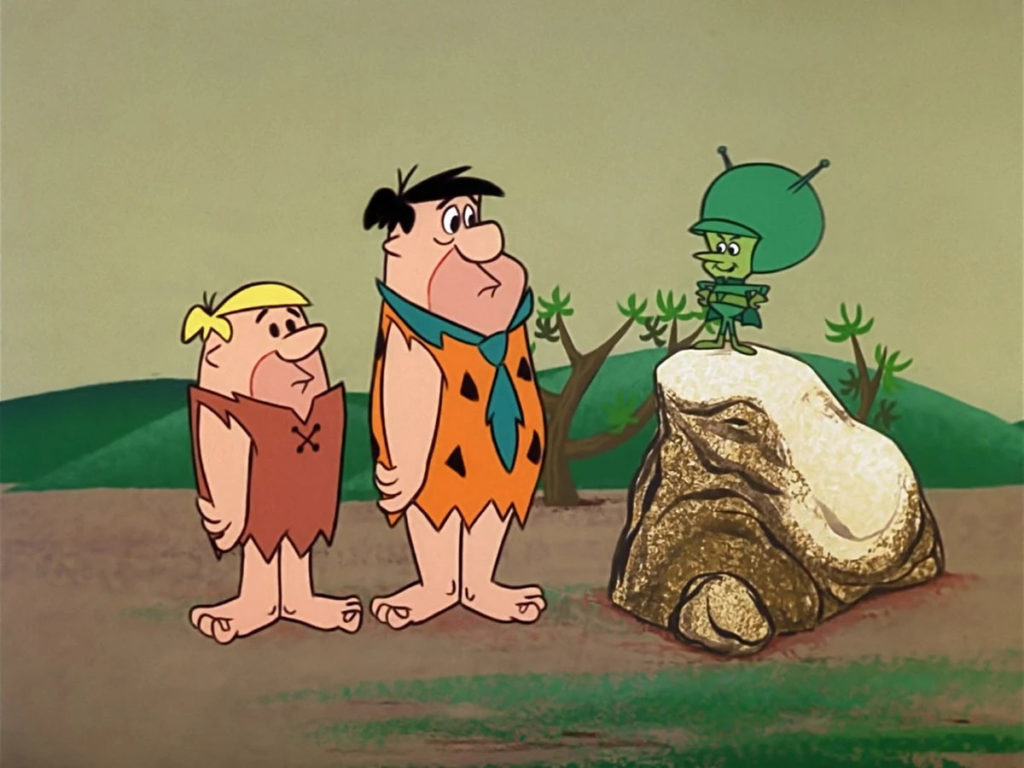
The Flintstones jumped the shark when they introduced The Great Gazoo, a green alien who floated around granting wishes in a show ostensibly about cavemen. The primetime soap opera Dynasty famously jumped the shark in its season six finale when the entire cast was randomly held hostage by heavily armed Moldavian revolutionaries at a wedding. Even a beloved show like The Office is frequently accused of jumping the shark when Jim and Pam finally got married, effectively ending the central romantic tension that drove the early seasons.
Growing the Beard
Interestingly, the internet eventually coined an opposite term to describe the exact moment a struggling television show finally finds its footing and becomes great: “Growing the beard.”
This phrase is a direct reference to Star Trek: The Next Generation. The show had a notoriously clunky and poorly received first season. However, at the start of season two, Commander William Riker (played by Jonathan Frakes) returned from hiatus with a thick beard. The show’s writing drastically improved from that point forward, inextricably linking Riker’s facial hair with a massive leap in creative quality.
The Classic TV History Series
Catch up on our complete guide to the bizarre rules, forgotten tech, and scheduling quirks that defined the broadcast era of television.
- What Is a Clip Show?
- The History of the TV Remote: Why Do We Call It a “Clicker”?
- How Much Does a TV Pilot Actually Cost?
- What Was the Friday Night Death Slot?
- What Is a Backdoor Pilot?
- Why Did Old Sitcoms Use Laugh Tracks?
- What Was a Sweeps Episode?
- What Was TGIF? ABC’s Friday Night Sitcom Block Explained
- What Happened to Made-for-TV Movies?
- What Is a Bottle Episode?
The Legacy of the Shark
Today, the television landscape looks entirely different. With streaming platforms favoring shorter, 8-to-10 episode seasons, showrunners usually have the luxury of a planned, definitive ending. But even with prestige budgets and finite stories, the threat of overstaying a welcome remains.
While we might not see a character literally water skiing over a marine predator anytime soon, the spirit of jumping the shark lives on anytime a show introduces a convoluted multiverse, brings a character back from the dead, or abandons what made it great in a desperate plea for attention. Thanks to Henry Winkler and a pair of wooden skis, we will always have the perfect shorthand to describe it.