Batman may spend most of his time fighting criminals in Gotham City, but some threats operate on a much larger stage. Spyral is one of DC Comics’ most secretive intelligence organizations, using advanced technology, undercover agents, and elaborate deception to operate in a world where superheroes themselves can become targets of espionage.
The organization became especially important when Dick Grayson left his Nightwing identity behind and entered the world of international espionage as Agent 37. His time inside Spyral revealed an organization whose goals, leadership, and loyalties were often deliberately difficult to understand.
What Is Spyral?
Spyral is a covert intelligence organization operating within the DC Universe. Rather than functioning like a conventional police force or superhero team, it relies on spies, secret identities, surveillance, infiltration, and specialized technology.
The organization has operated internationally and has repeatedly involved itself in conflicts surrounding superheroes, criminal organizations, and other intelligence agencies.
Spyral’s defining characteristic is secrecy. Its agents frequently work under false identities, information is tightly controlled, and even people working for the organization may not understand the true purpose of their assignments.
When Did Spyral First Appear?
Spyral was introduced during Grant Morrison’s Batman Incorporated era, first appearing in Batman Incorporated #4 in 2011.
Those early stories connected the organization to Kathy Kane, the original Batwoman, and established a history reaching much farther back than Dick Grayson’s later involvement.
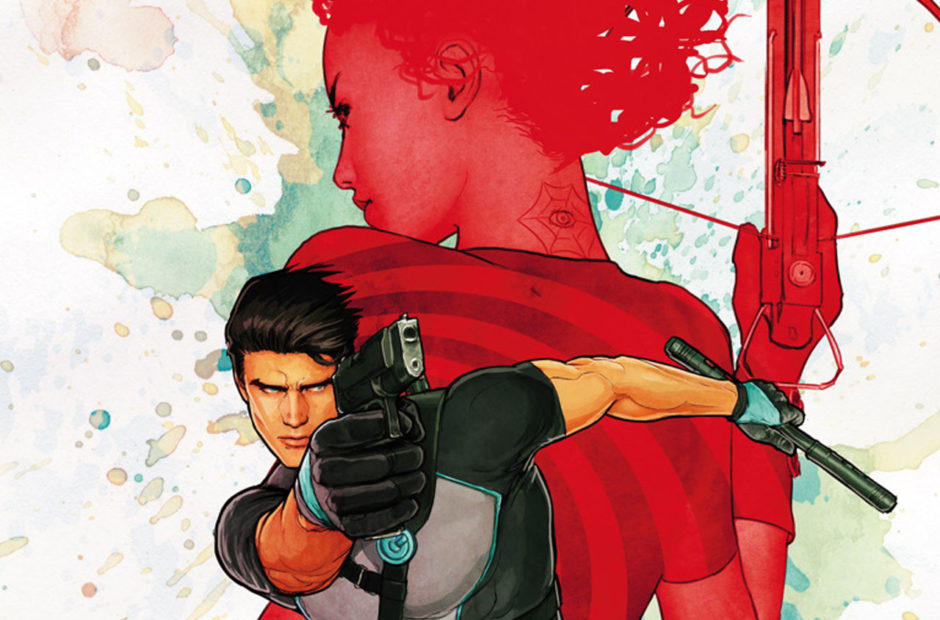
The concept expanded dramatically beginning in 2014 with the launch of Grayson, written initially by Tim Seeley and Tom King with art by Mikel Janín. The series transformed Spyral from a mysterious element of Batman mythology into the center of an ongoing espionage story.
Why Did Dick Grayson Join Spyral?
Dick Grayson’s path to Spyral began after the events of Forever Evil, when his secret identity as Nightwing was publicly exposed and the world came to believe that he had died.
Rather than immediately returning to his former life, Dick accepted a covert assignment from Batman. He infiltrated Spyral while secretly working against the organization from within.
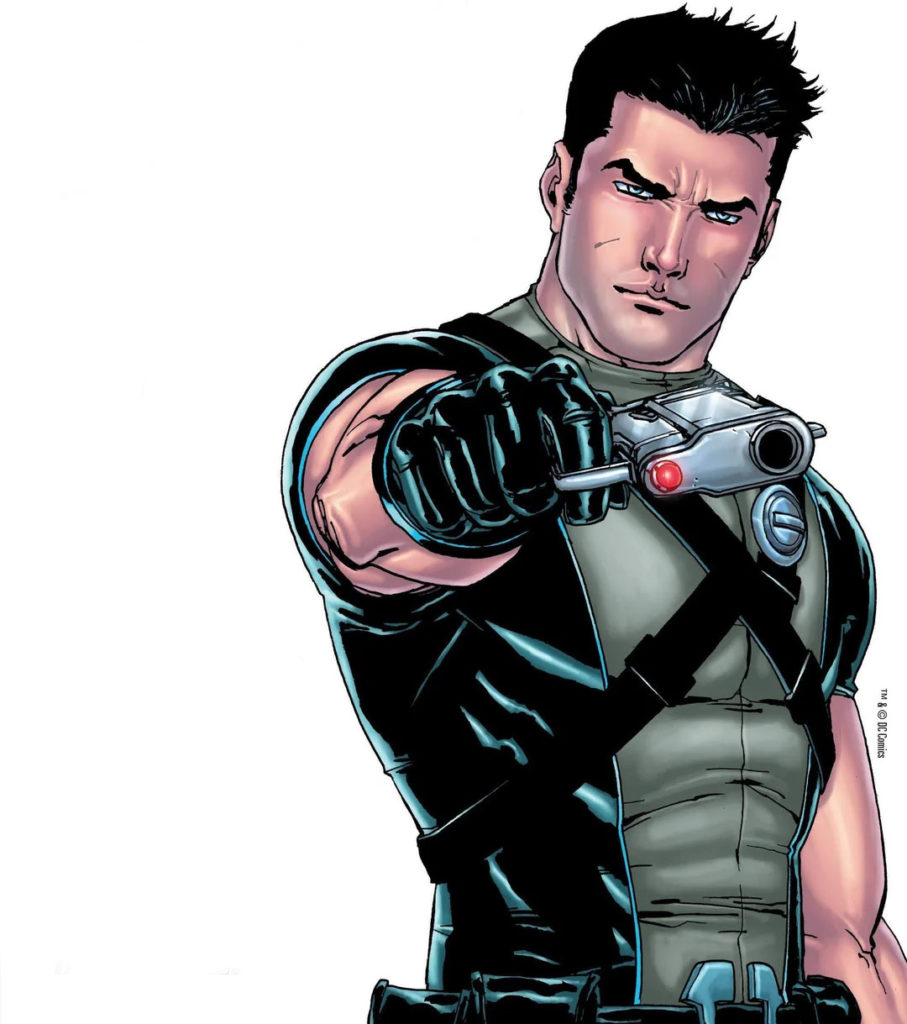
Inside Spyral, Dick became known as Agent 37.
The assignment marked a dramatic change for a character who had spent most of his career as Robin or Nightwing. Instead of wearing a costume and openly fighting criminals, Dick entered a world where lying, manipulating information, and maintaining multiple identities were fundamental parts of the job.
Who Is Helena Bertinelli?
Helena Bertinelli became one of the most important figures in Dick Grayson’s time with Spyral.
Better known in many DC stories as the Huntress, Helena worked with Spyral and became Dick’s partner during his missions as Agent 37. Their relationship was built around mutual respect, conflicting loyalties, and the constant uncertainty that comes with working inside an intelligence organization.
Helena eventually rose to a leadership position within Spyral, operating under the title of Matron.
Her role helped establish that Spyral was not simply a collection of faceless agents. Individual operatives could have their own priorities and moral codes even while serving an organization whose overall motives were frequently questionable.
Who Is Kathy Kane?
Spyral’s history is also closely connected to Kathy Kane, the original Batwoman.
Modern DC stories revealed that Kathy had secretly been involved with Spyral during her earlier career. Her relationship with Batman was intertwined with an intelligence mission that required her to learn more about the mysterious vigilante operating in Gotham.
Kathy later resurfaced as Agent Zero, revealing that her connection to Spyral had continued long after Batman believed her story had ended.
The revelation linked Spyral to some of the oldest elements of Batman history while turning what had once appeared to be a straightforward superhero relationship into part of a much larger espionage operation.
Who Was Mr. Minos?
When Dick Grayson entered Spyral, one of the organization’s most prominent leaders was the mysterious Mr. Minos.
Minos presented himself as Spyral’s director and oversaw many of Dick and Helena’s assignments. Like nearly everything surrounding the organization, however, his position was more complicated than it initially appeared.
His secrecy and willingness to manipulate his agents made him an ideal representation of Spyral itself. Dick could rarely be certain whether the information Minos provided was accurate, incomplete, or deliberately misleading.
What Is Spyral’s Hypnos Technology?
One of Spyral’s most distinctive tools is its Hypnos technology.
Hypnos implants allow agents to manipulate perception and conceal information about themselves. The technology can make it difficult for witnesses to identify an agent correctly and provides Spyral with an enormous advantage when conducting covert operations.
Dick Grayson received Hypnos technology while serving as Agent 37, helping him operate internationally despite the fact that his identity had previously been revealed to the public.
Like much of Spyral’s technology, Hypnos also raises uncomfortable questions about privacy and control. A device capable of altering how people perceive or remember someone is useful for a spy, but it also provides enormous potential for abuse.
What Is St. Hadrian’s?
Spyral has also operated through St. Hadrian’s, an exclusive girls’ boarding school that concealed a much more unusual purpose.
Behind its respectable appearance, St. Hadrian’s functioned as a training ground connected to Spyral’s espionage activities. The school reflects one of the organization’s favorite methods: hiding extraordinary operations behind something that appears completely ordinary.
St. Hadrian’s also reinforced Spyral’s long history, demonstrating that the organization had developed infrastructure and methods well before Dick Grayson entered its world.
How Is Spyral Different From A.R.G.U.S. and Checkmate?
DC Comics contains several intelligence and security organizations, which can make their roles difficult to distinguish.
A.R.G.U.S. is generally associated with government-backed responses to superhuman threats and has frequently been connected to figures such as Steve Trevor and Amanda Waller.
Checkmate operates more explicitly as an intelligence organization, using a chess-inspired hierarchy and combining espionage with operations involving metahumans.
Spyral leans most heavily into the world of classic secret agents. Its stories emphasize hidden identities, infiltration, surveillance, deception, and agents who may be spying on one another while pursuing the same mission.
The organizations occasionally occupy similar territory, but their methods and cultures distinguish them from one another.
Spyral and the Superhero Community
One of the most interesting aspects of Spyral is that superheroes are not automatically treated as allies.
The organization has gathered intelligence about superhumans and attempted to uncover information that heroes would rather keep secret. That makes Spyral dangerous even when its immediate goals appear beneficial.
Batman understands the value of intelligence better than almost anyone, which makes an organization capable of secretly collecting information about superheroes particularly concerning to him.
Dick Grayson’s assignment therefore involved more than simply discovering whether Spyral was “good” or “evil.” He needed to understand what the organization knew, what it intended to do with that information, and who was really controlling it.
What Happened to Spyral?
Spyral’s status has changed several times as leadership shifted and different agents moved through the organization.
Dick eventually returned to his life as Nightwing, while Helena Bertinelli continued to have connections to the espionage world. Spyral later appeared alongside other DC intelligence organizations and became caught in conflicts involving the mysterious organization Leviathan.
Like many secret agencies in comics, Spyral is particularly difficult to eliminate permanently. Its decentralized structure, hidden resources, and constantly shifting personnel make it easy for the organization to disappear from view and potentially return when a story requires it.
Why Spyral Matters
Spyral introduced a different kind of threat into Batman’s corner of the DC Universe. Instead of another criminal empire or masked villain, it represented the danger of information itself.
An organization that knows who heroes are, understands their weaknesses, and can manipulate what people see or remember does not necessarily need an army of supervillains to be dangerous.
Spyral also gave Dick Grayson one of the most unusual chapters of his long history. His transformation from Nightwing into Agent 37 demonstrated that the skills he learned from Batman could work just as effectively in international espionage as they did on the rooftops of Gotham.
FAQs
What is Spyral in DC Comics?
Spyral is a secret international intelligence organization that uses espionage, surveillance, infiltration, and advanced technology.
Was Dick Grayson a member of Spyral?
Yes. Dick infiltrated the organization under the identity Agent 37 while secretly working on Batman’s behalf.
Is Helena Bertinelli part of Spyral?
Yes. Helena worked as a Spyral agent and became one of the organization’s leading figures under the title Matron.
Is Kathy Kane connected to Spyral?
Yes. Modern DC continuity revealed that the original Batwoman had a long history with Spyral and later operated as Agent Zero.
Is Spyral part of the Batman universe?
Spyral originated through Batman-related stories and is closely connected to characters including Batman, Dick Grayson, Helena Bertinelli, and Kathy Kane, although its operations extend throughout the wider DC Universe.
Conclusion
Spyral occupies a unique place in DC Comics by bringing international espionage into a world normally dominated by superheroes and supervillains. Its agents rely on secrecy and information as much as physical force, creating threats that cannot always be solved with a direct fight.
For Dick Grayson, Spyral also provided the setting for a major reinvention. His time as Agent 37 proved that the former Robin and Nightwing could step completely outside the traditional superhero role while remaining one of DC’s most capable operatives.