Few childhood games are as recognizable as Duck, Duck, Goose. For generations, children have gathered in circles waiting to hear one simple word that turns a quiet walk into a sprint around the group.
The game requires no equipment, can be played almost anywhere, and is simple enough for preschoolers while still entertaining older children. Whether you remember playing it in school, at birthday parties, or during summer camp, Duck, Duck, Goose remains one of the easiest games to organize.
If you grew up in Minnesota, however, you may know it by another name: Duck, Duck, Gray Duck. We’ll explain that famous regional variation later in this guide.
What Is Duck, Duck, Goose?
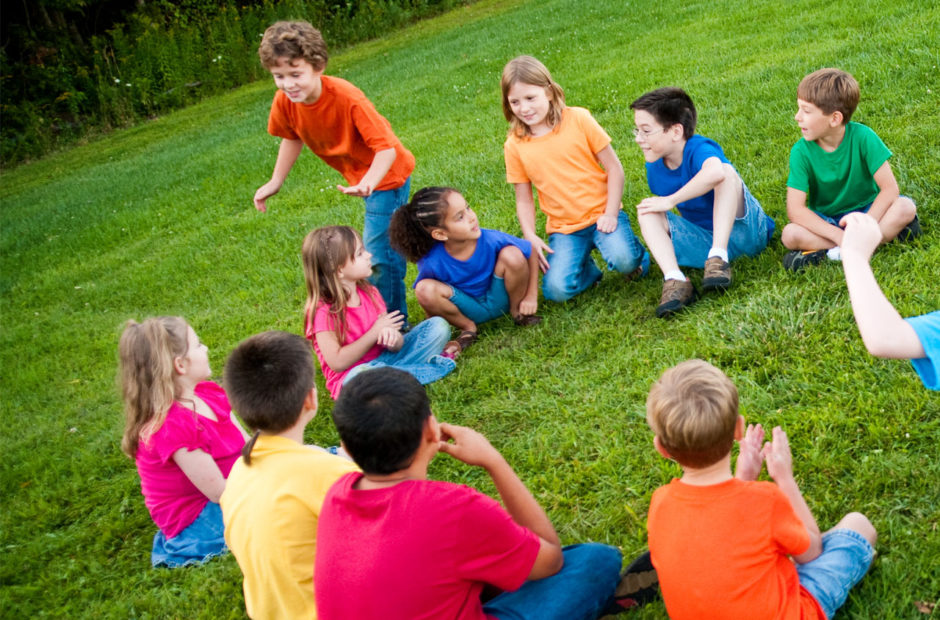
Duck, Duck, Goose is a circle game in which one player walks around the outside of the group, lightly tapping each player’s head while saying “duck.” At any moment, the picker chooses one player by saying “goose.”
The chosen player immediately jumps up and chases the picker around the circle. The picker tries to reach the empty spot before being tagged.
The game combines anticipation, quick reactions, and just enough strategy to keep every round exciting.
What You Need
- At least five players
- An open area large enough to form a circle
- No equipment
Duck, Duck, Goose works indoors or outdoors, although grass or gym floors are generally more comfortable than concrete.
Objective
If you are the picker, your goal is to reach the empty spot in the circle before the goose tags you.
If you are chosen as the goose, your goal is to catch the picker before they sit down.
How to Set Up Duck, Duck, Goose
- Have everyone except one player sit in a large circle.
- Choose one player to begin as the picker.
- The picker stands outside the circle while everyone else remains seated.
Leave enough room between players so the chase can happen safely.
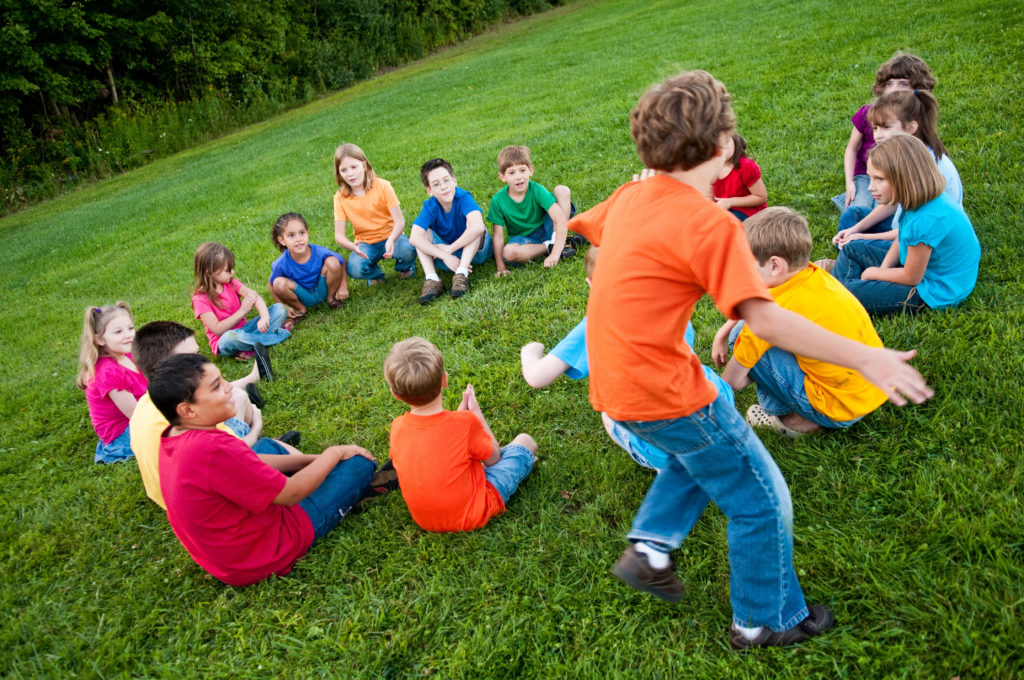
Credit: iStock/ideabug
How to Play Duck, Duck, Goose
- The picker walks around the outside of the circle.
- As they pass each player, they gently tap the person’s head or shoulder while saying, “Duck.”
- At any time, the picker selects one player by saying, “Goose.”
- The goose immediately stands and begins chasing the picker around the circle.
- The picker attempts to run all the way around the circle and sit in the goose’s empty spot.
- If the picker reaches the spot first, the goose becomes the new picker.
- If the goose tags the picker before they sit down, the original picker remains “it” for another round.
Play continues until everyone has had an opportunity to be the picker.
How Fast Should Players Run?
The chase should be energetic but controlled.
Players should stay outside the circle, avoid cutting across the middle, and watch for anyone who may still be standing or moving. Running full speed on slippery surfaces is discouraged.
For younger children, many groups simply jog instead of sprinting.
Tips for the Picker
- Keep a steady pace instead of obviously slowing down before choosing the goose.
- Look at several players instead of focusing on your intended choice.
- Choose different people throughout the game so everyone gets a turn.
- Do not tap players too hard.
Tips for the Goose
- Stand up as quickly as possible after hearing “Goose.”
- Run outside the circle rather than cutting through it.
- Watch where the picker is going instead of looking at the empty spot.
- Tag gently rather than pushing or grabbing.
Keeping the Game Fair
Duck, Duck, Goose works best when everyone has an opportunity to participate.
The picker should avoid selecting the same players repeatedly while ignoring others. Adults supervising younger children can encourage players to spread their choices around the circle.
Similarly, everyone should remain seated until they are chosen. Standing early or trying to anticipate the selection removes much of the suspense that makes the game fun.
Minnesota’s Duck, Duck, Gray Duck
If you learned this game in Minnesota, you may know it as Duck, Duck, Gray Duck instead.
Rather than repeating only the word “duck,” the picker often calls out different descriptive ducks as they move around the circle, such as:
- Blue duck
- Red duck
- Happy duck
- Sleepy duck
- Funny duck
The chase begins only when the picker finally says, “Gray duck!”
This version traces its roots to Minnesota’s Scandinavian heritage and the Swedish game Anka, anka, grå anka, which translates to “Duck, duck, gray duck.” While most of the United States adopted Duck, Duck, Goose, Minnesota largely preserved the older tradition.
Common Variations
Minnesota’s Duck, Duck, Gray Duck
If you learned this game in Minnesota, you may know it as Duck, Duck, Gray Duck instead.
Rather than repeating only the word “duck,” the picker often calls out different descriptive ducks as they move around the circle, such as:
- Blue duck
- Red duck
- Happy duck
- Sleepy duck
- Funny duck
The chase begins only when the picker finally says, “Gray duck!”
This version traces its roots to Minnesota’s Scandinavian heritage and the Swedish game Anka, anka, grå anka, which translates to “Duck, duck, gray duck.” While most of the United States adopted Duck, Duck, Goose, Minnesota largely preserved the older tradition.
Walking Version
For younger children, replace running with walking. This reduces collisions while still preserving the excitement of the chase.
Animal Theme
Instead of ducks and geese, choose another category such as farm animals, dinosaurs, sea creatures, or superheroes. This variation is especially popular with preschool groups.
Duck, Duck, Goose for Younger Children
Keep the circle small and encourage children to jog rather than sprint. Adults may also want to remind the picker to choose different players each round so everyone has an opportunity to participate.
If the group is still learning the game, helping children return to the correct spots after each chase keeps the action moving smoothly.
Indoor Duck, Duck, Goose
The game works well indoors as long as there is enough open space around the circle.
Gymnasiums, multipurpose rooms, and classrooms with desks moved aside all make suitable locations. Players should wear appropriate footwear and avoid running on slippery floors.
Frequently Asked Questions
How many people do you need to play Duck, Duck, Goose?
Five players is a good minimum, although larger groups generally make the game more exciting.
Can adults play Duck, Duck, Goose?
Absolutely. While it is most commonly associated with young children, the game works just as well at family reunions, company picnics, and casual parties.
What happens if the goose tags the picker?
In the traditional version, the picker remains “it” and begins another round.
Do players have to run?
No. Many groups choose to walk or jog, particularly when younger children are playing or when the game is held indoors.
Is Duck, Duck, Gray Duck the same game?
Yes. The core gameplay is nearly identical, although the Minnesota version uses descriptive ducks before finally calling “Gray duck!” instead of immediately choosing a goose.
More Game Night Guides
Looking for another classic game to play with children, classrooms, or family gatherings? Try one of these favorites.
Why Duck, Duck, Goose Has Lasted for Generations
Duck, Duck, Goose has endured because it delivers excitement with almost no preparation. One circle of players and a little open space are all that is needed to create a game that keeps everyone engaged.
It also scales well. Preschool classes, birthday parties, family reunions, scout meetings, and summer camps have all embraced the game because it is easy to explain, quick to reset, and welcoming to new players.
Whether you grew up shouting “Goose!” or “Gray duck!,” the appeal remains the same: nobody knows exactly when the chase is about to begin.