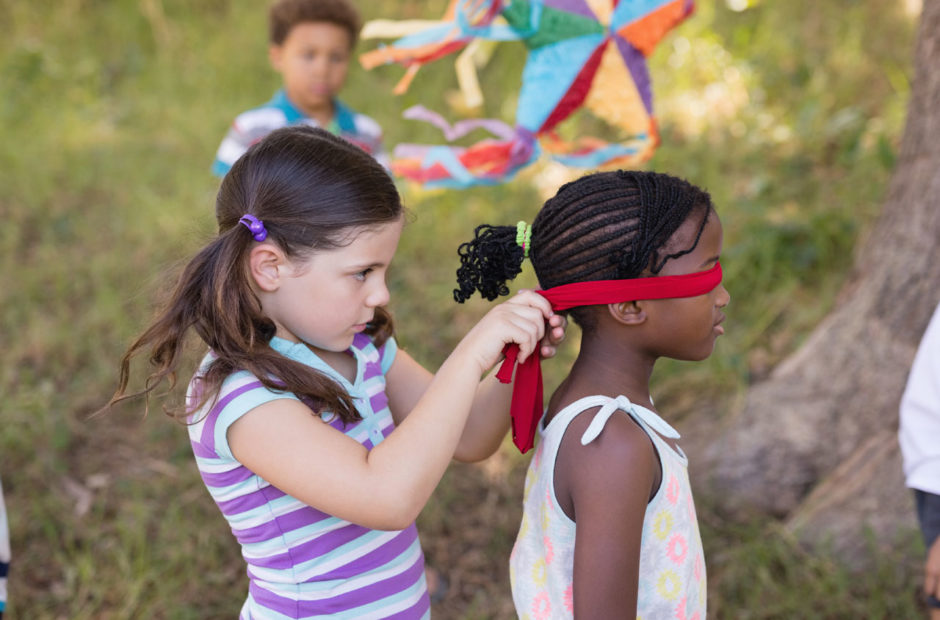
Blind Man’s Bluff is one of the oldest group games still played today. Instead of chasing someone you can see, one player is blindfolded and must rely on hearing, touch, and quick reactions to find the other players.
The game has been enjoyed for centuries and remains a popular activity for birthday parties, youth groups, and family gatherings. While the basic rules are easy to learn, choosing a safe playing area is just as important as understanding how the game works.
Whether you remember playing Blind Man’s Bluff as a child or are introducing it to a new generation, this guide explains everything you need to know.
What Is Blind Man’s Bluff?
Blind Man’s Bluff is a tag game in which one player, known as the Blind Man, wears a blindfold while trying to catch another player. Depending on the version being played, the Blind Man may also need to identify the person they have caught before the roles change.
The challenge comes from removing one player’s sense of sight while everyone else quietly avoids being tagged.
What You Need
- At least four players
- A soft blindfold that completely blocks vision
- A large, obstacle-free playing area
The game can be played indoors or outdoors, provided the space is free of hazards.
Objective
If you are the Blind Man, your goal is to catch another player.
If you are not blindfolded, your objective is to avoid being tagged while remaining inside the designated playing area.
Choosing a Safe Playing Area
Because one player cannot see, Blind Man’s Bluff requires more preparation than many other children’s games.
Before starting, remove or avoid:
- Furniture with sharp corners.
- Loose toys or equipment.
- Stairs.
- Tree roots, rocks, or uneven ground.
- Swimming pools or other water hazards.
A grassy yard, gymnasium, multipurpose room, or other open space usually works best.
If children are playing, an adult should supervise the game and stop play immediately if anyone moves outside the agreed boundaries.
How to Set Up Blind Man’s Bluff
- Choose one player to begin as the Blind Man.
- Place the blindfold securely over that player’s eyes.
- Ask the Blind Man to slowly turn in place several times so they lose their sense of direction.
- Have the remaining players spread out inside the playing area.
- Review the boundaries before beginning.
Everyone should agree that pushing, grabbing, or deliberately misleading the Blind Man into unsafe areas is never allowed.
How to Play Blind Man’s Bluff
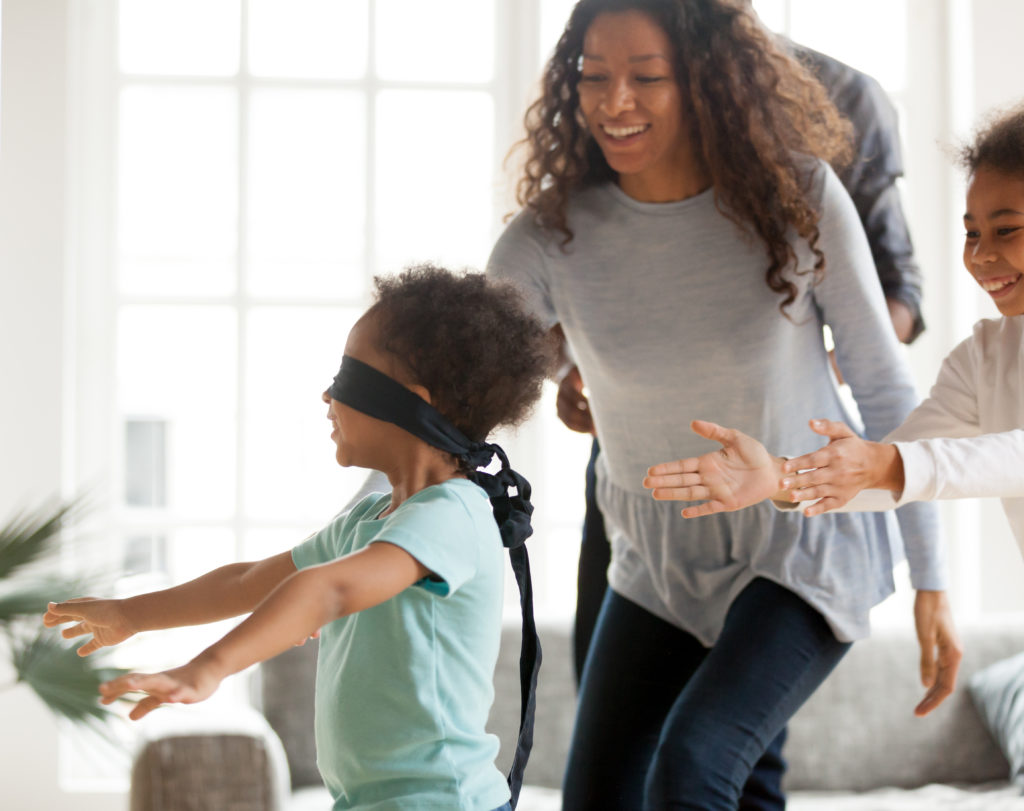
- The Blind Man begins searching for the other players.
- The remaining players quietly move around the playing area while avoiding being tagged.
- Players must remain inside the established boundaries.
- When the Blind Man tags someone, play pauses.
- Depending on the version being played, the Blind Man either wins immediately or must identify the player they caught.
Once the round ends, a new Blind Man is selected and another game begins.
Credit: iStock/fizkes
Traditional Identification Rule
In the traditional version of Blind Man’s Bluff, tagging another player is only part of the challenge.
After making contact, the Blind Man attempts to identify the player by feeling details such as clothing, hairstyle, or height. The Blind Man may not remove the blindfold while making the guess.
If the guess is correct, the tagged player becomes the new Blind Man.
If the guess is incorrect, the original Blind Man continues for another round.
Simple Tag Version
Many modern groups skip the identification step entirely.
Instead, once the Blind Man tags another player, that player immediately becomes the new Blind Man for the next round.
This version moves more quickly and works especially well with younger children.
Rules That Keep the Game Fair
- Players must remain inside the playing boundaries.
- No pushing or pulling other players.
- Do not intentionally make loud noises directly beside the Blind Man.
- Do not guide the Blind Man toward unsafe objects.
- Everyone should move carefully rather than run at full speed.
Blind Man’s Bluff works best when the goal is friendly competition rather than trying to trick the Blind Man into becoming frustrated.
Tips for the Blind Man
- Move slowly instead of rushing.
- Listen carefully for footsteps and laughter.
- Reach forward with your hands rather than charging ahead.
- Turn toward sounds instead of guessing randomly.
- Stay aware of the playing boundaries.
Moving carefully often leads to more successful tags than moving quickly.
Tips for the Other Players
- Keep moving quietly.
- Avoid crowding together.
- Respect the designated boundaries.
- Do not intentionally bump into the Blind Man.
- Remember that everyone will eventually have a turn wearing the blindfold.
Playing respectfully keeps the game enjoyable for everyone involved.
Blind Man’s Bluff for Younger Children
When younger children are playing, simplify the rules and reduce the size of the playing area.
Use the simple tag version rather than requiring the Blind Man to identify the person they caught. Keep the group small, remove every possible obstacle, and have an adult remain close enough to stop the round if the blindfolded player approaches a boundary.
You can also ask the other players to walk instead of run. This keeps the game manageable and gives the Blind Man a better chance of making a tag.
Blind Man’s Bluff for Older Children and Adults
Older players may enjoy a larger playing area, the traditional identification rule, or additional restrictions that make the game more challenging.
For example, players can be required to make occasional sounds so the Blind Man has something to follow. The group might clap once every 20 seconds, call out a word chosen before the round, or answer when the Blind Man asks, “Where are you?”
Any added challenge should still preserve the basic safety rules. The Blind Man should never be encouraged to move quickly through an unfamiliar or cluttered area.
Circle Variation
In the circle version, the group forms a wide ring around the Blind Man.
The Blind Man remains near the center while the other players move around the edge of the circle. Players may step inward briefly to tease the Blind Man, but they must remain within the agreed boundary.
This variation is easier to supervise because the Blind Man is less likely to wander into unsafe areas.
Sound Variation
In this version, the players must make regular sounds while avoiding the Blind Man.
The group can agree that everyone must clap, snap their fingers, or call out at set intervals. The Blind Man uses those sounds to determine where the other players are standing.
This version creates a more active game and prevents players from simply standing silently in one corner.
Stationary Blind Man’s Bluff
For a safer indoor version, the Blind Man remains in one designated spot while the other players move around them.
The players take turns approaching, making a sound, or briefly touching the Blind Man’s hand before moving away. The Blind Man then attempts to point toward or identify the player.
This variation removes most of the chasing while preserving the listening and guessing elements.
Blind Man’s Bluff Without a Blindfold
If a blindfold is unavailable or a player is uncomfortable wearing one, the game can be adapted by having the Blind Man close their eyes and remain inside a small marked area.
An adult or game leader should closely supervise to make sure the player does not peek and does not move beyond the safe zone.
This version is less reliable than using a secure blindfold, but it can work for a short, controlled round.
Common Mistakes to Avoid
- Using a playing area with furniture, stairs, or uneven ground.
- Allowing players to run at full speed.
- Spinning the Blind Man too many times.
- Letting players leave the established boundaries.
- Using a blindfold that can slip or partially block breathing.
- Allowing players to push, grab, or deliberately confuse the Blind Man near hazards.
The most successful rounds are usually the ones with the clearest boundaries and the fewest obstacles.
How Long Should a Round Last?
A round should continue until the Blind Man catches another player, but it does not need to continue indefinitely.
If several minutes pass without a tag, the game leader can make the playing area smaller, require players to make sounds, or end the round and choose a new Blind Man.
Shorter rounds help ensure that everyone gets a turn.
Frequently Asked Questions
How many people do you need to play Blind Man’s Bluff?
The game works best with at least four players, including one Blind Man and three people trying to avoid being tagged.
Does the Blind Man have to identify the person they catch?
Not always. The traditional version often includes identification, but many modern groups use a simpler version where the tagged player immediately becomes the new Blind Man.
Can Blind Man’s Bluff be played indoors?
Yes, provided the room is large, open, and free of furniture or other hazards. A gymnasium or multipurpose room is generally safer than a crowded living room.
Should the Blind Man be spun around before the game begins?
A few slow turns are traditional, but spinning is not required. Avoid excessive spinning, especially with younger children or anyone who may become dizzy.
Can players run?
Walking or careful movement is safer. Running increases the chance of collisions, falls, or leading the Blind Man toward an obstacle.
Who wins Blind Man’s Bluff?
In the simple version, the Blind Man succeeds by tagging another player. In the traditional version, the Blind Man must both catch and correctly identify someone.
Why Blind Man’s Bluff Has Lasted So Long
Blind Man’s Bluff has survived for generations because it transforms a familiar game of tag into something completely different. The blindfolded player must depend on hearing, patience, and careful movement, while everyone else tries to remain close enough to make the game interesting without being caught.
The game needs very little equipment, but it does require more supervision and preparation than most classic children’s activities. With a clear playing area, sensible boundaries, and players who respect the safety rules, Blind Man’s Bluff can still work as an entertaining party or group game.
More Game Night Guides
Looking for another classic activity for children, classrooms, or family gatherings? These guides cover more easy group games.
Image Suggestions
- Featured image: A blindfolded child or adult standing in a clear open area while a small group stays nearby.
Alt text: Group preparing to play Blind Man’s Bluff in a safe open area. - Gameplay image: A blindfolded player reaching carefully while others move around them.
Alt text: Blindfolded player trying to tag others during Blind Man’s Bluff. - Indoor option: A clear gymnasium or multipurpose room with a supervised group activity.
Alt text: Open indoor space suitable for playing Blind Man’s Bluff. - Nonliteral fallback: A soft blindfold placed on a table beside simple party-game supplies.
Alt text: Blindfold used for classic group games.