If you grew up watching television before the mid-1990s, you almost certainly remember the sacred ritual of the second dial.
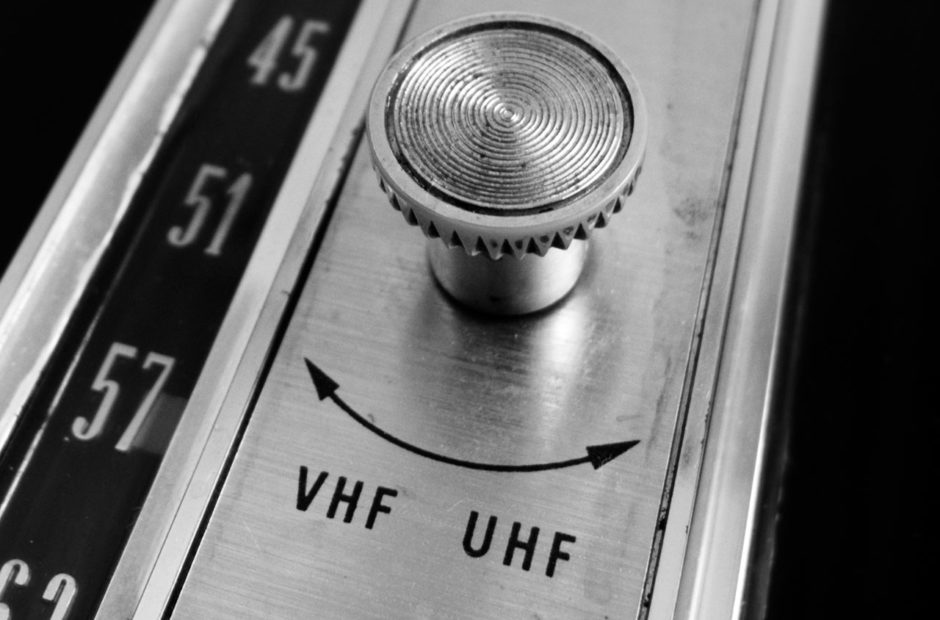
Your television set had two large knobs on the front. The top knob clicked with a solid, satisfying mechanical snap as you shifted through channels 2 through 13. These were the high-society networks: ABC, CBS, and NBC. The picture was clear, the signal was strong, and the programming was polished.
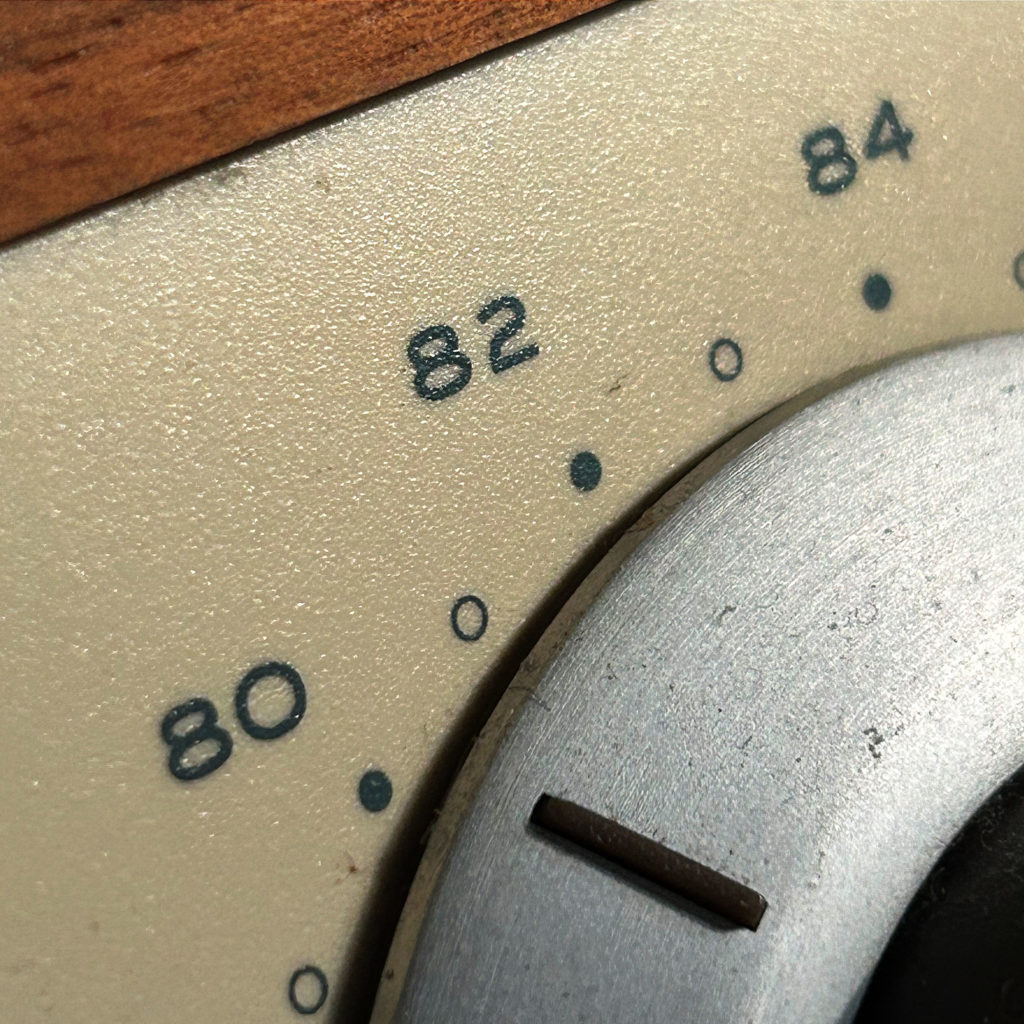
Then there was the lower knob. It turned smoothly with a faint, sandpaper-like friction, marked with numbers running from 14 all the way up to 83. Finding a station here required fine-tuning, patience, and often a loop of wire bent into an awkward circle on top of the cabinet. When a picture finally resolved through the snow, you were transported into an entirely different cultural universe: low-budget horror movies, imported Japanese cartoons, professional wrestling, regional used-car commercials, and foreign-language broadcasts.
This was the world of UHF television. While it was often dismissed as the technological wasteland of broadcasting, UHF channels were crucial to shaping modern geek culture. Without that second dial, dozens of cult television shows, iconic movie hosts, and independent media networks would never have existed.
The Physics of the Two Dials
The divide between the two knobs was rooted in fundamental physics and federal regulation. In the late 1940s, the Federal Communications Commission allocated a sliver of the electromagnetic spectrum known as VHF (Very High Frequency) for television broadcasts. VHF covered channels 2 through 13.
VHF signals were the gold standard of broadcasting. Their longer waves traveled long distances, easily bounced around hills and buildings, and required relatively little transmitter power to deliver a crisp, clear image into suburban living rooms. Because these channels were so reliable, the three major commercial networks quickly bought up or affiliated with nearly every available VHF frequency across the country.
By 1952, the demand for new television stations was exploding, but the VHF band was completely full. To create room for expansion, the FCC opened up the UHF (Ultra High Frequency) spectrum, creating channels 14 through 83.
On paper, this opened the floodgates for hundreds of new voices. In practice, it was an immediate disaster.
UHF signals operate at much shorter wavelengths. They require vastly more electricity to transmit, degrade quickly over distance, and struggle to penetrate walls, foliage, or bad weather. Worse still, early television manufacturers had no interest in adding expensive UHF tuners to their sets. If a consumer bought a new television in the 1950s, it only had a VHF dial. To watch a UHF station, a family had to go out and buy a separate, expensive converter box.
As a result, early UHF stations were commercial ghost towns. They had no audience, which meant they had no advertisers, which meant they quickly went bankrupt.
The Law That Saved the Second Dial
By the early 1960s, the FCC realized that the big three networks held an unbreakable monopoly simply because nobody could tune in to their competitors. To level the playing field, the federal government stepped in with a landmark piece of legislation: the All-Channel Receiver Act of 1962.
The law mandated that every single television set manufactured and shipped in the United States after April 30, 1964, was legally required to include a built-in tuner capable of receiving all 70 UHF channels alongside the standard VHF dial.
Virtually overnight, the potential audience for UHF exploded. As families replaced their old living room sets throughout the late 1960s and 1970s, millions of American homes suddenly had the hardware needed to tune in to the upper reaches of the broadcast band.
Yet, because the major networks were already comfortably entrenched on VHF, these newly accessible UHF slots were snapped up by scrappy independent operators, public broadcasters, religious organizations, and local entrepreneurs with tiny budgets and big ambitions.
Credit: iStock/Jens Johansen
The Wild West of Programming
Because UHF stations lacked network backing and big-budget studio funding, they had to be wildly creative to survive. They could not afford prime-time dramas, so they filled their broadcast schedules with whatever was cheap, available, and ignored by the big networks.
This necessity turned UHF into an experimental laboratory for pop culture:
- Cult Movie Marathons and Horror Hosts: Independent UHF stations bought up cheap syndication packages of classic black-and-white monster movies from Universal and low-budget sci-fi flicks from the 1950s. To give these movies personality, stations hired local performers in cheap makeup to host them. Characters like Svengoolie, Elvira, and Count Gore De Vol became local legends precisely because UHF stations needed a cheap way to frame late-night creature features.
- Anime and Imported Cartoons: Long before Japanese animation was a mainstream phenomenon, independent UHF stations were quietly introducing American kids to shows like Speed Racer, Star Blazers, Battle of the Planets, and Robotech. These imports were significantly cheaper to license than domestic animation packages, making them a staple of afternoon UHF schedules.
- Local Professional Wrestling: In the era before national wrestling promotions dominated cable, regional wrestling territories relied on local UHF affiliates to broadcast weekly matches. Shows taped in small studio spaces or local high school gyms drew massive, loyal local audiences and sold out arena events across the country.
- Educational and Public Broadcasting: Before PBS was an established network powerhouse, many educational stations operated solely on UHF, serving as the proving grounds for experimental children’s programming like Mister Rogers’ Neighborhood.
If you were a viewer who wanted something weirder, louder, or more eccentric than a standard network sitcom, the UHF dial was the only place to find it. This dynamic was immortalized in “Weird Al” Yankovic’s 1989 cult comedy film UHF, where a failing, low-budget station defeats a slick network rival through pure, chaotic creativity.
While UHF began as a fragmented patchwork of oddities, it eventually grew powerful enough to challenge the traditional television establishment.
In 1986, when Rupert Murdoch and Barry Diller set out to launch the Fox Broadcasting Company as a fourth major network, they faced an immediate structural hurdle: almost all the prime VHF stations in the country were already affiliated with ABC, CBS, or NBC. To build a national footprint, Fox had to stitch together an empire out of independent UHF stations across the country.
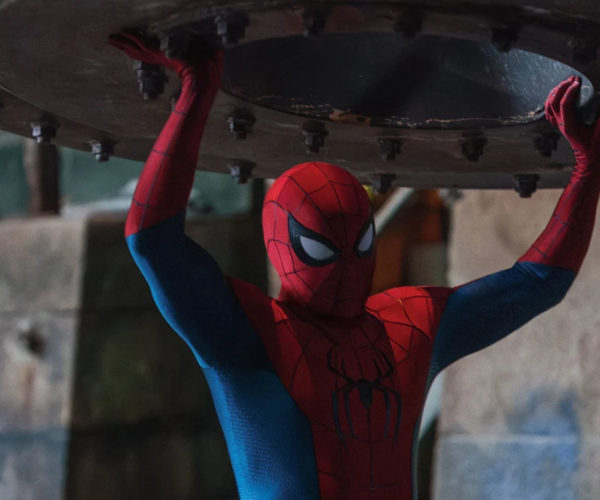
When shows like Married… with Children, The Simpsons, and The X-Files exploded into mega-hits, they did so largely over the UHF airwaves, proving that viewers would willingly tune to the fuzzy end of the dial if the content was compelling enough.
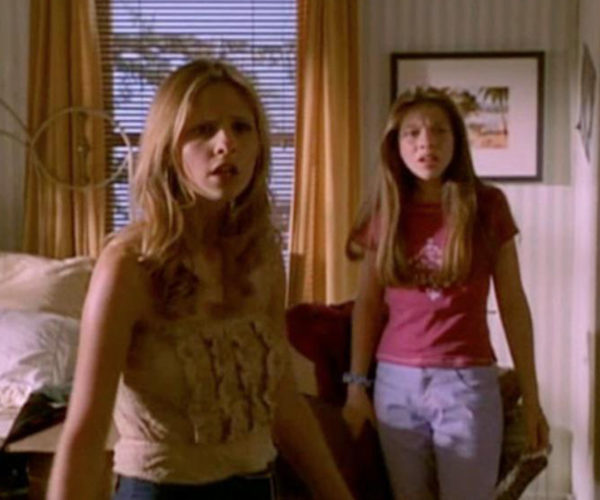
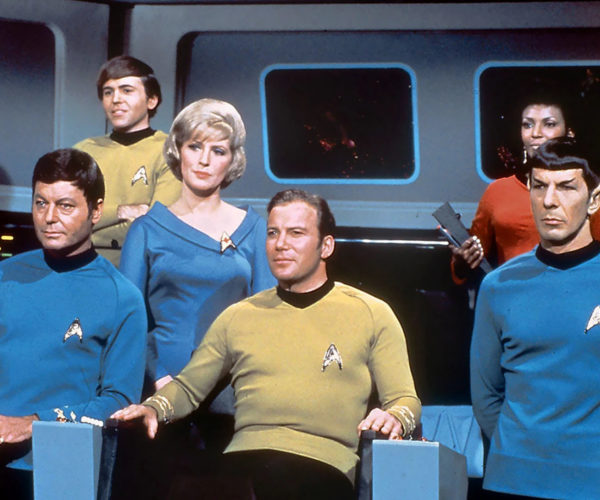
In the mid-1990s, the same strategy was used to launch both The WB and UPN. These fledgling networks relied on local UHF affiliates to deliver groundbreaking youth culture staples like Buffy the Vampire Slayer, Star Trek: Voyager, and Dawson’s Creek directly to teen audiences.
The Digital Fade-Out
The era of the fuzzy, analog UHF station came to a definitive close in June 2009, when the United States officially completed its digital television transition. The old analog signals were turned off, and television sets switched entirely to digital tuners.
Ironically, in the digital era, the physics flipped. Digital broadcast technology actually works better over UHF frequencies than it does over VHF, meaning many of the major network stations you watch with a modern digital antenna today are technically broadcasting on UHF bands, even if your TV screen still displays them as “Channel 4” or “Channel 7” for branding purposes.
Yet, the spirit of the physical UHF dial—that feeling of tuning past the static into an uncharted world of strange, delightful, and localized entertainment—has largely vanished from the airwaves. It was a technological accident created by government spectrum planning, but for a generation of curious viewers, that second knob was where television truly came alive.