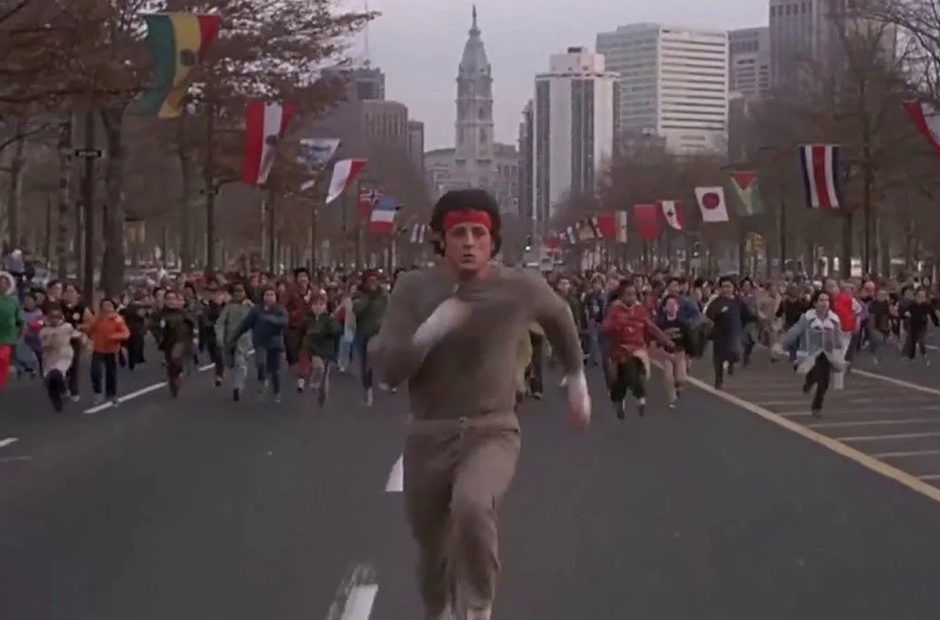
For nearly 50 years, the Rocky franchise has done something very few movie series ever manage: it found a believable way to outgrow its original hero.
Most long-running franchises simply recast the lead or reboot the timeline. Rocky took a different approach. It allowed Rocky Balboa to grow older, step away from the spotlight, and eventually become the mentor instead of the champion. That transition gave us the Creed films, which aren’t simply spin-offs. They’re the continuation of the same story.
That also creates a surprisingly common question.
Should you watch only the Creed movies? Is Rocky Balboa really Rocky VI? Does Rocky IV: Rocky vs. Drago count as another movie? And what’s actually the best order to watch everything?
Fortunately, unlike some franchises, the answer isn’t complicated. The series follows one continuous timeline, and release order remains the best way to experience Rocky Balboa’s journey from unknown club fighter to heavyweight champion to mentor.
Here’s how to watch every Rocky and Creed movie in order.
Quick Answer: Rocky and Creed Movies in Release Order
The best way to watch the Rocky franchise is release order.
| Movie | Year |
|---|---|
| Rocky | 1976 |
| Rocky II | 1979 |
| Rocky III | 1982 |
| Rocky IV | 1985 |
| Rocky V | 1990 |
| Rocky Balboa | 2006 |
| Creed | 2015 |
| Creed II | 2018 |
| Creed III | 2023 |
Because the series has always followed one primary continuity, chronological order is effectively identical to release order.
The Best Way to Watch the Rocky and Creed Movies
Watch every movie in release order.
Unlike franchises such as Halloween, Terminator, or Planet of the Apes, there are no competing timelines to untangle. Every theatrical film builds naturally on what came before.
Watching in release order also lets you appreciate something that has become increasingly rare in Hollywood: genuine character growth across decades.
Rocky begins the series as an underdog with almost nothing. Over six films he becomes champion, loses everything, rebuilds his life, and eventually discovers that his greatest accomplishment isn’t another title belt. It’s helping someone else become champion.
That emotional arc simply works better if you experience it in the order audiences originally did.
Rocky and Creed Movies in Chronological Order
Because every film follows the previous one, chronological order matches release order.
| Movie | Timeline Placement |
|---|---|
| Rocky | Rocky’s first title opportunity |
| Rocky II | Immediately follows the first film |
| Rocky III | Years later during Rocky’s championship run |
| Rocky IV | After Clubber Lang and before Rocky’s retirement |
| Rocky V | Immediately follows Rocky IV |
| Rocky Balboa | Many years later |
| Creed | Adonis Creed begins his career |
| Creed II | Continues Adonis’ story |
| Creed III | Several years after Creed II |
There is one wrinkle, however.
In 2021, Sylvester Stallone released Rocky IV: Rocky vs. Drago, an alternate cut of Rocky IV. It is not a new movie or a sequel. We’ll discuss where that version fits later in this guide.
Rocky and Creed Movies in Release Order
Rocky (1976)
Every great franchise has to start somewhere, but very few begin with a movie that wins the Academy Award for Best Picture.
Written by Sylvester Stallone while he was still a struggling actor, Rocky tells the story of Philadelphia club boxer Rocky Balboa, who unexpectedly receives a chance to fight heavyweight champion Apollo Creed.
On paper, it sounds like a sports movie.
In practice, it is a character drama disguised as one.
The boxing matches are memorable, but the emotional core is Rocky himself. He’s awkward, kind-hearted, insecure, funny without trying to be, and convinced his opportunity exists only because someone else needed an opponent.
The film’s greatest accomplishment is that winning the championship isn’t actually the goal. Rocky simply wants to prove he belongs.
Nearly five decades later, it remains one of the greatest sports films ever made.
Where to watch: Available to stream; sold on physical media and digitally.
Rocky II (1979)
Most sequels try to make everything bigger.
Rocky II wisely understands that audiences first fell in love with the characters.
Picking up almost immediately after the first movie, Rocky attempts retirement while dealing with fame, marriage, and financial pressures. Meanwhile, Apollo Creed becomes obsessed with proving that his narrow victory over Rocky wasn’t a fluke.
Eventually the inevitable rematch arrives.
Unlike many sports sequels, Rocky II doesn’t simply recreate the original formula. It explores what happens after the inspirational ending, when real life continues and dreams still require work.
It also delivers one of the most satisfying championship victories in movie history.
Where to watch: Available to stream; sold on physical media and digitally.
Rocky III (1982)
If the first two films are grounded dramas, Rocky III marks the moment the franchise begins embracing blockbuster entertainment.
Rocky has become a celebrity and long-reigning champion. Success has softened him, something brutally exposed by the arrival of Clubber Lang, played with unforgettable intensity by Mr. T.
After suffering devastating personal and professional losses, Rocky turns to an unlikely trainer: Apollo Creed.
Their evolving friendship becomes the emotional centerpiece of the film and lays the groundwork for everything that follows in the series.
It also gave popular culture one of its most recognizable songs. “Eye of the Tiger” has become so closely associated with determination that it’s almost impossible to hear the opening guitar riff without imagining someone preparing for a challenge.
Where to watch: Available to stream; sold on physical media and digitally.
Rocky IV (1985)
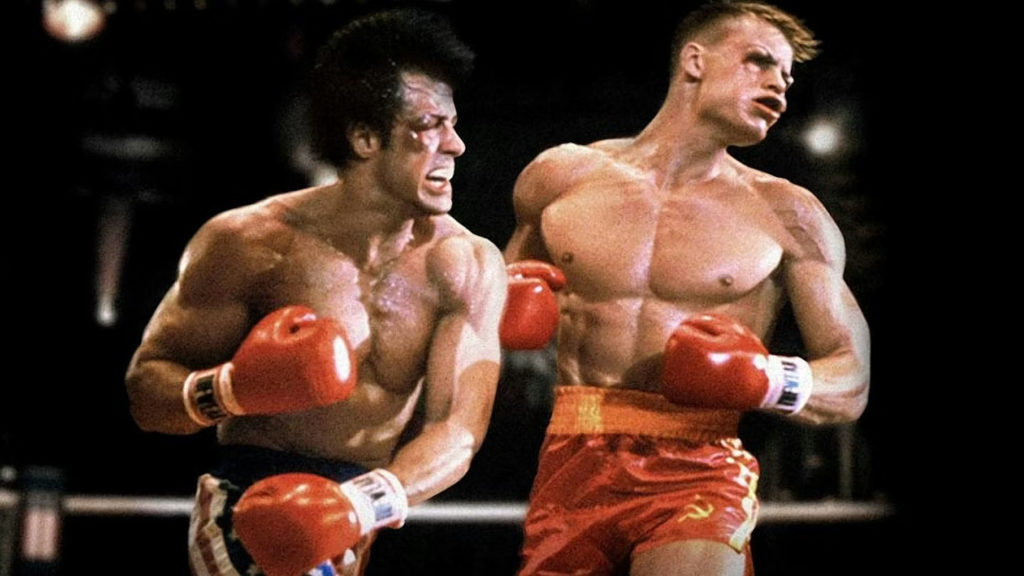
No movie captures the spirit of 1980s blockbuster excess quite like Rocky IV.
Everything is bigger.
The training montages are longer. The soundtrack is louder. The villains are larger than life. Even the Cold War itself becomes part of the story as Soviet champion Ivan Drago arrives to challenge America’s greatest fighters.
The emotional turning point comes early when Apollo Creed insists on fighting Drago himself. What follows permanently changes the direction of the franchise and gives Rocky perhaps his most personal motivation for stepping back into the ring.
Critics have occasionally dismissed Rocky IV as little more than a feature-length music video.
They’re not entirely wrong.
It’s also enormously entertaining.
The film understands exactly what kind of experience it’s delivering and commits completely. Whether it’s James Brown opening Apollo’s exhibition match, Rocky chopping wood in Siberia, or Paulie receiving a birthday robot that somehow became one of the movie’s most debated creative decisions, Rocky IV remains unapologetically a product of its era.
And honestly, that’s part of its charm.
Where to watch: Available to stream; sold on physical media and digitally.
Rocky V (1990)
Few entries in the franchise divide fans more than Rocky V.
After returning home from Russia, Rocky discovers that poor financial decisions have cost him nearly everything. Forced back into his old neighborhood, he begins training an ambitious young fighter named Tommy Gunn while struggling to reconnect with his own son.
The movie intentionally shifts away from the globe-spanning spectacle of Rocky IV in favor of a more personal story.
Some viewers appreciate that return to the series’ roots.
Others find it an unsatisfying conclusion to Rocky’s championship career.
Either way, Rocky V remains an important chapter because it plants ideas that later movies revisit with much greater success, particularly the concept of Rocky becoming a mentor instead of a fighter.
It also demonstrates that not every chapter in a long-running franchise has to be its strongest to remain important.
Where to watch: Available to stream; sold on physical media and digitally.
Rocky Balboa (2006)
When Rocky V was released in 1990, many people assumed that was the end of the franchise.
Sixteen years later, Sylvester Stallone returned with what turned out to be exactly the movie the series needed.
Rocky Balboa finds Rocky long retired from boxing. Adrian has passed away, his son has built a life of his own, and Rocky spends his days running Adrian’s restaurant while quietly carrying the weight of his memories.
The story begins with an exhibition match proposed by a television network using a computer simulation between the aging Rocky and current heavyweight champion Mason “The Line” Dixon. What starts as a publicity stunt gradually becomes something more meaningful.
Unlike the bombastic approach of Rocky IV, this film returns to the reflective tone of the original. It asks what happens after the cheering stops and whether someone whose identity was built around fighting can ever truly leave that part of themselves behind.
The famous “It’s not about how hard you hit” speech has become one of the defining moments of the entire franchise, and for good reason. It isn’t really about boxing. It’s about perseverance, regret, aging, and deciding that life hasn’t finished with you yet.
Many fans now view Rocky Balboa as the true ending of Rocky’s personal story. Ironically, it also became the bridge to an entirely new generation.
Where to watch: Available to stream; sold on physical media and digitally.
Creed (2015)
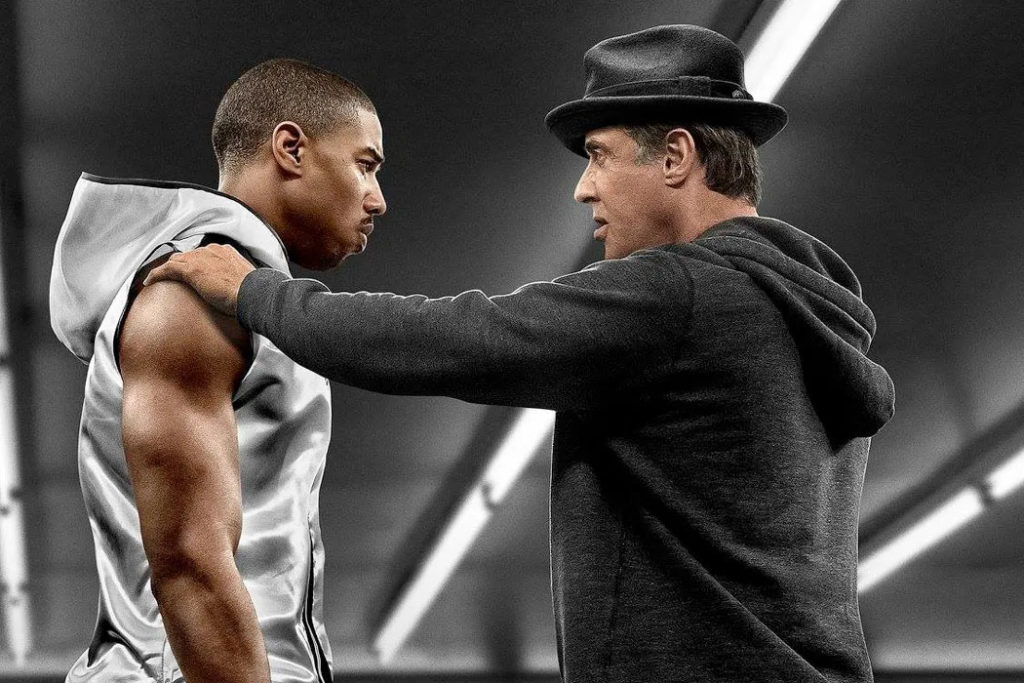
If someone had suggested in 1976 that the best continuation of the Rocky series would focus on Apollo Creed’s son, many fans probably would have laughed.
Instead, Creed became one of the strongest films in the entire franchise.
Directed by Ryan Coogler, the movie introduces Adonis Johnson, the son Apollo never knew. Despite growing up with opportunities his father never had, Adonis cannot ignore the pull of boxing and eventually seeks out Rocky Balboa to train him.
This is where the franchise accomplishes something remarkably difficult.
Rocky remains an essential character, but he is no longer the protagonist.
Instead of forcing the aging hero back into the spotlight, the movie allows him to become mentor, father figure, and emotional anchor while Adonis earns the audience’s investment on his own merits.
Michael B. Jordan brings enormous charisma to the role, while Stallone delivers one of the finest performances of his career. His portrayal earned an Academy Award nomination and reminded audiences that Rocky Balboa had always been a richer character than many people remembered.
Creed isn’t simply a spin-off.
It’s the successful passing of the torch.
Where to watch: Available to stream; sold on physical media and digitally.
Creed II (2018)
Some sequels exist because audiences enjoyed the previous movie.
Creed II exists because there was still unfinished business dating back more than thirty years.
Adonis Creed finds himself facing Viktor Drago, the son of Ivan Drago, the man responsible for Apollo Creed’s death in Rocky IV. What could have become little more than nostalgia instead becomes a thoughtful examination of legacy, fathers and sons, forgiveness, and the damage caused when people spend decades trapped by a single moment.
One of the movie’s smartest decisions is refusing to treat Ivan Drago as a cartoon villain.
Time has humbled him.
The Soviet Union is gone, his glory has faded, and he has spent years trying to rebuild both his reputation and his relationship with his son. That complexity gives the final fight emotional weight beyond simply settling an old score.
Meanwhile, Rocky must confront his own lingering guilt over Apollo’s death while learning that mentoring someone sometimes means allowing them to make choices you wish they wouldn’t.
Creed II functions as both a satisfying sequel to Creed and a surprisingly effective emotional follow-up to Rocky IV.
Where to watch: Available to stream; sold on physical media and digitally.
Creed III (2023)
Creed III proves that the franchise can continue even after Rocky steps away.
For the first time, Sylvester Stallone does not appear in the series.
Instead, Adonis has fully become the central figure. Retired as champion, he now promotes fighters and enjoys life with Bianca and their daughter until Damian Anderson, a childhood friend recently released from prison, unexpectedly returns.
Michael B. Jordan also makes his directorial debut here, bringing a fresh visual style to the boxing sequences. Several moments deliberately borrow ideas from anime, creating fights that emphasize emotion and psychology as much as physical action.
Without Rocky present, the story focuses entirely on Adonis confronting his own past rather than living in the shadow of his mentor.
That is an important milestone.
The movie demonstrates that Creed has grown beyond being “the Rocky spin-off.” It has become its own franchise while remaining firmly connected to everything that came before.
Where to watch: Available to stream; sold on physical media and digitally.
Where Does Rocky IV: Rocky vs. Drago Fit?
In 2021, Sylvester Stallone released Rocky IV: Rocky vs. Drago, a new cut of Rocky IV.
It is not a sequel.
It is not Rocky V.
It is not an alternate timeline.
Instead, it is Stallone’s opportunity to revisit one of his most famous films and present it closer to how he wanted it to play emotionally.
The new version removes or shortens several comedic moments, trims some of the music-video style montages, restores deleted dramatic scenes, and generally shifts the focus toward Apollo’s death and Rocky’s emotional journey.
Perhaps its most famous change is removing Paulie’s birthday robot almost entirely.
Whether that improves the movie depends on your perspective.
If you are watching the series for the first time, watch the original 1985 theatrical version. That is the version that audiences experienced and the one referenced by every later film.
If you’re revisiting the franchise, Rocky vs. Drago makes for an interesting companion piece that shows how differently the same material can feel through editing alone.
Can You Watch Just the Creed Movies?
Yes.
Should you?
Probably not.
The Creed films work surprisingly well on their own because they explain the important parts of Rocky and Apollo’s history as needed. Someone unfamiliar with the earlier movies can absolutely enjoy Adonis’ story.
However, watching the original Rocky films first gives many moments considerably more emotional weight.
Apollo Creed becomes more than a legendary boxer.
Rocky becomes more than an elderly trainer.
Ivan Drago becomes more than a famous opponent.
The Creed movies reward longtime viewers without shutting newcomers out. That’s one of the reasons they succeeded where many legacy franchises struggle.
Do You Need to Watch Rocky V?
This is probably the most common question surrounding the franchise.
The honest answer is yes… but with an asterisk.
Rocky V is generally considered one of the weaker entries, and later films don’t spend much time referencing its specific events.
However, it remains an important chapter in Rocky’s life.
The financial collapse that returns him to Philadelphia, his attempts to mentor Tommy Gunn, and his struggles with his son all influence the older Rocky we eventually meet in Rocky Balboa.
Think of it this way.
If you’re watching all nine movies, don’t skip it.
If you’re introducing someone to the series and only have time for the highlights, it’s the easiest film to leave out.
Which Rocky and Creed Movies Are Essential?
If you want the shortest version of the franchise while still following the major story, watch:
- Rocky
- Rocky II
- Rocky III
- Rocky IV
- Rocky Balboa
- Creed
- Creed II
- Creed III
That leaves out only Rocky V.
It’s not because the movie has no value. Rather, later entries successfully communicate where Rocky is in life without requiring viewers to know every detail from that chapter.
For the complete experience, though, all nine movies are worth watching.
Frequently Asked Questions About the Rocky and Creed Movies
How many Rocky and Creed movies are there?
There are nine theatrical films: six Rocky movies followed by three Creed films.
Is Rocky Balboa Rocky VI?
Yes. Although it uses a subtitle instead of a number, Rocky Balboa is the sixth film in the Rocky series.
Are the Creed movies sequels?
Yes. The Creed films continue the same continuity established by the Rocky movies. They are both sequels and successful legacy continuations.
Do I need to watch the Rocky movies before Creed?
No, but it’s recommended. The Creed films provide enough background for new viewers, but many emotional moments become more meaningful if you’ve already seen Rocky and Apollo’s story.
Does Rocky appear in Creed III?
No. Creed III is the first movie in the franchise that does not feature Sylvester Stallone as Rocky Balboa.
Is Rocky IV: Rocky vs. Drago a separate movie?
No. It is an alternate cut of Rocky IV, not an additional installment in the series.
More Movie Franchise Guides
If you’re planning a movie marathon, these guides can help you sort out more complicated franchises.
Final Thoughts on Watching the Rocky and Creed Movies in Order
The easiest way to watch the Rocky and Creed movies is also the best one: release order.
Unlike many long-running franchises, this series never needed alternate timelines or reboots to stay relevant. Instead, it allowed its characters to age naturally.
Rocky Balboa changes from hungry underdog to world champion, from retired fighter to mentor, and finally into the man who prepares someone else to carry the legacy forward.
That’s a remarkably satisfying journey, and one that rewards viewers who experience it from beginning to end.
Whether you’re discovering the franchise for the first time or revisiting it before another training montage convinces you that jogging up a flight of stairs somehow makes you invincible, these nine films remain one of cinema’s most enduring sports sagas.
Fun Jug Media, LLC (operating TheNerdy.com) has affiliate partnerships with various companies. These do not at any time have any influence on the editorial content of The Nerdy. Fun Jug Media LLC may earn a commission from these links.