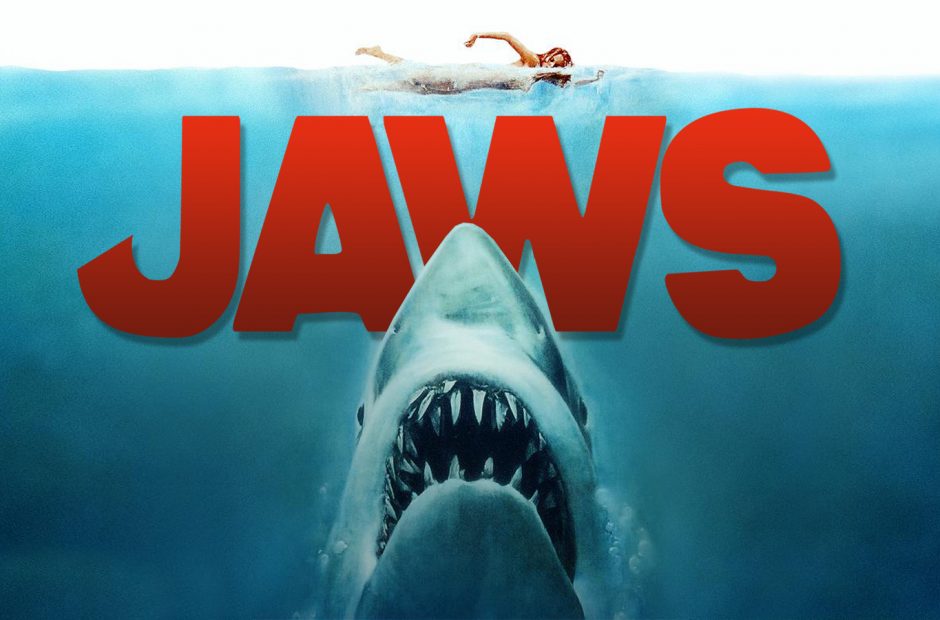
I didn’t see Jaws the year it came out due to my age. I came to it a little later, and from the first time I watched it, I was hooked. Not just entertained, but pulled in completely. Even as a kid, something about it felt different from other movies I was watching.
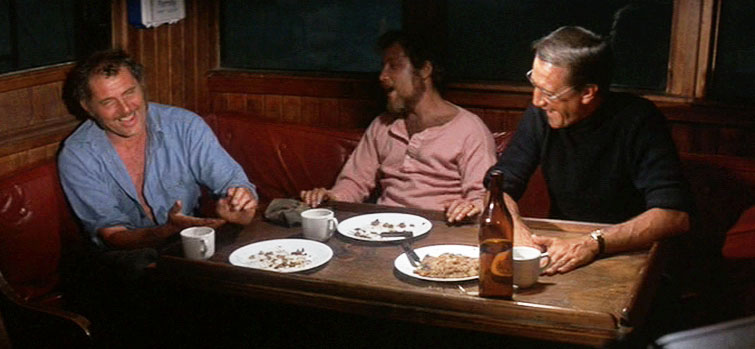
The moment that stuck with me wasn’t the shark. It was the scene on the boat, when Quint and Hooper start comparing scars. It’s funny, a little competitive, and strangely personal. You’re watching these guys try to one-up each other, but you’re also learning who they are. In this literal sea of chaos, these men still find a way to connect, not in an obvious way, but in something that feels deeper the more you sit with it.
And then it happens. That sudden thump against the hull. The tone snaps. Whatever this was, it isn’t just a character moment anymore. Something is out there, and it’s real.
Why That Scene Matters
That sequence does something most thrillers struggle with. It makes you care about the people before it asks you to fear for them.
By the time the danger arrives, you’re not watching strangers in a situation. You’re watching characters you’ve just spent time with, people who feel distinct and grounded. The tension doesn’t come from the threat alone. It comes from the possibility of losing them.
This is where Jaws separates itself. The movie earns its suspense.
The Power of Holding Back
Much has been said about how little the shark is shown, often because of the mechanical issues during production. But what matters more is how the film uses that limitation.
The absence of the shark forces the audience to imagine it. You see the effects of its presence long before you see the creature itself. The water becomes uncertain. The space becomes threatening.
When the film finally reveals the shark, it feels earned rather than routine.
Character Before Spectacle
At its core, Jaws is not built around the shark. It is built around Brody, Quint, and Hooper. Their personalities clash, overlap, and evolve over the course of the film.
Brody is cautious and out of his depth. Quint is obsessive and driven. Hooper is analytical but inexperienced in his own way. Each brings a different perspective, and the movie allows those differences to play out.
The result is a story that works even when the shark is not on screen.
Why the Tension Still Works
Modern thrillers often move faster and show more, but they sometimes skip the step that Jaws handles so well. They introduce the threat before establishing the people involved.
Without that foundation, tension becomes surface-level. The audience understands the danger, but doesn’t feel it in the same way.
Jaws takes its time, and that patience is what makes the payoff land.
What Jaws Gets Right
The film understands that fear is more effective when it is attached to something human. The scar scene is not just a pause in the action. It is the moment that makes everything that follows matter.
Once you see that, the structure of the movie becomes clear. Every major beat builds on character first, spectacle second.
That’s why it still works. Not because it was first, or because it was influential, but because it understood what actually creates tension.
Fun Jug Media, LLC (operating TheNerdy.com) has affiliate partnerships with various companies. These do not at any time have any influence on the editorial content of The Nerdy. Fun Jug Media LLC may earn a commission from these links.
What to Read Next
- Why Editing Matters More Than You Think
- How Movie Pacing Changed After the 1990s
- When Practical Effects Made Movies Feel Real