Some toy lines wanted children to imagine they were part of the show.
Captain Power and the Soldiers of the Future tried to make the television notice them.
That was the promise, anyway. In 1987, Mattel’s Captain Power toys arrived with a concept that sounded like it had escaped from the future: interactive ships that could fire at the television during episodes of the live-action series, register hits from on-screen enemies, keep score, and even eject the pilot when the player lost.
For a kid used to watching cartoons and then playing with the toys afterward, that was a wild leap. Captain Power was not simply asking you to recreate the show on the carpet. It was asking you to participate while the show was happening.
That is why the line remains fascinating. Not because it became a massive long-term success. It did not. Not because every part of the experience worked perfectly. It did not. But because the core idea was pointing toward a future the toy industry, video games, and television would spend decades chasing: toys, screens, and interactive play all feeding the same experience.
Captain Power was not just a toy line with a TV show.
It was a toy line that wanted the TV show to shoot back.
What Captain Power Toys Were
Captain Power and the Soldiers of the Future was a 1987 science fiction property built around a syndicated live-action television series and a Mattel toy line. The story took place in a future Earth where humans had lost a war against machines, and Captain Jonathan Power led a small resistance team against Lord Dread and the Bio-Dread Empire.
As an action figure concept, that already had enough 1980s toy aisle energy to work: armored heroes, evil machines, futuristic weapons, spaceships, villains, and a world built around a clear good-versus-evil conflict.
But the interactive technology was the real hook.
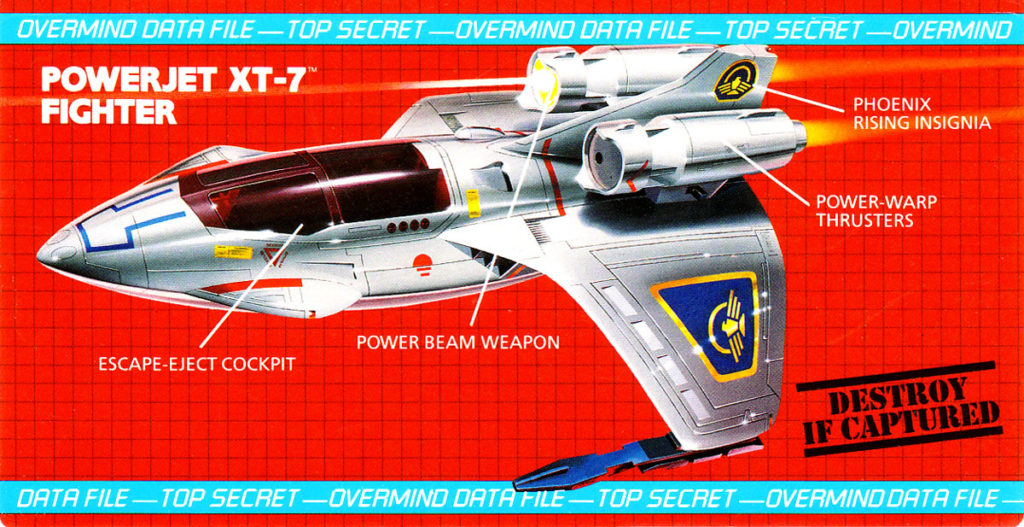
The most memorable toys were the battery-powered ships, especially Captain Power’s XT-7 PowerJet and Lord Dread’s Phantom Striker. These vehicles could be pointed at the television during special sequences in the show. The toys used light sensors to respond to colored flashes on screen, allowing kids to fire at targets, take hits, and lose points. When the toy’s score reached zero, the cockpit would eject the figure.
That one feature did more than sell a vehicle. It changed the relationship between the toy and the television.
The show was no longer only an advertisement, a story, or a source of characters. It became part of the toy.
The Fantasy Was That the Screen Could See You
The psychology of Captain Power is incredibly strong because it sits right on the border between television and video games.
Children had already been trained to understand both modes. Television was something you watched. Video games were something you controlled. Toys were something you physically handled. Captain Power tried to collapse all three into one experience.
The toy did not literally make the show change, of course. The broadcast was still the broadcast. The episode kept going no matter how well or badly a child played. But the toy created the feeling that something on screen was interacting with the object in your hands. The show fired. Your ship reacted. You fired. The toy scored. Lose badly enough, and the cockpit popped open like your tiny pilot had just learned an important lesson about screen-based warfare.
That was powerful because it gave children a physical consequence for something happening on television.
A lot of toy lines let kids continue the story after the episode ended. Captain Power asked them to play during the episode. That was a different emotional rhythm. You were not waiting for the commercial break to grab the toy. The toy was part of the viewing.
For 1987, that was a very big idea.
The Toys Were Part Light Gun, Part Vehicle, Part Roleplay Device
The interactive ships were strange objects because they were doing several jobs at once.
They were vehicles for the figures. They were handheld electronic toys. They were light-gun-style controllers. They were also roleplay devices, because holding one while watching the show made the child feel like a pilot rather than a viewer.
That hybrid identity is exactly what makes the line interesting now.
A normal vehicle toy works because you move it through space. A light gun works because you aim at a target. A roleplay toy works because you pretend to be inside the fantasy. The Captain Power ships tried to do all of that together, and the design made the intention obvious. You did not just park the XT-7 next to the figures. You held it, aimed it, fired it, and waited for the screen to answer.
That turned the living room into the play environment.
It also changed what counted as a toy accessory. The television was not sold in the box, but the television was part of the experience. That is a bold piece of design logic, and it is one reason the line still feels ahead of its time even though the execution was tied to late-1980s technology.
The VHS Missions May Have Made the Idea Clearer
The weekly television series was the big public-facing piece of Captain Power, but the separately released VHS mission tapes were arguably the cleanest expression of the toy concept.
Broadcast television had to tell a story, move characters through scenes, and fit the interactive flashes into the episode. The VHS tapes could be more direct. They were designed as missions. The child could replay them, improve, and treat the experience more like a home game.
That matters because interactivity benefits from repetition.
With a normal episode, the child was participating inside a story that was still going to end the same way. With a mission tape, the point of replaying was clearer. It felt closer to a score-based game, even if it was still built on prerecorded video rather than true branching gameplay.
This is where Captain Power feels most like a missing link. It was not a video game console. It was not a normal action figure line. It was not simply a VHS board game. It was somewhere in between, using the household technology available at the time to suggest a more interactive kind of entertainment.
That middle space is awkward, but it is also why the line is so interesting.
The Show Was More Ambitious Than the Toy Aisle Needed
The television series itself was unusually ambitious for a toy-driven property.
Captain Power and the Soldiers of the Future was live action, set in a bleak future, and built around resistance fighters battling machine domination. It included computer-generated characters and effects at a time when that still felt novel on television. It also had a darker tone than many 1980s toy tie-in shows, with ongoing stakes and a world that felt closer to post-apocalyptic science fiction than Saturday morning comfort food.
That ambition is part of the property’s appeal now.
It may also have complicated the toy line.
Many successful 1980s toy properties were instantly readable. A transforming robot, a ninja turtle, a ghost trap, or a sword-wielding muscle hero could sell itself in a quick demonstration. Captain Power had to sell the show, the world, the figures, the ships, the villains, and the interactive mechanic. That is a lot of explanation for one toy aisle.
The show was not just a commercial engine. It was trying to be a science fiction series in its own right. That made it memorable, but it also meant the brand was balancing story ambition against toy simplicity.
That balance was not easy.
How Captain Power Fit the 1980s Toy Aisle
Captain Power arrived at a moment when toy companies were looking for stronger connections between media and products.
By 1987, the basic action figure ecosystem was well established. A strong line could have figures, vehicles, villains, cartoons, comics, playsets, and roleplay items. Mattel had already seen the power of a toy-first world with Masters of the Universe. Other companies were building massive brands around animation, transformation, military fantasy, monsters, and mutant comedy.
Captain Power tried to push that ecosystem further.
The television show was not only there to introduce characters. It was part of the play pattern. The vehicles were not only vehicles. They were controllers. The child was not only reenacting the story. They were scoring points against the screen.
That gave the line a unique identity, but uniqueness can be expensive. Interactive electronics raised the price and complexity. The concept depended on children having the right toy while watching at the right time. It also depended on parents understanding why a spaceship needed to be pointed at the television in the first place.
For a toy line, that is both exciting and risky.
The Controversy Was Part of the Problem
Captain Power also arrived during a period when children’s television, toy advertising, and media tie-ins were already under scrutiny.
The interactive element made the debate sharper. Critics could look at the show and argue that it was not just encouraging kids to want toys. It was structuring part of the viewing experience around owning them. That was different from a cartoon that simply featured characters available in stores.
There was also a class issue built into the concept. If the show was more fun with the interactive toys, then children without the toys were watching a version of the experience they could not fully access. Contemporary criticism raised that point, and it is not hard to see why the line made some adults uncomfortable.
From a toy-design perspective, the interactivity was the breakthrough. From a children’s television perspective, the same breakthrough created questions about whether the show was entertainment, advertising, game platform, or all of the above.
That tension followed the brand.
Why the Line Did Not Become the Future
For all its ambition, Captain Power did not become the future of toy lines.
Part of the issue was technological. The interactive system was clever, but it was also limited. The show could send signals to the toy, and the toy could track hits and points, but the child could not actually change the episode. It felt interactive, but only within strict boundaries.
That distinction matters.
For kids expecting something like a video game, the limits could become apparent. For parents, the electronics and required media connection may have made the line feel more complicated than a normal action figure purchase. For retailers, it was a product that needed explanation, shelf space, and confidence that children would understand the promise.
The broader brand also had a short runway. The series ran for one season of 22 episodes, and although a second season was planned, it was not produced. Without ongoing television support, the toy line lost the very thing that made its biggest gimmick feel alive.
That is the central irony of Captain Power: the toys were ahead of their time, but they were also completely dependent on the media machine around them.
Why Collectors Still Care About Captain Power
Collectors still care about Captain Power because it represents one of the strangest intersections of toys, television, and early interactive entertainment.
It is not just another science fiction action figure line. The figures, ships, VHS tapes, accessories, and packaging all point toward a specific experiment. This was Mattel trying to make a toy line that behaved like a television game before that kind of media blending became normal.
That makes complete pieces especially interesting. The figures matter. The ships matter. The battery compartments, electronics, sensors, cockpit mechanisms, decals, and accessories matter. The VHS tapes matter because they show the concept working outside the weekly broadcast schedule. A collector who assembles the full experience is not just collecting toys. They are reconstructing an experiment.
There is also the nostalgia of a promise that felt bigger than the product’s actual lifespan. Many short-lived toy lines are remembered because they disappeared quickly. Captain Power is remembered because it seemed to point somewhere. It suggested a world where toys and screens would talk to each other more directly.
The line did not get to own that future, but it clearly saw part of it coming.
The Idea Was Bigger Than the Shelf Life
The reason Captain Power toys were ahead of their time is that the line understood something the entertainment industry would spend decades refining.
Kids do not always want media and toys to be separate.
They want the show to continue in their hands. They want the toy to make the screen feel personal. They want the game, the character, the vehicle, and the story to feel connected. Later products would chase that idea with video games, interactive figures, app-connected toys, toys-to-life platforms, second-screen experiences, and smart devices.
Captain Power tried to do it with a syndicated television show, battery-powered ships, flashing lights, and 1987 living room technology.
That is why it still matters.
Not because it solved interactive entertainment forever. It did not. Not because the toy line became a permanent aisle fixture. It did not. But because it took a real swing at making the screen part of the toy, and the toy part of the show.
Most toy lines ask kids to imagine they are in the battle.
Captain Power handed them the ship, pointed them at the television, and told them the battle had already started.
Further Retro Toy Box Reading
- Why Masters of the Universe Toys Became a Toy Aisle Powerhouse Again
- Why M.A.S.K. Toys Still Have One of the Best Gimmicks of the 1980s
- Why The Real Ghostbusters Toys Were Stranger Than the Cartoon