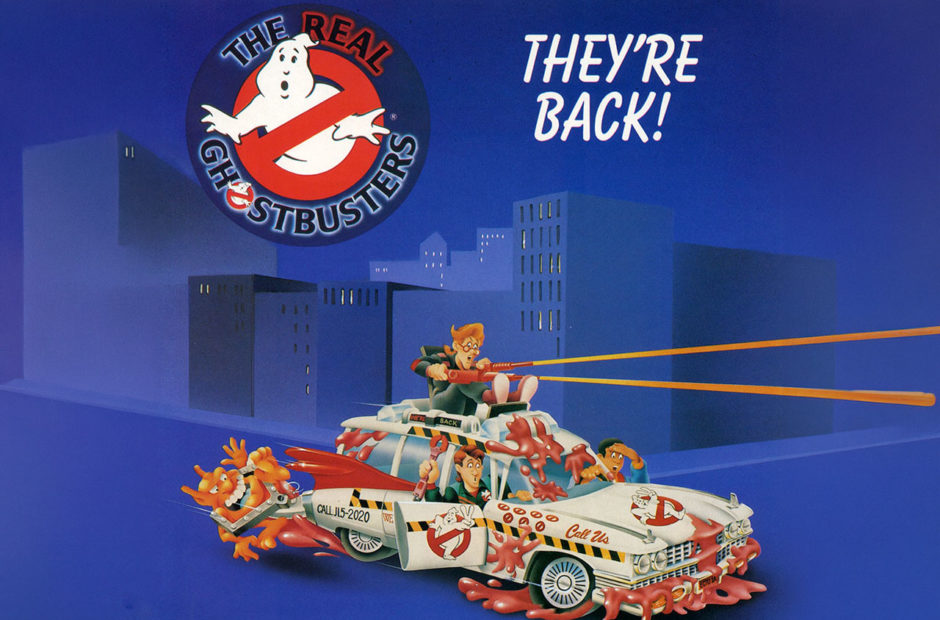
Some toy lines are strange because the source material is strange.
The Real Ghostbusters toys are stranger because Kenner looked at a cartoon about four guys catching ghosts and apparently decided, “Fine, but what if everything screamed, stretched, slimed, transformed, mutated, or had eyeballs where eyeballs shouldn’t be?”
That was the magic of the line.
The animated series was already a fascinating little mess in the best possible way. It spun out of the 1984 Ghostbusters movie, renamed itself The Real Ghostbusters to separate itself from Filmation’s unrelated Ghostbusters cartoon, changed voices, shifted tones, expanded into Slimer! and the Real Ghostbusters, and eventually started feeling like several slightly different shows wearing the same jumpsuit.
And somehow, the toy line still found ways to get weirder.
Kenner launched The Real Ghostbusters toys in 1986, and the company quickly understood that the Ghostbusters themselves were only part of the appeal. The real playground was the ghosts. Ghosts could be goofy, gross, scary, stretchy, squishy, translucent, bug-eyed, oversized, undersized, or built around a gimmick that made no sense until a child pressed the button and immediately understood everything.
That is why The Real Ghostbusters remains one of the great 1980s licensed toy lines. It did not merely reproduce the cartoon. It used the cartoon as permission to fill the toy aisle with monsters.
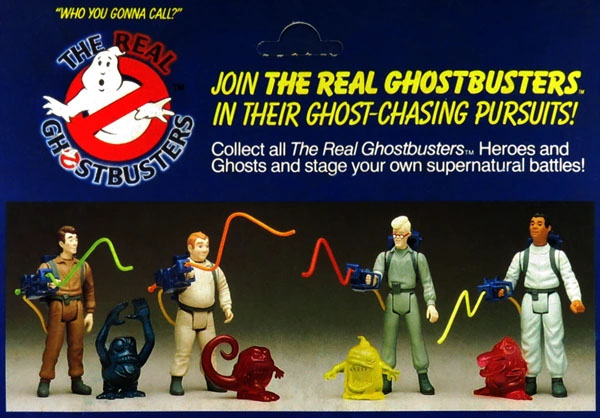
What The Real Ghostbusters Toy Line Was
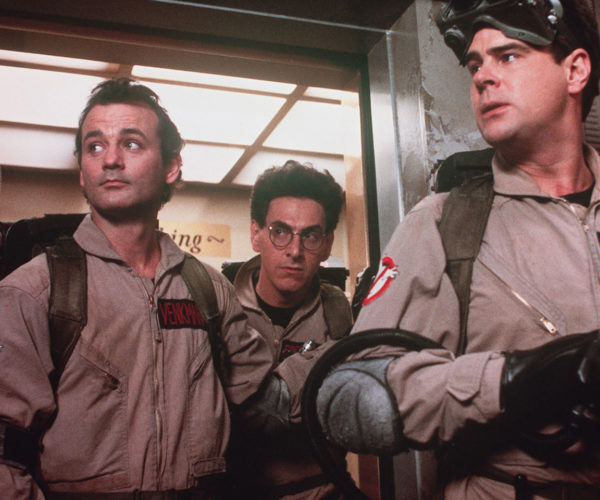
The Real Ghostbusters toy line was produced by Kenner beginning in 1986, the same year the animated series premiered. The basic figure lineup was exactly what kids expected: Peter Venkman, Ray Stantz, Egon Spengler, Winston Zeddemore, Janine Melnitz, Slimer, the ghosts, the Proton Packs, the Ghost Traps, the Ecto-1, and the Fire House playset.
That alone would have been enough for a competent licensed toy line.
Kenner didn’t stop there.
The company treated Ghostbusters as a toy concept, not just a character roster. The heroes could be repainted, re-equipped, frightened, slimed, armored, or given new ghost-catching gear. The ghosts could be original creations that barely needed to exist in the cartoon because the toy aisle was already doing the work. If a ghost had a weird face, a snapping mouth, an action feature, or a horrible little body that looked like it belonged under a refrigerator, it belonged in the line.
That gave Kenner enormous freedom. The movie had created the idea. The cartoon had made it kid-friendly. The toy line made it tactile.
For children, that was the whole point. A ghost was not just something to watch. It was something to trap, fling, squeeze, chase, fear, lose behind the couch, and rediscover later in a condition that suggested it had been living there voluntarily.
The Cartoon Was Already a Little Messy
It is tempting to say the toys were stranger than the cartoon as though the cartoon was some clean, orderly thing.
It was not.
The Real Ghostbusters premiered in 1986 and ran into the early 1990s, but the show changed quite a bit along the way. Early episodes could be surprisingly atmospheric, with strange folklore, urban legends, monsters, and scripts that sometimes understood the original film’s deadpan rhythm better than anyone expected from a cartoon.
Then the show evolved.
Slimer became more prominent. Voice cast changes shifted the sound of the series. Janine’s design and personality softened. In 1988, the show was rebranded as Slimer! and the Real Ghostbusters, adding a Slimer-focused cartoon component and making the whole package feel more obviously aimed at younger viewers.
So yes, the cartoon got messy too.
That matters because the toy line was not working from one fixed version of Ghostbusters. It was working from a brand that was constantly being adjusted for television, syndication, younger audiences, and the broader commercial machine around it. Kenner did not have to stay locked to one tone. The show itself had already opened the door.
Kenner walked through that door carrying a plastic toilet ghost.
As one does.
Kenner Realized the Ghosts Were the Real Toy Aisle
The Ghostbusters were the heroes, but the ghosts were where the toy line could run wild.
That is one of the smartest things Kenner understood. The four main characters had to be recognizable, but ghosts did not have the same limitations. A ghost could be a monster, a prank, a puppet, a blob, a bug, a skeleton, a haunted object, or something that looked like it crawled out of a pizza box after midnight.
That flexibility made the line feel bigger than the show.
The cartoon supplied Slimer, the team, the firehouse, Ecto-1, and the general tone. The toy line supplied an ever-growing parade of things for the Ghostbusters to fight. Some were tied to familiar ghostly ideas. Others felt like Kenner’s designers had been asked to make nightmares, but only the kind that could pass a toy safety review.
This was the right approach. Kids did not need every ghost to have a full episode. They needed something weird enough to chase.
The ghosts also gave the line something many action figure brands struggled to maintain: variety. A military line has to keep inventing soldiers and vehicles. A superhero line has to keep finding heroes and villains. The Real Ghostbusters could put almost anything on a card and make it work as long as it looked like the team might need to blast it with a proton stream.
That made the toy aisle feel haunted in volume.
Fright Features Made Fear Into the Gimmick
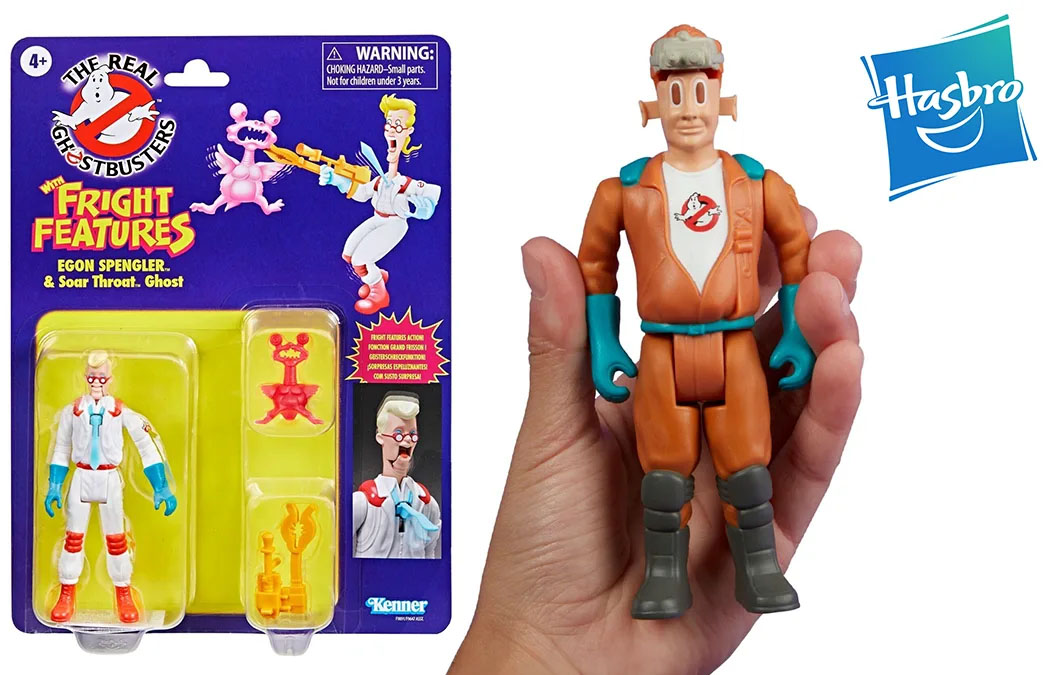
Fright Features Ghostbusters toys from Hasbro’s rerelease
The Fright Features figures may be the clearest example of Kenner understanding the assignment.
The basic idea was simple: squeeze or activate the figure, and the Ghostbuster reacted in terror. Eyes bulged. Hair popped up. Mouths opened. Bodies stretched into exaggerated panic. Instead of making the heroes look cooler, Kenner made them look completely unprepared for the job they had been doing professionally for years.
That should have been ridiculous.
It was ridiculous.
It was also perfect.
The action feature turned the emotional beat of Ghostbusters into a toy. The franchise was never just about heroes defeating monsters. It was about schlubby professionals encountering the supernatural and reacting with a mixture of competence, sarcasm, panic, and poor workplace safety standards. Fright Features captured the panic part and made it playable.
It also gave Kenner an excuse to revisit the main characters without simply putting them back on shelves in the same outfits. That became one of the line’s long-term survival tools. The Ghostbusters could return again and again as long as the new version had a fresh gimmick.
In a toy aisle driven by action features, that mattered.
The Haunted Humans Were Kenner at Its Weirdest
If the ghosts showed Kenner’s freedom, the Haunted Humans showed Kenner’s confidence.
The Haunted Humans were ordinary-looking characters who transformed to reveal the monsters inside. They were not essential to the cartoon. They were not required by the movie. They existed because “normal person turns into a horrible ghost thing” is a very strong toy idea.
That is where The Real Ghostbusters line started to feel less like a traditional licensed line and more like Kenner using the license as a monster factory.
The concept worked because it fit the brand’s play pattern. The Ghostbusters investigated weird things. Weird things turned out to be haunted. The toy performed that reveal right in the child’s hand. It was the same basic logic that made so many 1980s toys effective: hide the surprise, then make the reveal the fun.
It also expanded the line beyond the four heroes and their equipment. Now the world itself could be haunted. A person, a place, a vehicle, a household object, or some random nightmare with arms could all become part of the same play pattern.
That made the line feel unpredictable, which is exactly what a ghost line should feel like.
The Fire House and Ecto-1 Gave the Weirdness a Home
For all the line’s strange ghosts and action features, Kenner also knew the importance of anchors.
The Ecto-1 gave kids the vehicle they expected. The Fire House gave them the headquarters they wanted. Those two toys kept the line connected to the core Ghostbusters fantasy even as the figure waves got increasingly bizarre.
That balance mattered.
A toy line can get weird, but it still needs a place for the weirdness to happen. The Fire House was perfect because it gave the Ghostbusters a base, a containment unit, a place for figures to stand, and a vertical play environment that made the whole line feel more complete. Ecto-1 did the same thing from the vehicle side. It turned the team into a mobile business, not just four figures waiting around for something awful to appear.
Those anchors gave Kenner permission to go further with the rest of the line.
Once a kid had the team, the car, and the headquarters, every new ghost became another case.
How The Real Ghostbusters Fit the 1980s Toy Aisle
The Real Ghostbusters arrived in a toy aisle that loved ecosystems.
By the mid-1980s, the strongest action figure lines were rarely just figure lines. They had vehicles, headquarters, villains, creatures, cartoons, accessories, and enough shelf presence to make a kid feel like the line was a world. Kenner had already helped define that strategy with Star Wars, and The Real Ghostbusters gave the company a different kind of playground.
The figures were larger than the 3.75-inch scale that had dominated so much of the earlier decade, but they were still toyetic, colorful, and built for action features. The ghosts allowed for sculptural variety. The equipment gave the heroes a recognizable job. The packaging sold the concept immediately: funny men, weird monsters, ghost-catching gear, and slime-colored chaos.
It also helped that Ghostbusters as a concept was unusually flexible. It could be comedy, horror, science fiction, workplace satire, monster-of-the-week television, or pure toy aisle nonsense. Kenner leaned hardest into that last category, but it never completely lost the others.
That is why the toy line could sit comfortably near other major 1980s brands while still feeling distinct. Masters of the Universe had sword-and-sorcery muscle. G.I. Joe had military hardware. Transformers had robots and disguise. The Real Ghostbusters had professional exterminators for the afterlife.
There was room for that.
Why the Line Kept Mutating
One reason The Real Ghostbusters toys are so memorable is that the line did not stay still.
Kenner kept finding ways to refresh the basic idea. There were new ghost assortments, new hero gimmicks, new equipment themes, new monster concepts, and later waves that pushed further into strange territory. Some of those ideas felt inspired. Some felt like the brand was being stretched because the toy aisle demanded constant novelty.
That is not a criticism so much as a description of the era.
Successful 1980s toy lines had to keep moving. A child who already owned the basic team needed a reason to want another Peter, another Ray, another Egon, or another Winston. The answer was almost always a new action feature, a new costume, a new threat, or a new ghost that looked completely unreasonable.
The Real Ghostbusters handled that better than many lines because the premise could absorb the absurdity. If a toy looked too strange for a normal action figure line, it might still work here. Ghosts are supposed to be strange. Haunted things are supposed to be wrong. Monsters are supposed to make you ask, “What am I looking at?”
Kenner used that loophole beautifully.
Why Collectors Still Care About The Real Ghostbusters
Collectors still care about The Real Ghostbusters because the line captures a very specific corner of 1980s toy culture.
It is colorful, funny, spooky, gross, and loaded with action features. It has recognizable heroes, but it also has enough original toy weirdness that collecting it feels different from simply rebuilding a cartoon cast. The line is full of objects that make sense only when you remember how much the 1980s toy aisle loved a gimmick.
It also has the usual collector complications. Proton streams, packs, traps, ghost accessories, small pieces, stickers, doors, containment parts, and fragile features all matter. A loose figure can be fun, but a complete example tells a fuller story. A boxed piece tells an even fuller one, especially because Kenner packaging was part of the experience.
The ghosts themselves are a major part of the appeal. Many vintage lines live or die by their heroes. The Real Ghostbusters is one of the lines where the monsters may be even more fun to collect. They are visual punchlines, little horror-comedy sculptures, and reminders of a period when toy companies trusted kids to want things that were not sleek, heroic, or remotely normal.
That is worth remembering.
The Toy Line Was Never Just About the Cartoon
The Real Ghostbusters cartoon matters. Of course it does. For a generation of kids, it was the version of Ghostbusters they spent the most time with. It kept the franchise alive between movies, gave the characters new adventures, and turned Slimer into a much bigger mascot than he had been in the original film.
But the toy line had its own identity.
Kenner did not simply shrink the cartoon into plastic. It expanded the playable version of Ghostbusters until it became something stranger, grosser, and more toy-driven. The cartoon gave kids a reason to care about the team. The toys gave them a reason to turn every room in the house into a supernatural emergency.
That is the sign of a great licensed toy line.
It does not just remind you of the thing you watched. It gives you a version of that world that only toys can deliver.
The Real Ghostbusters did exactly that. It gave kids heroes, ghosts, gear, a car, a headquarters, and an endless parade of things that looked like they had escaped from a haunted toy designer’s lunch break.
The cartoon may have gotten messy.
The toys made messy the entire point.