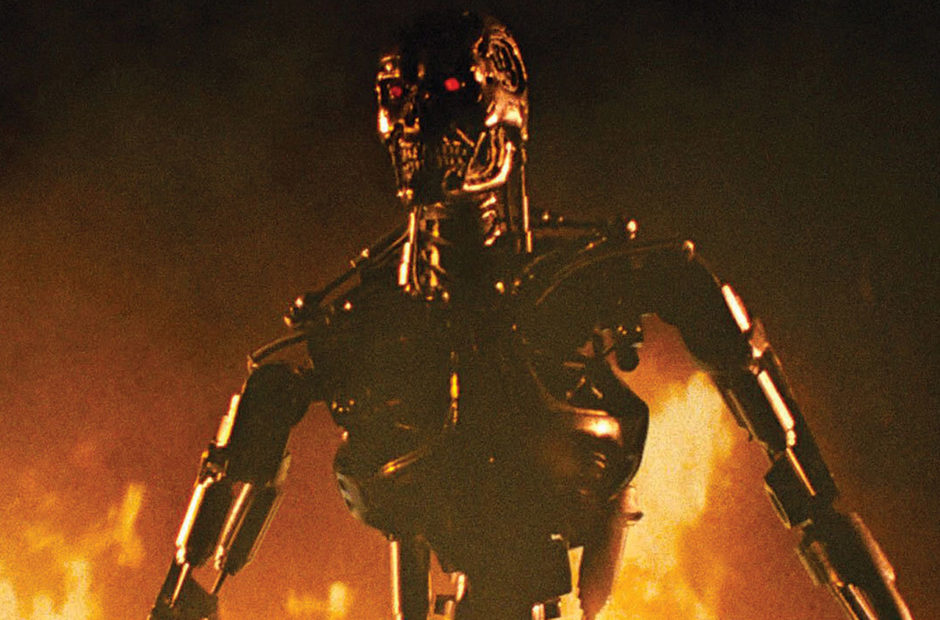
The Terminator franchise begins with one of the cleanest science fiction premises ever put on film: a killer machine travels back in time to murder the mother of the future resistance leader.
Simple. Elegant. Terrifying.
Then the sequels arrived, and suddenly watching the Terminator movies in order became less of a viewing plan and more of a whiteboard exercise involving alternate timelines, erased futures, Judgment Day moving around like a bad appointment, and multiple attempts to continue after Terminator 2: Judgment Day.
So here is the practical answer: if you are watching the Terminator movies for the first time, release order is the best place to start. That lets you see how the franchise grew, fractured, rebooted itself, and then tried to return to the first two films.
Chronological order is possible, but with Terminator, it needs a warning label.
Quick Answer: The Terminator Movies in Release Order
If you want the simplest way to watch the Terminator movies, start here.
| Movie | Year |
|---|---|
| The Terminator | 1984 |
| Terminator 2: Judgment Day | 1991 |
| Terminator 3: Rise of the Machines | 2003 |
| Terminator Salvation | 2009 |
| Terminator Genisys | 2015 |
| Terminator: Dark Fate | 2019 |
That is the full theatrical release order. It is also the easiest way to understand how the franchise became so tangled.
The Best Way to Watch the Terminator Movies
For first-time viewers, this is the cleanest viewing order:
- The Terminator
- Terminator 2: Judgment Day
- Terminator 3: Rise of the Machines
- Terminator Salvation
- Terminator Genisys
- Terminator: Dark Fate
That gives you the franchise as audiences experienced it.
However, there is an important catch: Terminator 2: Judgment Day is the real dividing line. Almost every later sequel is, in one way or another, trying to answer the same question:
What happens after T2?
The problem is that the franchise has offered more than one answer.
The Terminator Timeline Is Not One Straight Line
This is the part where the machines win, mostly because they understand flowcharts better than we do.
The first two movies form the core of the franchise:
- The Terminator
- Terminator 2: Judgment Day
After that, the series branches.
| Timeline Branch | Movies |
|---|---|
| Original sequel path | The Terminator, Terminator 2: Judgment Day, Terminator 3: Rise of the Machines, Terminator Salvation |
| Rebooted timeline | Terminator Genisys |
| James Cameron-backed legacy sequel path | The Terminator, Terminator 2: Judgment Day, Terminator: Dark Fate |
That means there is no single clean chronological order that makes every movie fit neatly together. The franchise is built around time travel, altered futures, and sequels that overwrite or ignore other sequels.
In other words, the continuity is not broken. It is aggressively time traveled.
The Terminator Movies in Chronological Timeline Order
If you want to watch by story chronology, the safest way is to follow the major timeline branches instead of pretending the whole franchise is one straight line.
The Original Sequel Timeline
- The Terminator
- Terminator 2: Judgment Day
- Terminator 3: Rise of the Machines
- Terminator Salvation
This is the path that continues from the first two films into the postponed Judgment Day and the future war.
The Dark Fate Timeline
- The Terminator
- Terminator 2: Judgment Day
- Terminator: Dark Fate
This version ignores the sequels after T2 and acts as a direct continuation of the first two James Cameron films.
The Genisys Timeline
- Terminator Genisys
Yes, that looks absurd by itself, but that is also the point. Terminator Genisys rewrites events around the original film and creates its own altered continuity. It references familiar events, but it does not function as a clean prequel or sequel to the rest of the series.
Terminator Movies in Release Order
The Terminator (1984)
James Cameron’s The Terminator is where the franchise begins, and it remains the best entry point.
The setup is lean and ruthless. A cyborg assassin is sent from the future to kill Sarah Connor before she can give birth to John Connor, the future leader of the human resistance. Kyle Reese is sent back to protect her.
What makes the movie work is how small and relentless it feels. This is not yet a giant mythology machine. It is a slasher movie wearing a science fiction skeleton, with Arnold Schwarzenegger as an unstoppable killer who does not bargain, does not get tired, and absolutely should not be trusted near a police station.
Where to watch: Available to stream; sold on physical media and digitally.

Terminator 2: Judgment Day (1991)
Terminator 2: Judgment Day is one of the great sequels, full stop.
The movie reverses the structure of the original by turning Schwarzenegger’s T-800 into John Connor’s protector. This time, the threat is the T-1000, a liquid-metal Terminator that remains one of the most effective movie monsters of the 1990s.
What makes T2 special is that it does not just go bigger. It goes deeper. Sarah Connor is no longer the terrified target from the first film. She is hardened, damaged, and absolutely convinced that the future can still be changed. The movie turns a chase story into a question of fate, responsibility, and whether humanity can stop building the thing that kills it.
Also, yes, it has a motorcycle jumping into a flood channel. Sometimes cinema is not complicated.
Where to watch: Available to stream; sold on physical media and digitally.
Terminator 3: Rise of the Machines (2003)
Terminator 3: Rise of the Machines continues after T2, but it changes the meaning of that ending.
Instead of “there is no fate but what we make,” T3 argues that Judgment Day was delayed, not stopped. John Connor is older, disconnected, and still living under the shadow of a future he thought had been avoided.
The movie introduces the T-X, a new Terminator sent to eliminate future resistance figures. Schwarzenegger returns as another reprogrammed Terminator, and the film leans harder into action spectacle and self-aware humor than the first two movies.
It is not as strong as The Terminator or T2, but it is important because it sets up the future war direction that leads into Terminator Salvation.
Where to watch: Available to stream; sold on physical media and digitally.
Terminator Salvation (2009)
Terminator Salvation is the franchise’s biggest attempt to move into the future war.
Set after Judgment Day, the film follows John Connor during the human resistance’s fight against Skynet. Christian Bale plays Connor, while Sam Worthington’s Marcus Wright becomes the movie’s central mystery.
The idea is strong. Instead of sending another Terminator back in time, Salvation tries to show the war the earlier movies warned us about. That alone makes it a notable entry, even if the execution divided fans.
For timeline purposes, this is the continuation of the T3 path, not the Dark Fate path and not the Genisys reboot.
Where to watch: Available to stream; sold on physical media and digitally.
Terminator Genisys (2015)
Terminator Genisys is where the timeline walks into a room, flips the table, and insists this was the plan all along.
The movie starts by revisiting familiar events from the original Terminator, then changes them dramatically. Sarah Connor is no longer the unsuspecting target we met in 1984. She has been raised by a reprogrammed Terminator she calls Pops, played by Schwarzenegger.
The result is part reboot, part alternate timeline, part greatest-hits remix. It is not a clean continuation of the earlier movies, and it should not be watched first even though it plays with the original film’s events.
For new viewers, save this one until after you know the first two movies. Otherwise, it is like watching someone remix a song you have never heard.
Where to watch: Available to stream; sold on physical media and digitally.

Terminator: Dark Fate (2019)
Terminator: Dark Fate ignores the sequels after Terminator 2 and acts as a direct follow-up to the first two films.
Linda Hamilton returns as Sarah Connor, with Arnold Schwarzenegger also returning in a very different take on the familiar Terminator role. The film introduces Dani Ramos, Grace, and a new machine threat connected to a different future.
The key thing to know is that Dark Fate is not the next chapter after Terminator Salvation or Terminator Genisys. It is a legacy sequel that branches off from T2 and says, essentially, “Let’s try this again from there.”
That makes it easier to understand than the franchise’s reputation suggests. Watch The Terminator, watch T2, then watch Dark Fate as one possible continuation.
Where to watch: Available to stream; sold on physical media and digitally.
Where Do the Terminator TV Shows Fit?
This is a movie guide, so the TV shows should not be counted in the main theatrical release-order list. But they are worth mentioning because they matter to the larger franchise.
Terminator: The Sarah Connor Chronicles
Terminator: The Sarah Connor Chronicles is a live-action TV series that continues after Terminator 2: Judgment Day while creating its own branch of the timeline.
It does not fit neatly with Terminator 3, Terminator Salvation, Genisys, or Dark Fate. Like many later Terminator stories, it uses the first two films as its foundation and then heads in its own direction.
Where to watch: Available to stream; sold on physical media and digitally.
Terminator Zero
Terminator Zero is an animated Netflix series released in 2024. It is set largely in Japan and introduces new characters rather than focusing on Sarah Connor and John Connor.
The series is not one of the Terminator movies, so it should not be placed in the main film list. If you are exploring the broader franchise, though, it is another alternate branch built around the same core idea: humans, machines, time travel, and the future trying very hard to murder the past.
Should You Watch Terminator in Release Order or Timeline Order?
For most viewers, release order is better.
Release order lets you experience the franchise’s evolution naturally:
- The Terminator creates the nightmare.
- Terminator 2 expands it into a blockbuster mythology.
- Terminator 3 continues the original sequel path.
- Terminator Salvation moves into the future war.
- Terminator Genisys reboots and rewrites the timeline.
- Terminator: Dark Fate returns to the first two films as its foundation.
Timeline order is trickier because the franchise does not have one timeline. It has branches. Some sequels continue earlier films. Some overwrite them. Some act like previous sequels never happened.
That is not a reason to avoid the franchise. It is just a reason not to start with a spreadsheet.
Which Terminator Movies Are Essential?
If you only want the essential Terminator experience, watch:
- The Terminator
- Terminator 2: Judgment Day
That is the core. Everything else is optional, depending on which version of the future you want to follow.
If you want the original sequel path, add:
- Terminator 3: Rise of the Machines
- Terminator Salvation
If you want the legacy sequel path, add:
- Terminator: Dark Fate
If you want the alternate reboot path, add:
- Terminator Genisys
If you want the complete theatrical experience, watch all six movies in release order.
Frequently Asked Questions About the Terminator Movies
What is the first Terminator movie?
The first Terminator movie is The Terminator, released in 1984 and directed by James Cameron.
What is the best Terminator movie to watch first?
Start with The Terminator. Even though later movies revisit or rewrite parts of the timeline, the 1984 film is still the best introduction to the franchise.
Are the Terminator movies connected?
Yes, but not in one straight line. The first two movies are the core of the franchise. After Terminator 2, the series branches into different continuations, including the T3/Salvation path, the Genisys reboot, and the Dark Fate legacy sequel path.
Does Terminator: Dark Fate ignore the other sequels?
Yes. Terminator: Dark Fate works as a direct sequel to The Terminator and Terminator 2: Judgment Day, ignoring Terminator 3, Terminator Salvation, and Terminator Genisys.
Is Terminator Genisys a remake?
Not exactly. Terminator Genisys revisits events from the original film, but it changes them and creates an alternate timeline. It is better described as a reboot or alternate-timeline sequel than a straightforward remake.
Is Terminator Salvation a prequel?
Terminator Salvation is not a prequel to the original movie in the usual sense. It is set after Judgment Day in the future war, continuing the timeline that follows Terminator 3: Rise of the Machines.
Do I need to watch the Terminator TV shows?
No. The TV shows are optional. Terminator: The Sarah Connor Chronicles and Terminator Zero are part of the broader franchise, but they are not required to follow the movies.
Final Thoughts on Watching the Terminator Movies in Order
The best way to watch the Terminator movies is release order. Start with The Terminator, then Terminator 2: Judgment Day, and continue from there if you want to see how the franchise keeps trying to solve the same future in different ways.
If you only watch two, watch the first two. That gives you the purest and most satisfying version of the story.
Everything after that is a branch. Some branches are stronger than others, but they all come from the same root: Sarah Connor, a machine from the future, and the terrifying possibility that humanity might be smart enough to build its own extinction but not smart enough to avoid doing it.
- The Alien Movies in Order: Complete Timeline Guide
- The Predator Movies in Order: Complete Timeline Guide
- Why Physical Media Still Matters for Movie Fans
Fun Jug Media, LLC (operating TheNerdy.com) has affiliate partnerships with various companies. These do not at any time have any influence on the editorial content of The Nerdy. Fun Jug Media LLC may earn a commission from these links.