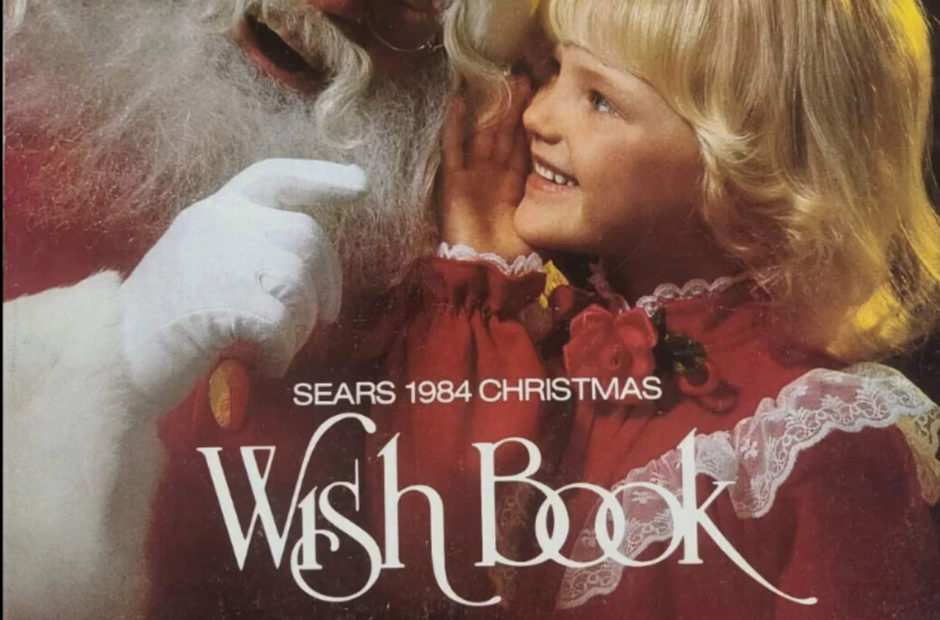
The Sears Wish Book was an indispensable annual ritual for American families long before digital shopping carts existed. Sometime between late August and early October, a thud echoed on front porches across the country as the mail carrier dropped a three-pound brick of high-gloss newsprint onto the welcome mat. For parents, it signaled that holiday expenses were fast approaching. For children, it was the opening bell of Christmas.
Sprawling across more than six hundred pages, the catalog was seized, dragged to living room rugs, and dog-eared until its spine split. Armed with red ballpoint pens or magic markers, siblings circled toys, stars were drawn next to desired video game cartridges, and elaborate, ranked hierarchies of plastic desires were drafted for Santa. Long before modern search bars or recommendation algorithms directed our purchases, that giant catalog served as the analog operating system of American childhood.
Yet the catalog was far more than a beloved piece of holiday nostalgia. It was a logistical marvel, an unstoppable retail monopoly, and the most influential kingmaker in the toy industry. By understanding the rise and fall of this annual publishing juggernaut, you see the direct ancestor of modern e-commerce, built decades before the World Wide Web.
The Depression-Era Experiment That Became a Tradition
Sears, Roebuck and Co. was already an established mail-order titan when it decided to test a targeted holiday concept. In 1933, in the depths of the Great Depression, Sears issued its very first dedicated Christmas catalog. It was a modest, 78-page booklet featuring Lionel electric train sets, a Miss Pigtails doll, live canaries, and Mickey Mouse wristwatches.
The gamble was an instant commercial success. By segregating high-margin toys, games, festive housewares, and seasonal apparel into a separate, glossy showcase, Sears discovered that consumers were willing to open their wallets for holiday gift-giving even during harsh economic times.
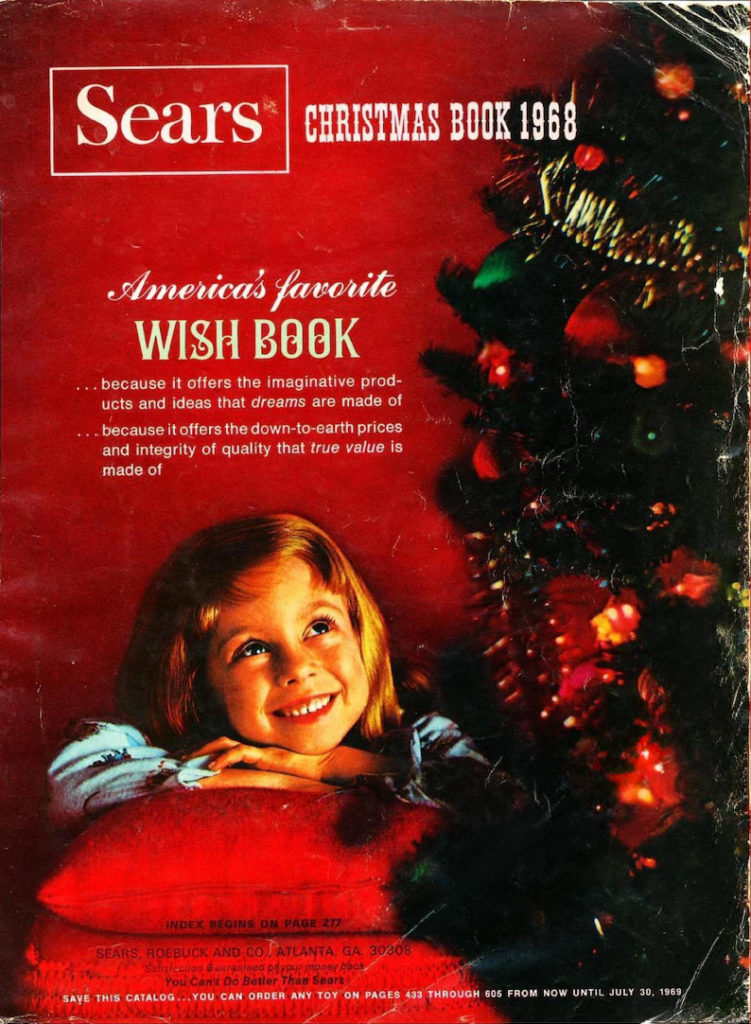
Over the subsequent decades, the publication grew into a cultural institution. By 1968, the company officially branded the holiday catalog as the Sears Wish Book. At its commercial peak in the 1970s and 1980s, each edition topped six hundred pages, distributed to tens of millions of households. More than two hundred of those pages were dedicated purely to toys, dolls, board games, video game systems, and sporting goods.
The Battle for the Center Spread
For toy manufacturers like Mattel, Hasbro, Kenner, Milton Bradley, and Parker Brothers, securing favorable placement inside the catalog was not just an advertising goal. It was life or death for their annual balance sheets.
Placement inside the pages was governed by high-stakes corporate negotiation. Toy makers paid substantial co-op advertising allowances and offered steep wholesale discounts just to have their flagship items photographed in full color near the front of the toy section. A full-page layout showcasing the newest action figures or dollhouses guaranteed massive nationwide orders from parents who lived hundreds of miles from the nearest metropolitan shopping mall.
Sears also wielded its immense retail leverage to demand products that consumers could purchase nowhere else:
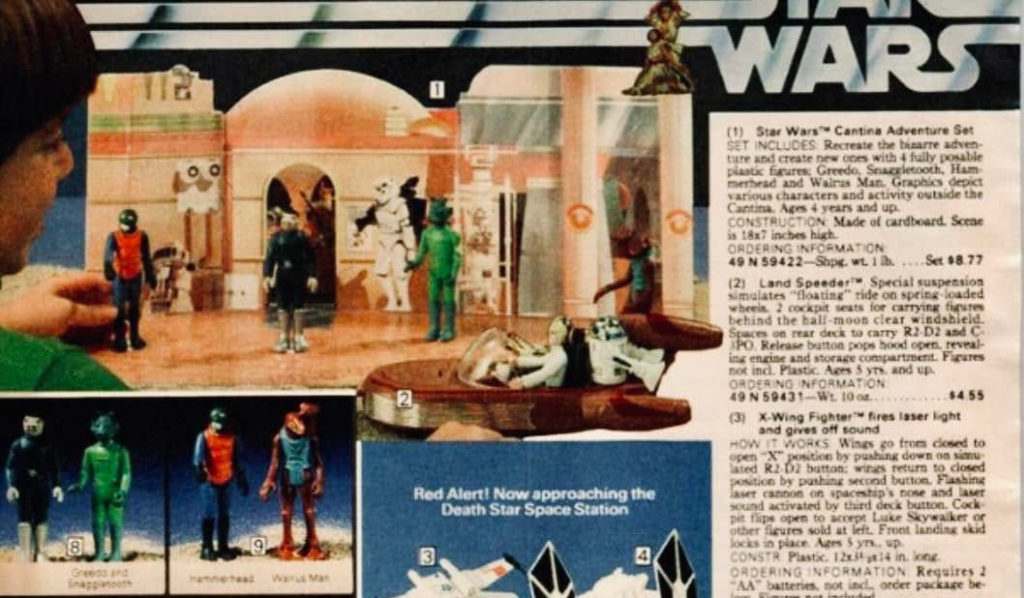
- Exclusive Store Multi-Packs: Sears routinely required toy companies to bundle figures, accessories, and playsets into exclusive catalog packaging. Kenner, for instance, created unique twin-packs and four-packs of vintage Star Wars figures that were shipped in plain brown mailer boxes exclusively to catalog shoppers.
- The Legendary Blue Snaggletooth: The most famous catalog anomaly in toy history occurred in 1978. Sears secured the exclusive rights to sell the Kenner Cantina Adventure Set. Because Kenner designers were working from limited black-and-white Lucasfilm production stills, they molded the alien character Snaggletooth as a tall humanoid wearing a blue space suit and silver boots. When the film reached wide release, Snaggletooth was revealed to be a short alien wearing a red tunic. Kenner quickly corrected the retail figure, turning the tall “Blue Snaggletooth” from the catalog into one of the sought-after action figure collectibles in existence.
- Cardboard Playsets and Catalog Variants: To keep mail-order shipping costs manageable and offer lower price points, Sears partnered with manufacturers to produce budget-friendly cardboard versions of massive plastic playsets, including exclusive editions of the Star Wars creature cantina and early superhero command centers.
The Invisible Supply Chain Empire
The cultural magic of the catalog rested on a foundation of industrial engineering that laid the groundwork for today’s supply chains.
Operating out of its colossal, multi-million-square-foot catalog merchandise center on Chicago’s West Side, along with regional fulfillment hubs nationwide, Sears built a distribution network that rivaled the United States Postal Service. Hundreds of rail cars rolled directly into the basements of Sears fulfillment centers daily, unloading merchandise that was sorted, packed, and shipped via pneumatic tubes, conveyor belts, and small armies of pickers navigating sprawling warehouse aisles on roller skates.
When an order form arrived in the mail, or a customer phoned the local catalog desk, the machinery moved with military precision. Families in remote farming communities could order a television, a velvet party dress, a set of Craftsman tools, and an Atari 2600 console, knowing the entire order would arrive at their doorstep or local pick-up center within days.
Decades before Jeff Bezos envisioned an “everything store,” Sears had already realized the dream using paper pages, rotary telephones, and freight rail.
The Discounter Squeeze and the End of an Era
Despite its historic dominance, the catalog empire was caught completely flat-footed by structural shifts in American retail during the late 1980s.
First came the rise of specialized big-box “category killers.” Retailers like Toys “R” Us built massive warehouse stores stocked floor-to-ceiling with every toy imaginable, offering immediate gratification and lower prices without requiring parents to wait weeks for postal fulfillment or pay shipping fees.
Simultaneously, hyper-efficient discount chains like Walmart and Target expanded rapidly across suburban and rural America. In 1989, Walmart officially surpassed Sears as the largest retailer in the United States, utilizing advanced computerized inventory systems to drastically undercut traditional department store pricing.
The colossal overhead required to print, bind, and ship millions of multi-hundred-page catalogs every year became an unsustainable corporate burden. In early 1993, Sears shocked the business world by announcing the complete shutdown of its traditional general catalog division, eliminating roughly 50,000 jobs.
While Sears continued to issue smaller, specialty holiday versions bearing the Wish Book moniker sporadically through the 1990s and 2000s, the cultural moment had passed. The retailer struggled to transition its catalog infrastructure into the internet age, ceding the digital landscape to Amazon and modern e-commerce platforms.
The Lost Ritual of Anticipation
Today, a holiday wish list is an Amazon link or a shared digital spreadsheet. Items are delivered within twenty-four hours, algorithmic alerts ping smartphones when prices fluctuate by pennies, and inventory availability is confirmed in a fraction of a second.
The transaction is undeniably faster and vastly more convenient. Yet something visceral vanished when the massive paper catalog disappeared. The Sears Wish Book was an exercise in collective anticipation. It was a tangible object passed between hands, filled with shared family discussions and handwritten dreams on newsprint pages. It was proof that long before software code connected the world, a three-pound paper book could unite millions of living rooms in the simple, breathless wonder of the holiday season.