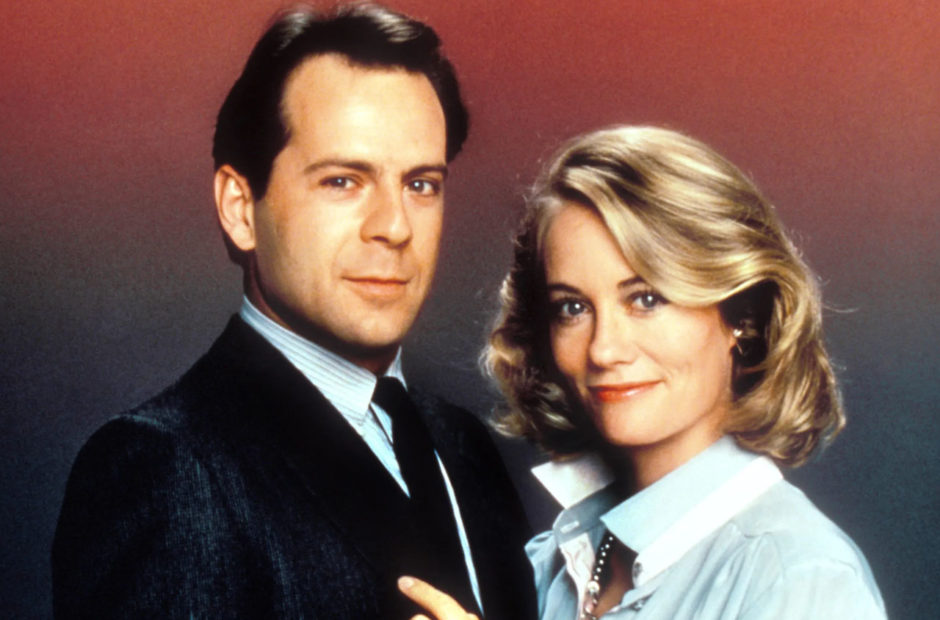
For decades, the “Moonlighting Curse” has plagued broadcast network executives with a strict, unbreakable rule regarding television romance: keep the two leads apart at all costs. Conventional wisdom held that sexual tension drove a show’s ratings, and the moment that tension resolved, the audience would get bored and change the channel.
The Origin of the Moonlighting Curse
The trope takes its name from the hit 1980s ABC detective dramedy Moonlighting, starring Cybill Shepherd and a pre-Die Hard Bruce Willis. The show was a massive critical and commercial success, fueled entirely by the crackling, combative sexual tension between the two leads, Maddie Hayes and David Addison.
For two and a half seasons, the writers masterfully teased the audience. Finally, in a highly publicized season three episode, Maddie and David slept together. Almost immediately after, the show’s ratings completely collapsed, and the series was eventually canceled.
Hollywood executives took the wrong lesson from this. They looked at the timeline and concluded that consummating the relationship killed the show. In reality, Moonlighting was destroyed by a brutal combination of behind-the-scenes chaos: a massive writer’s strike, Shepherd taking maternity leave, Willis breaking his collarbone and leaving to shoot a movie, and the episodes frequently airing out of order. The romance didn’t kill the show; the production schedule did. But the myth was born, and for the next twenty years, writers were terrified of letting their main characters get together.
The Art of the Stall
Because of the Moonlighting Curse, the “Will They/Won’t They” dynamic became an exhausting staple of 1980s and 1990s television. Writers would contrive increasingly absurd reasons to keep characters apart to protect the ratings.
Shows like Cheers (Sam and Diane), The X-Files (Mulder and Scully), and Friends (Ross and Rachel) built massive audiences by dragging out the tension for years. Characters would constantly get interrupted right before a kiss, suffer sudden bouts of amnesia, or arbitrarily decide to marry entirely different people just to reset the romantic chessboard.

The Gilmore Girls Exception
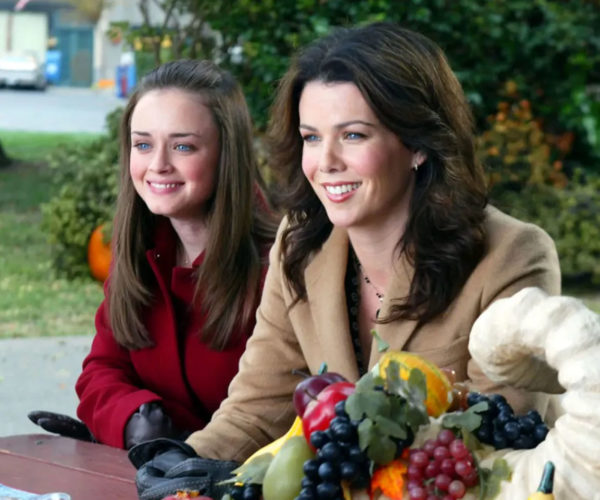
As the broadcast era evolved, a few shows proved that the curse could be beaten if the writing was strong enough. The shadow of the Moonlighting Curse hung heavily over Gilmore Girls, which spent four agonizing seasons building a slow-burn romance between Lorelai Gilmore and diner owner Luke Danes.
When the two finally got together at the end of season four, industry purists worried the show had written itself into a corner. Instead, they found a way through it that actually worked. The writers realized that while the romantic tension was a fun hook, the actual engine of Gilmore Girls was the complex mother-daughter dynamic and the eccentric ecosystem of Stars Hollow. By letting Luke and Lorelai be a functional (mostly) couple, the show freed up narrative space to explore more interesting conflicts, proving that a show didn’t have to die just because two adults finally communicated their feelings.
Breaking the Curse
Today, the Moonlighting Curse is largely viewed as an archaic relic of the broadcast era. Modern audiences simply do not have the patience for a seven-year stall tactic.
Shows like The Office (Jim and Pam), Parks and Recreation (Leslie and Ben), and Brooklyn Nine-Nine (Jake and Amy) successfully shattered the myth by treating their characters like actual adults. They proved that if you write compelling, multi-dimensional characters, watching them navigate a healthy, committed relationship is just as entertaining as watching them pine for each other from across a room.