Learning how to store board games properly becomes increasingly important as your collection grows. What starts as a few games tucked into a cabinet can eventually become shelves filled with boxes of different shapes and sizes, each containing cards, boards, tokens, dice, and other components that need protection.
Unlike books or movies, board games aren’t particularly uniform when it comes to storage. One game might contain nothing more than a deck of cards, while another includes several boards, hundreds of tokens, and dozens of delicate miniatures. Even the boxes themselves can vary considerably in construction and durability.
Fortunately, protecting a board game collection doesn’t require expensive storage systems or a dedicated gaming room. Understanding how different components can be damaged, choosing appropriate shelving, and paying attention to environmental conditions can help keep your games in good condition for years to come.
Should You Store Board Games Vertically or Horizontally?
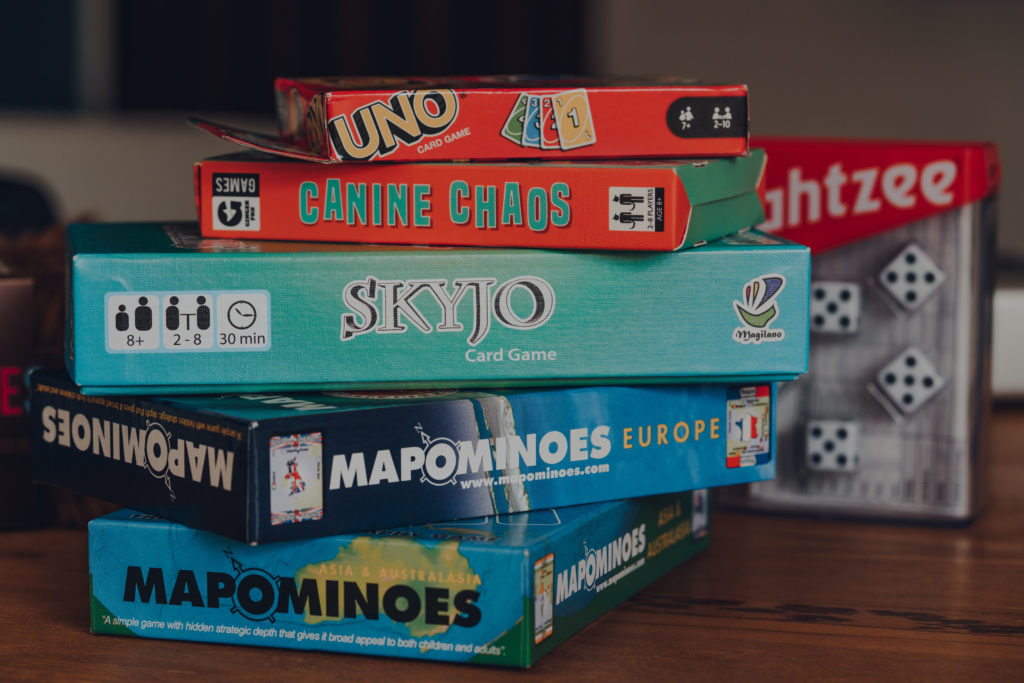
One of the most common debates among board game collectors concerns whether boxes should be stored vertically, like books, or horizontally, stacked on top of one another. Both approaches have advantages, and neither is automatically the right choice for every game.
Vertical storage is popular because it makes individual games easier to access. You can see the titles along their spines, remove a box without disturbing an entire stack, and arrange your collection on ordinary bookshelves. It also eliminates the problem of heavy games sitting on top of lighter boxes for extended periods.
However, storing a game vertically can create problems if its components aren’t secured. Cards, dice, tokens, and other pieces may fall out of their trays or shift toward the bottom of the box. In some cases, that movement can damage delicate components or make opening the game an unpleasant experience.
Some factory inserts are designed to hold everything in place when the box is stored flat. Turn those boxes on their sides, and the contents may no longer remain in their intended compartments. This is particularly common with games that contain numerous loose tokens or miniatures.
Horizontal storage avoids many of those problems because gravity helps keep the components in their trays. It’s also useful for unusually shaped boxes that don’t stand securely on their edges. The disadvantage is that stacking too many games can place considerable weight on the boxes at the bottom, potentially causing lids to bow, corners to crush, or cardboard to deform.
For most collections, a combination of both methods makes sense. Store sturdy boxes vertically when their contents are properly secured, and keep games with fragile components or unsuitable inserts horizontal. If you’re stacking boxes, place heavier games toward the bottom and avoid creating tall piles that put excessive pressure on the lower boxes.
Before committing to vertical storage, try gently turning a closed game onto its side. If you can hear components sliding around inside, it’s worth checking whether they need additional protection.
Credit: iStock/Alena Kravchenko
Protecting Board Game Boxes From Damage
It’s easy to concentrate on protecting the pieces inside a board game while overlooking the box itself. However, boxes are often an important part of a collection, particularly for older games, limited editions, and titles that are no longer being produced.
Cardboard boxes can suffer from crushed corners, torn edges, surface scratches, and deformation caused by excessive pressure. Many of these problems develop gradually rather than resulting from a single accident.
Start by making sure your shelves provide adequate support. A box shouldn’t hang significantly over the edge of a shelf, especially if it’s heavy or contains numerous components. Likewise, avoid squeezing games so tightly together that removing one requires pulling against the neighboring boxes.
When arranging games vertically, leave enough room to remove them without scraping their surfaces against the shelf above or the boxes beside them. If a game fits so tightly that you have to force it into place, the storage space is too small.
Be especially careful with unusually large games. Some collector’s editions and miniature-heavy titles weigh considerably more than an ordinary board game, and their boxes may not be designed to support substantial weight from other games.
Don’t Force an Overfilled Box Closed
Another common problem develops when a game’s contents no longer fit comfortably inside its original packaging. This can happen after adding card sleeves, expansions, upgraded components, or aftermarket organizers.
If the lid no longer closes properly, don’t force it down or place heavy objects on top to keep it shut. Doing so can damage the box corners, distort the lid, or place unnecessary pressure on the components inside.
Instead, reconsider how the contents are arranged. Removing an inefficient insert, using smaller bags for loose components, or storing an expansion separately may provide the space you need. Some collectors prefer keeping everything in a single box, but preserving the original packaging is more important than forcing additional material into a container that wasn’t designed to hold it.
Protective box sleeves are available for some popular games and can help reduce surface wear from handling and shelving. However, they’re optional rather than essential, and they won’t compensate for poor storage conditions or excessive pressure.
How to Protect Cards, Tokens, and Other Game Components
A board game box provides the first layer of protection, but the way components are stored inside it can be just as important. Loose pieces can rub against one another, heavier items can press against delicate components, and poorly fitted inserts may allow everything to shift when the game is moved.
Fortunately, most games don’t require elaborate storage solutions. A few appropriately sized bags, compartments, or dividers are often enough to keep the contents secure.
Cards and Cardboard Components
Cards are among the most frequently handled components in many board games, making them particularly susceptible to wear. Repeated shuffling can damage edges, while spills, dirty hands, and rough playing surfaces can leave permanent marks.
Protective card sleeves can be useful for games that receive frequent play, especially when cards are shuffled regularly or the game would be difficult to replace. However, there’s no reason to assume that every card in every board game needs a sleeve.
Board games also use a wide variety of card sizes, so check the dimensions before purchasing sleeves. Standard trading card sleeves won’t necessarily fit smaller European-style cards, oversized cards, or unusual formats.
Remember that sleeving cards increases the amount of space they occupy. A deck that fits comfortably inside its original insert may no longer fit after sleeving, so you may need to adjust how the cards are stored.
For additional information about protecting collectible cards, see our guide to storing and protecting trading cards, which covers sleeves, rigid holders, and environmental considerations in greater detail.
Cardboard tokens and tiles generally don’t require individual protective sleeves, but they should be kept from moving around excessively. Small resealable bags can help separate different types of tokens, making setup easier while reducing unnecessary friction between components.
Avoid packing bags so tightly that tokens are bent or pressed against one another. If a game contains particularly delicate cardboard pieces, a compartmentalized organizer may provide better support than a tightly packed bag.
Dice, Wooden Pieces, and Miniatures
Dice and wooden components are usually more durable than cards or cardboard, but that doesn’t mean they should be left loose inside a box. Heavy dice can strike more delicate pieces when a game is moved, while painted wooden components may develop chips or scratches from repeated contact.
Keeping these items in separate bags or compartments is generally sufficient. There’s little reason to purchase elaborate storage accessories for ordinary wooden cubes, meeples, or standard dice unless doing so makes the game easier to use.
Miniatures require more consideration, particularly when they feature thin weapons, extended limbs, wings, or other fragile details. Packing several figures tightly together can cause delicate parts to bend or break, especially if the box is transported frequently.
Games with detailed miniatures may benefit from individual compartments, foam inserts, or other storage systems that prevent the figures from rubbing against one another. Painted miniatures deserve additional care because contact between figures can damage their painted surfaces.
Not every miniature needs an expensive custom insert, however. The appropriate level of protection depends on the figures, their construction, and how frequently the game is handled or transported.
Should You Replace the Original Game Insert?
Factory inserts vary enormously in quality. Some are carefully designed to hold every component securely, while others seem intended primarily to keep everything in place during shipping.
If the original insert works well, there’s no particular reason to replace it. However, if cards constantly spill out of their compartments or pieces become mixed together whenever you move the box, modifying the storage arrangement may be worthwhile.
Simple resealable bags are often the easiest solution. They’re inexpensive, take up relatively little space, and allow you to separate components without changing the game’s packaging. Choose bags large enough that pieces fit comfortably without being forced into corners or compressed.
Aftermarket organizers can be useful for games with complicated setups or large numbers of components. Some provide dedicated spaces for cards, tokens, and miniatures, while others include removable trays that can be placed directly on the table during play.
Before purchasing one, check that it accommodates any expansions or sleeved cards you own. An organizer designed around unsleeved cards may not work for a collection you’ve already modified, and some organizers add enough bulk that the original lid no longer closes completely.
The best storage arrangement is the one that protects the components while allowing the game to be packed away without unnecessary pressure.
Temperature, Humidity, and Sunlight Matter
Board games contain a mixture of materials, including cardboard, paper, plastic, wood, and occasionally metal. These materials don’t always respond to environmental changes in the same way, which makes proper storage conditions important for long-term preservation.
Cardboard and paper are particularly sensitive to moisture. High humidity can contribute to warping, swelling, and mold growth, while repeated changes in humidity can cause materials to expand and contract. Wooden components may also respond to changes in moisture, and some plastics can become distorted when exposed to excessive heat.
For most collectors, the simplest solution is to keep games in a reasonably cool, dry, climate-controlled room. Avoid storing valuable collections in garages, attics, or damp basements where temperatures and humidity may fluctuate significantly throughout the year.
The National Park Service’s museum conservation resources discuss the importance of protecting collections from environmental threats such as temperature fluctuations, moisture, light, and pests. While ordinary board games don’t require museum-level storage facilities, the same general principles are useful for protecting them.
Direct sunlight is another concern. Prolonged light exposure can fade printed artwork on boxes and boards, while heat from sunlight may contribute to additional deterioration. If your collection is displayed on open shelving, try to position it away from windows where the boxes will receive direct sunlight for extended periods.
Water damage is an especially serious risk because cardboard can absorb moisture quickly. Keep valuable games off the floor when possible, particularly in rooms where plumbing leaks, flooding, or water intrusion could occur. Sturdy shelving provides both better accessibility and an additional layer of protection against minor water incidents.
Dust is less destructive than water, but it can accumulate on exposed boxes and work its way into damaged packaging. Periodically dusting shelves and the outside of boxes with a clean, dry cloth can help keep the collection in good condition. Avoid spraying cleaning products directly onto cardboard, and don’t use excessive moisture when cleaning around your games.
Storing Board Games You Rarely Play
Not every game in a collection receives regular attention. Some are saved for particular groups, others are seasonal favorites, and a few may be kept primarily because they’re difficult to replace or hold sentimental value.
Games that spend months or years in storage deserve a little additional preparation, particularly because problems may go unnoticed for long periods.
Before putting a game away, check that all components are clean and completely dry. Make sure cards and boards aren’t bent, tokens are stored without excessive pressure, and any delicate miniatures are adequately protected. If the game contains batteries, remove them before long-term storage to reduce the risk of damage from leakage.
It’s also worth checking that the box closes normally. A lid that’s being forced upward by an overfilled insert may gradually become distorted, particularly if other boxes are stacked on top of it.
If you’re storing games in a closet or another enclosed area, make sure the space remains reasonably dry and isn’t prone to condensation or pest activity. Avoid placing cardboard boxes directly against surfaces where moisture may accumulate, and don’t assume that putting a game inside a plastic storage bin automatically makes it safe from environmental problems.
Plastic containers can provide useful protection against dust and accidental splashes, but they can also trap moisture if damp materials are sealed inside them. The condition of the storage area still matters.
For collections that remain in storage for extended periods, occasional inspections are worthwhile. Look for signs of moisture, mold, pests, or damaged packaging, and check that the shelves and containers remain in good condition. You don’t need to unpack every game during each inspection, but catching a developing problem early may prevent damage to the rest of the collection.
Keeping Your Board Game Collection in Good Condition
One of the appealing things about board games is that they’re meant to be handled, shared, and enjoyed. Unlike some collectibles that spend their entire lives inside protective cases, a board game is likely to be opened repeatedly, spread across a table, and packed away after every session.
That regular use makes sensible storage especially worthwhile. Securing loose components, supporting boxes properly, and keeping games away from moisture and excessive heat can prevent much of the damage that accumulates over time.
There’s also no need to treat every game as though it’s a priceless museum artifact. A frequently played family favorite may show some wear despite your best efforts, and that doesn’t necessarily mean you’ve failed to care for it. The goal is to prevent avoidable damage while keeping the games accessible enough that you’ll actually want to play them.
Whether your collection occupies a single bookshelf or an entire room, a little attention to how everything is stored can help ensure that your favorite games are ready the next time someone asks what you’re playing tonight.