There are toy lines that get remembered because they were popular, and then there are toy lines that get remembered because they seemed to take over the entire bedroom floor.
Masters of the Universe belongs firmly in the second category.
He-Man has returned to pop culture more than once, through cartoons, collector lines, retail revivals, anniversary releases, and now another live-action movie. But the reason Masters of the Universe keeps coming back is not simply brand recognition. It is because the toy line still understands what made Eternia work in the first place.
Masters of the Universe was built to sell a world, not just a hero. The figures were chunky, colorful, strange, instantly readable, and surrounded by beasts, vehicles, playsets, package art, and mini-comics that made the whole thing feel bigger than the shelf space it occupied.
That is why Mattel’s modern revival, especially the Masters of the Universe Origins line that began in 2020, landed with collectors. It did not bring He-Man back by pretending he was something else. It embraced the muscles, the monsters, the weapons, the colors, the mini-comic energy, the weird names, and the feeling that every figure was one good afternoon away from knocking over Castle Grayskull again.

Masters of the Universe Was Built Like a Toy Line First
One of the reasons Masters of the Universe still works is simple: it began as a toy line.
The original Mattel figures launched in 1982, before the Filmation animated series turned He-Man into an after-school staple in 1983. That order matters. The toys did not feel like merchandise hanging off a cartoon. The cartoon helped sell the toys, absolutely, but the line already had its own visual language before most kids ever heard Prince Adam explain the power of Grayskull.
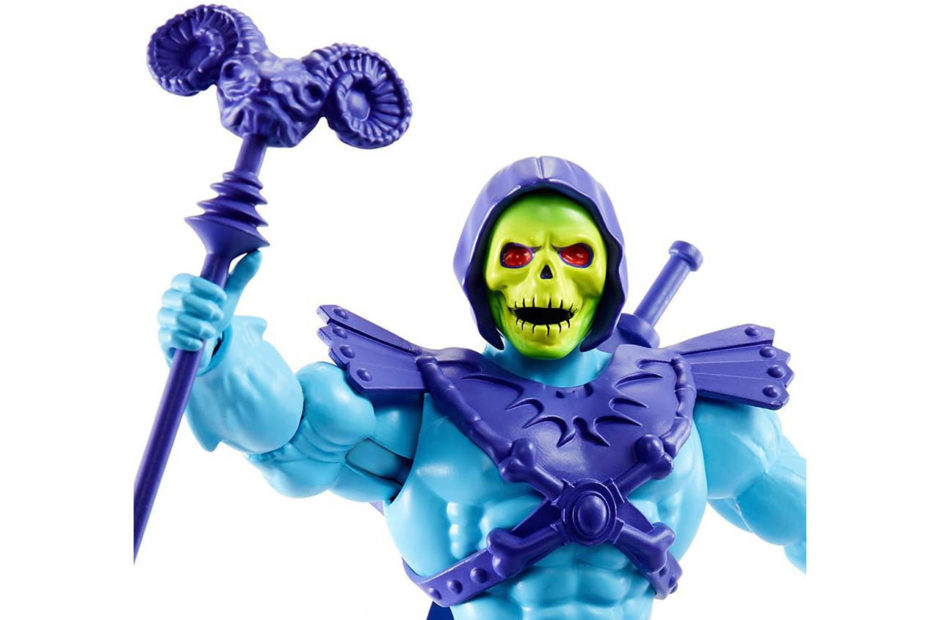
That early toy-first DNA gave Masters of the Universe a different texture from many licensed lines. The figures were chunky, colorful, and built around instant recognition. You did not need a detailed biography to understand He-Man, Skeletor, Beast Man, Mer-Man, Teela, Man-At-Arms, Stratos, or Zodac. The names were basically tiny sales pitches. The bodies were heroic and exaggerated. The weapons looked dangerous. The villains looked like they had crawled out of a monster magazine and then joined a gym.
That was the point.
The original figures were not trying to be delicate. They were not trying to disappear into realism. They were 5.5-inch hunks of toyetic confidence with spring-action waists, shared parts, bold colors, and a scale that made them feel bigger than the 3.75-inch action figures that dominated so much of the post-Star Wars toy aisle.
Masters of the Universe did not win by being subtle. It won by looking like nothing else on the shelf.
The 1980s Line Understood the Power of the Toy Aisle
Walk into a toy aisle in the early 1980s and Masters of the Universe knew exactly how to get your attention.
The packaging was loud in the best possible way. The logo looked like it belonged on a sword, a volcano, or a van mural. The card art had color, movement, and danger. The mini-comics gave kids just enough story to make the characters matter without locking play into one strict version of the world.
That was a huge part of the line’s appeal. Eternia was defined, but not over-explained. The mini-comics, package copy, toy designs, and eventually the animated series gave kids a framework, but the toys still left room for backyard mythology. Castle Grayskull could be a fortress, a haunted skull, a secret base, a throne room, a trap-filled dungeon, or whatever the afternoon required.
That kind of flexibility mattered.
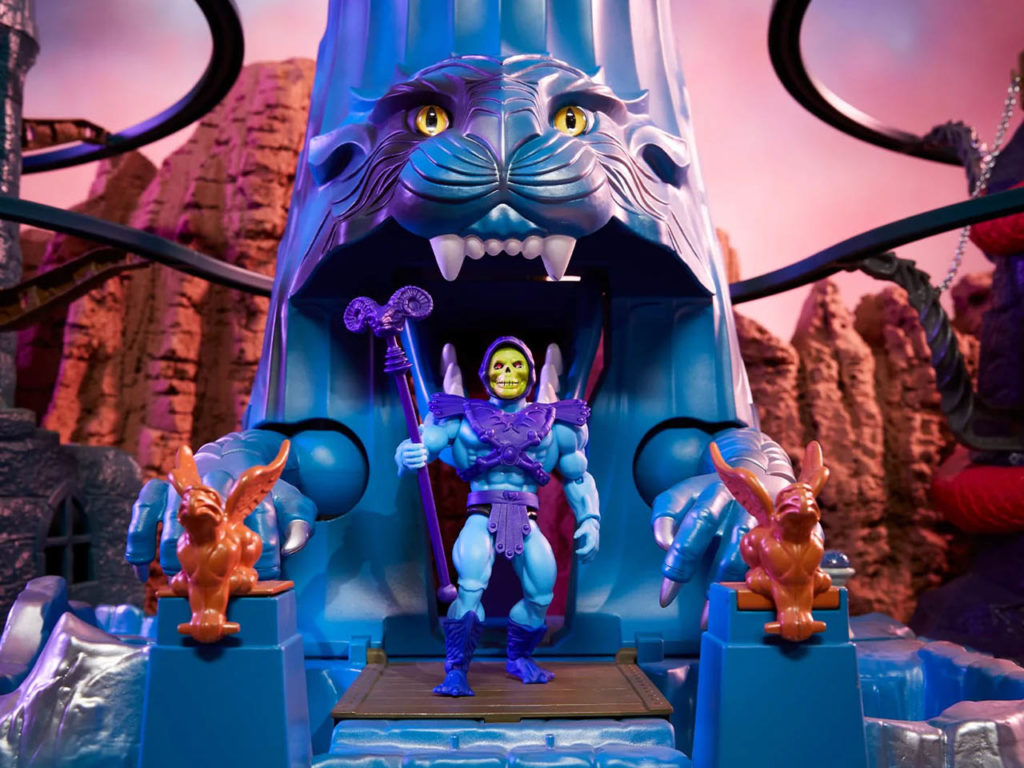
He-Man could ride Battle Cat. Skeletor could command Panthor. The Battle Ram could split into different vehicles. The Wind Raider had a grappling hook. Castle Grayskull opened up like a plastic forbidden temple. Later figures added action features, strange creature designs, faction identities, and enough oddball names to make the line feel like it was growing in every direction at once.
And that is the thing about Masters of the Universe: it was not just a figure line. It was a system. Figures, beasts, vehicles, playsets, weapons, mini-comics, animation, and package art all fed the same fantasy.
That is why the line felt so big even before you had many toys from it. A kid with He-Man and Skeletor had a conflict. A kid with Battle Cat had a ride. A kid with Castle Grayskull had a world.
Why Origins Worked When So Many Revivals Miss the Point
Modern nostalgia lines often fail because they do one of two things wrong.
They either reproduce the old toy so faithfully that it feels like a museum piece, or they modernize it so aggressively that it loses the thing people cared about in the first place.
Masters of the Universe Origins found the smarter middle ground.
Beginning in 2020, Origins gave collectors and longtime fans figures that looked and felt spiritually connected to the vintage Mattel line, but with modern articulation and cleaner play value. The figures kept the classic 5.5-inch scale and retro packaging feel, but they were easier to pose, easier to display, and more in tune with what modern buyers expect from an action figure.
That was the right move because the original Masters of the Universe figures were never beloved because they were realistic. They were beloved because they had presence. Origins understood that He-Man should still look like He-Man. Skeletor should still look like Skeletor. Beast Man should still look like a furry orange nightmare who would absolutely smell terrible in person.
The line also brought back one of the great forgotten pleasures of vintage toys: the card back.
A good Masters of the Universe card back is not just packaging. It is a checklist, a promise, and a problem for your allowance. Seeing the other figures was part of the experience. Origins leaned into that old retail psychology. It reminded collectors that part of the fun was never just owning one figure. It was knowing there was always another character, another vehicle, another villain, another version, another piece of Eternia just out of reach.
That is dangerous behavior from a toy company.
Also effective.
Masterverse Gave the Brand a Second Modern Track
Origins was not the only modern Masters of the Universe strategy.
In 2021, Mattel introduced the Masterverse line around the era of Netflix’s Masters of the Universe: Revelation. Where Origins leaned into retro play, Masterverse aimed more directly at modern collector shelves with larger, more detailed 7-inch figures.
That split was important. It allowed Mattel to serve two related but different audiences.
Origins was for the fan who wanted the emotional hit of seeing a modern figure that looked like it belonged near the old card art. Masterverse was for the fan who wanted more sculpting, more articulation, and a figure that could stand beside other modern collector lines without looking like it had wandered in from 1984 looking for the Kay-Bee Toys.
That two-track approach helped Masters of the Universe avoid one of the common revival traps. It did not have to make one line do everything. Origins could be charming, colorful, and retro. Masterverse could be more premium and display-driven. Cartoon Collection figures could lean into animation-specific nostalgia. Movie-era products could support whatever current version of the brand Mattel wants to push next.
Instead of treating Masters of the Universe as one fixed memory, Mattel started treating it like a toy ecosystem again.
That is when the brand feels strongest.
Mattel
Why Every New Comeback Starts With the Toys
The 2026 live-action Masters of the Universe movie gives He-Man another mainstream moment, but the brand’s latest comeback did not begin with a trailer. It began when Mattel put the toys back in front of collectors and nostalgic fans in a form that understood why the line worked in the first place.
That matters because Masters of the Universe has always depended on toy logic more than traditional story logic.
Yes, the cartoons matter. Yes, the characters matter. Yes, the mythology matters. But the heart of the brand is still the toy shelf: He-Man, Skeletor, Battle Cat, Castle Grayskull, strange villains, stranger allies, vehicles that look like they were designed during a sugar rush, and a world where fantasy and science fiction can stand next to each other without anyone in the room asking for a flowchart.
That is why the modern lines have worked as well as they have. They are not just selling nostalgia for a cartoon. They are selling the feeling of building Eternia again.
The movie may bring more attention. That is useful. But for collectors and toy fans, the real comeback had already been happening in the aisles, on collector shelves, and through Mattel’s willingness to keep expanding the line in multiple directions.
The toys did the heavy lifting first.
Why Collectors Still Care About Eternia
Collectors still care about Masters of the Universe because the line is built around things toy collectors love.
Strong silhouettes. Loud colors. Distinct factions. Vehicles that look ridiculous in the right way. A central playset that may be one of the most recognizable toy castles ever made. Variants that actually make sense within the brand’s toy logic. Deep-cut characters that feel rewarding without requiring a graduate seminar in continuity.
There is also a tactile quality to MOTU that is hard to fake.
Vintage figures have a specific weight and stance. Origins figures echo that feeling while making them easier to pose. The weapons are simple but iconic. The armor clips on. The beasts and vehicles feel like extensions of the figures rather than separate accessories. Even the repetition of body parts across the original line became part of the charm. You could tell Mattel was building an army of weirdos out of a toy system, and somehow that made Eternia feel more coherent, not less.
For adult collectors, MOTU also hits a very specific emotional lane. It was not quiet nostalgia. It was big, bright, weird, and slightly dangerous-looking. It belonged to the era when toy aisles were packed with brands fighting for attention, and Masters of the Universe fought harder than almost anyone.
That is why the modern revival works. It does not ask collectors to apologize for liking He-Man. It understands that the absurdity is part of the appeal.
A man with a pageboy haircut, a power sword, furry shorts, and a green tiger should not work.
And yet, here we are.
The Power Was Never Just Nostalgia
The reason Masters of the Universe toys keep coming back is not complicated, but it is easy to underestimate.
Mattel remembered what the brand was.
It was not just fantasy. It was not just science fiction. It was not just a cartoon property. It was not just collector nostalgia. Masters of the Universe was a toy world designed to be seen from 20 feet away, understood in five seconds, and played with for years.
The modern resurgence worked because it respected that. Origins did not sand off the weird edges. Masterverse gave collectors another lane. The Cartoon Collection and other modern branches have continued to prove that Eternia can support more than one kind of toy buyer at the same time.
That is the lesson for Retro Toy Box, and it is why this series is starting in Eternia.
The best toy lines do more than sell characters. They sell a place you want to visit, a conflict you understand instantly, and a shelf full of plastic that somehow feels like a mythology.
Masters of the Universe did that in 1982.
Somehow, all these years later, it is still doing it.