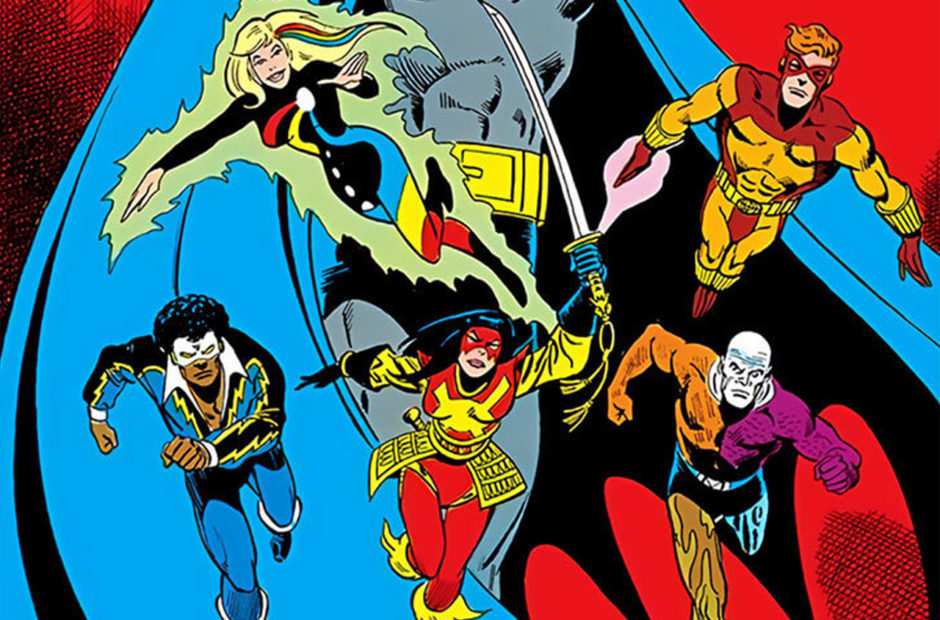
The Outsiders were created for missions the Justice League could not handle publicly. While most superhero teams operate in the spotlight, the Outsiders function in the shadows, taking on threats that require secrecy, infiltration, and deniable operations.
Though the roster has changed repeatedly over the years, one idea has remained consistent: this is a team built to operate outside the system.
The Origin of the Outsiders
The Outsiders first appeared in Batman and the Outsiders #1 in 1983, created by writer Mike W. Barr and artist Jim Aparo. The team formed after Batman temporarily left the Justice League, frustrated by restrictions that prevented immediate action during a crisis.
Instead of waiting for approval, Batman assembled his own hand-picked group of heroes willing to operate more directly.
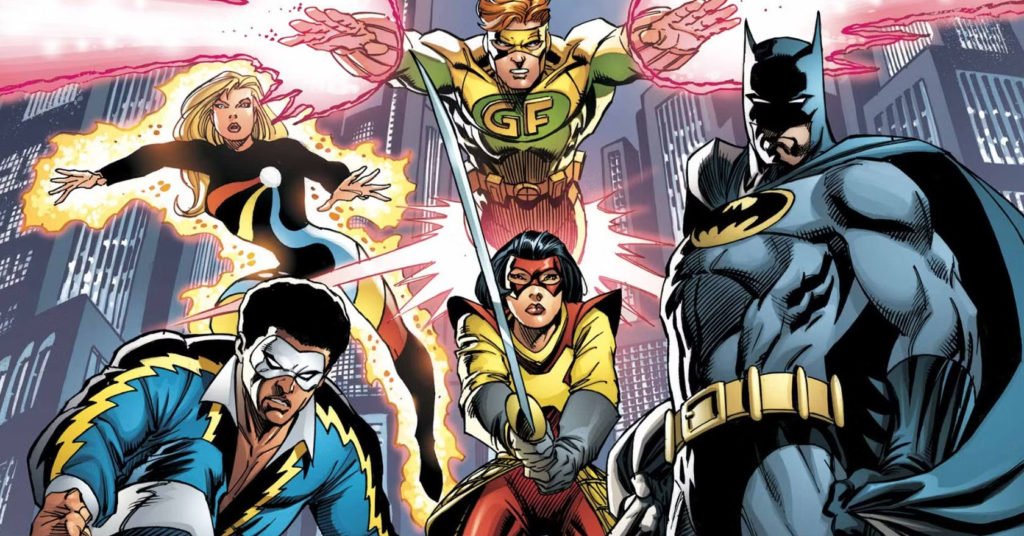
The Original Team Lineup
The first version of the Outsiders combined established heroes with newer characters, creating a team that felt very different from the Justice League.
- Batman – Founder and strategist of the team.
- Black Lightning – A powerful hero capable of generating and controlling electricity.
- Geo-Force – A prince with earth-based powers tied to gravity and geology.
- Halo – A mysterious hero capable of generating energy auras with different abilities.
- Katana – A master swordswoman carrying the mystical Soultaker sword.
- Metamorpho – A shape-shifting hero who can transform his body into different elements.
This combination gave the team a more grounded and tactical feel compared to larger superhero organizations.
How the Outsiders Differ from the Justice League
The Justice League represents global heroism and public trust. The Outsiders operate with fewer limitations. Their missions often involve covert operations, political conflicts, organized crime, or threats that require plausible deniability.
That difference gives the team a more unpredictable and sometimes morally gray tone.
Batman’s Influence on the Team
Batman’s leadership defines the Outsiders more than any specific roster. Unlike the Justice League, where members often function as equals, the Outsiders frequently operate according to Batman’s strategy and planning.
This creates tension inside the team, especially when secrecy or manipulation become part of the mission.
Major Versions of the Outsiders
Several incarnations of the team have appeared across DC history. Some versions focus heavily on black-ops style missions, while others lean more toward traditional superhero action.
Different rosters have included heroes such as Nightwing, Arsenal, Supergirl, Captain Marvel Jr., and Martian Manhunter.
The team’s flexibility has allowed DC to reinvent it repeatedly while keeping the core concept intact.
The Outsiders in Animation and Television
The team has appeared in several adaptations, most notably in Batman: The Brave and the Bold and Young Justice. These appearances helped introduce the Outsiders concept to newer audiences outside the comics.
While the lineups often change, the idea of a more tactical and independent superhero team remains consistent.
Why the Outsiders Matter
The Outsiders occupy a unique space in the DC Universe. They are not sidekicks, government agents, or public icons. They are specialists brought together to handle situations larger organizations cannot address openly.
That gives the team a grounded identity that continues to separate it from more traditional superhero groups.
FAQs
Why did Batman create the Outsiders?
Batman formed the team after becoming frustrated with limitations placed on the Justice League during a crisis.
Are the Outsiders part of the Justice League?
No. The team usually operates independently, though members often have ties to the League.
Who is the most important Outsiders member besides Batman?
Black Lightning, Katana, and Geo-Force are among the characters most closely associated with the team.
Conclusion
The Outsiders remain one of DC’s most distinctive teams because they exist outside traditional superhero structures. By combining covert operations with character-driven conflict, the series created a darker and more tactical corner of the DC Universe that still feels different decades later.