The Crime Syndicate are the Justice League’s dark reflection. They occupy the same roles, wield comparable power, and share none of the restraint. Originating from a parallel Earth where villainy is the natural order, the Syndicate exists to answer a simple question. What happens when the world’s greatest heroes never choose to be heroic?
The Core Concept
The idea behind the Crime Syndicate is deliberately straightforward. Each member mirrors a Justice League counterpart, but with values inverted. Power is not a responsibility. It is a right. Cooperation is not based on trust. It is based on convenience.
This simplicity is what makes the team endure. They are not complicated antagonists. They are a moral contrast.
First Appearance and Creation
The Crime Syndicate debuted in Justice League of America #29 in 1964, created by writer Gardner Fox and artist Mike Sekowsky. Their introduction expanded DC’s multiverse by presenting a world where familiar heroes existed as villains.
Rather than attacking through brute force alone, the team’s earliest stories emphasized the unsettling nature of inverted ideals. A universe built on cruelty does not need justification. It functions by default.
Earth-3 and a World Built on Inversion
The Syndicate originates from Earth-3, a parallel Earth designed as a distorted mirror of DC’s primary setting. While details shift across publishing eras, the core premise remains consistent. On Earth-3, villainy is rewarded, and altruism is viewed as weakness.
The Syndicate does not merely operate within this system. They dominate it.
The Core Members
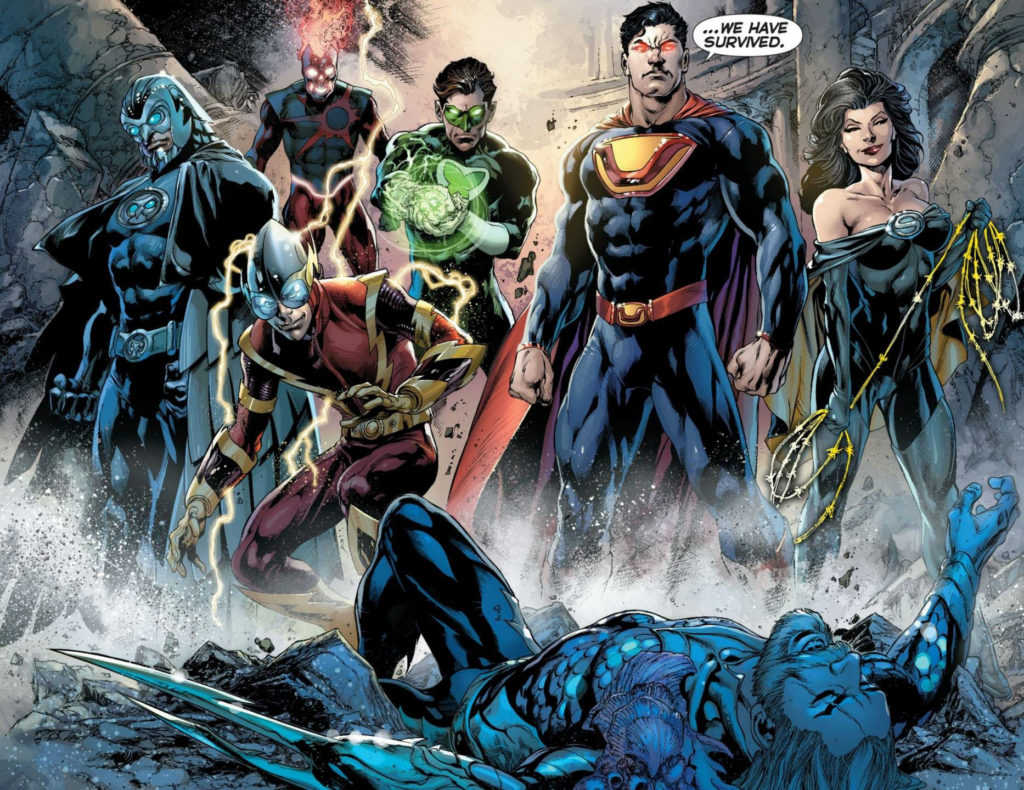
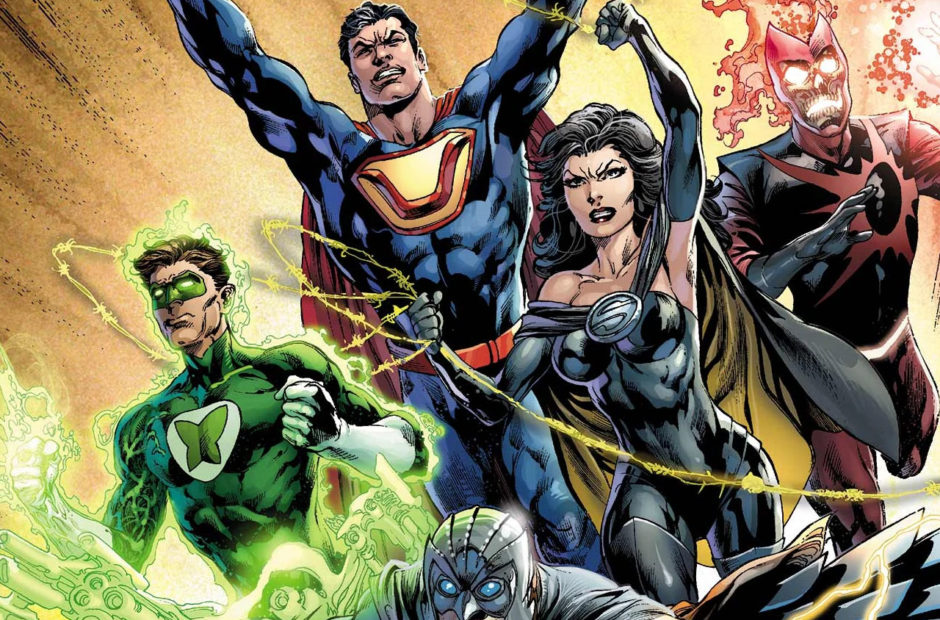
Across most incarnations, five figures form the backbone of the team:
- Ultraman: The Superman counterpart, driven by dominance rather than hope.
- Owlman: The Batman counterpart, defined by cold logic and long-term manipulation.
- Superwoman: The Wonder Woman counterpart, often portrayed as the most ruthless strategist.
- Johnny Quick: The Flash counterpart, reckless and impulsive, fueled by speed and ego.
- Power Ring: The Green Lantern counterpart, bound to a ring powered by an alien force.
Other distorted reflections appear depending on continuity, but these five represent the core concept.
How the Crime Syndicate Operates
The Syndicate functions as a criminal partnership rather than a heroic alliance. Members cooperate because it benefits them. Betrayal is expected. Loyalty is temporary.
This makes them efficient and unpredictable. They do not hesitate to escalate situations or sacrifice civilians if it secures their position.
Modern Interpretations and Lasting Impact
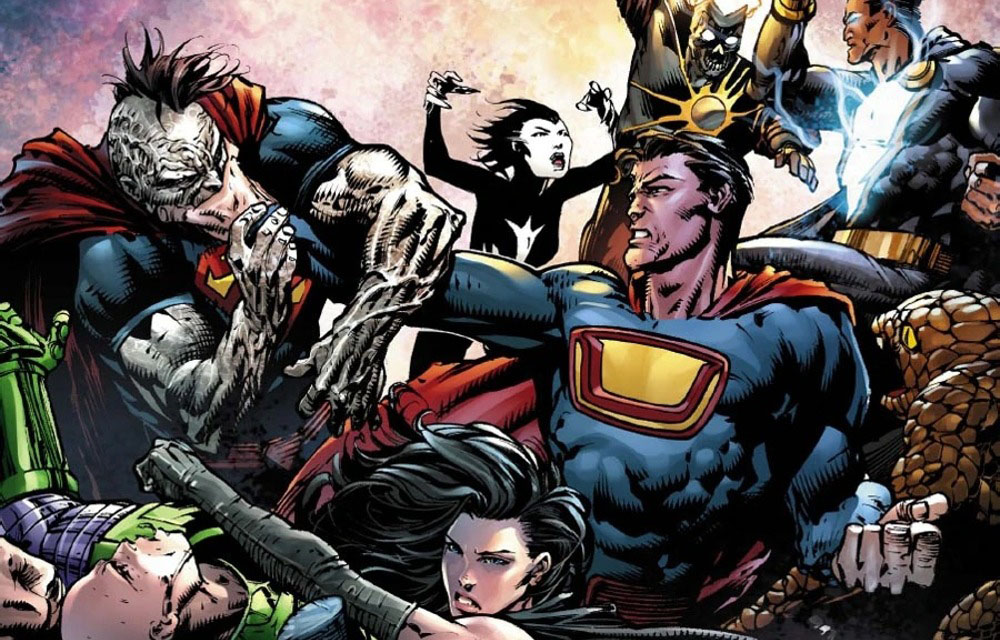
In modern DC stories, the Syndicate often emerges during moments of instability. Their most prominent recent use came during the Forever Evil storyline, where they exploited a power vacuum to invade another Earth and assert control.
That story reinforced why the concept works. The Syndicate does not need complex motivations. They see opportunity and take it.
Why the Crime Syndicate Matters
The Crime Syndicate exists to challenge the idea that heroism is inevitable. They demonstrate that power alone does not create heroes. Choice does.
By stripping away moral restraint, the Syndicate highlights what truly separates the Justice League from its darker reflection. Values are not automatic. They are learned, defended, and maintained.
FAQs
Are the Crime Syndicate from another universe?
Yes. They are typically portrayed as originating from Earth-3, a parallel world within DC’s multiverse.
Are the members always the same?
The core roles remain consistent, though specific details can change between eras.
Are they meant to replace the Justice League?
No. They exist as a narrative contrast, not a substitute.
Conclusion
The Crime Syndicate endures because the idea behind them is timeless. They take DC’s most familiar icons and remove the one thing that makes them heroes. In doing so, they remind readers that heroism is not about power. It is about restraint.