Welcome to an exciting year-long project here at The Nerdy. 1986 was an exciting year for films giving us a lot of films that would go on to be beloved favorites and cult classics. It was also the start to a major shift in cultural and societal norms, and some of those still reverberate to this day.
We’re going to pick and choose which movies we hit, but right now the list stands at nearly four dozen.
Yes, we’re insane, but 1986 was that great of a year for film.
The articles will come out – in most cases – on the same day the films hit theaters in 1986 so that it is their true 40th anniversary. All films are also watched again for the purposes of these reviews and are not being done from memory. In some cases, it truly will be the first time we’ve seen them.
This time around, it’s Feb. 14, 1986, and we’re off to see 9 1/2 Weeks, The Hitcher, and Parting Glances.
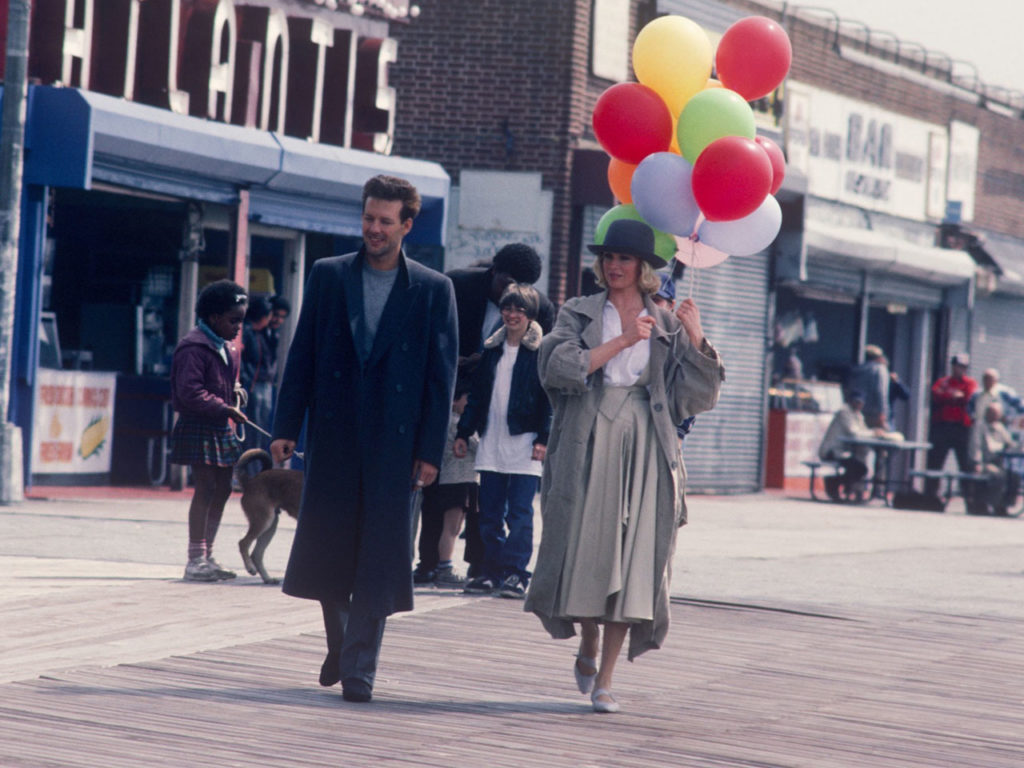
9 1/2 Weeks
Talk about a movie whose reputation is a bigger deal than the movie itself.
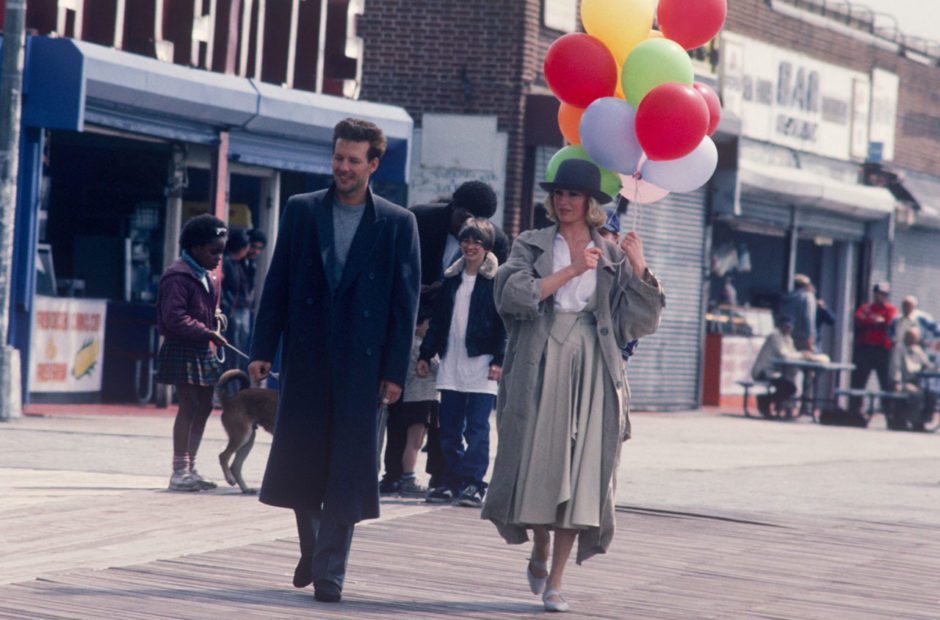
Elizabeth McGraw (Kim Basinger) meets John Gray (Mickey Rourke) by chance and finds herself immediately drawn to him. Shortly after their initial meeting, Elizabeth finds herself descending into a world of Domination and submission with John as he takes more and more control over her life. But after only 9 & 1/2 weeks, Elizabeth decides that perhaps this is not what she was looking for.
Off of a $17M budget (I have no clue how this movie cost that much), it went on to gross $100M and started a mad rush in Hollywood to try to recapture whatever worked here. Co-writer and producer Zalman King, in particular, spun it into a lengthy career of sexually charged films and TV productions such as Red Shoe Diaries.
Here’s the issue I had with the film: You never really understand either of these characters. John comes from a large family, so perhaps he felt a sense of loss of control being lost in the shuffle. Elizabeth is divorced and seems to be trying to find herself, but that is never incredibly clear. The performances were fine, but the lack of motivation was definitely aggravating.
As for its place in 1980s film history, it is fairly important and worth checking out based ont hat alone.
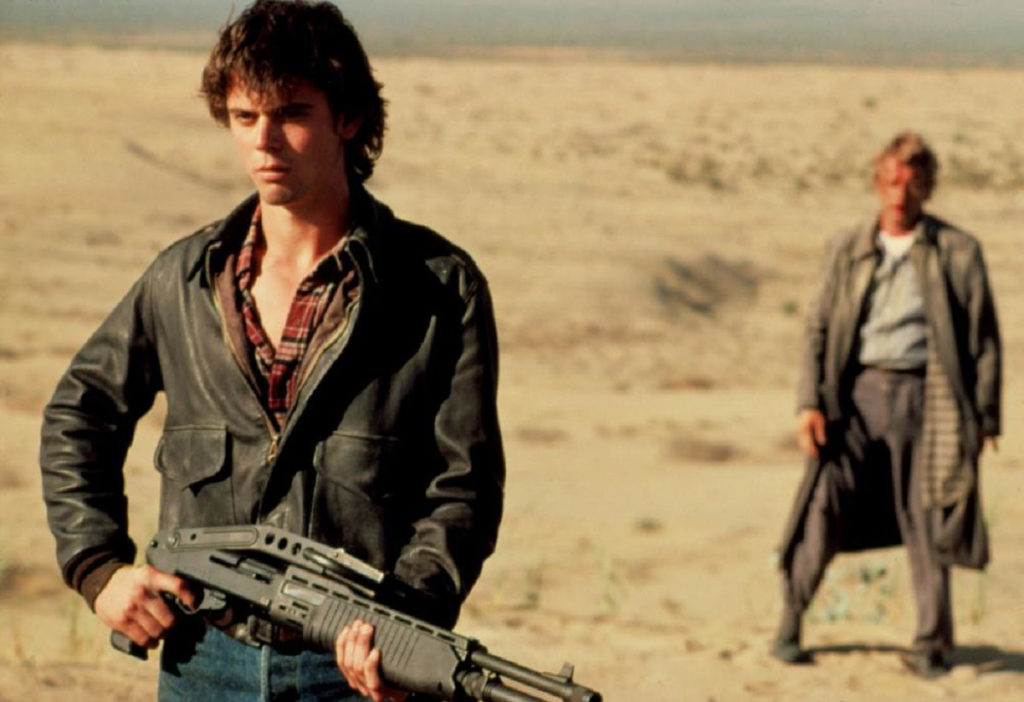
The Hitcher
This is one of those movies that really leaves you wondering what the actual story was, but in a good way.
Jim Halsey (C. Thomas Howell) is delivering a car to California when he picks up John Ryder (Rutger Hauer), a hitchhike that immediately makes it obvious he is up to no good. What follows is a cat-and-mouse game between the two across rural Texas that is sure to leave a trail of bodies behind them.
The Hitcher is an odd movie in the sense that you probably shouldn’t like it. You never get a clear idea of who John Ryder is or what is driving him to kill everyone he meets. And that’s where the fun of the film is, you can project any backstory you want onto Ryder. Is he a spree killer? Is he an agent of chaos? You simply don’t know.
Where the film really sold me back in the day was the storyline of Nash (Jennifer Jason Leigh). I don’t want to spoil it for anyone who has never seen the film, but this storyline runs so wildly counter to other films of the time that it immediately made me take notice when I rented the film in 1986.
Easily one of my most-watched 80s films because every time you see it, you’re left with questions as to what exactly just happened.

Parting Glances
Considering this was released in 1986, I was surprised by how quickly it took to tackle the AIDS epidemic.
Robert (John Michael Bolger) and Michael (Richard Ganoung) are a late-20s gay couple living in New York City in the 1980s. Robert is preparing to leave for two years for a work assignment in Africa, while Michael is preparing for the departure of his partner and caring for his friend Peter (Steve Buscemi), who has AIDS. As the film continues, you learn Peter is part of the reason Robert is leaving, and it’s mainly because he does not want to face his own mortality.
The film falls very much into a slice-of-life category where you feel you are only seeing a small sliver of these people’s lives. Yes, major moments happen for most, but in general, you know life goes on before and after the credits roll.
What makes this film important is how early in the AIDS crisis it came out. To say this was the early days would be an understatement. Up to this point there had only been two major magazine stories on the crisis that I can remember, so this film was a big step in visibility.
Just from a historical standpoint, this is a film very much worth tracking down.
1986 Movie Reviews will continue on Feb. 28, 2026, with Hollywood Vice Squad, House, Pretty in Pink, and Salvador.